Inside the Staff Room: How Top Basketball Teams Win With Hudl
23 Jul 2026
10 min Read
Elite basketball staffs don’t talk about technology. They talk about time, and how the right system gives more of it back.
The best basketball staffs in the country don't talk about technology the way vendors do. They talk about time. About what it costs to log into five different platforms before 8 a.m. About what it means to have film ready at halftime versus scrambling for it. About the difference between telling a player something and showing them the numbers that prove it.
This is a guide built from those conversations — pulled from sessions with video coordinators, analytics staff, assistant coaches, and operations directors at programs competing at the highest levels of college basketball.
The themes that emerged aren't platform-specific. They're about how elite staffs think, work, and build the infrastructure that makes winning sustainable.
The Platform Play: One Hub, Not Five
Ask a video coordinator or operations staffer what slows them down most, and the answer is rarely the work itself. It's the overhead around it. Five platforms. Five logins. Five sets of data that don't talk to each other — which means one person spending part of every day just managing the infrastructure instead of using it.
That's the problem programs have been naming out loud, and it's reshaping how the tools are being built. Chuck Wesley, Manager of Customer Solutions at Hudl, has heard it consistently enough that it's become the organizing principle behind product development.
"I've got five different things I'm logging into. None of you talk to each other. You're actually making my day less efficient, not more efficient. There's just more stuff that I have to deal with."
The consolidation is already happening. Two years ago, there were roughly 4,400 third-party imports to Hudl Sportscode per week across Hudl's user base. This year, that number is around 1,000. Instat imports are moving in the opposite direction — up. Programs are collapsing the stack, and the workflows are following.
What that looks like going forward is a collaborative Sportscode model — multiple coaches in the same sorter simultaneously, real-time updates, version histories. The reference point Wesley used is deliberately unglamorous: "Think of it like Google Docs, Google Sheets. Multiple coaches being able to edit the same sorter at the same time — that's the idea we're gonna bring forward."
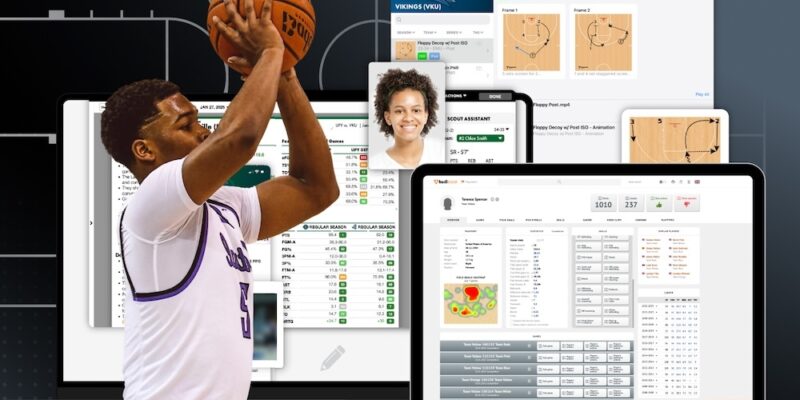
Titan GPS follows the same integration path — data tied into the Hudl library, synced with video, available inside the same timeline coaches are already working in. One ecosystem. Everything in it.
For staff rooms running lean, that's not a product pitch. It's a staffing decision.
Live from the Sideline: Real-Time Workflow Under Pressure
Game night is where the prep either pays off or falls apart. The programs doing it best have one thing in common: they've built their live workflow before the season starts, so the season doesn't break it.
James Buchanan, Assistant Coach for Video and Analytics at North Dakota State, has refined his Coach's Challenge process to the point where the margin for error is nearly gone.
"We have a manager that sits right behind me on the bench," he said. "Anytime there's a close call with that SDI feed, it is real time. I'll turn around, we'll see the program feed, which is just the broadcast, and we'll zoom it in from there."
The result: 80 percent success on challenges this year.
That kind of efficiency doesn't happen by accident. It's the product of live-coding discipline built in the offseason — scrimmages, five-on-five sessions, any situation where the pressure is low enough to find the problems before they cost you.
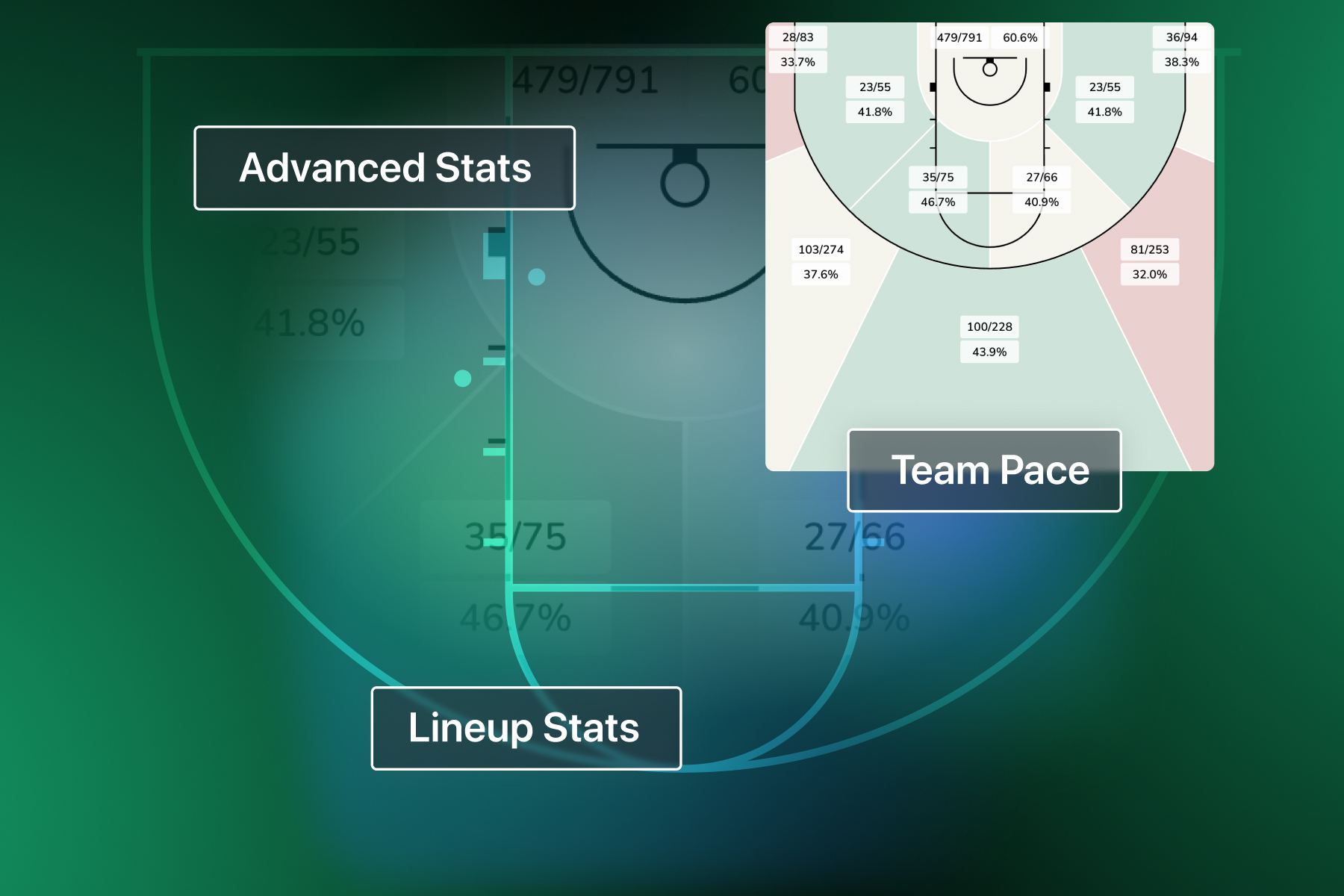
Ed "Buck" Mahan, Sr. Customer Success Manager at Hudl and longtime D1 video coordinator, works through the same logic on the halftime side. His setup isn't complicated — a laptop in the coaches' locker room, shot charts ready to go before the coaches walk in.
"By the time the season would come around, it would take me about 30 seconds for every shot to just go through, apply those data points, move on to the next shot, do that same thing."
The output is a detailed shot chart — passes that led to shots, shot quality, contested looks — printed and waiting for players when they arrive. "The next day they'd come into the locker room and they'd expect to have this there," Mahan said. "They'd be diving in, they'd be like, 'Hey, Buck, show me these clips. What do you mean I made bad passes here?'"
That's the standard worth building toward: not film that's available, but film that's expected.
Two things drive Mahan's live workflow: getting clips to coaches on iPads during the game, and having the halftime breakdown ready in under 15 minutes. The hotkeys and matrix logic that make that possible — setting up opponent rebounds to automatically deactivate defense, for example — are built in the summer and stress-tested before a game ever matters.
"Any way you can add a qualitative data point to a quantitative result is critical in my workflow," he said.
Data + Film = Decisions
The most honest thing a coach can say is "I think." The most powerful thing they can say is "here's the data."
The programs pulling away from the pack aren't just watching more film. They're closing the loop between what the data says and what the film shows — and using that combination to have conversations with players that are harder to argue with and easier to act on.
Dhruv Mehrotra, now an assistant coach at South Dakota after a stint as a graduate assistant at BYU, describes what that looks like in practice. "Everyone preaches about it, but now we have data backing what we're saying," he said. "We're not just saying, 'Hey, Rob, you're not very good in pick and roll,' or 'Hey, you should do this or that.' We're showing him numbers that back up what we're trying to prove."
That shift — from assertion to evidence — changes the dynamic in the film room. A player who might push back on a coach's read has a harder time pushing back on a number attached to a clip. The conversation moves faster. The correction sticks longer.
The data-film loop isn't just about accountability. It's about trust. When players can see the evidence behind what they're being asked to change, the ask lands differently.
The Video Story: Details That Build Trust
Tony Dukes didn't learn Hudl in a classroom. He learned it at the San Antonio Spurs, in a video room where the standard was set by one of the most detail-obsessed coaches in basketball history.
"Working in the video room there is like Sportscode on steroids," said Dukes, now an Assistant Women's Basketball Coach and Senior Director of Scouting and Analytics at Mississippi State. "It's like Yale or Harvard. That's where I really learned how to work Sportscode to the highest level."
Under Gregg Popovich, the margin for error wasn't measured in plays. It was measured in punctuation. "If I had one mistake in there, Pop would look at it and find a missing period," Dukes said. "Literally the small details — those types of things help you in those situations where you might think it's not a big deal, but actually help you out in the long run, for sure."
The lesson from the NBA isn't about software. It's about craft. Master the details when the stakes are low, and the high-stakes moments take care of themselves.
The Staff Playbook: Career, Culture, and the Long Game
The most useful career advice comes from people two or three roles ahead of you who made the mistakes they're now telling you to avoid.
Across NABC and WBCA, a consistent theme emerged from the operations and video staff in the room: the coaches who build long careers in this business aren't the ones who chase the next title. They're the ones who become indispensable in the role they're in.
Austin Cox, Director of Basketball Operations at Bradley, put it directly: "You've got to be a master at your role before you can take the step into the role that you want. Because that's where you're going to build your trust. So often we're trying to chase that recruiting spot or that GM spot or that assistant coaching spot, and we lose — we don't take care of our business. You might need to be the IT guy right now, but if you can master that and become the best dang IT guy in the program, that's going to get you to where you want to go."
Max Teems, Director of Video Operations at Boise State, learned the same lesson from the urgency trap — the instinct to respond fast that can undermine the value of responding right. "Fast is good, but right is better," he said. "Training myself to slow down, say 'I'll find out' rather than just jump in with an answer — I think that's gained a lot of trust with our staff."
The time theme runs deeper than individual workflow. Sean Smith, Director of Program Development at Columbia, framed it as a skill set unto itself. "Finding ways to save time is always going to be a skill," he said. "Coaches talk about it all the time now — transfer portal, offseason, everything. Time is such a valuable resource. Being able to have initiative on that — what can we do to make things faster — is always an eye that will be useful."
And Carter Mumm, Special Assistant to the Head Coach and Video Coordinator at Arkansas, offered what might be the most practical piece of advice in the room: build something, show it to someone, see what happens. "I didn't realize how much you could do with Sportscode," he said. "And I was like, this is actually kind of fun. Knowing what your programs need and what your coaches are emphasizing, then just finding niche ways to go about that — build projects and then just kind of show it to them."
Recruit Smarter: Portal Speed, Better Decisions
Recruiting has always been about finding the right player before someone else does. What's changed is how much information is available, how fast it moves, and how quickly a program that isn't using it gets left behind.
The coverage numbers tell part of the story. Gregory Eaton, Senior Solutions Consultant for North America Basketball at Hudl, put it plainly: "We've captured over 80% of high school boys basketball games over the last three straight years."
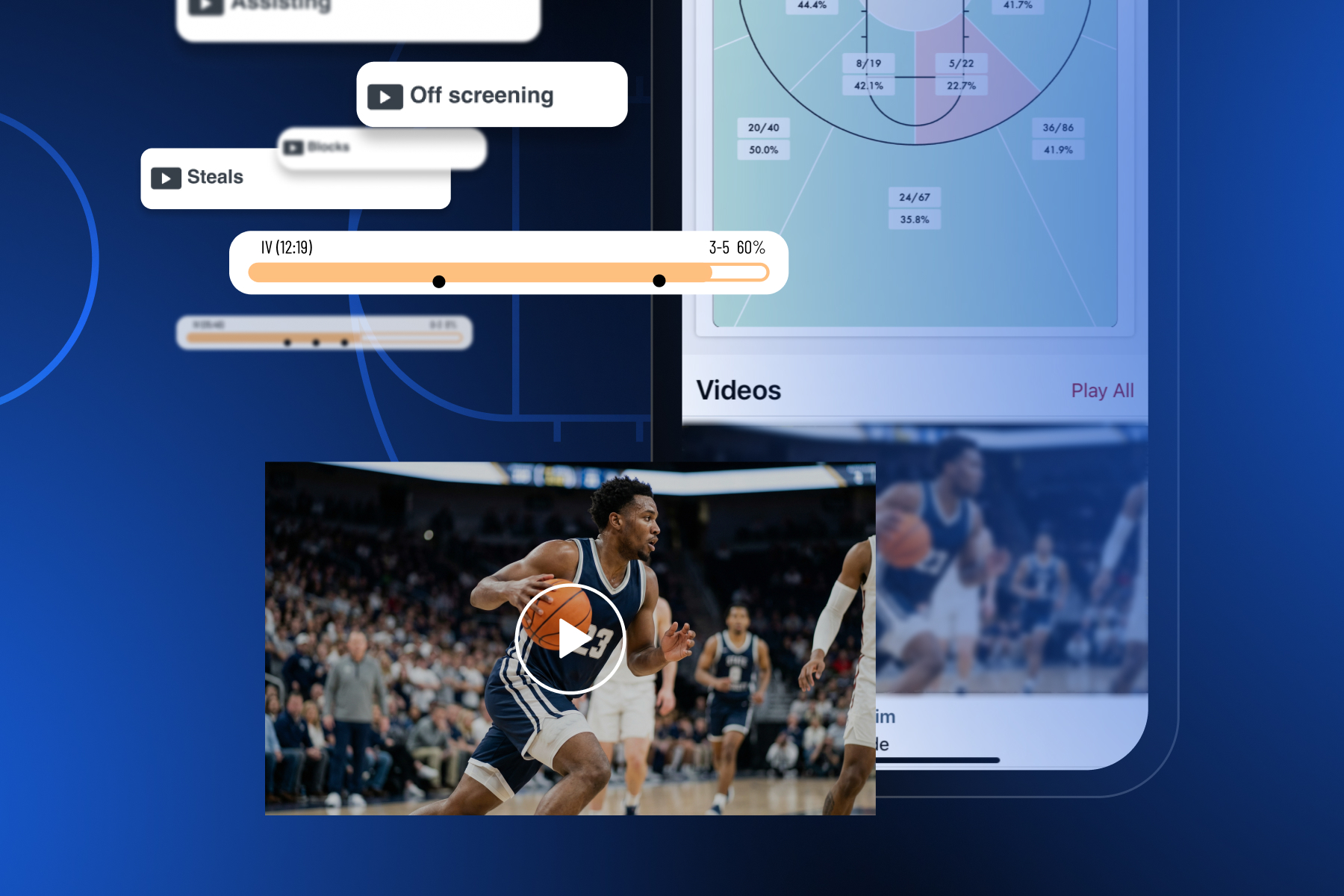
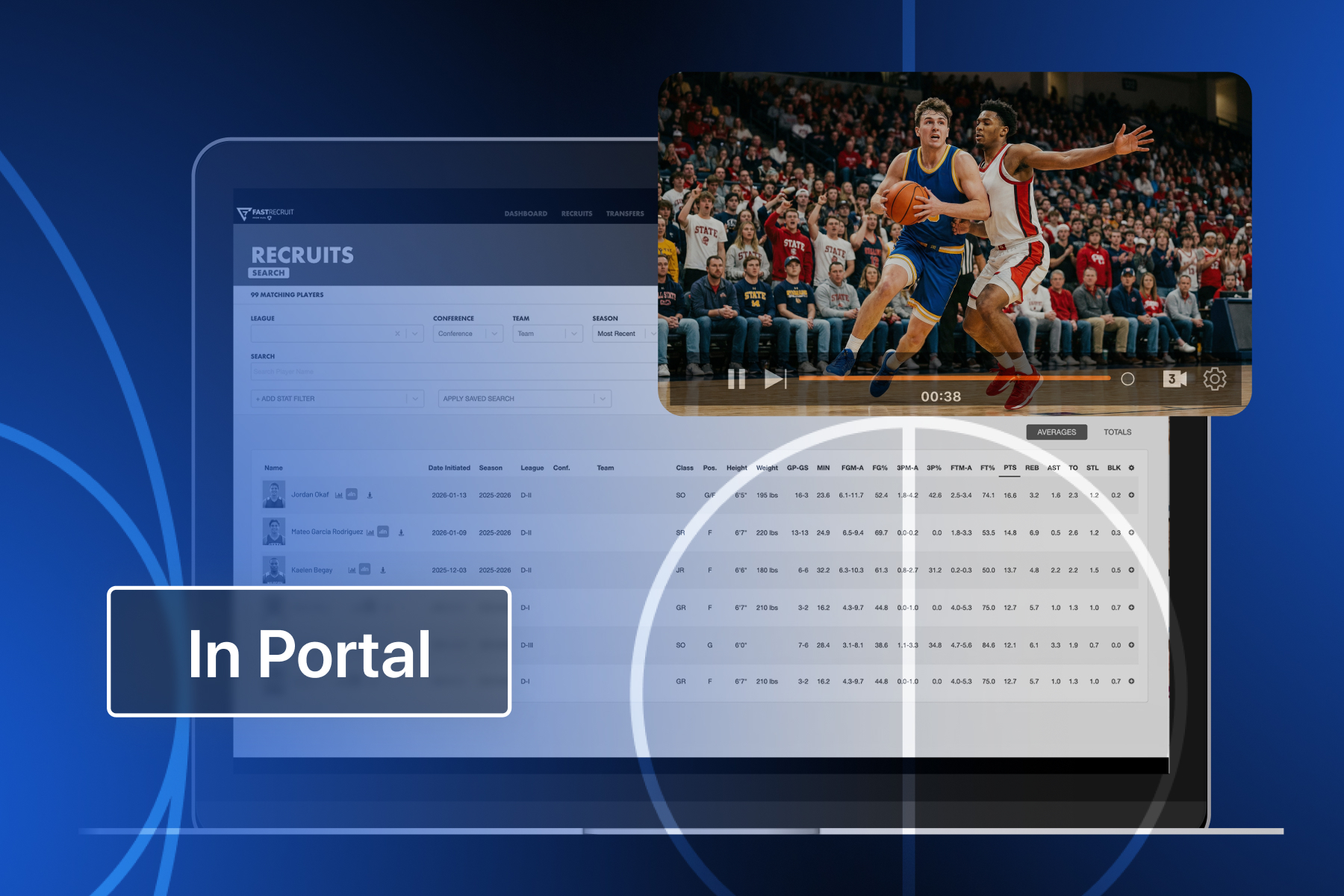
That's not a feature. That's infrastructure. When a prospect enters the portal, a program running on Hudl can have an evaluation started within 24 hours —including AI-generated player recaps, stat filters, and film. The paper booklet that used to anchor a recruiting pitch has been replaced by something a coach can build in 90 seconds and send from their phone.
Ryan Phillips of Hudl framed the standard for the women's side: "Put data and film behind every recruiting decision — not just the eye test."
That applies in both directions. Evaluating incoming prospects and showcasing your own players to the next level. A pass-first point guard who might not jump off a highlight tape becomes a different conversation when you can pull her assist-to-turnover numbers, filter to half-court sets, and have film distributed to a coaching staff in under 15 minutes.
The programs winning the recruiting battle aren't necessarily the ones with the biggest budgets or the best brand. They're the ones who can move fast, back up the eye test with evidence, and tell a player's story in a way that makes the decision easy for the staff on the other end.
The Through Line
Every section of this guide comes back to the same thing: time, and what you do with it.
The platform consolidation is about time. The live workflow is about time. The data-film loop saves the time it used to take to make a case. The video storytelling builds the trust that makes every subsequent conversation shorter. The staff philosophy is about knowing your role well enough that you stop wasting time chasing the next one. The recruiting tools compress a process that used to take days into one that takes hours.
Elite programs aren't built on any single tool or any single hire. They're built on systems that compound — where every efficiency creates room for the work that actually matters.
The staff rooms that are winning know the difference. Now you do too.
See how the best basketball programs win with Hudl.