Starting 5: The Best Basketball Plays of the Season

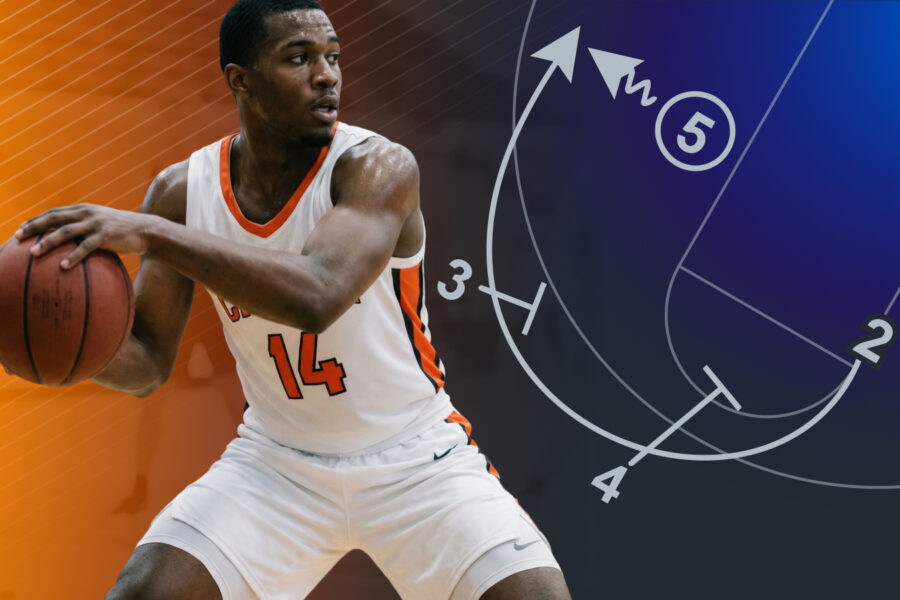
The best sets from the 2025 – 26 basketball season, drawn up by the FastDraw community.
Every season, coaches and analysts around the world contribute their most interesting film breakdowns to the FastDraw Playbank — a living library of basketball strategy. FastDraw, Hudl's play-diagramming software, powers the drawings beneath each set, letting coaches study and steal ideas from every level of the game.
Below, we've spotlighted five standout contributions from the current season, spanning across college and professional leagues around the world.
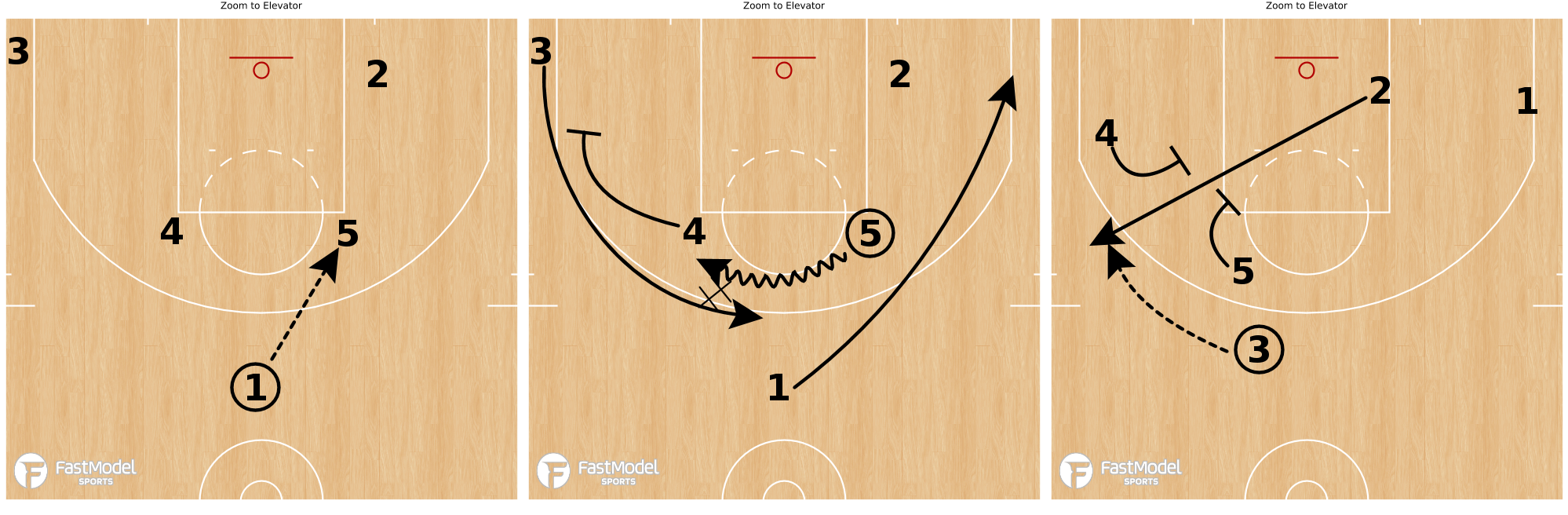
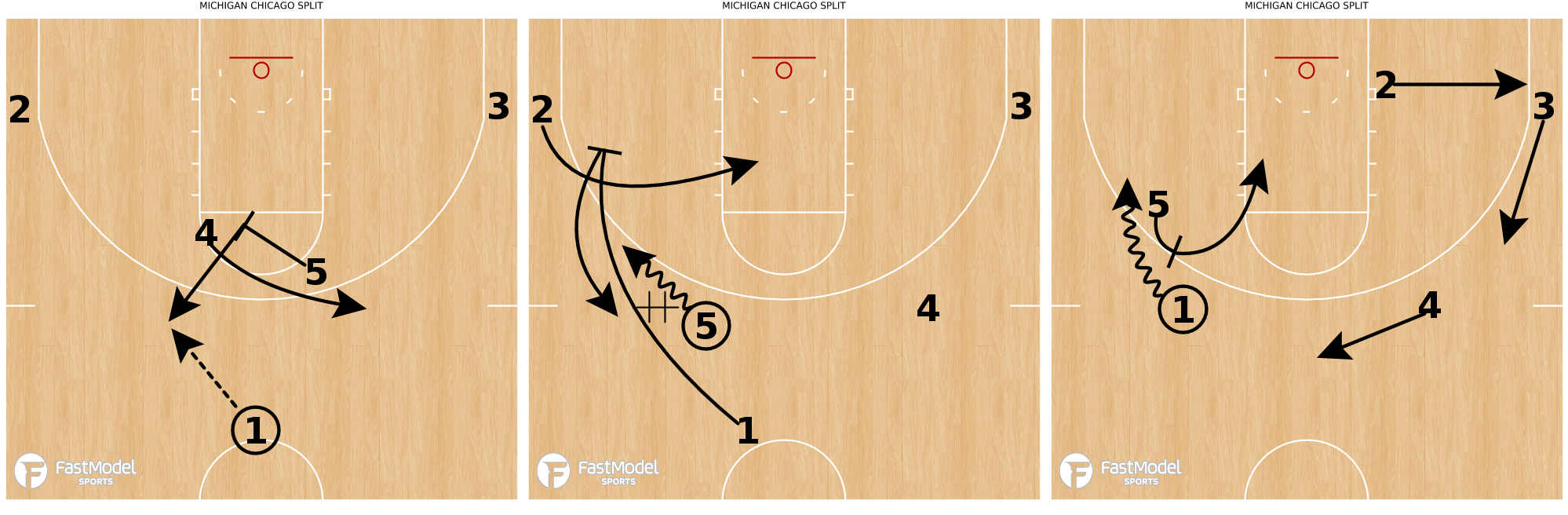
The most recently contributed play in this collection, and arguably the most technically rich. Michigan's Chicago split set — submitted in late March 2026 — chains together a post entry, a cross screen, a curl, a dribble handoff, and a step-up pick-and-roll in a single fluid sequence. It's the kind of set that demands perfect spacing and timing to execute, but when it works, it generates a layered attack that's nearly impossible to prepare for.
Chicago action is itself a high-IQ concept: the post player receives the pass, then immediately acts as a handoff hub while the 1 makes a curl cut. The resulting step-up ball screen for the returning point guard leverages all the motion that preceded it, as help defenders are already displaced.
KEY ACTIONS
- 5 screens for 4 in the post; 1 passes to 5 on the catch.
- 1 uses a screen from their teammate as 2 curls; 5 initiates a dribble handoff back to 1.
- 1 comes off a step-up ball screen from 5, reading the defense and exploiting the open option.
By the time the defense recovers from the initial curl, the ball-handler attacks the lane created by the step-up, forcing the defenders to choose between protecting the rim or the open kick-out.
[ Chicago Action ] [ Pick & Roll ] [ Dribble Handoff ] [ Curl Cut ]
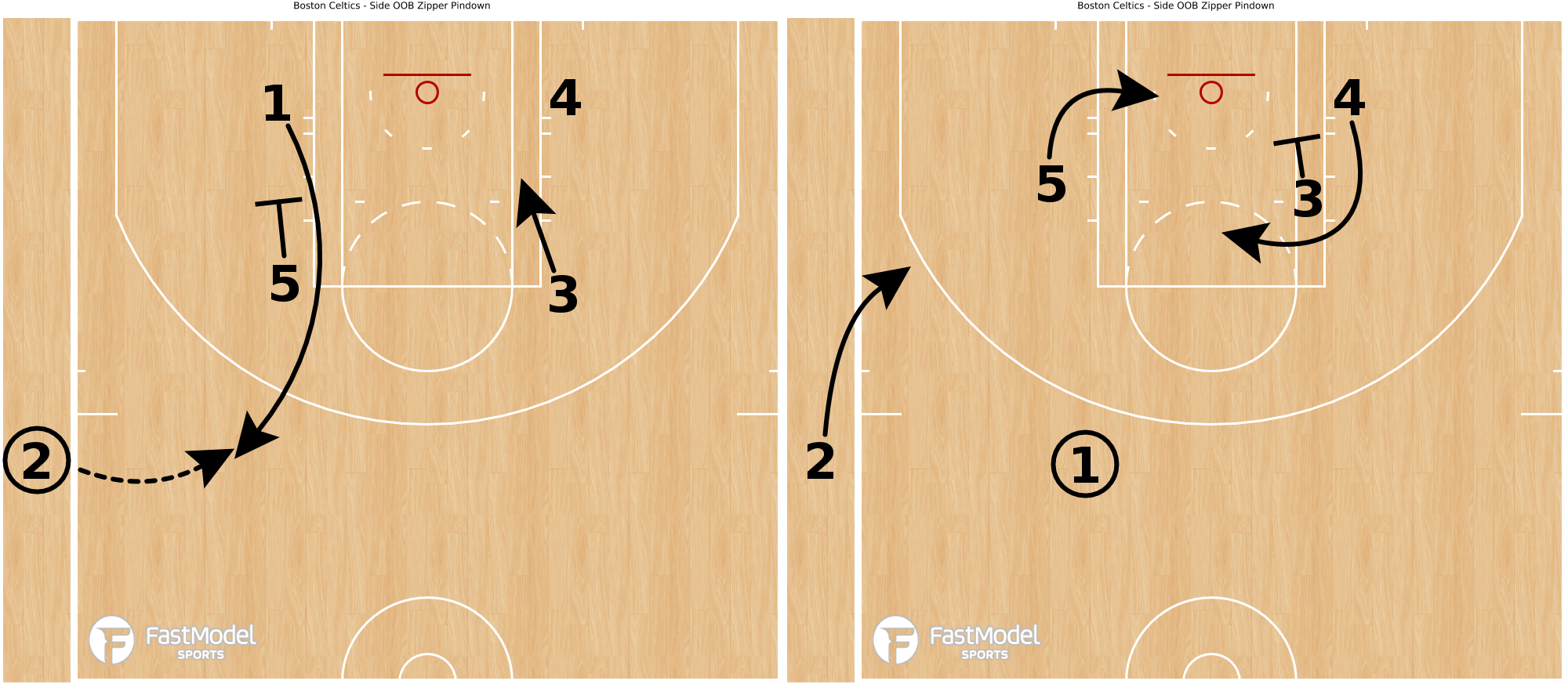
The play uses a zipper screen to free up the inbound receiver quickly, before transitioning into a pindown action that curls the 4-man tight to the front of the rim. The beauty lies in the defensive conflict it creates: The 5's defender must decide whether to help on the lob threat at the rim or remain attached to their assignment — a two-way dilemma with no clear answer.
KEY ACTIONS
- The 5 sets a zipper screen up the lane to free the 1 for the inbound reception.
- The 3 then sets a down screen for the 4, who curls hard to the front of the rim.
- The 5's defender is caught in a dilemma — help on the lob or stay attached — creating the easy scoring chance.
This is the type of secondary action that makes Boston so difficult to guard. Even a great individual defender can be put in an untenable position when the surrounding structure forces impossible choices.
[ SLOB ] [ Zipper Screen ] [ Down Screen ] [ Man Offense ]
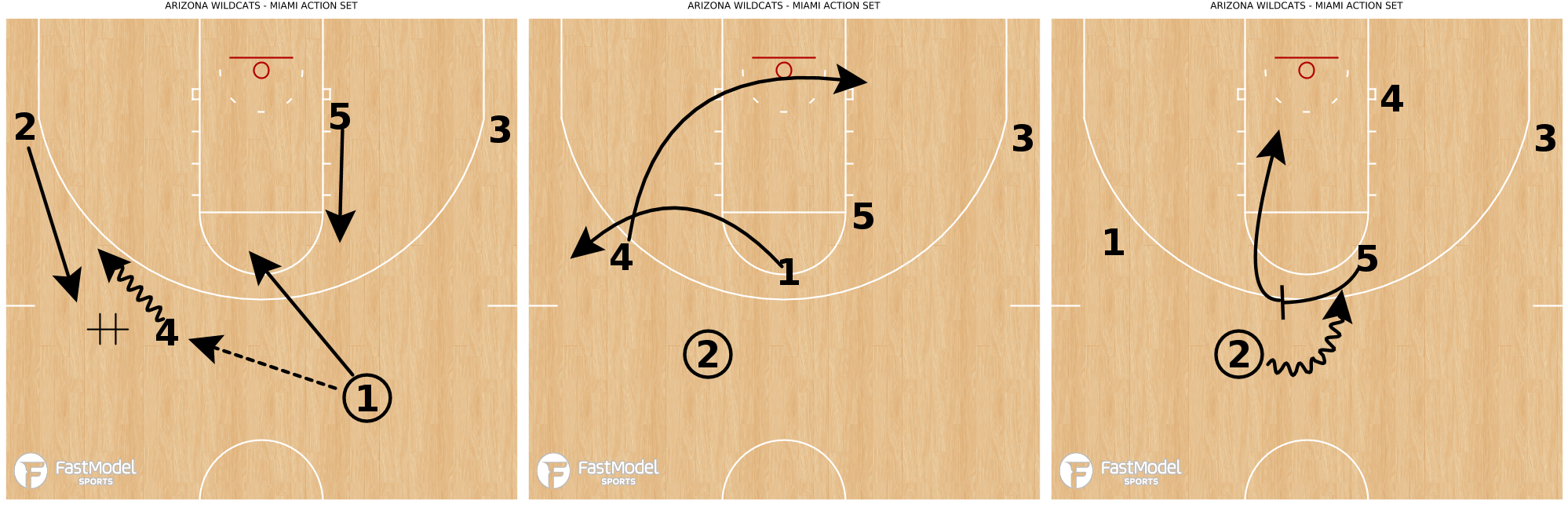
Miami action — a dribble handoff combined with a lift screen — has become one of the most ubiquitous concepts in modern basketball, from professional down to high school. Arizona's 2025–26 version demonstrates exactly why it's so versatile: it seamlessly flows out of a simple initial pass into a pick-and-roll with multiple options for the ball-handler to exploit.
The read progression here is clean and teachable. The guard attacks off the DHO, the 4 cuts to the low post to occupy help-side attention, and the 5 sets a step-up ball screen. From there, the primary ball-handler reads the defense and chooses from a menu of actions — pull-up, drive, kick to the corner, or lob to the roll man.
KEY ACTIONS
- 1 passes to 4; 4 initiates a dribble handoff (DHO) with 2 while 5 lifts to create space.
- 4 cuts to the low post after the handoff; 1 relocates to the 45-degree corner.
- 2 runs pick-and-roll with 5, reading the defense for the best available option.
What makes this Arizona version notable is the purposeful use of the 4's cut to occupy the paint, which removes one potential helper before the pick-and-roll even develops. Simple, disciplined, and devastatingly effective.
[ Miami Action ] [ Dribble Handoff ] [ Pick & Roll ] [ 5-Out ]