ADI is Now in Hudl Signal: A New Era for Performance Analysis
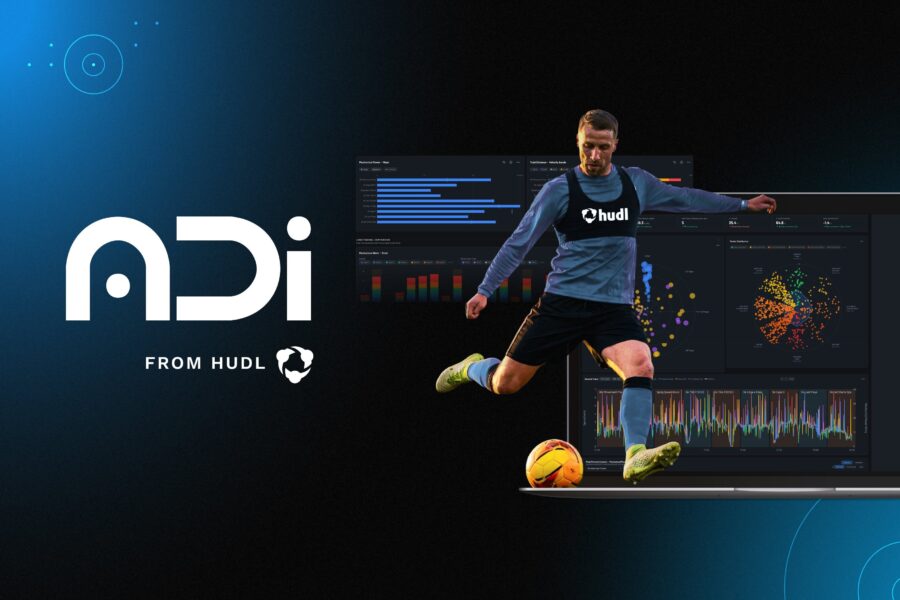
The industry’s most advanced multidirectional movement analysis now lives inside Hudl Signal. One platform. Every data source. The complete picture of athlete movement.
When Hudl acquired Athletic Data Innovations last year, we made a promise: that ADI's industry-leading multidirectional movement analysis would become a native part of the platform where elite sports scientists already work. Today, we're delivering on that promise.
ADI is now fully integrated into Hudl Signal.
The most advanced movement analysis in the industry — built on Andrew Gray's pioneering research into the true mechanical cost of how athletes move — is no longer a siloed, separate desktop application. It lives natively inside Hudl Signal, powered by the platform's AI assistant, turning the most complex biomechanical data into answers any sports scientist can access by typing a question.
A New Dimension of Analysis
For two decades, elite performance departments have been analysing multidirectional sports with metrics designed for linear movement. Speed. Distance. Acceleration in a straight line. These metrics have value — but they tell an incomplete story.
ADI in Hudl Signal is built to tell the rest of it.
By measuring both speed-change and direction-change acceleration, ADI's algorithms — now running natively inside Hudl Signal — quantify the true mechanical cost of every sprint, cut, curve and deceleration. The movements that define elite competition but that traditional GPS metrics consistently miss are now analysable inside the same platform where sports scientists already work. The result is a new generation of metrics that reveal not just how fast or how far athletes move, but how they move.
- Mechanical Power quantifies the true intensity of every athletic action, capturing the energy demands of multidirectional movement that linear metrics leave unaccounted.
- Movement Intensity provides a more complete picture of athlete workload across a session or match, accounting for the full spectrum of movements rather than speed-based thresholds alone.
- Gait analysis analyses step patterns within the specific context of each movement type — distinguishing between constant speed running, acceleration and changes of direction — to provide a level of biomechanical detail that transforms injury monitoring and return-to-play decision-making.
These are not incremental improvements to existing metrics. They represent a fundamentally different way of understanding athletic movement — and they are now available inside Hudl Signal.
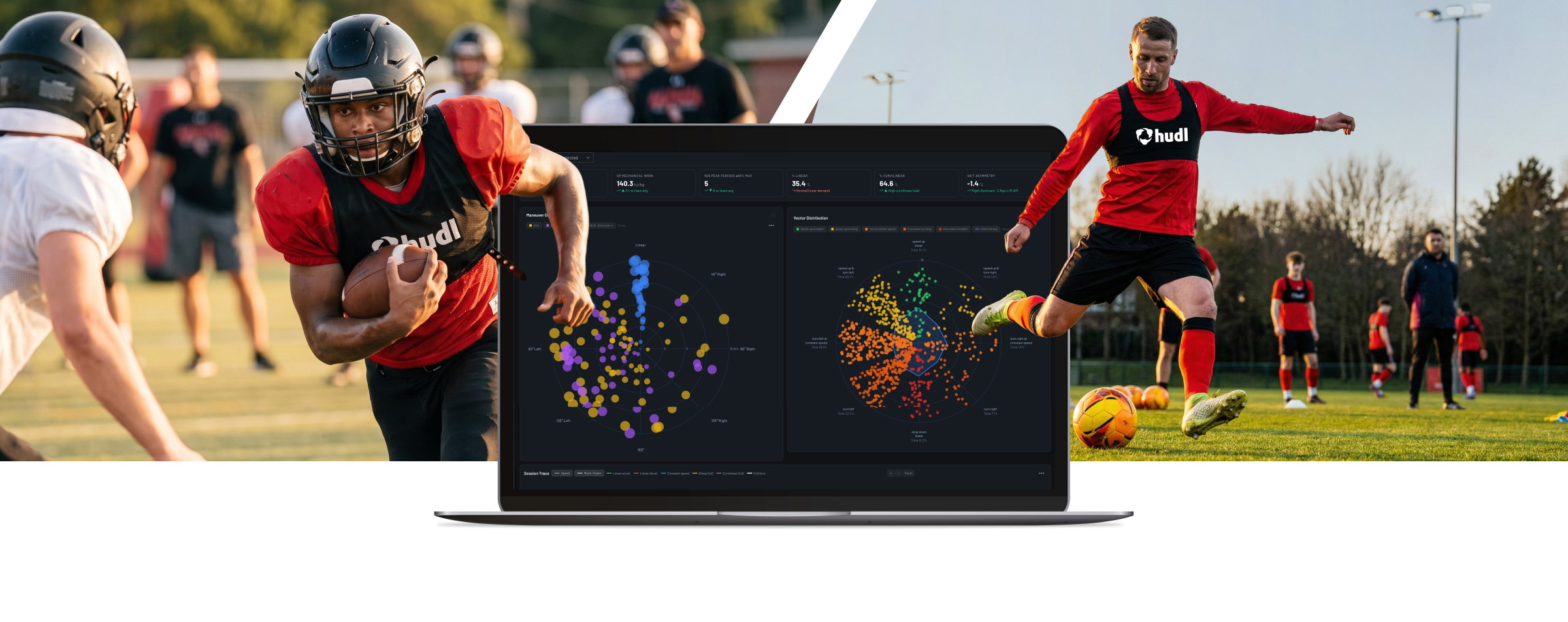
Bringing ADI into Hudl Signal fundamentally changes the game for practitioners. By seamlessly working with any tracking system your club already uses, it unlocks true multi-directional movement analysis right at the center of your daily workflow
Accelerated Insights by AI, All in One Place
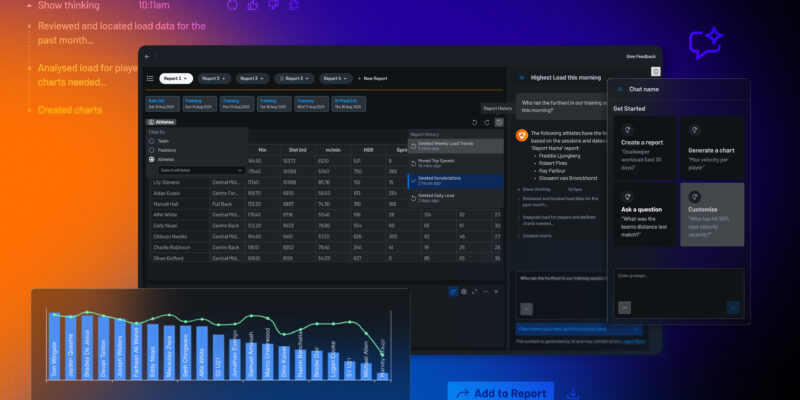
Rather than building a separate reporting interface for ADI — which would recreate the fragmented workflows Hudl Signal was designed to eliminate — ADI metrics are available directly within Hudl Signal's AI assistant.
Sports scientists can ask questions that draw on both standard session data and ADI's multidirectional metrics simultaneously, without switching tools, configuring dashboards or interpreting raw numbers in isolation.
Ask what an athlete's Mechanical Power output looked like in the final 15 minutes of last night's match. Ask which players are showing asymmetry in their change-of-direction mechanics over the last three sessions. Ask how this week's Movement Intensity compares to the same fixture last season. The AI assistant treats all data sources as a single analytical environment and returns answers in plain language, instantly.
This is the fullest expression of what Hudl Signal was designed to be: not a platform that stores data, but one that allows practitioners to make better decisions, faster
The Bigger Picture
ADI in Hudl Signal is the latest step in Hudl's vision for an end-to-end performance ecosystem — one where tactical video, athlete tracking and advanced biomechanical analysis exist not as separate tools to be manually reconciled, but as a single, unified environment.
For sports scientists and performance analysts, that means less time managing data and more time acting on it. ADI metrics, session data, and the full analytical power of Hudl Signal's AI assistant now operate as one — all integrated with the wider set Hudl Pro Suite.
The most complex biomechanical questions get answered in the same place as every other performance question, without switching platforms, exporting files or losing context along the way.
"Traditional linear speed tracking only tells half the story, but this integration completely transforms how we evaluate every aspect of athlete performance—from physical conditioning and structural preparation to injury mitigation. We no longer have to manage players based on incomplete linear baselines. Instead, we can finally measure the true mechanical tax of cutting, braking, and curvilinear running, ensuring our daily readiness and safety decisions are backed by the absolute physical reality of what actually happened on the pitch.
Be Part of the Conversation
On July 9th, ADI founder Andrew Gray joins Martin Buchheit, Darcy Norman and Sportsmith for a live roundtable — The Limits of Linear: Rethinking Athlete Monitoring for Multidirectional Sports — to discuss what the true physical cost of athletic movement means for the future of elite performance analysis.
If you want to hear the science behind what we've built, directly from the leading names in the industry, register now to secure your spot