How Lake Sumter State Built a Campus-Wide Camera System
Jul 13, 2026
8 min Read
Lake Sumter State runs 11 cameras across every sport on campus. Here’s how a small college made the case, found the funding, and built it sport by sport.
There is no press box behind home plate at Lake Sumter State College. The baseball and softball fields sit side by side, sharing a press box in the middle, meaning Lacey Crandall had to get creative every game day.
She would maneuver through the grandstands, find a spot near the catcher's backstop, and set up a handheld camcorder. If the camera held a charge, the stream would go live. If it didn't, her phone would start buzzing. Fans in the stands, parents watching from home, donors who had driven out to support the program — they would all text her at the same moment to say the stream was down.
She already knew and was running to fix it.
"It would die in the first inning of the second game of a doubleheader, and I'd have to run down there and change it," said Crandall, Sports Information Director at Lake Sumter State College in Leesburg, Fla. "There was a lot of running around in addition to my normal running around for game day."
And in Florida, the equipment didn't just die. It cooked.
"Walking up to grab the camera would be similar to walking on the concrete in bare feet," she said. "It would be so hot."
A Growing Department, a Shrinking Margin for Error
Lake Sumter is not a typical college athletics program. There's no football team. No basketball program. What they have is baseball, softball, indoor and beach volleyball, along with men's and women's golf and track added in just the last four years under Crandall's watch.
Eleven sports. One small staff. And until recently, a patchwork of handheld cameras, wireless transmitters and borrowed time.
Wes Redman, Director of Education Technology Services at Lake Sumter, had been fighting the same battle from the infrastructure side. His background was classroom technology, not sports video. But because he started at the school as the audio-visual technician, the athletic fields fell under his domain too.
"It was a trial by fire for a long period of time trying to find the right process," he said. Webcams. Wireless transmitters. Different hardware configurations that overheated, dropped signal or refused to connect to the network. "It was finally when we were able to work out this deal with Hudl that we were able to finally find the product that was going to do what we needed it to do."
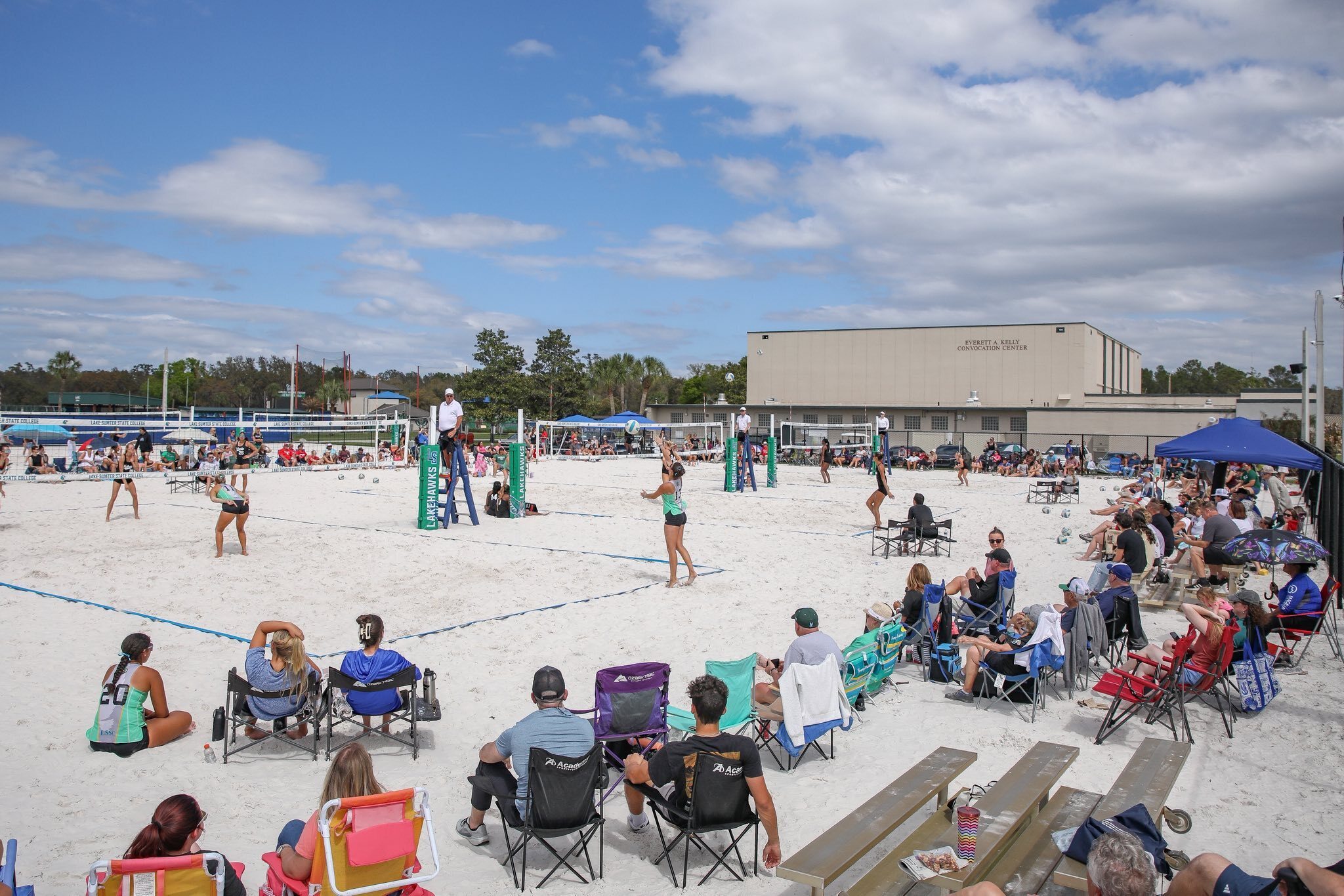
For Crandall, the chaos wasn't limited to baseball and softball. Beach volleyball came with its own set of problems. With no permanent infrastructure at the courts, she was propping iPads and her phone on tripods in the sand, hoping none of them would get hit by a stray ball, then running from court to court to stop recordings and swap batteries before the next match started.
Six courts. One person. No guarantee any of it would work.
The People Who Made the Case
The decision to invest in a permanent camera infrastructure didn't start in a budget meeting. It started with the people who were already watching.
Lake Sumter's Foundation, made up of alumni and community donors, had been among the most vocal about the quality of the live streams. These weren't casual observers. They were the people showing up to games, writing checks to support the program and trying to share what Lake Sumter athletics looked like with family and friends who couldn't make it in person. When the stream went down, they experienced it firsthand.
"Our foundation is our biggest part of our fundraising here at the college," Redman said. "They were among those who were trying to watch the live streams. And if you can't put out a good quality product, it's hard."
The Foundation worked with alumni and sponsors to help find the funding. But what made it work wasn't just the money. It was that the people making the case for investment were the people experiencing the problem. Donors who had watched a pixelated, freezing stream understood the value of fixing it in a way that a budget line item alone couldn't communicate.
For ADs at colleges weighing a similar decision, that's worth sitting with. The ask doesn't always have to come from inside the athletics department. Sometimes the people who care most about your program already want to help solve the problem. They just need someone to bring them a plan.
Built Sport by Sport
Once the funding was in place, Redman approached the rollout the same way he approaches most infrastructure projects: methodically, one piece at a time.
Indoor volleyball came first. Fall semester, get the gym camera up and running, work through any issues before the season starts. Then baseball and softball, which required slightly more complexity. Outdoor environments, older facilities, and a bucket lift to run hardwire up to the mounting points.
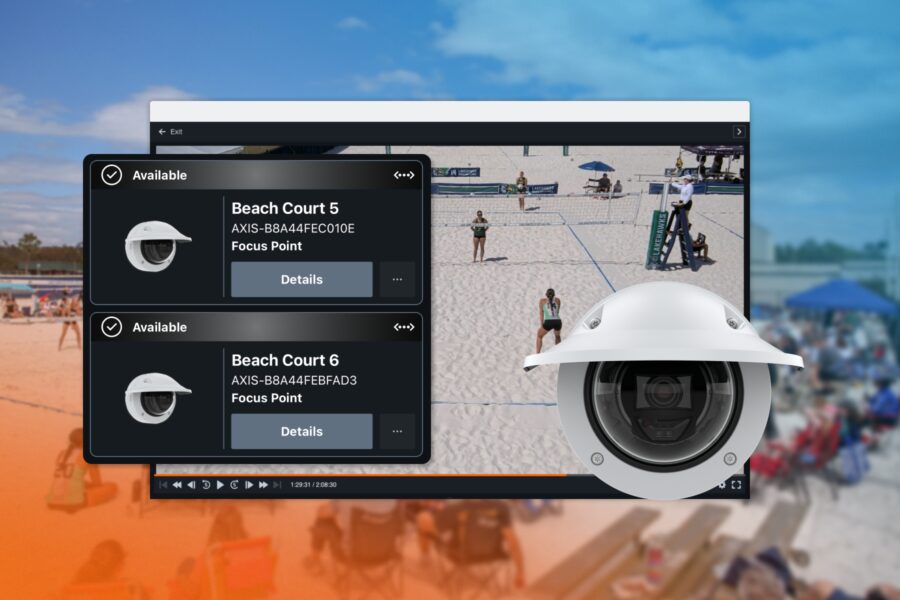
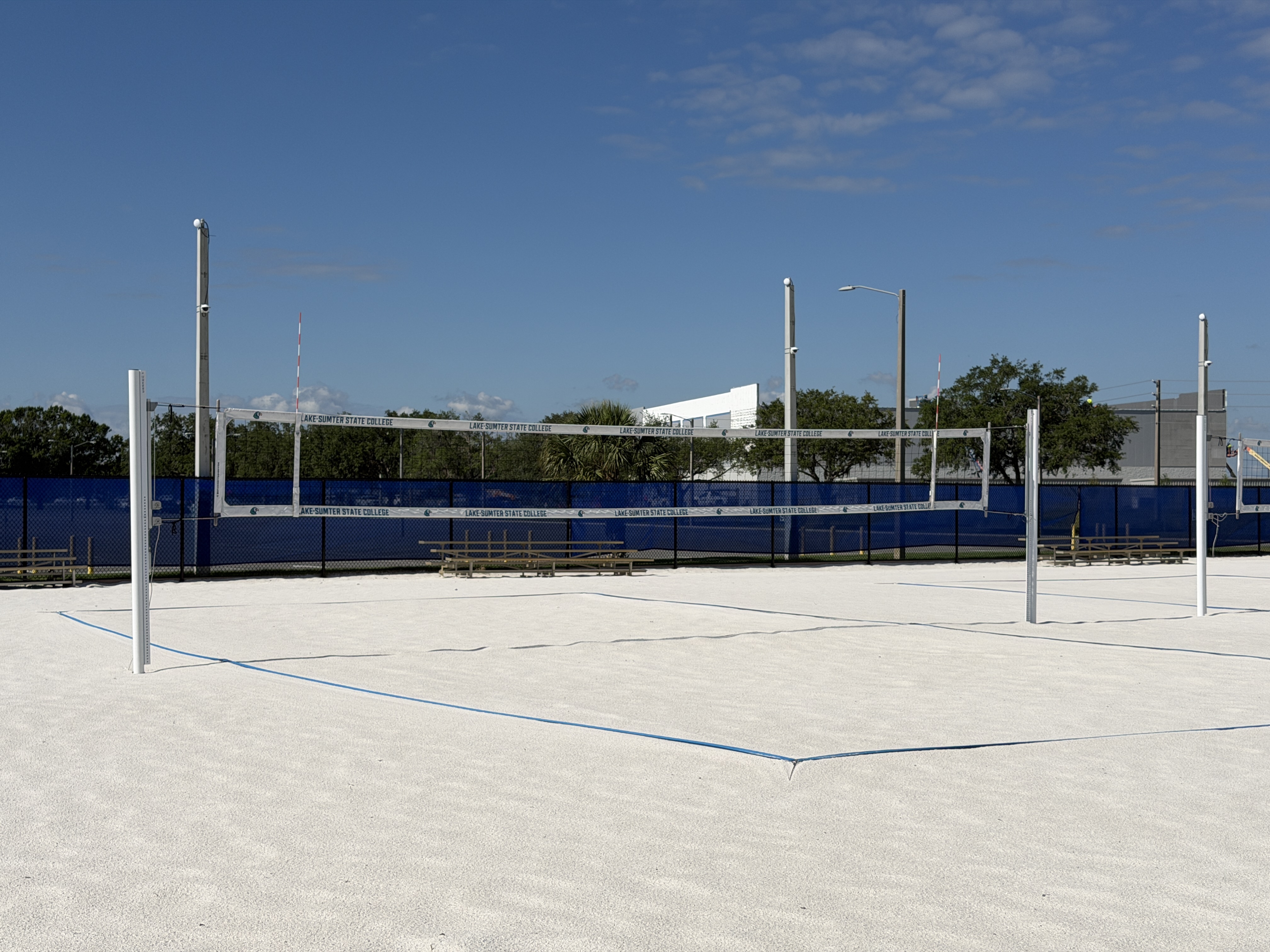
Beach volleyball was last and the most involved. Six courts meant six cameras, each requiring a concrete pole sunk four feet into the ground and rising 16 feet above the surface. Redman coordinated with the facilities team, brought in an electrical contractor to run underground power to each pole and waited for the concrete poles to arrive.
"The hardest part was waiting on the concrete poles to come in," he said. "But once they got in, they were up in a matter of days."
"We looked at it and said we need to work on each sport individually and be able to take the sports as they come along," Redman said. "So we started with indoor volleyball, then baseball and softball, then beach volleyball."
It wasn't a single sweeping infrastructure overhaul. It was one sport at a time, across one fiscal year, with a clear plan and the right contractor relationships in place. For a school without a dedicated AV budget or a full-time athletics technology staff, that approach made the project feel achievable at every step.
A Breath of Fresh Air
The first time Crandall started a stream with the new setup, she noticed something right away. There were fewer steps. About 15 fewer, by her count.
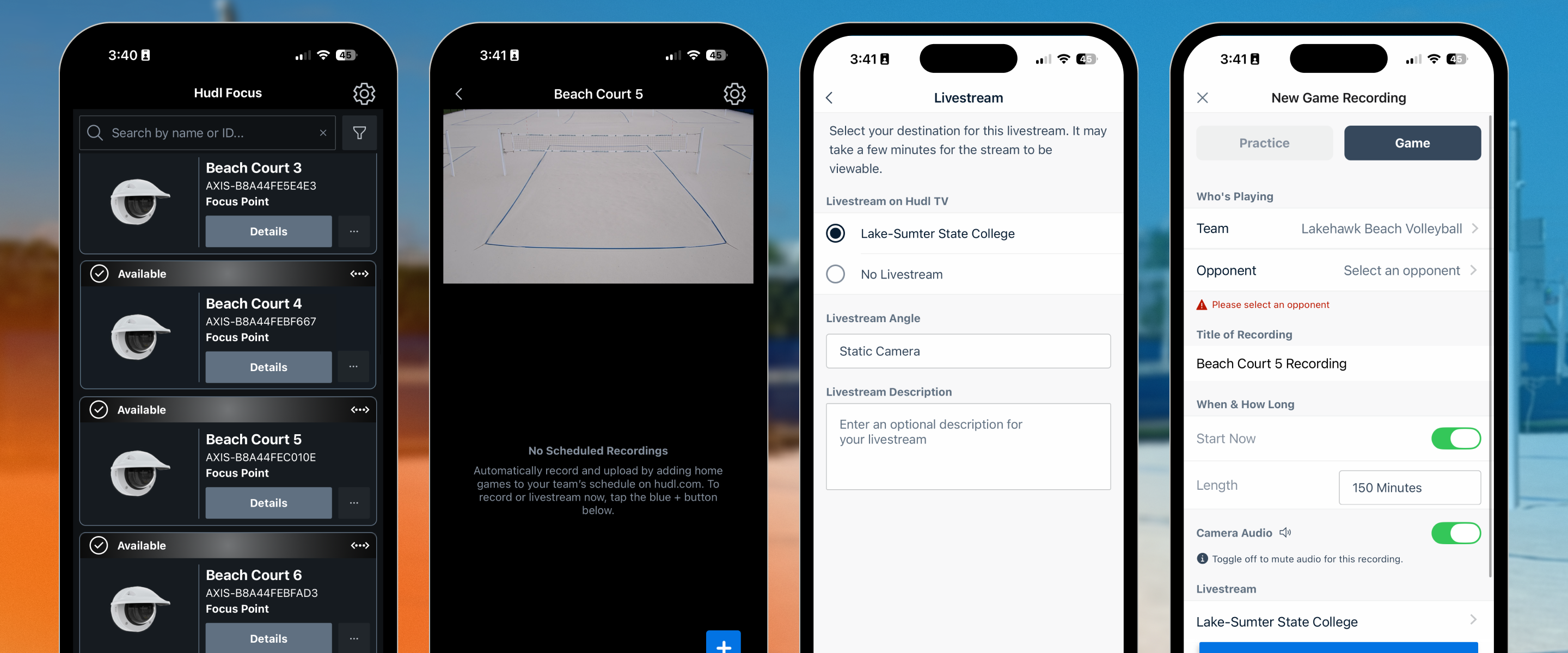
"I literally just right-click the screen in the Production Truck and the camera's on," she said. Beach volleyball was the biggest change. Instead of sand-covered iPads on tripods and a countdown to the next battery death, she pulls out her phone before a match. Six cameras. One screen. Change the pair name, hit start.
"Now I can just pull out my phone and I have all six cameras on my screen at once, and all I have to do is change the pair name and hit start," she said. "It's a lot less running around, a lot less wondering if it's going to work."
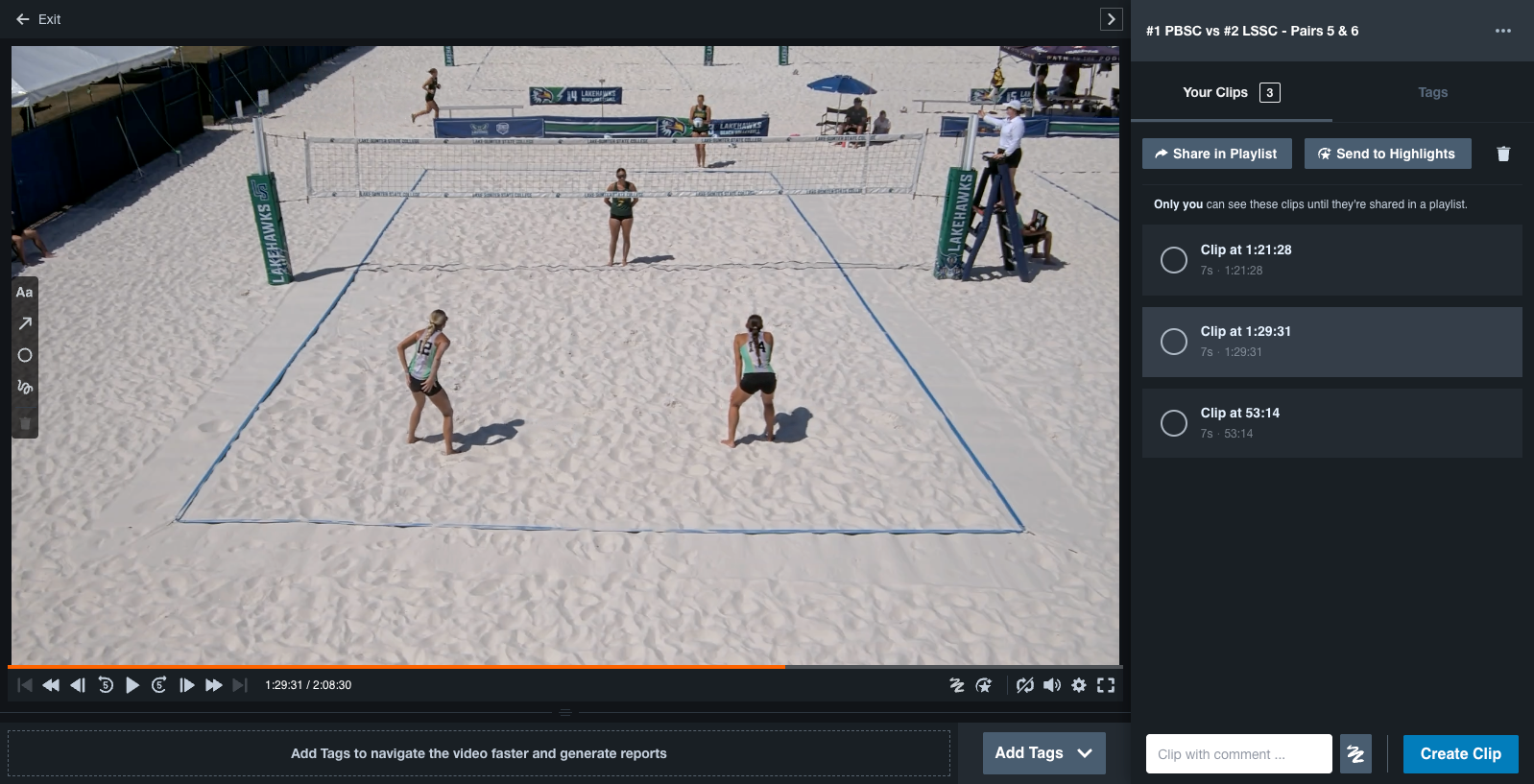
The overhead angle the cameras provide, looking straight down at each court from the midpoint of the pole, also changed what was possible with the footage. Coaches could see court positioning. Athletes could review their own movement.
The same camera streaming to fans was building a coaching library at the same time.
Now I can just pull out my phone and I have all six cameras on my screen at once, and all I have to do is change the pair name and hit start. It's a lot less running around, a lot less wondering if it's going to work.
Lacey Crandall, Sports Information Director, Lake Sumter State College
Setting the Standard
Two weeks before Lake Sumter hosted its conference beach volleyball tournament, the University of Nebraska came to Leesburg for a scrimmage.
The cameras had just gone live. It was the first match they streamed with the new setup, and Lake Sumter beat pair five of a Power Four program on their own courts. A few weeks later, they hosted the conference tournament on that same infrastructure.
"We can provide the highest quality beach volleyball experience in the state," Crandall said, "and I'm really happy about that."
For a school without dorms, without lights on the baseball and softball fields, and with early afternoon start times that make it hard for parents to travel, the cameras do something beyond documenting games. They bring people in. Athletes from out of state have family members watching every match. Recruits considering Lake Sumter can see what the program actually looks like before they ever set foot on campus.
"A lot of the stuff that we've implemented can also be used as recruiting tools for future student athletes," Crandall said. "Implementing ways to keep up when you're not there makes a massive difference in recruiting."
Lake Sumter was among the first beach volleyball programs in the NJCAA to have permanent camera infrastructure in place. Other schools in the conference noticed.
"I've gotten a lot of thank-yous," Crandall said.
What's Next
The buildout isn't finished. Redman has two center field cameras planned for the baseball and softball fields in the next fiscal year, adding a second angle to both venues. After that, the vision extends further: golf and track, both sports that have never had a camera at all.
"We've got some great athletes that don't get to see very often on the live stream," he said. "We'd like to expand beyond just the sports we have right now and be able to grow with the equipment."
If You're Questioning It
For ADs sitting on a similar decision, weighing the cost against the complexity and wondering if it's worth it, Crandall's answer is direct.
"If you're questioning it, the answer is 100% it's worth the investment. When you're not having to set up the camera every single time, you don't have to connect it to the computer every single time. You literally just have to open up your MacBook and right click and it's already on and hit go. It's a massive timesaver and stress saver."
Lake Sumter didn't build everything at once. They started with one sport, proved the model worked, and expanded from there. For a department that had been running on handheld cameras and crossed fingers, that was enough to change everything.
Want to see more?
See how Iowa Western Community College built a full athletic department system across 26 sports with one partner and one contract.