NHTSA Clicks Into High School Sports to Save Lives
Jun 22, 2026
5 min Read
By embedding custom creative and a life-saving message directly inside the sports content that athletes and fans already love and trust, NHTSA’s Click It or Ticket campaign reached its highest-risk audience at the moments they were most engaged—without ever feeling like a PSA.
Why The Mission Matters
The National Highway Traffic Safety Administration (NHTSA) is the federal agency responsible for reducing deaths, injuries, and economic losses from motor vehicle crashes. Every year, NHTSA's Click It or Ticket enforcement campaign drives a coordinated national effort to increase seat belt compliance.
The campaign's central message was direct: seat belts are the best way to save your life in a crash. Click it, don't risk it. Overlooking a two-second habit can lead to consequences that last a lifetime.
The Challenge: Reaching a Resistant Audience Authentically
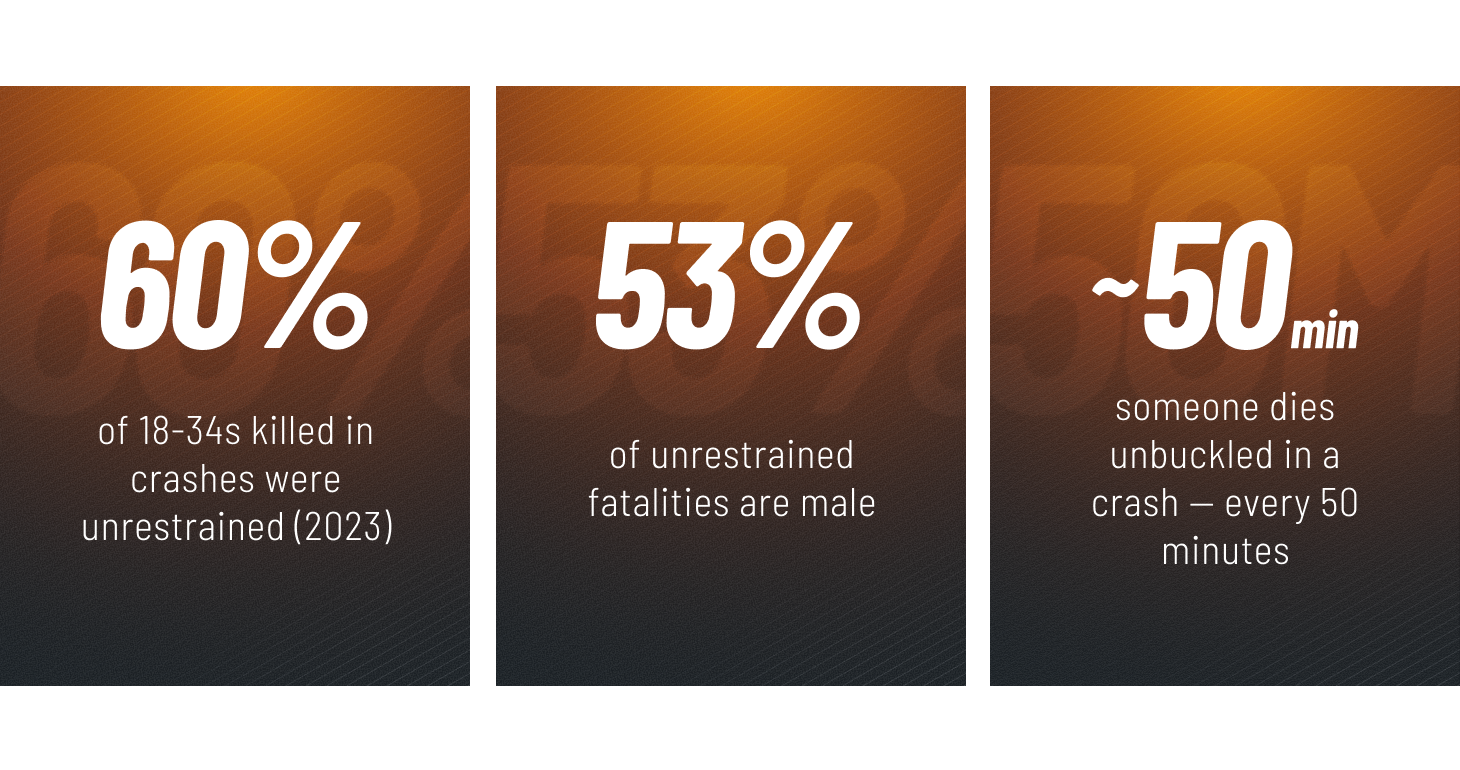
NHTSA had the data, the message, and the enforcement infrastructure. What it needed was cultural access. Young men between 18 and 34 — the cohort most likely to skip the seat belt — are also among the most difficult to reach through traditional advertising channels. They're skeptical of authority-driven messaging. They scroll past PSAs. And they instinctively tune out content that feels like it was made for someone else.
The challenge wasn't reach, it was resonance: could the message land in an environment where this audience was emotionally invested, contextually open, and genuinely engaged? NHTSA needed custom content that felt native to the world of its target audience—content that spoke their language before it asked them to change their behavior.
Finding a Platform Built for the Moment
NHTSA's Click It or Ticket campaign ran across digital, radio, and television. Each channel addressed a different part of the awareness problem.
But Hudl represented something those channels couldn't replicate: a direct, trusted connection in the context our audience cares about.
Comscore data from May 2025 showed that 28% of Hudl's total audience falls in the 18-to-34 age range—precisely the at-risk demographic NHTSA needed to reach. More importantly, this isn't passive viewership. Hudl is where athletes go to watch highlights of their own games, follow teammates, relieve buzzer-beaters, and stay connected to the sports culture they've been part of since childhood. It's an emotionally loaded environment.
Hudl's in-house creative and media team proposed a custom content solution: not a banner ad, not a pre-roll, but a piece of video content specifically crafted to live inside the athlete and fan experience—one that would speak directly to the soundtrack of their target audience’s life.
The Activation That Clicked
Hudl's in-house creative team approached the creative with care: a balance between showcasing the value of safety and connecting to a sports story.
The concept was developed internally and refined through close collaboration with NHTSA's agency, Stratacom—was built around a simple, powerful insight: athletes live their lives surrounded by satisfying clicks. The snap of a helmet chin strap. The click of a pen finishing a test. The zip of a sports bag before a big game. These sounds are woven into the identity of anyone who has grown up playing sports.
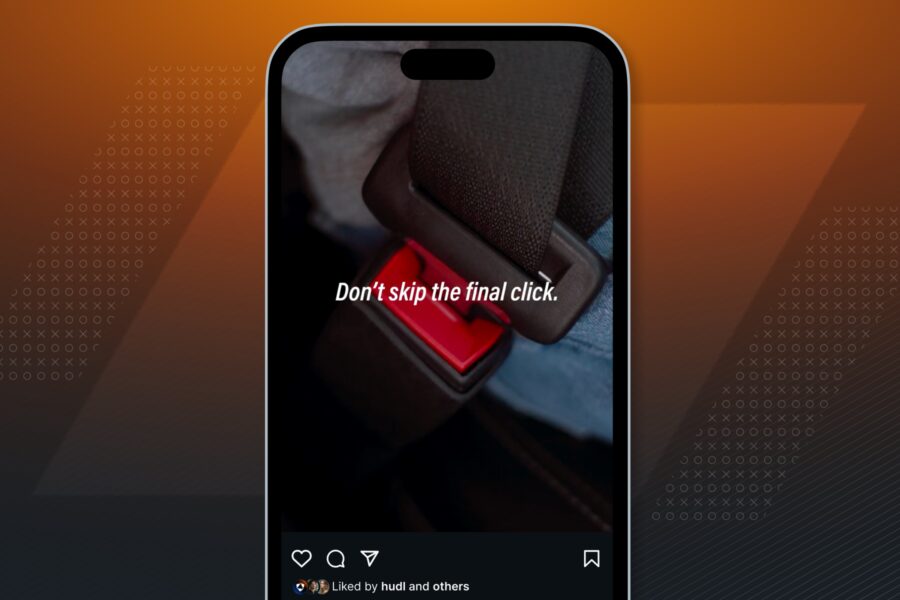
"The Click" is an ASMR-style custom video that strings together these intimate, familiar athletic sounds in sequence — building anticipation, building identity — before landing on the most important click of all: a seat belt.
The message is emotional before it's instructional. It doesn't lecture. It connects. Two seconds in a young athlete's daily routine—the time it takes to buckle up—framed through the lens of all the other two-second rituals that define who they are.
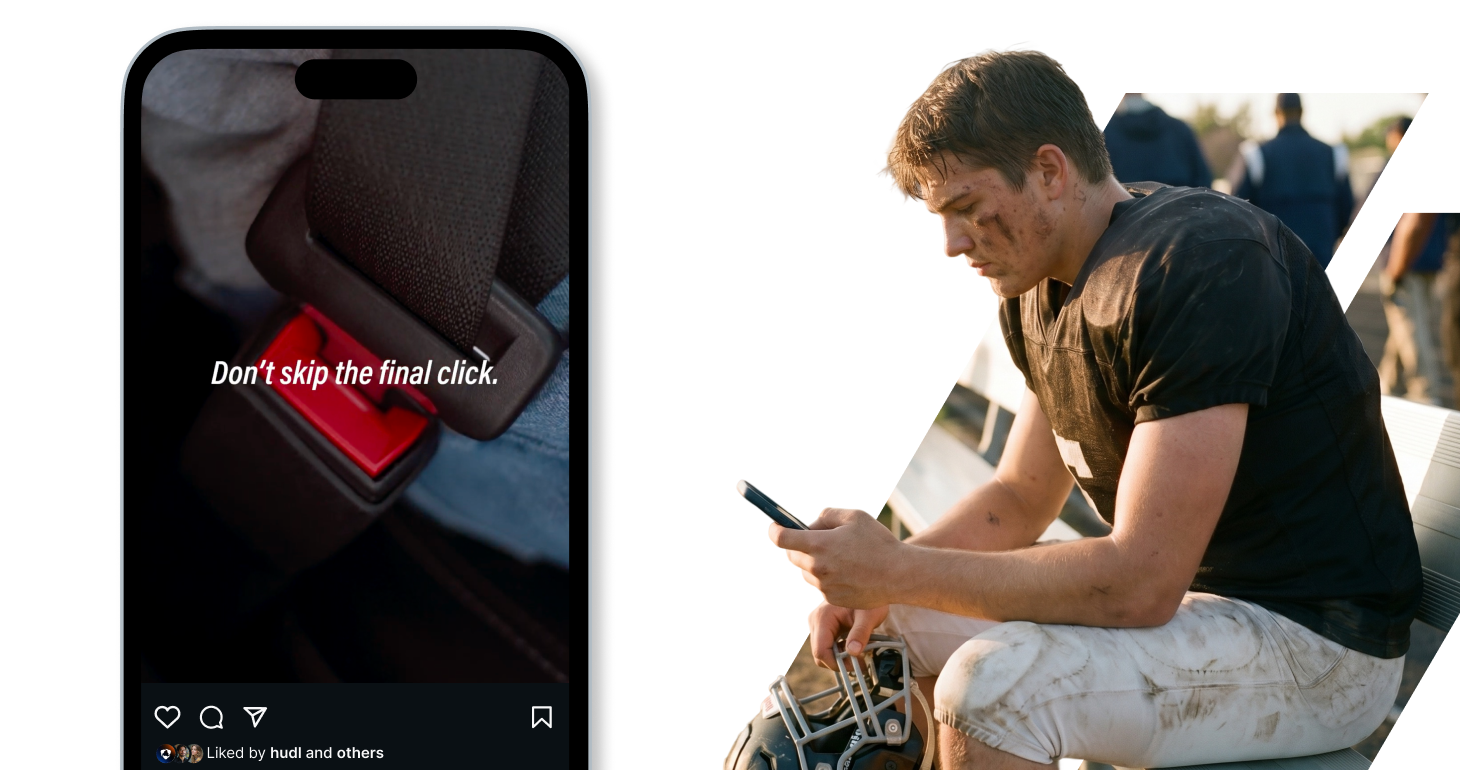
The campaign extended across social as a natural fit: ASMR content travels on its own merits in a feed, and an audience that already shares highlights and celebrates teammates engaged with it in the same way they engage with anything else from their sports world.
Early Results: A Message That Moved
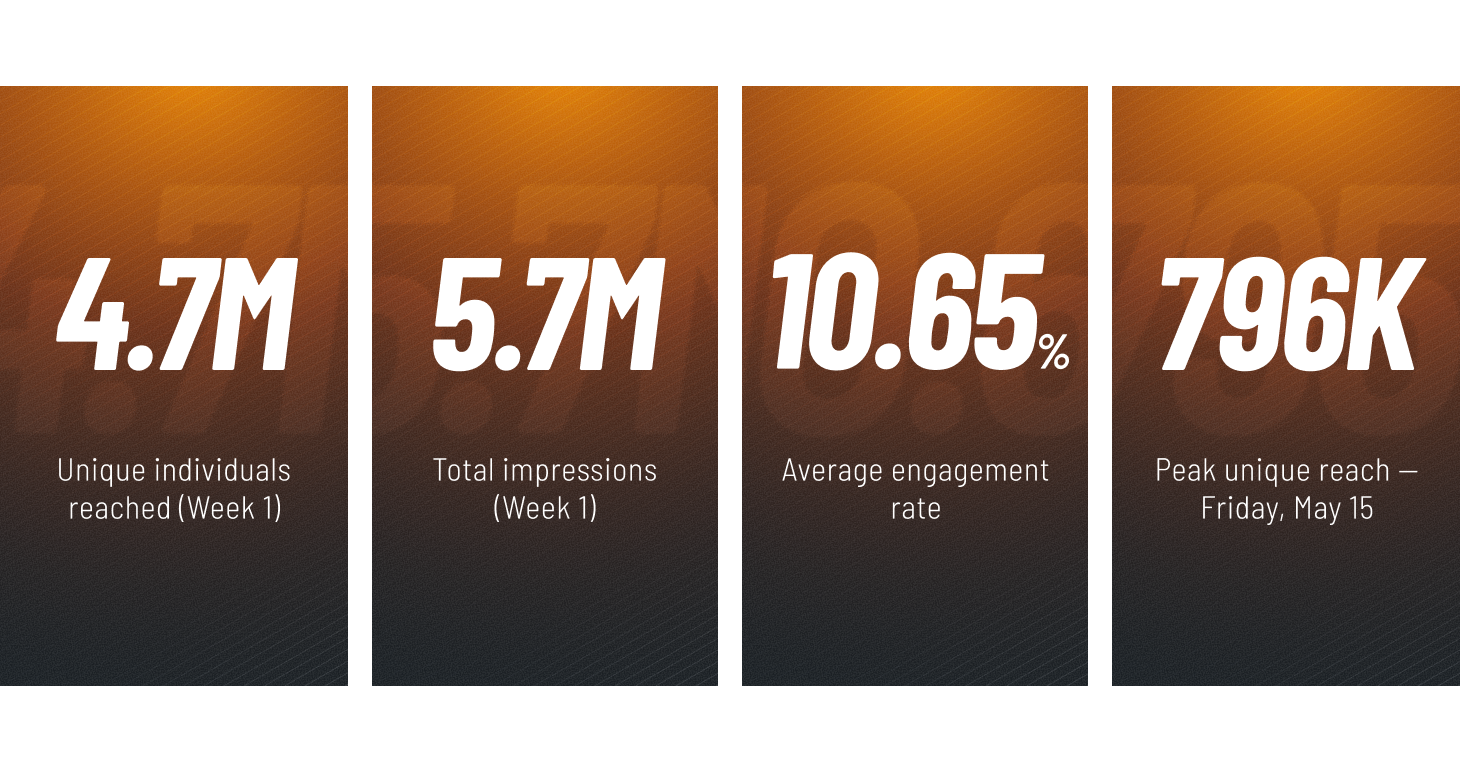
Within the first week, early indicators signal strong resonance with the target audience.
Notably, the campaign's highest engagement rates came on Monday and Tuesday—11.61% and 11.44% respectively—while peak volume arrived on the weekend. This mirrors a pattern consistent with a highway safety message: early-week exposure drives the deepest engagement, while Friday and weekend reach maximizes raw visibility heading into the highest-risk driving windows.
Friday reach peaking at 795,000 unique users is particularly meaningful for a seat belt safety campaign. It aligns the brand's message within the moment it matters most.
What This Means for Brands
NHTSA's Click It or Ticket campaign is unique: there’s no product to sell, no seasonal promotion and no competitive storyline. What NHTSA needed was something harder: the trust of a resistant audience in a moment that mattered.
That's exactly what Hudl's platform delivers. The athletes and fans who watch highlights on Hudl, who follow their high school teammates into college and beyond, who return to the platform because it holds the story of their athletic lives—these are not passive consumers. They are emotionally engaged, community-rooted, and deeply loyal to the platforms that speak their language.
"The Click" worked because it was built from the inside out. It started with athlete identity, not safety statistics. It used the sounds of sport to earn attention before asking for a behavior change. And it ran in an environment where that audience was already leaned in.
For brands who are selling products, building awareness, or changing behavior, the Hudl audience offers something broadcast and social media can't fully replicate: the context of people who care.
Sports create that context. Hudl sustains it, every day, for every athlete, across every season.
Get started by connecting with our in-house media and creative team.