Hudl signs partnership with NYFL to raise the standards of aspiring young players outside of the professional system.
In the UK, less than 1% of academy players get offered a professional contract at Premier League clubs. Most are released and left wondering what comes next.
The National Football Youth League (NFYL) aims to bridge that gap between college and academy football. It aims to give aspiring players “outside of the system” a professional, competitive environment which will allow them to continue to flourish – both inside football and in further education.
Success stories include the likes of Britt Assombalonga and Shandon Baptiste, who both progressed from securing professional contracts to playing at top level for both club and country.
Assomabalonga was released from Nottingham Forest at the age of 15 and went on to play for clubs in the English Championship – including a homecoming to Forest – and in the Turkish Super Lig. He is now an ambassador for the NFYL. Baptiste also suffered initial rejection from the academy system, leaving Reading’s set up after being deemed too small. He eventually made it to the Premier League with Brentford and Luton.
Central to the NFYL’s mission of raising the standards and aspirations of talented football players is their use of technology, giving players access to the same tools used by professional clubs.
“We want the NFYL to be recognised as one of the most progressive youth football environments in the country for both men’s and women’s football,” said League Director and Founder Louise Macey. “The partnership with Hudl helps raise standards across the league while giving players, coaches and clubs access to the tools and insights used in the modern game.”
As a taste of what that coverage will look like, we used Hudl Wyscout to break down four of the finals, which recently took place at The Hawthorns, the home of Championship club West Bromwich Albion, at the beginning of May.
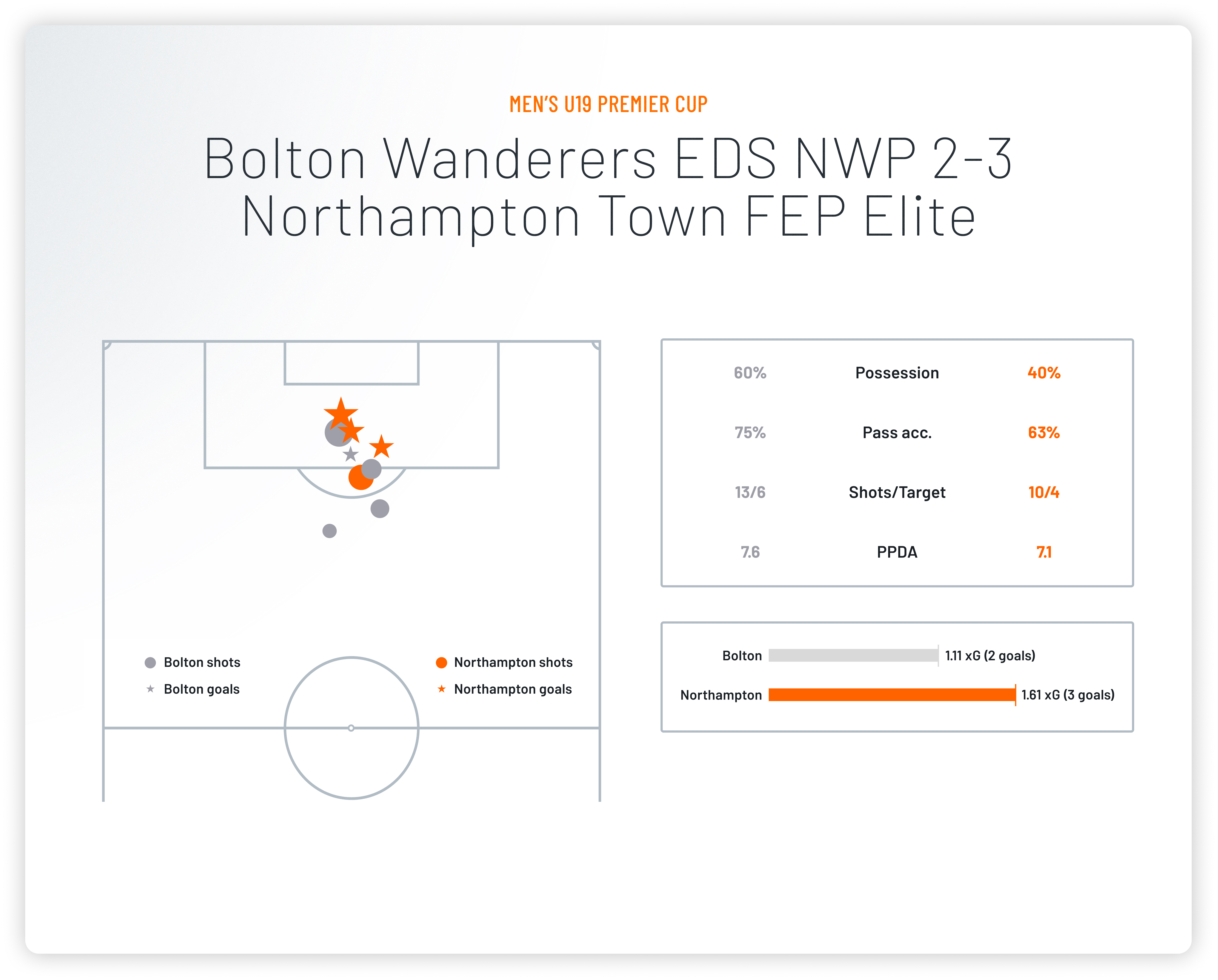
Northampton Town emerged victorious in a five-goal thriller to beat Bolton to the U19 Premier title. It was a clash of styles with Wanderers dominating possession (60%), outpassing their opponents (454 vs 272), but Northampton were more clinical in front of goal.
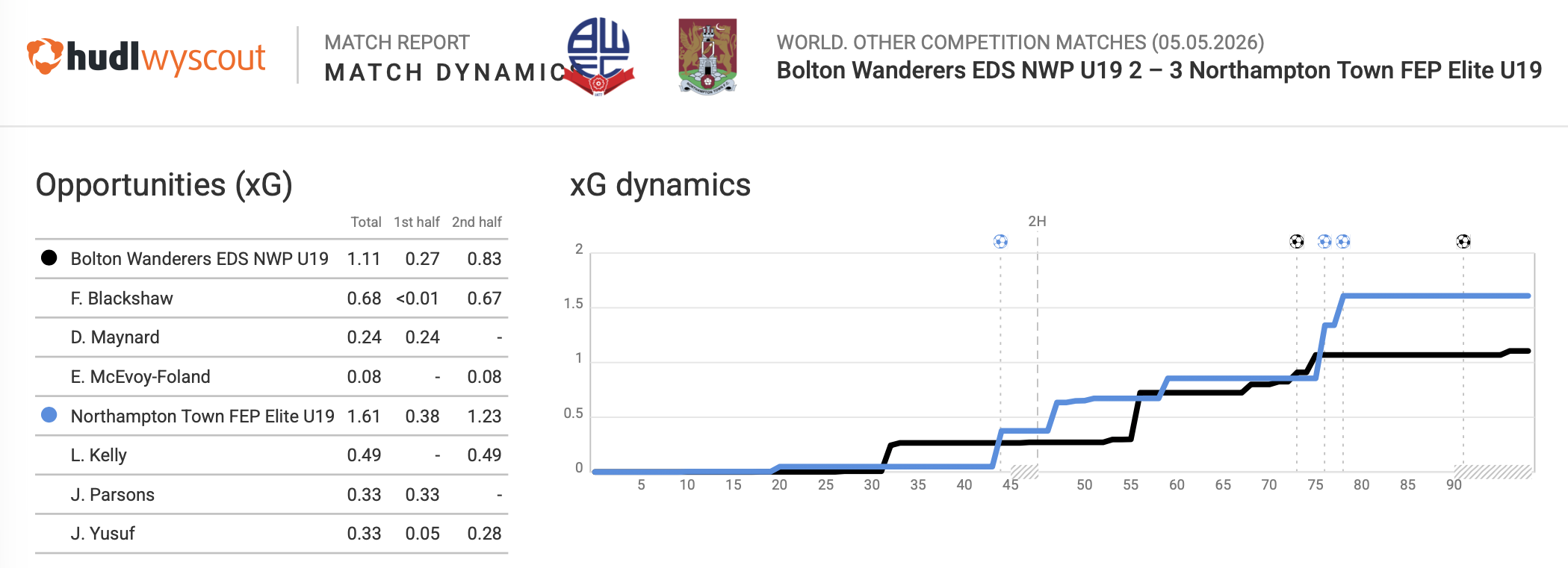
A look at the xG dynamics paint a picture of a game that was neck-and-neck, until the game burst into life with a flurry of activity between the 73rd and 78th minute. A two-goal salvo in the space of 3 minutes from the Cobblers ultimately proved to be decisive.
Statistical Spotlight: George Steers
Central to Northampton's win was midfielder George Steers, who embodied both sides of their performance — quietly influential during the even exchanges before stepping up when it mattered most.
Awarded player of the match, the data also points to Steers as the standout performer. As well as being the author of the crucial third goal, no player from either side made more key passes (4) or duels (30) – highlighting his influence in the middle of the park.
In the League Cup final of the same age group, Middlesbrough’s class saw them complete a second-half comeback thanks to a Spencer Walker double.
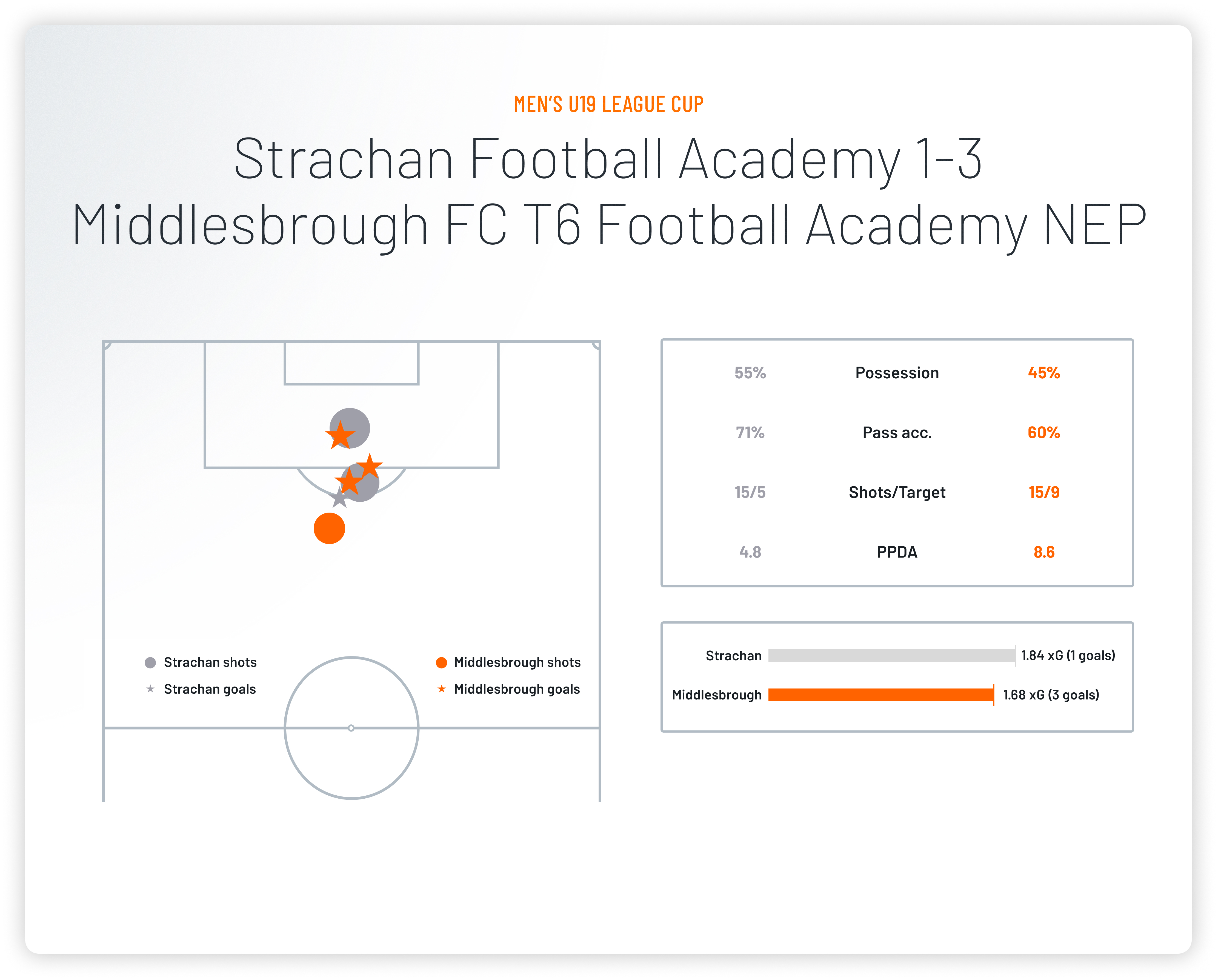
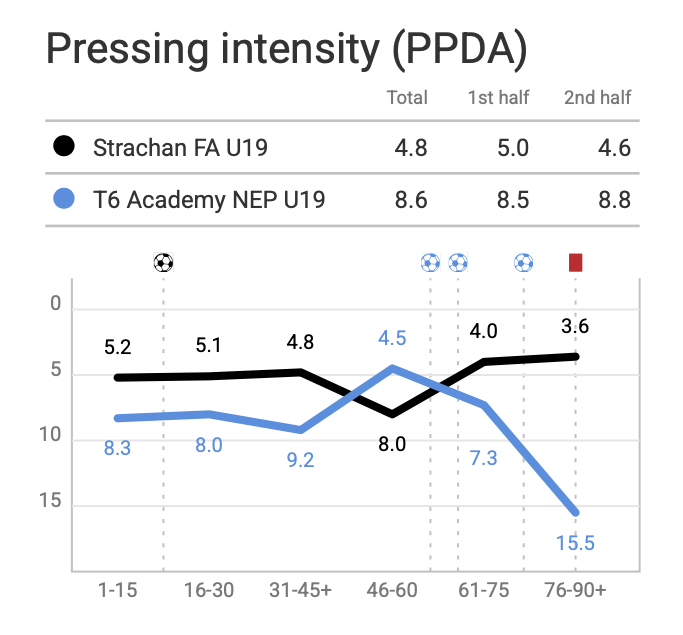
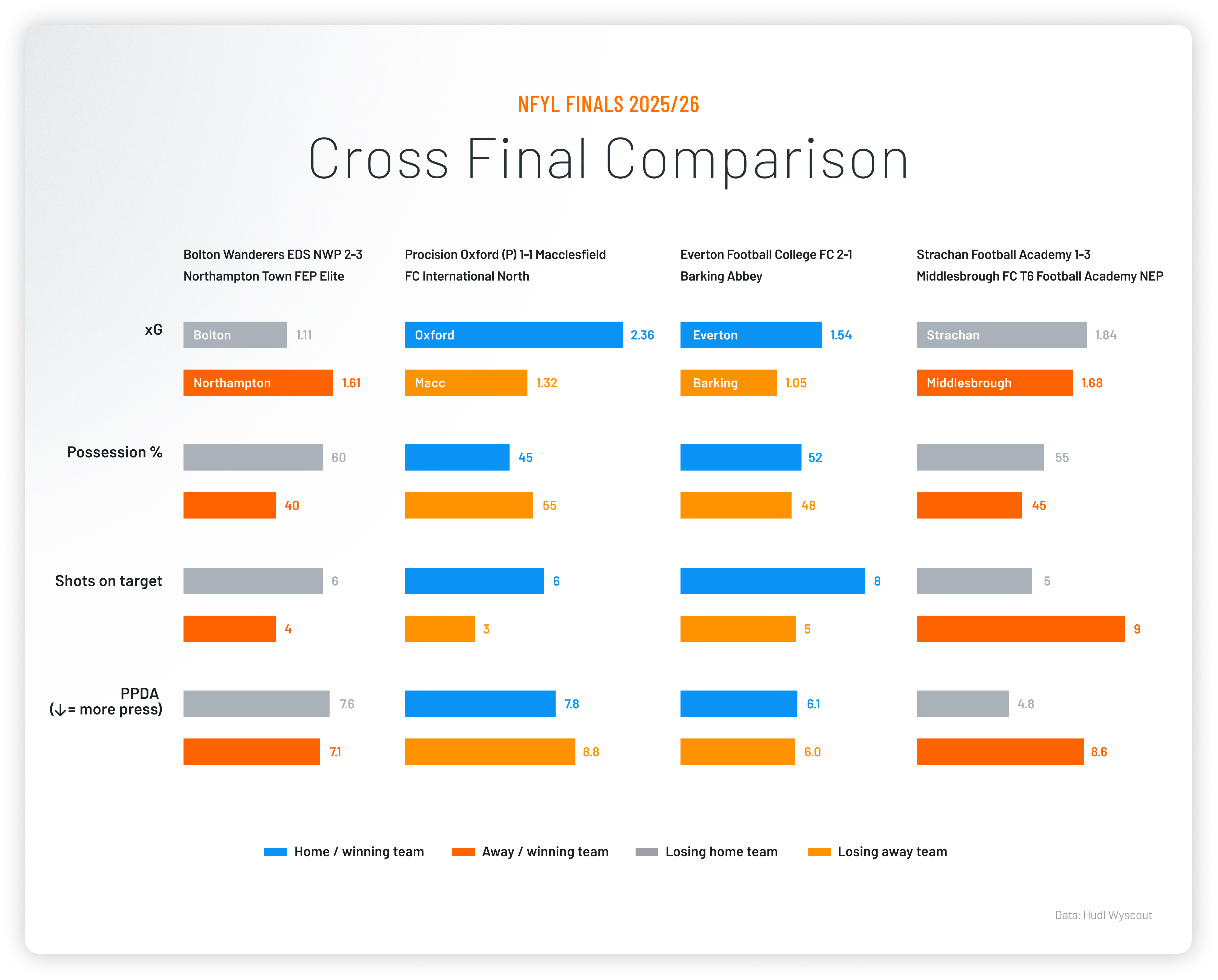
Strachan had more possession (55% vs 45%) and started the game stronger. Particularly noticeable was their high press. Looking at PPDA, which measures passes allowed per defensive action and is a reliable indicator of pressing intensity, Strachan’s 4.8 to Middlesbrough’s 8.6 showed a significantly higher level of aggression – indeed it was the highest of any team in the four featured finals
One possible explanation for Middlesbrough’s second half dominance was that Strachan’s aggressive approach led to a physical drop off and allowed Middlesbrough back into the game – as demonstrated by the fact Boro created 1.29 xG in the second half compared to their 0.39 in the first half.
Statistical Spotlight: Spencer Walker
It was a mixed game for Walker who was the goalscoring hero but ended up receiving a red card in the dying moments of the game. Nevertheless, his two goals from an xG of 0.65 and just three touches in the box demonstrated his unerring ability in front of goal. Watching the footage back, his ability to run in behind the defence, hold off challenges and keep his composure was on full display.
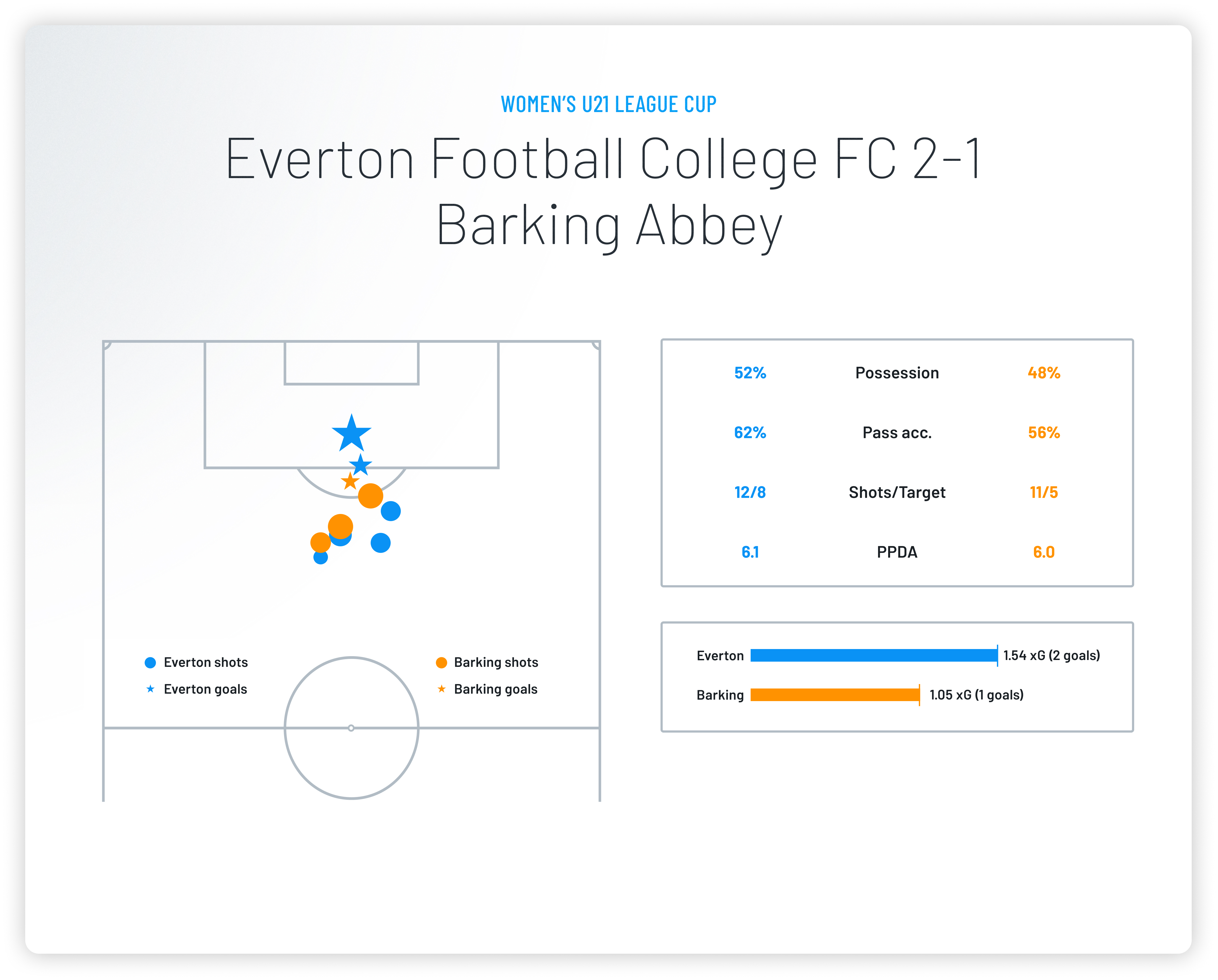
NFYL covers both men and women’s football and the U21 League Cup final witnessed a thrilling David versus Goliath clash. Aryanna Adesan caught favourites Everton cold with an early looping long range strike but goals from tournament top scorer Lola Smith and Cerys Williams were enough for the Merseysiders to walk away with the trophy.
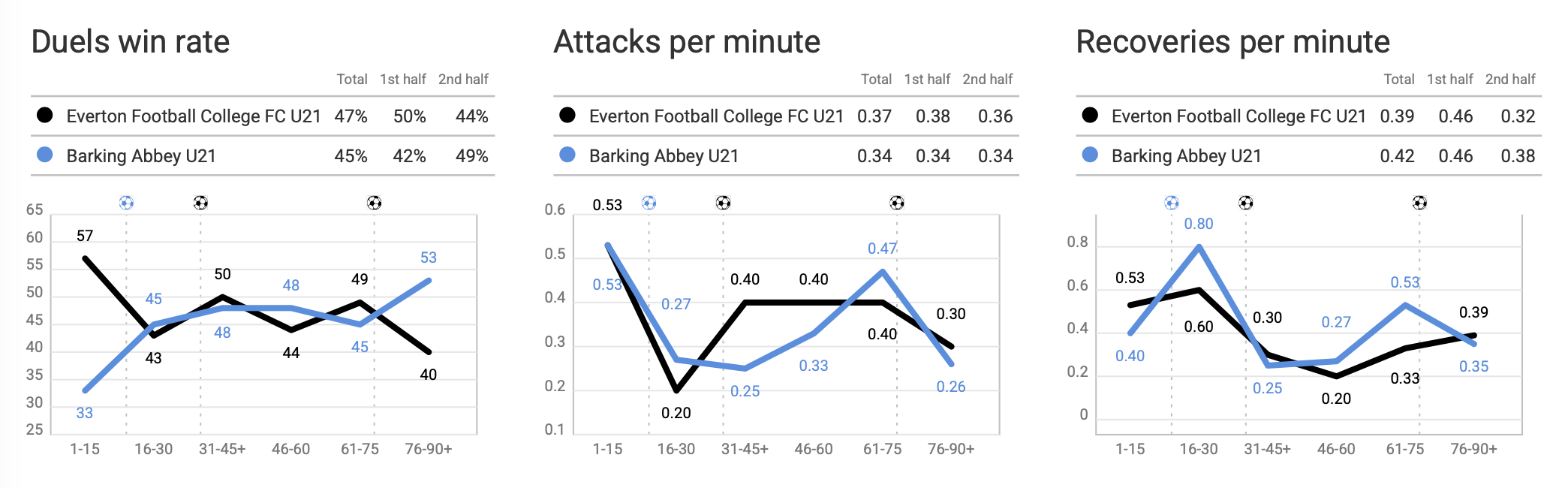
Of the four finals, this was arguably the most evenly matched from a tactical standpoint. Both teams had nearly identical PPDA (6.1 vs 6.0), possession (52/48), and pass accuracy (62/56), making it the tightest tactical battle of the four. Everton’s accuracy in front of goal with 8 shots on target from 12 attempts edged the tie.
Statistical Spotlight: Aryanna Adesan
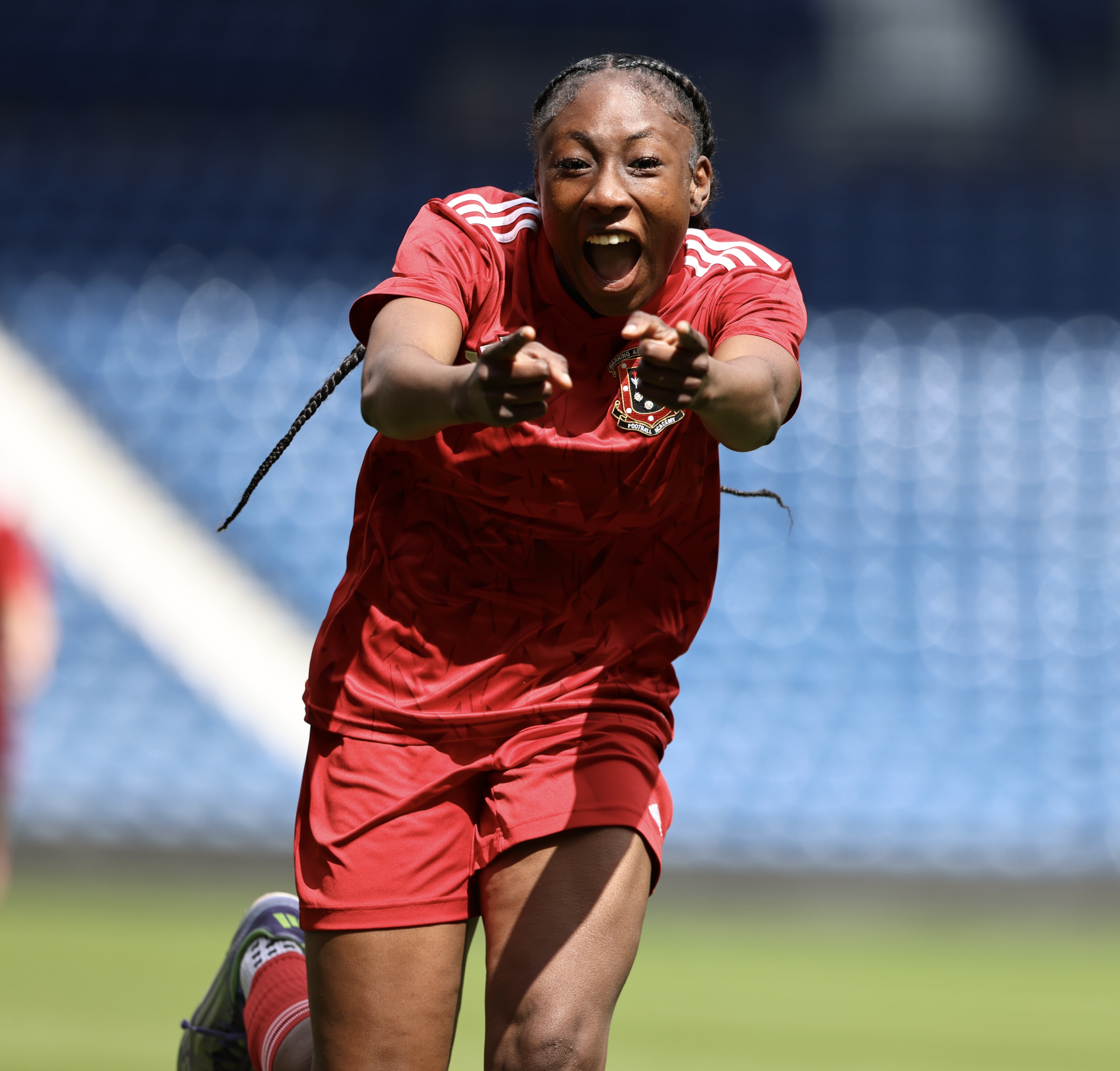
Despite finishing as runner up, Barking Abbey’s Adesan was a constant thorn in Everton’s side. Adesan had more shots (4) and more touches in the box (5) than any other player and her physicality and movement caused Everton plenty of problems. She is a young player to watch, having already made appearances in the semi-professional National Women's League South for Hashtag United.
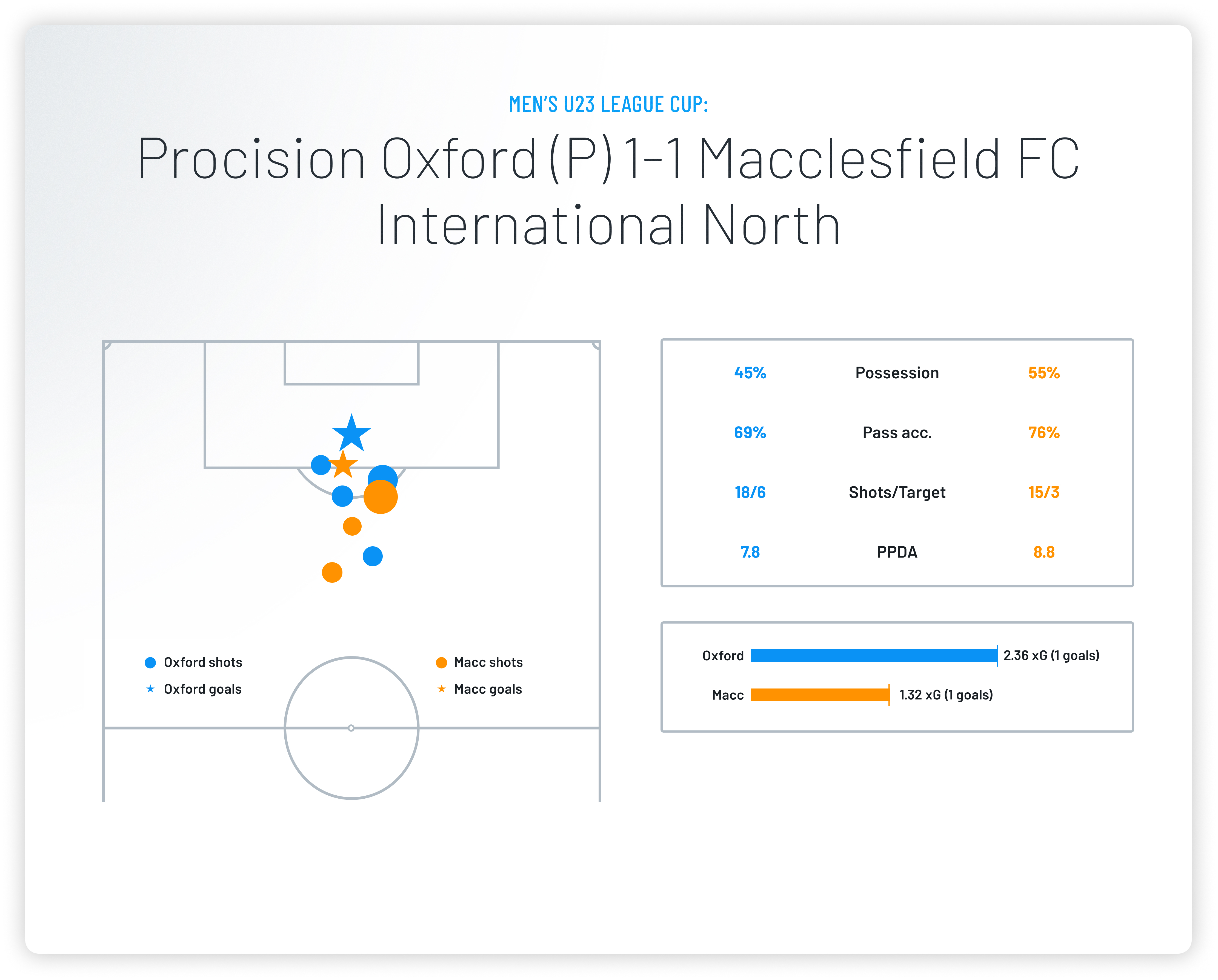
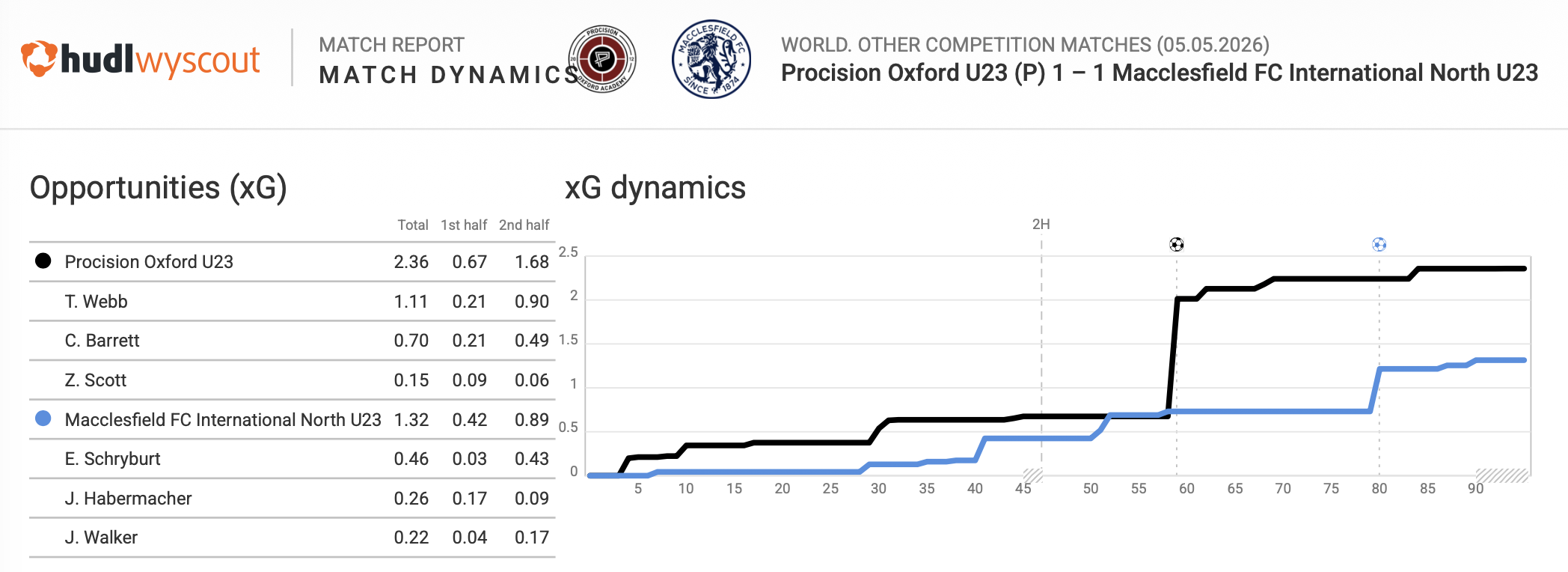
Procision Oxford and Macclesfield could only be separated by penalties after a 1-1 draw during normal time. Oxford had the better xG (2.36 vs 1.32) and took more shots (18 vs 15), but Macclesfield keeper Justin Griffith kept them at bay during 90 minutes with 5 saves – including 4 reflex saves.
However, despite his heroics during normal time, there was nothing he could do in the shootout, with Procision Oxford netting all five of their penalties to get the win.
Statistical Spotlight: Connor Barrett
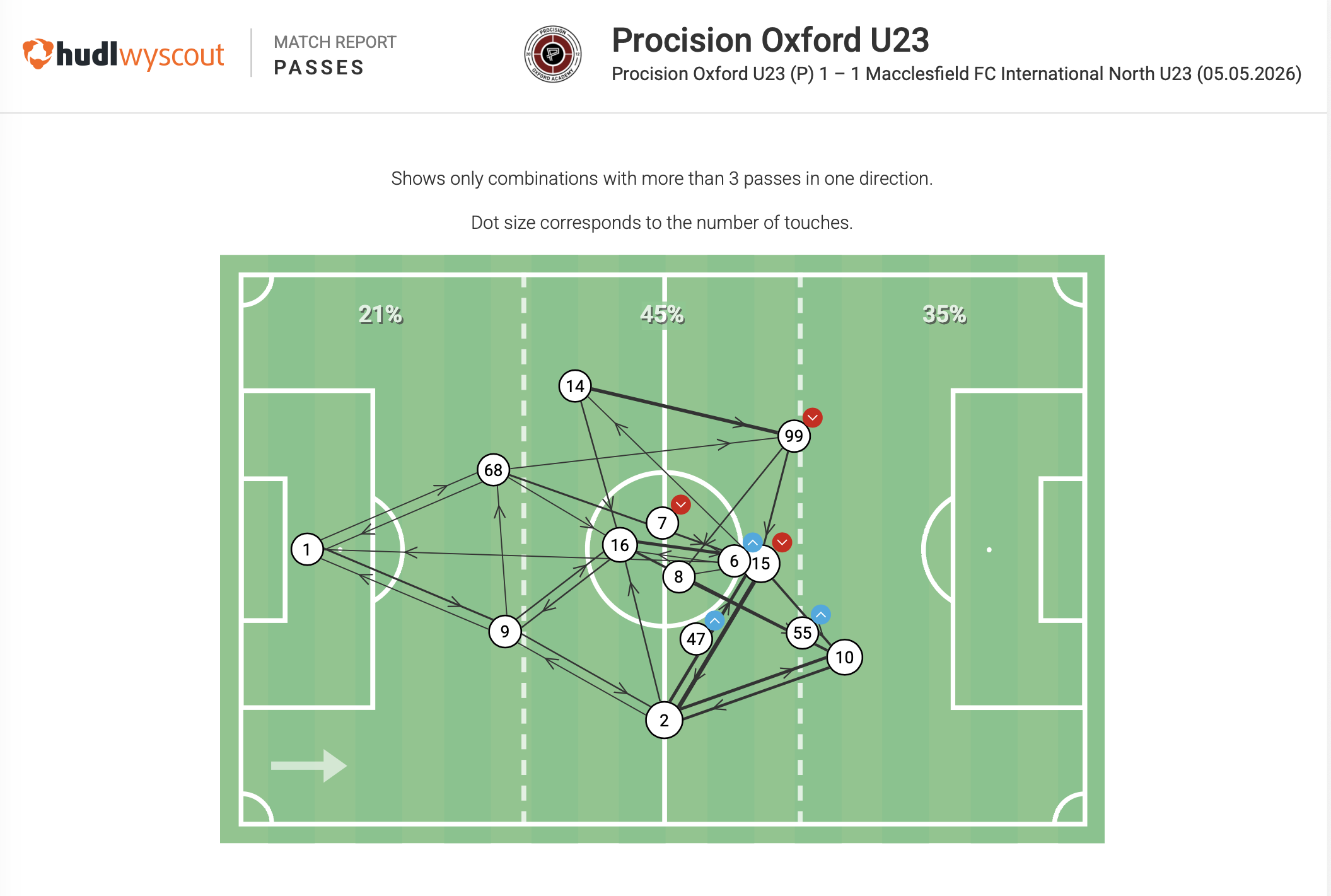
The Procision Oxford skipper put in an all-action captain’s performance, topping the ranks for key passes (4), deep completions (2) and dribbles (7). Nominally a right-sided attacking midfielder, he often found himself the furthest man forward and no Oxford player had more shots than his 8.
Although his performance wasn’t rewarded with a goal, he stepped up first in the penalty shoot out to lead by example, emphatically thumping his shot into the net and setting the tone for his teammates.
Barrett (number 10) was always looking to get forward
The Oxford vs Macclesfield final in many ways encapsulated a theme that ran across all four games.
Three of the four finals were won by teams who underperformed in possession but were more clinical, the exception being Oxford who dominated xG but had to go to penalties.
Another trend was three of the finals also saw comebacks, with Bolton, Barking Abbey and Strachan all losing having been in winning positions.
“Football is developing and changing quickly, and we want the NFYL evolving with it,” summarised Macey. “What excites us most is the opportunity to support player development in new ways, and Hudl and Wyscout give us a major step forward in creating a progressive environment for both our men’s and women’s divisions.”
Explore how Hudl Wyscout can elevate your youth scouting and recruitment, or speak with our team about building a scalable youth scouting strategy.