How we’ve turned guesswork into certainty — and built a culture of accountability and insight.
In-season football practice planning is a balancing act. You want your players sharp, but not overworked. You want intensity, but not burnout. You want structure, but also flexibility.
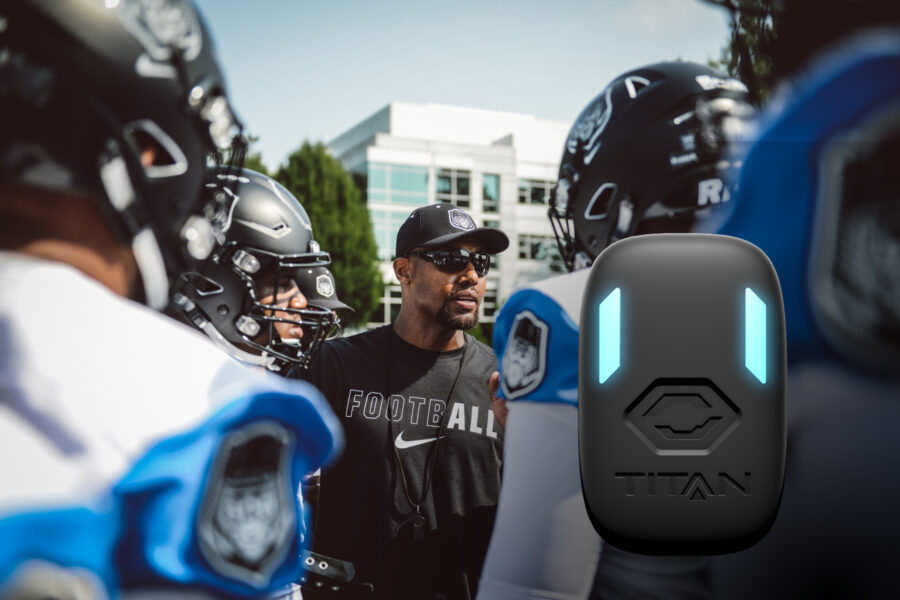
At Maroa-Forsyth High School, we work to achieve this balance by treating our practice plans as living documents—and using Titan GPS trackers to bring clarity and confidence to every decision we make.
Practice Plans as Living Documents
Our practice plans at Maroa-Forsyth are consistent enough that our players know what’s coming next, but flexible enough to evolve daily. We might add a few minutes to a drill that’s clicking, cut back on one that’s dragging, or run pursuit drill twice instead of three times. These aren’t random tweaks—they’re deliberate, based on what we see, feel, and now, what we can measure.
Titan gives us the ability to validate those decisions. Without it, we’re relying on gut feel and hoping our team hits the right workload. With Titan, we know.
No Wasted Time: Conditioning is Earned
One of the biggest shifts we’ve made is eliminating traditional conditioning from our practice schedule. Instead, conditioning is earned— penalties, fumbles, mental mistakes. And it’s done outside of practice, on their time.
That frees us up to focus on drills and team periods at full speed. And when I say full speed, I mean go, go, go. Music’s loud, coaches are calling out formations, we’re spotting the ball and using down markers—everything we can do to simulate game conditions and demand full focus.
Challenges Without Data
Before Titan, we were relying on experience and observation. You hope your team hits the right workload. You trust your coaches to spot loafing. You guess whether your walkthrough day was actually light.
And sure, your gut might be pretty good. But you’re still guessing. You’re still hoping. And that’s not enough when you’re trying to optimize performance and protect your players.
Turning Guesswork into Certainty
Titan GPS trackers changed the game for us. Now we can validate our practice structure. We track metrics like:
- Player Load
- Sprint Counts
- High-Speed Efforts
- Weekly and Daily Workload Targets
This data gives us clarity. We know who’s working hard, who’s underloaded, and who might be at risk of overtraining. It’s not just about effort—it’s about effort at the right level, for the right player, at the right time.
Low-Hanging Fruit: Walkthrough Days
One of the first areas Titan helped us uncover was our walkthrough days. On paper, these are supposed to be light. But when you dig into the data, you might find that for some players, it’s anything but.
Take Player X, for example. He runs two reps of kickoff, he’s the scout punt returner, 50 yards of perfect plays, and a full go two-minute drill. Suddenly, his “walkthrough” day turns into a high-load session. With Titan, we catch that. Maybe we get him one catch in the two-minute drill and then sub in a backup to get valuable reps with the 1’s. It’s a small change with a big impact.
Smart Adjustments: Pursuit Drill Tweaks
Most teams run some form of pursuit drill during the practice week. It’s a staple. But it’s also an opportunity to make smart adjustments.
Let’s say you’ve got a player who’s a top scout team option and also a regular rabbit in the pursuit drill. His workload is already high. Give him a break today. Instead, make your quarterback—whose workload is low this week—a rabbit. It’s a simple switch that keeps your team balanced and healthy.
It’s not just about protecting players. It’s about maximizing their readiness.
Don’t Forget the JV Guys
JV players often fly under the radar when it comes to workload management. But they matter too—especially if you want them ready to contribute when called upon.
Our JV games are on Monday nights. That means some of our JV guys start the week with a high load: game Monday, full-go practice Tuesday. It’s tough to back them off when you need them to give the varsity a good look, but Titan helps us find those opportunities.
Maybe we pull a JV scout team starter for a few reps and give a younger kid a shot. Sometimes that kid surprises you. Sometimes that’s how you find your next contributor.
Balancing Intensity and Recovery
One of the biggest lessons we’ve learned is that intensity and recovery aren’t opposites—they’re partners. You can’t push hard every day. But you also can’t afford to coast.
Titan GPS trackers help us find that balance. We can see when a player is trending toward overload and adjust accordingly. We can spot underloaded guys and give them more reps. It’s not just about protecting players—it’s about maximizing their readiness.
Results We’ve Seen
Since integrating Titan into our football practice planning, we’ve seen:
- Improved recovery for high-load players
- Fewer soft tissue injuries
- More confident decision-making from our staff
- Better rep distribution across the roster
- More opportunities for younger players to contribute
And maybe most importantly, we’ve built a culture of accountability and insight. Players see their data. They understand their effort. They ask questions. They want to improve.
Coaching with Confidence
In-season football practice planning is a complex puzzle. Every team is different. Every week brings new challenges. But with the right tools, the right mindset, and the right data, we can coach with confidence.
Titan GPS trackers have become an essential part of our process. They help us validate our instincts, refine our plans, and protect our players. They help us turn good practices into great ones—and great teams into championship contenders.
If you’re not using Titan yet, take a look. The insights are real. The impact is immediate. And the confidence it brings? That’s priceless.