Field Hockey Replay Sportscode Coda Performance Analysis Opponent Scouting Coaching

Belgian Hockey x Hudl Sportscode: Workflows, Match Analysis and Performance Insights

5 min Read

How Belgium’s national hockey teams use Hudl Sportscode for live coding, instant feedback, and the video analysis that helped win a World Cup
Belgium’s rise as a world hockey power has been fuelled not only by technical skill and coaching expertise, but also by a sophisticated use of performance analysis. 

Across the Belgian federation’s youth and senior setups, Hudl Sportscode plays a central role in shaping match preparation, improving training-ground detail, and giving players the tools to understand and elevate their own performance.

“Every team uses it, but a bit differently throughout the year,” explains Emily Calderon, Senior Performance Analyst. The federation fields boys’ and girls’ youth teams at U15, U16, U18 and U21 levels (roughly ten national squads) are all using Hudl tools in some form. Usage peaks during tournaments and training camps, where both development and competitive demands rely heavily on video analysis.

The Short and Long-Term Goals of Belgian Hockey

Belgium’s youth sides operate with two performance horizons: In the short term, each age group works toward its next major tournament.

As Calderon notes, “Their short-term plan is working toward either a European Cup or, for U21s, a World Cup.” These cycles are when Hudl Sportscode is used most intensely: analysing their own performances, studying opponents, and preparing match plans.

Long term, the objective is clear: produce future Red Lions and Red Panthers, Belgium’s senior national teams.

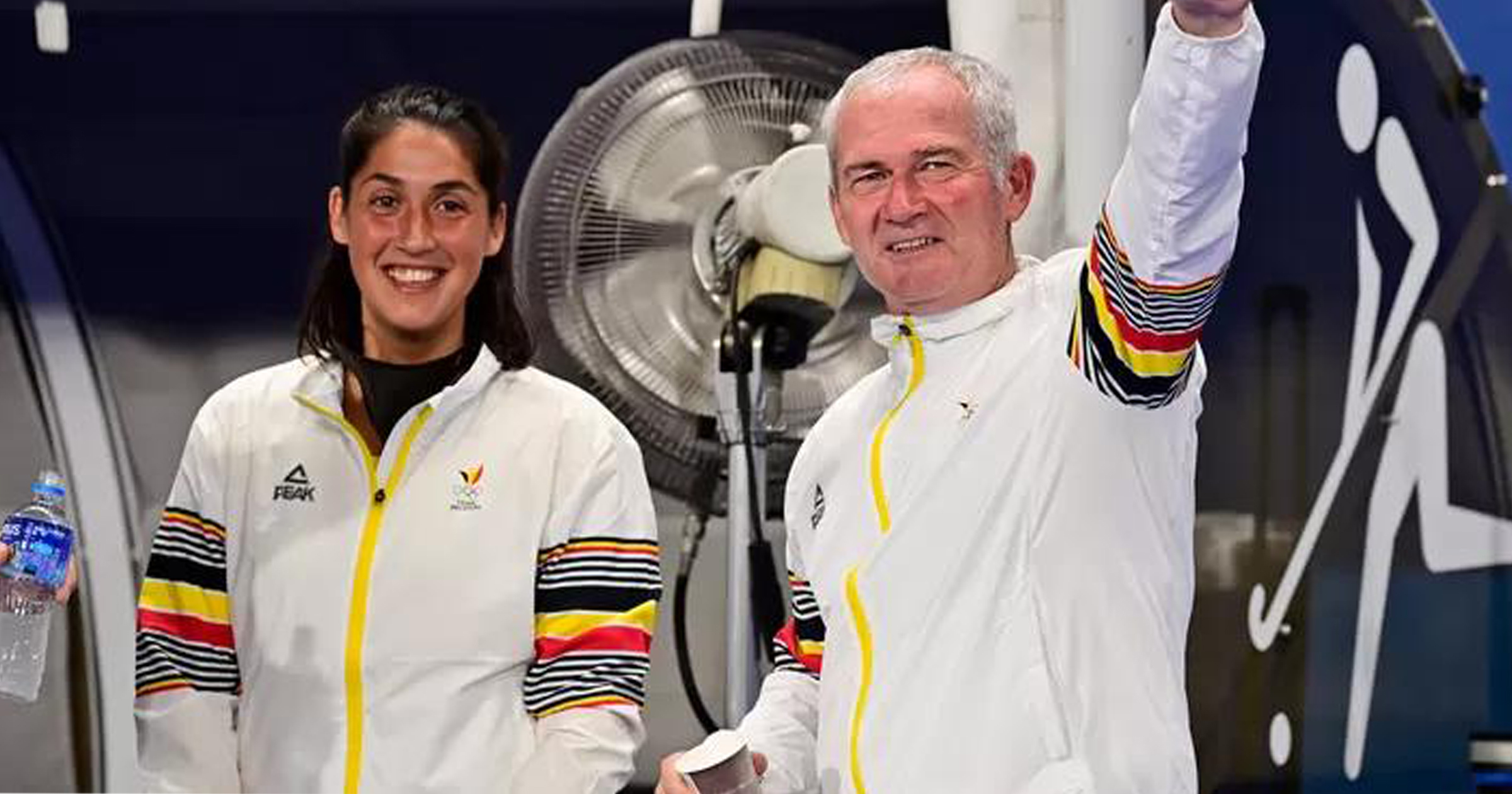
Emily Calderon on international duty with Belgian Red Lions Head Coach Shane McLeod. The Red Lions have secured Olympic and European Championship gold medals under their guidance.

Which Hockey Actions Are Most Valuable to Code in Hudl Sportscode?

Belgium codes both technical and tactical dimensions of performance. On the technical side, Analysts tag isolated instances so coaches can quickly jump to specific players or techniques. This includes small details such as hand position on the stick, defensive body alignment, ball positioning before striking, and optimal spatial control.

Tactically, every game moment is coded from ball starts (“outlets”) in four field zones, with each outcome labelled as positive, negative, or neutral.

 “Negative being you lose the ball. Positive being you get a circle entry, a shot on goal, an opportunity, a penalty corner. Neutral being a free hit in the same or another zone,” explained Calderon.

Belgium also tracks KPIs unique to their game model, such as sustained possession in the opponent’s half, and uses “specials,” a workflow where coaches call out key moments live so analysts can instantly create custom tags.

“In practice, a debrief often starts with going through those specials… every minute we can win on finding the right clip helps us progress.”
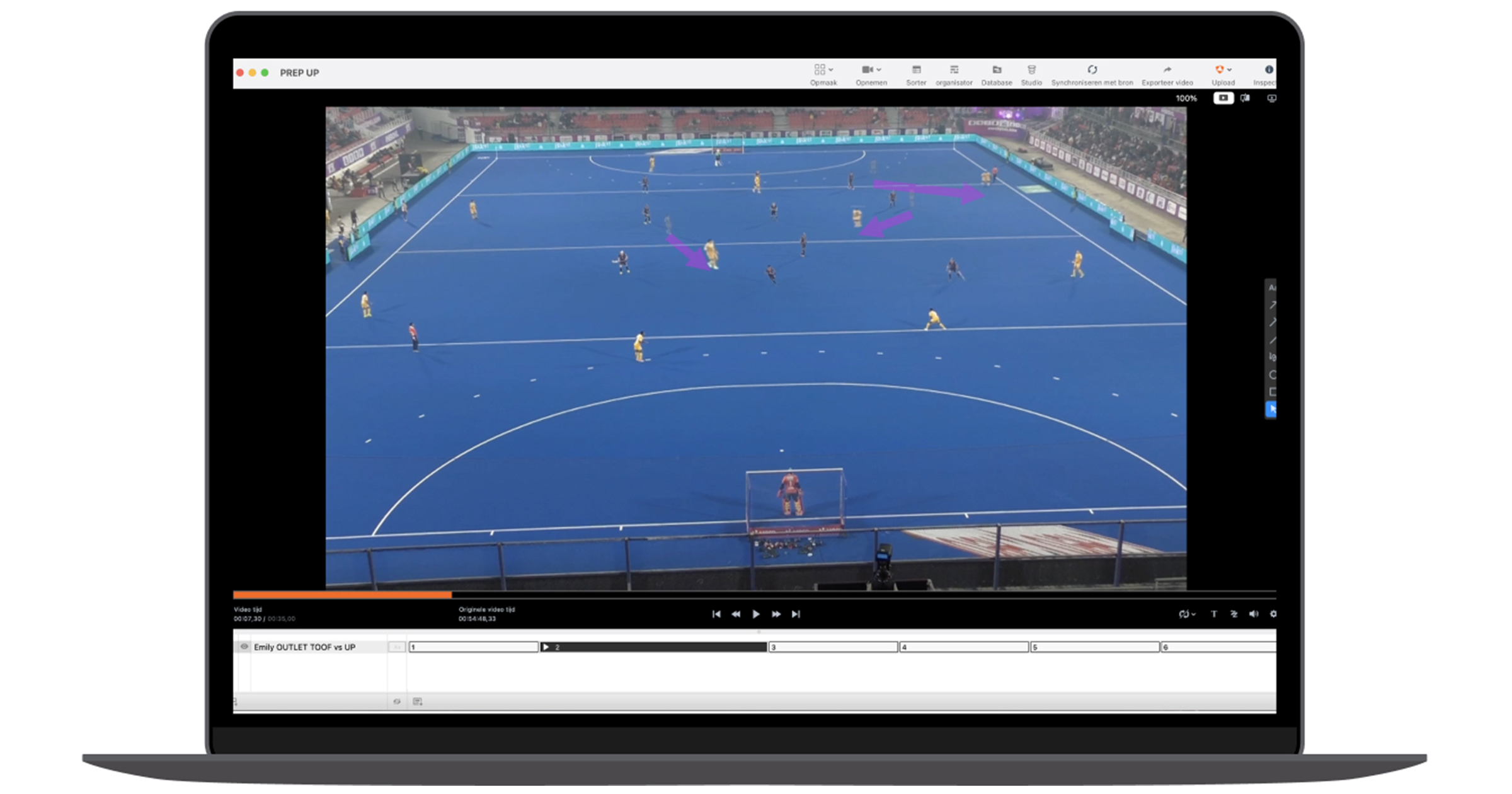
Take control of your hockey analysis with Hudl Sportscode: Import your vision, analyze deeply, then distribute to your players and coaching staff.

Training-Ground Analysis Workflow

Training sessions are filmed, focusing on structured drills for technical refinement, and iCoda allows fast tagging and later slow-motion, line-drawing, and overlay comparisons of training capture. 

“We just break it up into little blocks… the coach is looking for someone specific and can find them quickly,” said Calderon.

In intra-squad matches, training is treated like a full game: imported into Sportscode, clipped, databased and reviewed before the next session. Sometimes footage simply loops in the team room to spark conversation.

Live Match Workflow and In-Game Support

Live coding is Belgium’s biggest time-saver—and a competitive advantage in tournament play.

“Being able during the game to have everything actually ready straight after the game… that’s the most important thing for us,” said Calderon. 

Clips arrive on the bench via Hudl Replay when facilities allow, enabling coaches to make real-time tactical adjustments.

Even when filming and coding are both required, the Analyst or Coach can still deliver a fully coded game roughly 40 minutes post-match thanks to Sportscode’s efficiency, double-speed playback, and streamlined databasing tools.

Take a closer look at how you can implement elite-level hockey analysis at any level

Get Started Today

How Belgium Presents Analysis to Its National Teams

After a match, the workflow is built for speed.Calderon codes live during the game, sending clips directly to the bench, then spends 15–20 minutes correcting labels and finalising datasets. “If statistics are wrong, they’re not useful,” she notes.

Coaches receive the full game with all tags and statistical windows—before the team even returns to the hotel. Players then analyse footage collectively in a shared recovery room.

We want to prevent them all sitting in their room with their iPad… we think the interaction has a very big value.

This setup encourages healthy debate, shared understanding, and informal peer coaching.
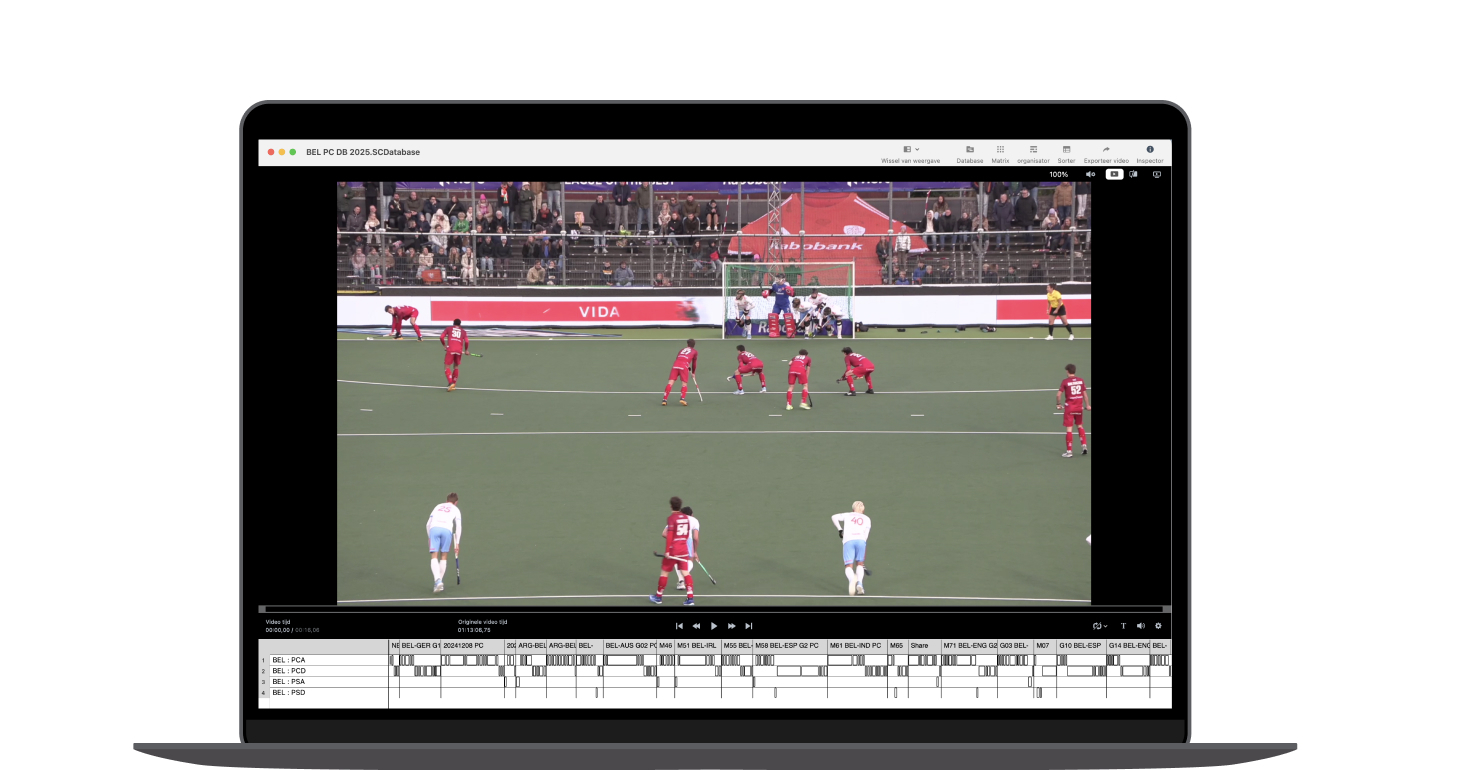
The execution of set pieces is crucial to success in hockey. Penalty corner video analysis has directly contributed to Belgium's success on the international stage.

A Real-World Example: World Cup 2018

One of Belgium’s strongest examples of video analysis driving immediate success came during the 2018 World Cup, the year the Red Lions won their first world title.

After a tight 2–1 win over Canada, Belgium conceded a dangerous long corner due to poor structural setup. Within 24 hours they faced India, a much stronger opponent.

“The coach immediately went through that long corner… he drew on a board how he wanted us to position.”

Calderon prepared the relevant clips, and by the next match the team executed the refined structure flawlessly.

“You can overlay what he drew on the board exactly on the field. If we didn’t have that video, we'd probably make the same mistake the day after.”

This is analysis in its purest form: immediate insight, immediate correction, immediate impact.

“You can overlay what he drew on the board exactly on the field. If we didn’t have that video, we'd probably make the same mistake the day after.” Emily Calderon speaking on Belgium's use of video analysis during the Red Lions' World Cup winning campaign.

How Crucial Is Hudl Sportscode to Belgian Hockey?

According to Calderon, the answer is simple: 

“You need a software like this. You can’t work without it anymore.”

The volume of international matches, rapid tournament turnarounds, and depth of world level analysis all make Sportscode indispensable.

Databasing allows players to find clips within seconds—crucial for a generation accustomed to instant access.

“If they want information and they don’t have it within a minute, they’re not going to keep looking for it.”

Belgium’s hockey success: youth development, tournament readiness and senior team excellence - relies heavily on fast, reliable and context-rich video analysis. Hudl Sportscode enables the federation to turn raw footage into actionable competitive insight across both training and competition.

From U15 squads learning foundational principles to the senior Red Lions fine-tuning match-winning structures, analysis has become part of the country’s hockey DNA. Or, as Calderon summarises:

“Being able during the game to have everything actually ready straight after… that’s our biggest time win and gives us a real impact on performance.”

Ready to elevate your analysis workflow?

Explore the full suite of Hudl tools designed specifically for field hockey. From live coding to instant feedback and powerful databasing, discover how your team can gain the same performance edge used by Belgium’s national programs.