ROI in Japan: How Data Prevents Costly Transfer Mistakes
13 Jul 2026
7 min Read
One failed signing can lock in sunk costs for three seasons. Here’s how J.League clubs can use analytics to recruit smarter — and what separates the signings that pay off from those that don’t.
Most clubs still talk about transfers in the language of gut feel. The player catches the scouts eye. The coach reckons they could be a good fit. The transfer fee feels about right. But for a sporting director, every signing is a capital decision — and one of the biggest a club makes all year.
Between wages and transfer spend, 70–80% of a typical club's operating budget is tied directly to the playing squad. Get a signing right and you compound value for years. Get it wrong and you lock in sunk cost — wages, a place in the squad, an amortised fee — across multiple seasons. Before you know it, you’re constantly course correcting trying to break the cycle of poorly thought out investments.
The asymmetry is the part clubs underestimate. A good signing helps. But a bad one can destabilise a budget long after everyone's stopped talking about it, because boards feel a failed transfer far longer than they enjoy a successful one. So the real question isn't "can we afford this player?" It's "what's the return — and how confident are we in it before we commit?"
What separates a signing that pays off from one that doesn't
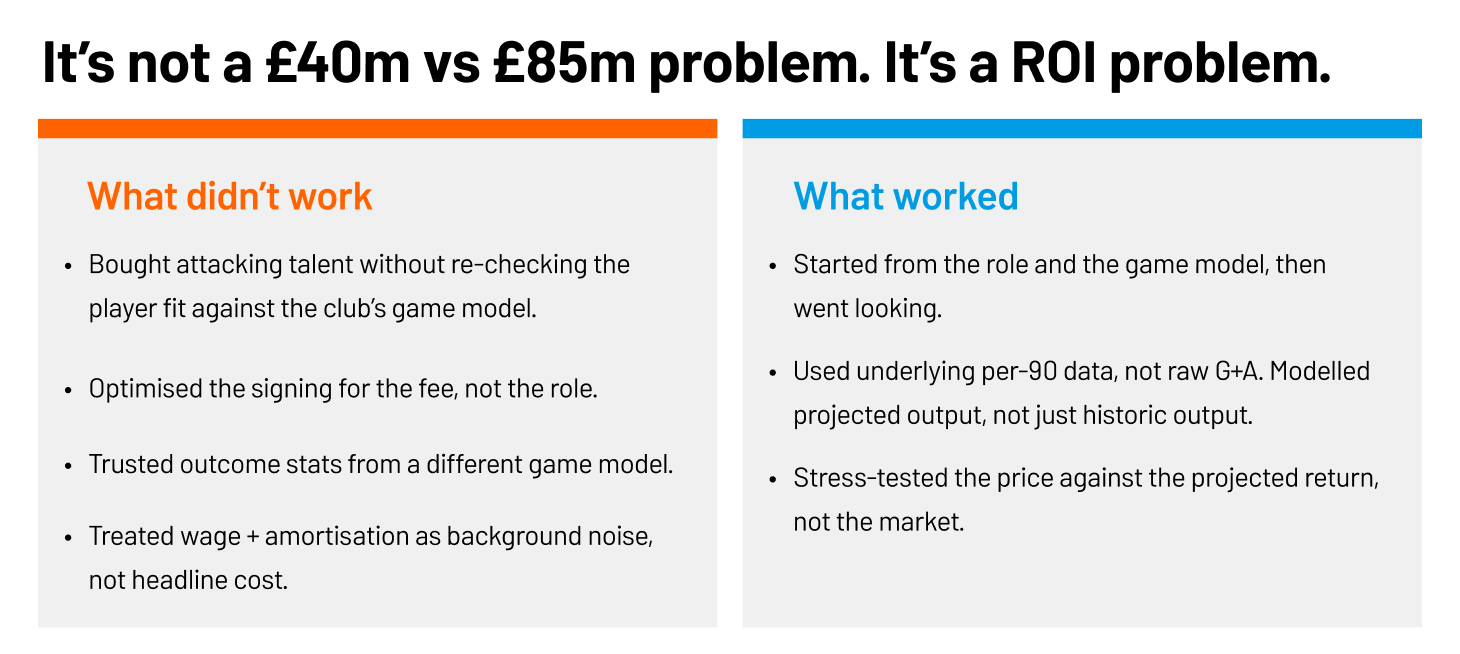
Higher transfer fees don’t necessarily directly correlate to surefire success. There are plenty of cautionary tales – big transfer fees, limited impact on the pitch, and quickly moved on at a huge loss. We’ve all seen it happen.
These rarely fail for a lack of money. Usually it’s a case of being unable to translate talent from different league contexts, while inflated fees were priced against the market rather than against the wages and amortisation the club would actually carry for years. The same trap is waiting for any J.League club tempted by a player tearing up a weaker competition abroad.
And that's the cost clubs underestimate. A transfer fee is only the down payment — the real bill is the fee spread across the contract, plus every year of wages, plus the squad place and budget you can't now spend elsewhere.
The difference for clubs that avoid it? They're signing based on how a player fits the game model, not the hype of landing the 'next big thing' before their rivals.
Applying that to a J.League Context
You don’t need a European budget to recruit smarter – and there are plenty of signings paying Japanese clubs back right now that prove it.
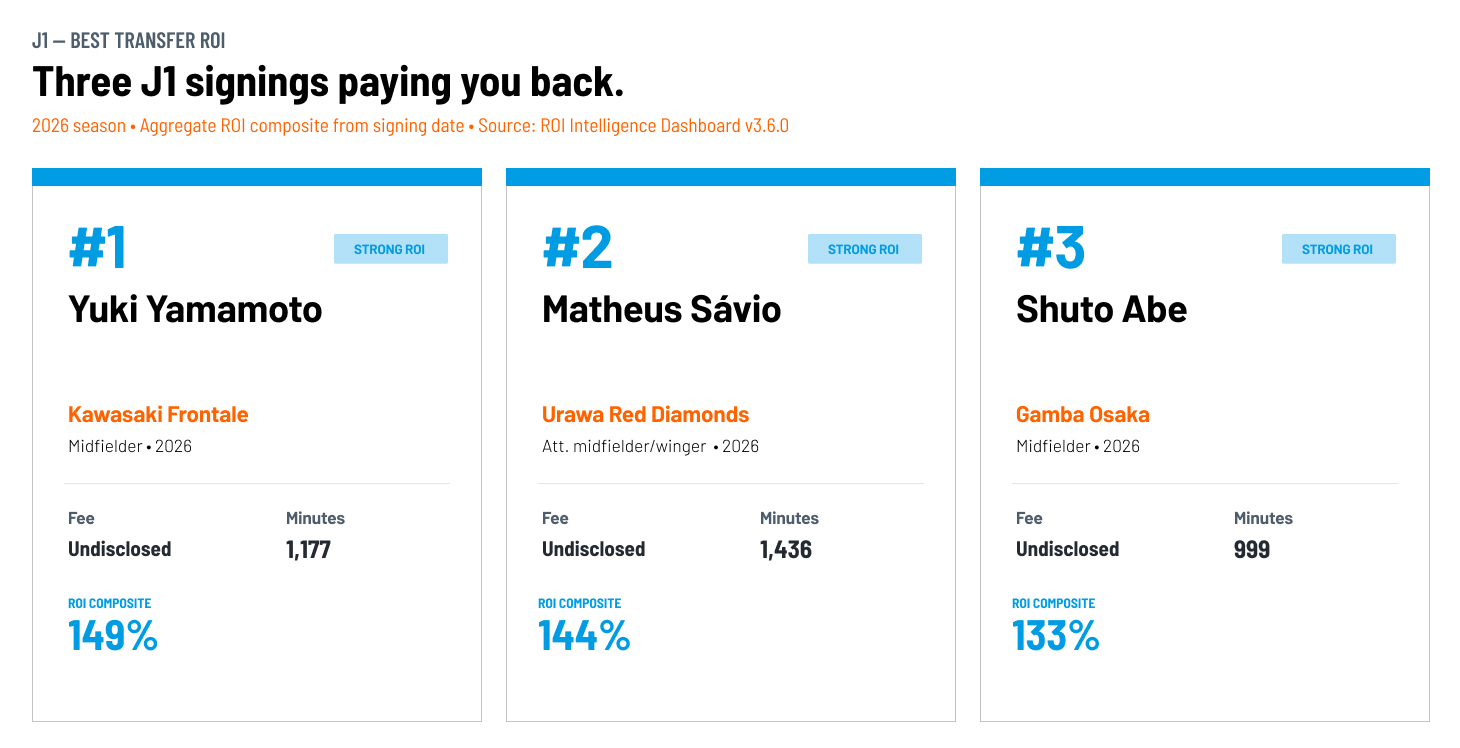
In J1 this season, Yuki Yamamoto at Kawasaki Frontale is returning close to 1.5x what he cost. Matheus Sávio at Urawa Red Diamonds and Shuto Abe at Gamba Osaka sit in the same bracket. Both arrived for undisclosed, modest fees. The common thread isn't expenditure. It's the process behind the signing.
And that's the encouraging part for J.League clubs: recruiting well is method, not budget, driven.
So how do you put a number on "paying off"? This example ROI score isn't one stat — it's a composite built from Hudl Statsbomb data, and it's simple enough to take to a board.
At its heart is On-Ball Value (OBV): a value on every action a player makes, based on how much it shifts his team's chance of scoring or conceding — the contribution goals and assists alone miss. Weigh that against what he costs in fee and wages, adjust for position, so a defender is scored on specific defensive value rather than goals, and you get a single figure.
A score of 100% means the signing has returned exactly what it cost — so Yamamoto's ~149% says Kawasaki are getting roughly half as much value again as they paid for him.
While ROI can be calculated in a variety of ways, this particular example highlights that there is significant value in finding players available for lower fees, who can provide a high return on the field.
Best practices: Building the due-diligence layer
The best-run trading clubs in Europe don't sign on instinct and then look for data to justify it. They flip the order. Those best practices and principles travel to any club, in any leagues – and a handful of Japanese clubs are already applying them.
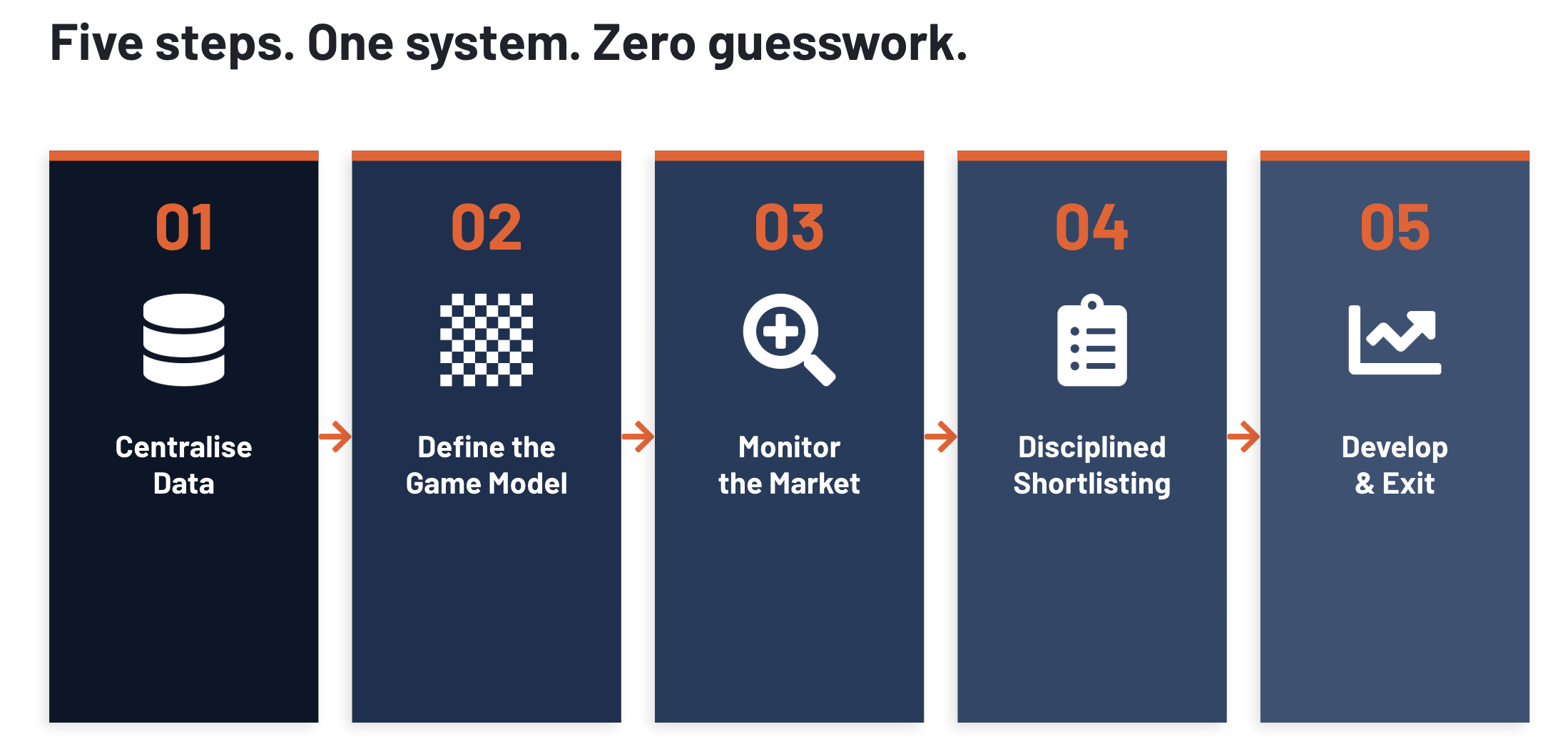
Centralise your data first.
The foundation isn't a signing — it's a single, shared picture of every player. The strongest operations pull event data, physical and tracking data, video, market valuations and availability records into one model, then rate every player on the same scale.
The output that matters most is a quality score adjusted for league strength: it lets you line up J1, J2, the K League, the A-League and Europe on one axis, and it models projected output — what a player is likely to do next, not just what he's already done. Get this right and you stop comparing apples to oranges, and you start seeing the players your rivals have missed.
Define the game model, not a shopping list.
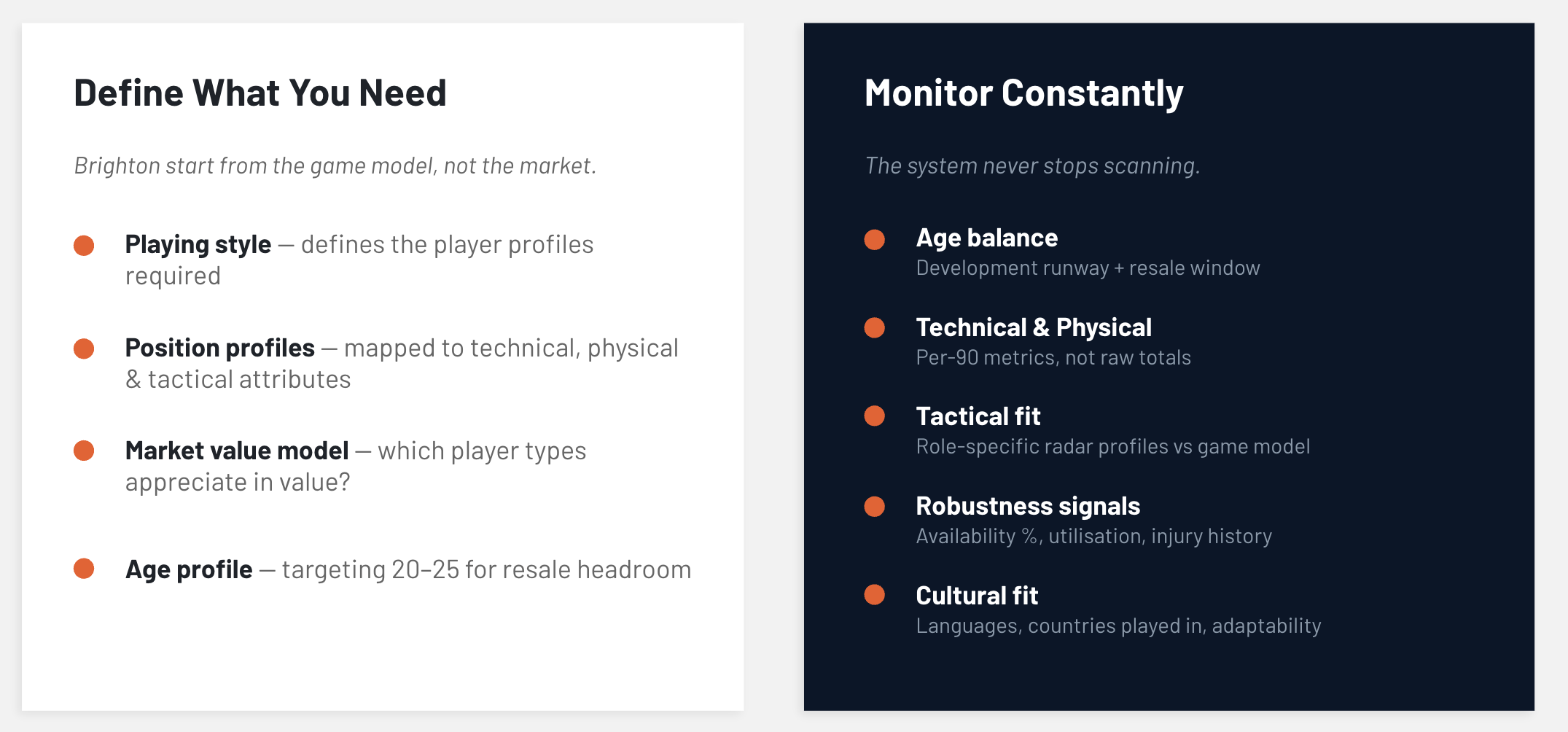
Decide what your system actually needs before you look at who's available — the role, the technical and physical attributes, the age range that leaves resale headroom (the best traders target 20–25). Shop the market first and you end up paying for talent you can't use. Start from the model and every search has a brief.
Monitor the market constantly.
Your scouting system should never stop scanning, and it should be tracking far more than goals: per-90 metrics and on-ball value rather than raw totals, tactical fit against your specific profiles, robustness signals like availability and injury history, even cultural fit — the languages and leagues a player has adapted to before. The point is to know who fits before you need them, so you're never making an eight-figure call in a hurry.
You're not buying what a player has done. You're buying what he'll do in your shirt, in your system, over the life of the contract. Project that, then stress-test the price against the projection — not against the market.
Keep the shortlist disciplined.
Let the data build the ranked list, then use scouts and video to validate it — not to bolt on personal favourites. It sounds rigid. In practice it strips out the pet projects, aligns the coach and the sporting director around one standard and gives you a natural rank order before a single negotiation begins. It's also where you stress-test price: against your own projected return, not against what the market happens to be asking.
Do those four well and you've removed most of the risk before money changes hands. What comes next — developing the player, adding value and timing the sale for maximum return — is where the model pays off most of all. That's a subject in its own right, and one we'll come back to in a later piece.
This is where the tooling earns its place. Hudl Wyscout puts the video and the global player market in one place, so you can underpin subjective opinion on a target with video evidence before anyone picks up the phone. Hudl Statsbomb adds the event data, on-ball value and custom player radars that turn "he looks good" into "here's exactly what we gain and what we give up."
Used together, they become the due-diligence layer between a name on a scouting report and a signature on a contract — the step that catches the big money mistakes before they cost you three seasons.
None of this takes the judgment out of recruitment. It sharpens it. The eye test still matters — it just shouldn't be the only thing standing between your club and an eight-figure commitment. The clubs that win the transfer market aren't the ones spending the most. They're the ones treating every signing like the capital decision it is, and bringing in the data to be at the foundation of the process.
Want to pressure-test your own recruitment process?See how Hudl Wyscout and Hudl Statsbomb work together — book a demoand we'll walk through it with your squad.