Thai Players and the J.League: A Recruitment Opportunity


The relationship between Thai football and the J.League runs deeper than most realise. We explore the pathway between the two nations – and the scouting opportunities that exist for forward-thinking clubs.
Japan sends more players to European leagues than any other in Asia – there were 114 back in August according to national broadcaster NHK – but it is also a league that has given more opportunities to players from Southeast Asia, especially Thailand, than any other.
This started out as a result of the J.League’s commercial strategy but has become something more given the impact that Thai players have had in Asia’s number one league. Soon after the turn of the century, the J.League wanted to expand into new markets, increase the number of fans internationally and, ultimately, increase revenue. Agreements were signed with national associations all over Southeast Asia and broadcast deals were done. And players were identified.
Of course, identifying that potential in the first place requires visibility — and that's where modern scouting tools have quietly played a role in keeping this corridor alive.
Why Thailand?
Thailand was long seen as the best in the region, with the strongest league, national team and the highest level of players and several factors make Japan particularly attractive for Thai footballers.
First is the level: J1 is one of the strongest leagues in Asia, with high tactical standards and intense physical demands, but the step up from Thai League 1 is more manageable than a leap straight to a top European competition. Agents and players see Japan as a realistic environment where they can earn minutes, develop and still compete for continental honours through the AFC Champions League.

Then there is style and culture both on and off the pitch. Japanese football emphasises technical quality, quick passing and collective structure, which fits naturally with the strengths of many Thai players who rely on technique and agility rather than size. Off the pitch, the relative cultural proximity, food, and existing Thai communities in Japanese cities make adaptation easier than in some Western leagues, especially when clubs are already familiar with Southeast Asian imports.
Using Hudl Wyscout viewing data, we can see that Japanese clubs consistently rank among the highest viewers of the Thai League 1. While some of this will be opposition analysis as well as for talent identification purposes, it nevertheless shows a steady interest in the league. But are there opportunities that clubs are still overlooking?
Chanathip the Catalyst
Thai footballers have moved to Japan since the eighties, with examples such as Vorawan Chitavanich, Witthaya Laohakul, and Natee Thongsookkaew playing in the old Japan Soccer League, the semi‑professional forerunner to the modern J.League. But the modern pioneer was Chanathip Songkrasin, who signed for Consadole Sapporo in 2017.
The J.League has actively targeted Southeast Asia as a growth market, adjusting its foreign‑player regulations to allow an additional slot for players from Asian Football Confederation member nations outside existing quotas. The talented winger – inevitably nicknamed ‘Thailand’s Messi’ — was already a star domestically with a large following and there was huge interest in his move to Japan.
Chanathip first moved on loan from leading Thai club Muangthong United, arriving soon after being named as the MVP of the AFF Suzuki Cup as Thailand won Southeast Asia’s biennial tournament. While the J.League is not as physically demanding as Europe, there were still some concerns as to his diminutive stature.

On the pitch, he answered those doubts quickly. Chanathip broke into Consadole’s team, became a regular starter and by his second full season in 2018 he had helped the club to a record fourth‑place finish in J1. That year he was named Consadole’s Player of the Year and voted into the J.League Best XI, the first Southeast Asian player ever to make that select list.
Off the pitch, his success gave the J.League a tangible marketing hook in Thailand; Thai media followed his progress closely, and the league highlighted his story when pushing its brand in Southeast Asia.
His talent and value to the team were clear and that became official in 2022 as he left the northern part of Japan to join a national powerhouse. Kawasaki Frontale paid $3.8 million, then a record fee for a domestic transfer. It didn’t really work out as expected just south of Tokyo and the following year he returned home but he did so leaving a legacy behind.
Theerathon, Teerasil and the Muangthong connection
Chanathip was not alone for long. Muangthong United became a pipeline for Thai internationals heading to Japan, sending striker Teerasil Dangda and left‑back Theerathon Bunmathan on loan deals that widened the path. Teerasil joined Sanfrecce Hiroshima in 2018 and later played for Shimizu S‑Pulse, showing that a Thai centre‑forward could compete physically and tactically in J1, even if his stay was relatively short before returning home.
Theerathon’s trajectory was even more symbolic. After a 2018 loan at Vissel Kobe, where he shared a dressing room with European stars like Andrés Iniesta, he joined Yokohama F. Marinos on loan and then permanently to play under Ange Postecoglou.
In 2019 he played 25 league games as Marinos won the J1 title, making him the first Southeast Asian player ever to win the Japanese top‑flight championship. That triumph mattered in Thailand not only as a personal milestone but as proof that Thai players could be decisive in a title race, not just squad fillers.
Impact on Thai football and the J.League
The flow of players has continued, with the likes of Jaroensak Wonggorn, Supachok Sarachat, Ekanit Panya just a few more recent examples of Thai players making the move to Japan. And this steady stream has had clear effects in both countries.
For Thailand, national‑team regulars returning from Japan come back sharper, more tactically aware and accustomed to high‑tempo matches, which raises standards in the national setup. Football Association leaders have explicitly praised how J.League experience improved Chanathip’s game, pointing to his stronger performances for the national team after his move. That narrative reinforces the idea among younger players that going abroad, and specifically to Japan, is the path to elevate their careers and the national side.
At club level in Thailand, there is some tension: selling or loaning star players can weaken title contenders in the short term and frustrate local fans. However, transfer fees, loan arrangements and strategic partnerships with J.League clubs can also bring financial stability and shared expertise, especially for teams positioning themselves as regional brands. BG Pathum United’s close links to Japan, highlighted by signing Chanathip on a permanent deal after his long J.League spell, show how Thai clubs are now leveraging these relationships in both directions.
For the J.League, Thai players have been a bridge into a growing Southeast Asian fanbase. Chanathip’s games with Sapporo and Kawasaki attracted significant interest in Thailand, and league‑organised viewing events in Bangkok have capitalised on that momentum. Thai talent has helped the J.League position itself as the natural destination for Southeast Asia’s best players, strengthening its own status within the Asian football hierarchy.

What’s next
From a Thai perspective, every successful export makes the next move easier. The image of Theerathon lifting the J1 trophy with Yokohama Marinos, or Chanathip being named in the J.League Best XI, offers concrete proof that Thai players can influence title races and individual awards at a higher level than the domestic league.
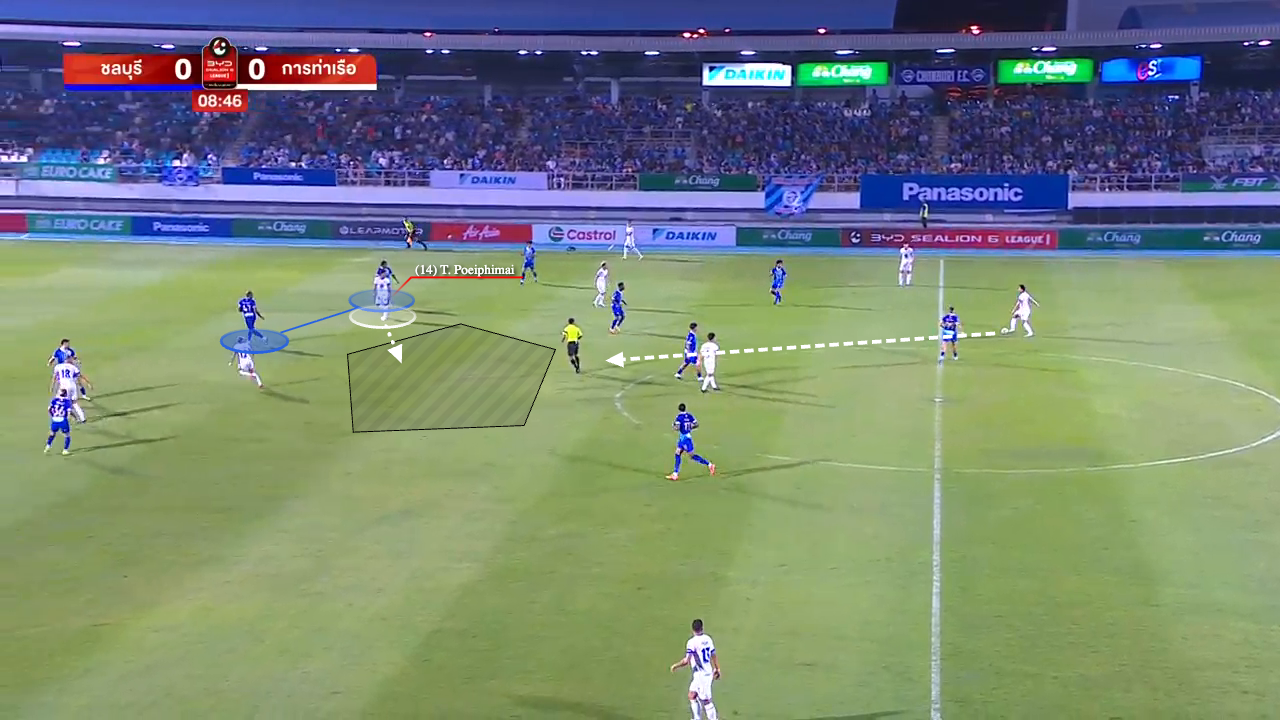
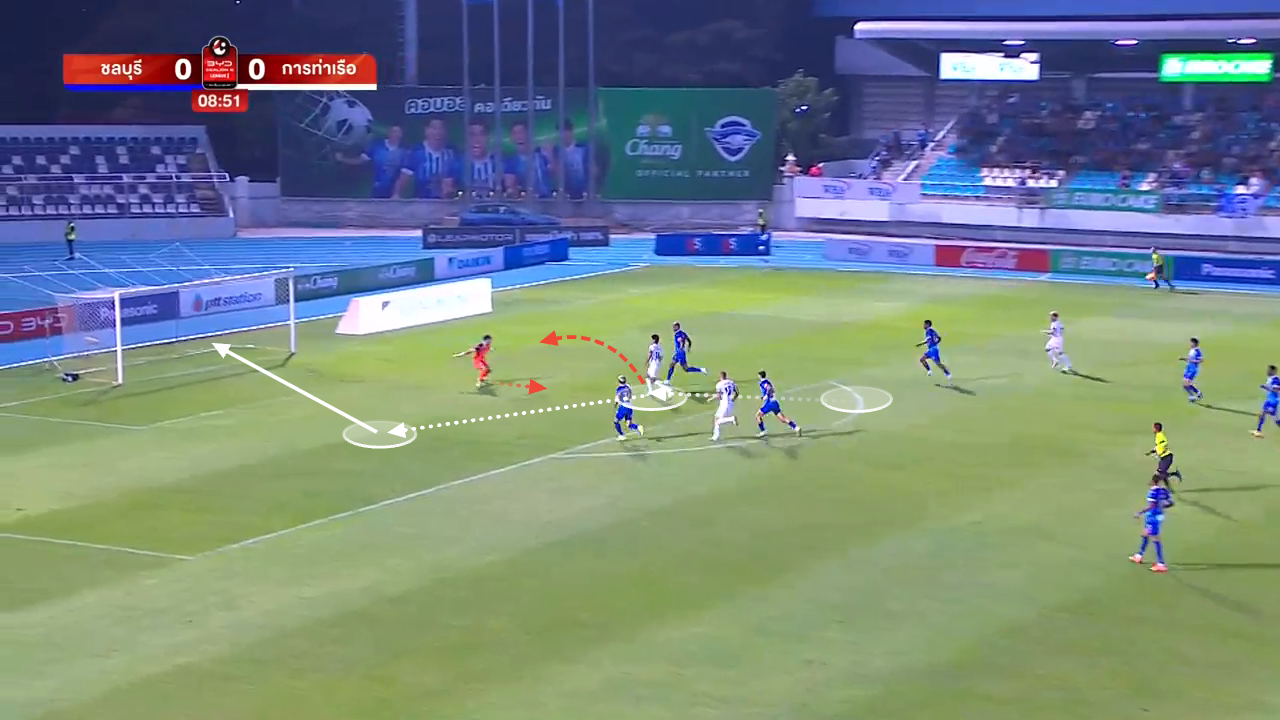
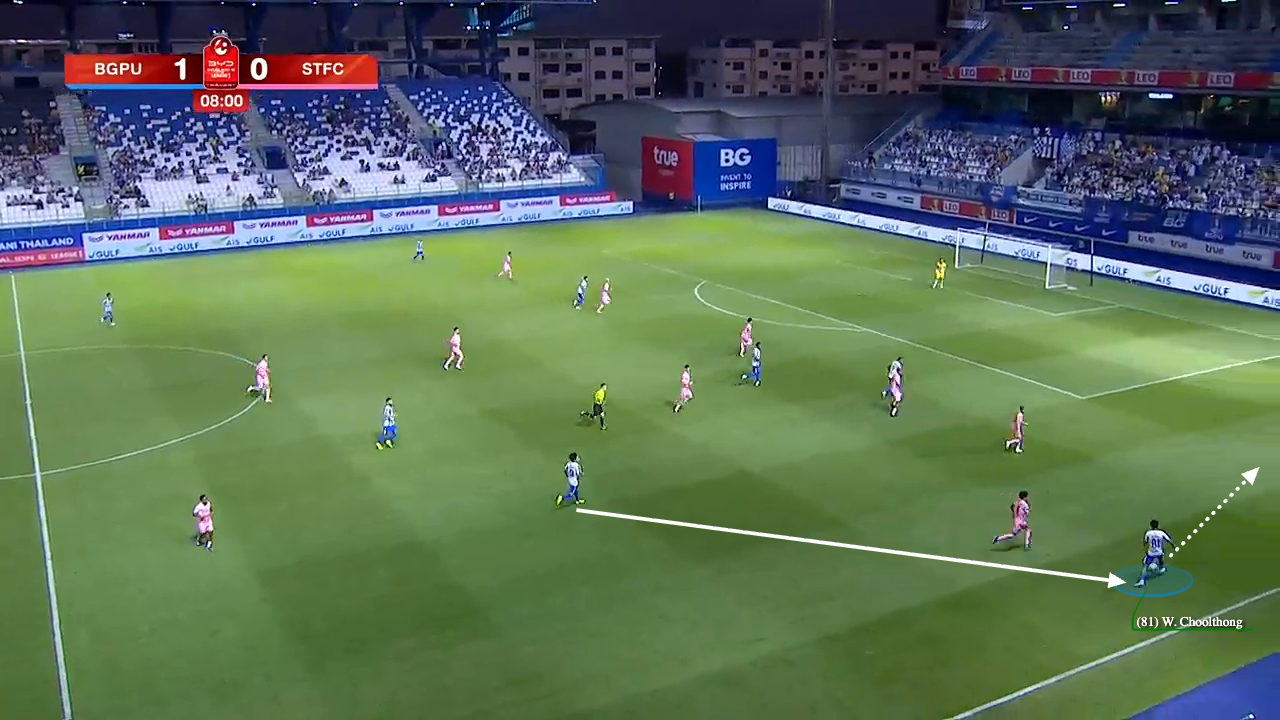
Now it is time for the next generation to build on the foundations set by the pioneers and then move to the next level. Using Hudl Wyscout – the world’s most comprehensive football video library – we can take a look at some young players from the Thai League 1 that could be of interest to Japanese clubs.
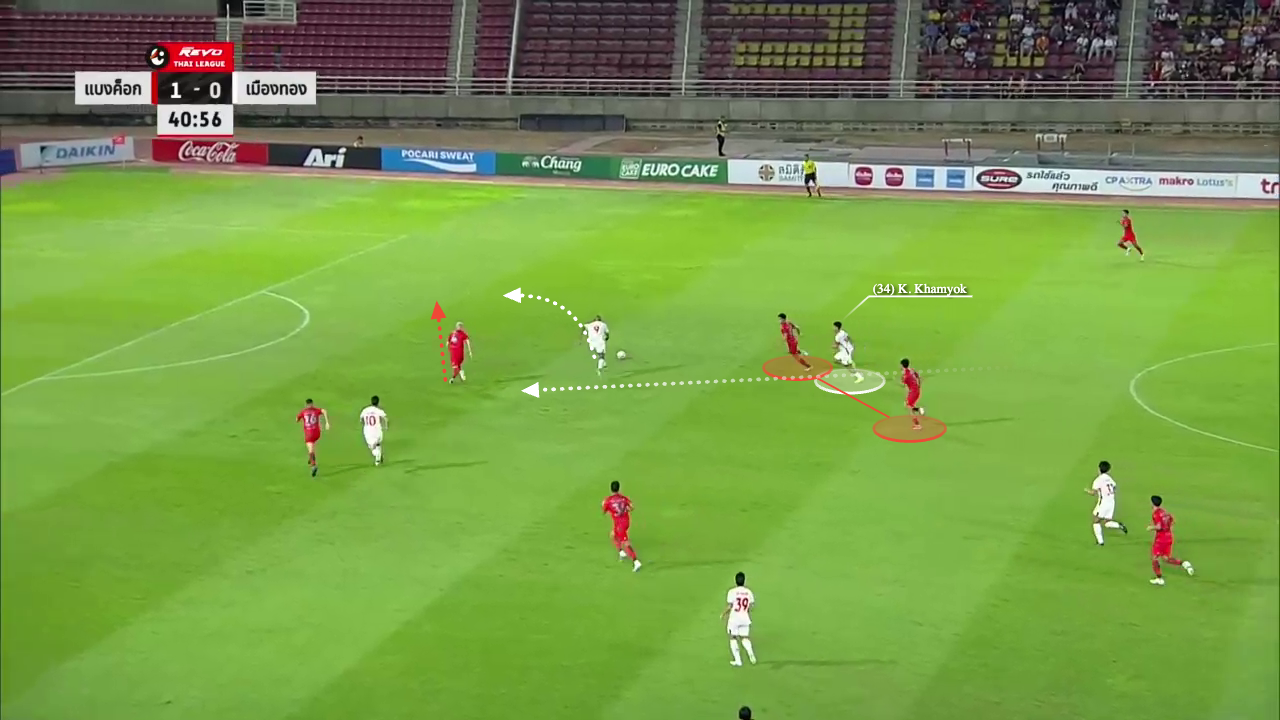
Kakana Khamyok (Muangthong United, 21)
Watching the tape, Kakana is a dynamic attacking midfielder who carries the ball well, whether that be on the flanks or arriving into the box, and has shown an ability to contribute both goals and assists.



With the J.League moving towards a European calendar, partly to be able to attract better players, there is a challenge ahead. South Koreans are the foreigners of choice when it comes to Asians in the J.League, but there remains plenty of potential in South-East Asia that represent low risk, high reward recruitment opportunities.
Want to expand your recruitment processes? Find out more about how to use Hudl Wyscout for your scouting and talent evaluation workflows here.
Follow John on Substack.