Creating a Club Framework: San Diego Wave

Chris Loxston in conversation with Ed Sulley on how a framework-first approach to hiring and recruitment saves clubs money, time, and costly squad turnover.
Chris describes his Technical Director role at San Diego Wave as resting on three pillars: playing philosophy, leading recruitment, and player and youth development. The latter is an area that is still evolving across the NWSL now that the league has done away with the draft.
On a matchday his job is to observe, not to make decisions. Through the week he watches every training session, works with the recruitment team ahead of transfer windows, and even helps manage the grounds crew, because a club that wants to keep the ball on the deck needs a pitch that lets them do it.
The word Chris avoids is philosophy. He finds it too abstract to build anything practical on. Instead he talks about a playing framework, a set of guidelines for how the team wants to play in each phase of the game. For example, a framework might say the team wants to beat the first line of pressure with the ability to play forward out of the back. It does not tell a coach exactly how to coach.
Chris draws a clean line here: the framework belongs to the club, and the game model and tactical plans for specific opponents belong to the coach.
Building that framework was not a solo decision. Chris put together a proposal and worked through it with the club's general manager, backed by league-wide data on what successful teams actually do in each phase of play. That became the basis for a set of KPIs the club still uses to track its own style, and it became the foundation for both player recruitment and head coach recruitment.
There is a financial logic underneath all of this. Chris estimates it takes four to five transfer windows to build a squad capable of playing a certain way, and the average head coach lasts under two years in the job. In a salary cap league with real limits on transfer spending, changing your identity every time a new coach walks in gets expensive fast. His view is that the club has to decide how it wants to play first, and build everything else, coaches and players alike, around that decision.
In practice the framework lives in a short keynote deck with animations and video examples, which gets shown to everyone from prospective coaches and players, all the way to any young trialist who comes through the doors.
Manager Recruitment and the Search That Landed Jonas Eidevall
“You want to do as much as possible - do your due diligence, do your homework - to make sure that the person you are going to offer the job to is, with everything laid out, the best person for you at that moment in time."
The clearest proof this framework works came before the club had even hired its current head coach. Most of the squad signed with San Diego Wave before Jonas Eidevall did in January 2025, recruited against a framework rather than a specific coach's plan. That is the kind of proof point most clubs cannot claim.
But what does managerial recruitment look like in practice? First a long list is built, which then gets filtered on two things: availability, and fit against the club's existing framework. Once the list narrows, shortlisted candidates go through multi day interviews covering how they would set up the current squad and where they would look to strengthen it.
Chris and the club’s general manager, Camille Ashton, also did the same kind of homework on candidates that they do on players. They watched match footage, in Eidevall's case, games from his three years at Arsenal, and ran data analysis on how those teams played against the framework criteria the club had already established. They took references from people who had worked with each candidate before.
The reasoning behind all this diligence is precisely because a head coach immediately becomes the public face of the club. They run every press conference, they stand on the touchline every matchday, and their decisions shape how the team is perceived on and off the pitch. Getting that wrong is costly in a way that goes well beyond results.
Chris is also clear that tactical knowledge is only part of the job. He has seen plenty of coaches who are excellent tacticians struggle because they cannot manage a group of players day to day, and that combination of skills, not just one, is what the process is really screening for.
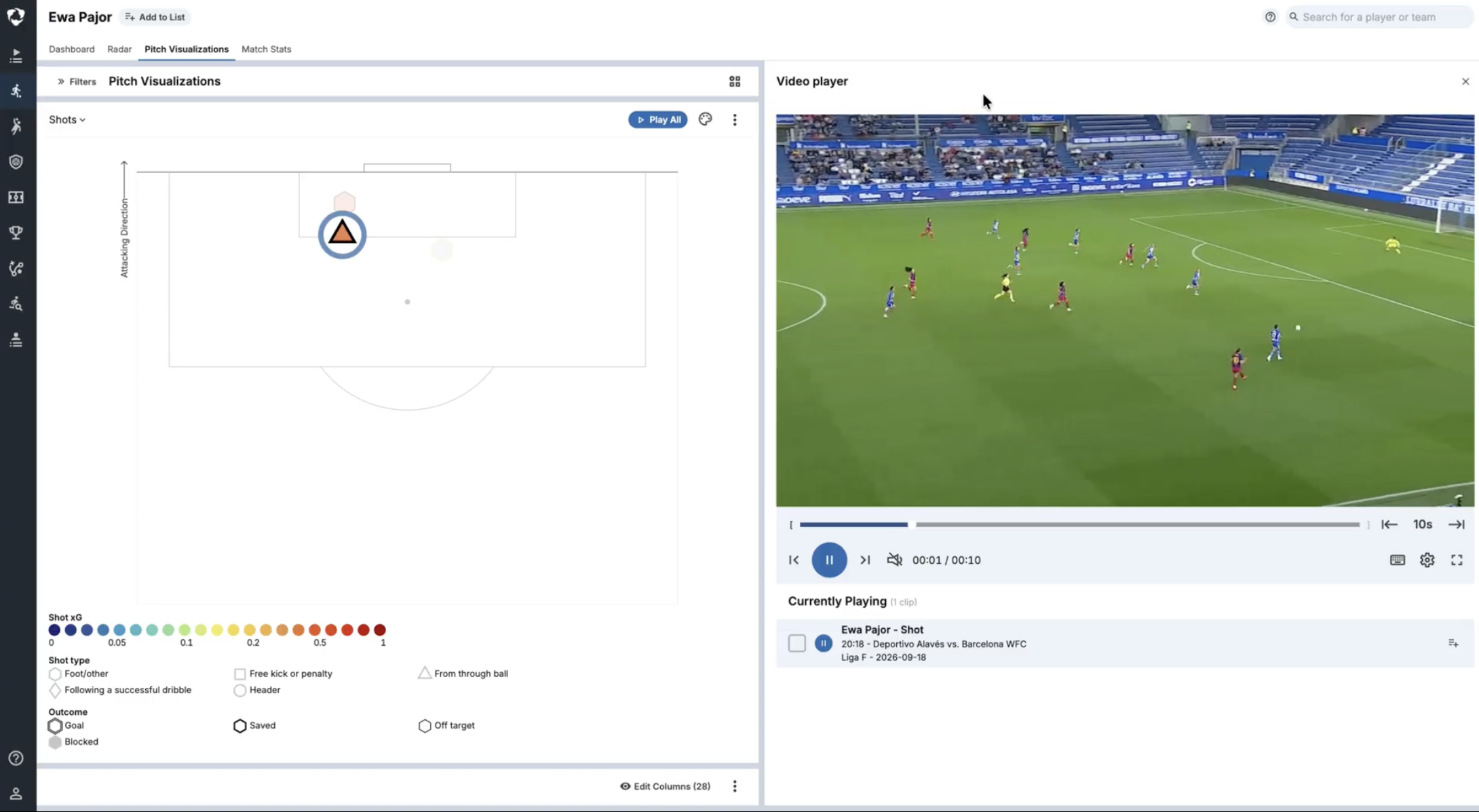
Technology has changed how much of this diligence is possible. Chris points to how far platforms like Hudl Wyscout and Statsbomb have come in covering women's football specifically, a dramatic shift from just a few years ago, along with the arrival of women's specific expected goals models. None of that replaces judgment, but it gives a technical director a much stronger evidence base to work from than existed even five years ago.
Chris is also candid that the process runs both ways. A coaching search is as much the coach interviewing the club as the club interviewing the coach. He compares a coach's career to a stock that rises and falls. Coaches who succeed tend to get offered bigger jobs and keep getting them. Coaches who struggle find that those same job offers stop coming. That reputation, built up over years, shapes who ends up on a club's long list in the first place.
Finding Players Who Fit the Framework
"We're never going to sign a player that a head coach doesn't like - because they're not going to play them."
The same framework that shapes San Diego Wave's coaching search also shapes how the club signs players. Chris and GM Camille Ashton built positional profiles that match both the way the team wants to play and the reality of the league it plays in. The NWSL is a transitional league, so even a possession-heavy team needs pace across the back line and up front, because committing numbers forward to attack means conceding transitions when possession is lost.
Before any player search begins, Chris says the club works through around 20 criteria as part of a squad planning process involving the general manager and head coach together. That covers contract lengths, salary cap position, available international roster spots, and the specific positions the club needs to target in a given window.
Next, a recruitment and scouting network of four people plus a data insights analyst works across roughly 10 to 15 leagues the club considers genuinely comparable to the NWSL, and brings back a shortlist of three to five names per target.
Players get presented first to the general manager and Chris, who then narrow the list down to two names that go in front of the head coach, who provides their preference. Once a player is agreed between all stakeholders, the general manager handles the contract, and the pitch to the player follows the same logic as the pitch to a head coach candidate, selling the project rather than just the role.
Positional profiles are not fixed, but what doesn’t move are certain non-negotiables. In defensive and midfield positions, Chris points to high technical ability and high pass success rates as fixed requirements, because a player who is right for the role but wrong for the framework will still struggle to succeed at the club.
Keeping scouts, coaches, and data staff aligned on what they are actually looking for is, in Chris's words, one of the hardest parts of the job. San Diego Wave brings its scouting team to see the current squad train and to watch games in person, because attitude and off the ball behaviour are hard to pick up from a screen. Scouts based further afield in South America and Europe still watch every game the club plays. The team also tracks how players perform after moving between leagues, using that as a real world signal for how a player might translate into the NWSL.
The stakes around getting this right keep rising. San Diego Wave recently signed a player to what was reported as the largest contract in the history of the women's game, and Chris expects that level of investment to keep growing as more clubs build out dedicated recruitment departments. Since the NWSL retired its draft, spotting talent early has become a competitive advantage in its own right, not just a nice to have.
Lessons and Advice
"Get the right people, the right processes, and the right structure. That's where everything can build from."
Every technology vendor with a pitch deck wants time on a technical director's calendar, and Chris says that pressure has only grown as AI tools flood the market. His filter for all that boils down to one guiding principle: before adopting anything, he asks what the tool actually does and what impact it will realistically have in his context. Tools are only worth bringing in if they make people more informed and help them make better decisions, not because they are new.
He points to a concrete example from his own workflow. Before Hudl Studio, an analyst who wanted to telestrate a clip had to export the video, mark it up, then import it back into a presentation. Removing that friction did not just save time, it let analysts spend more of their day on analysis instead of file management, without giving up any quality in the finished product. For Chris, that is the standard any new tool should be held to: it should remove friction without asking anyone to accept a worse result in exchange.
Asked what he would tell a technical director starting from nothing, with no framework, no coach, and no recruitment plan in place, Chris does not point to strategy documents or data infrastructure. His advice is to get the right people in place first, people who genuinely align with the vision, and then get out of the way and let them do their jobs well. Get that wrong, he says, and nothing else you put in place will matter much. Get it right, and the rest of the job becomes far more straightforward.