Michigan Football Has a Champagne Problem

New coach Kyle Whittingham needs to unlock the best version of Bryce Underwood.
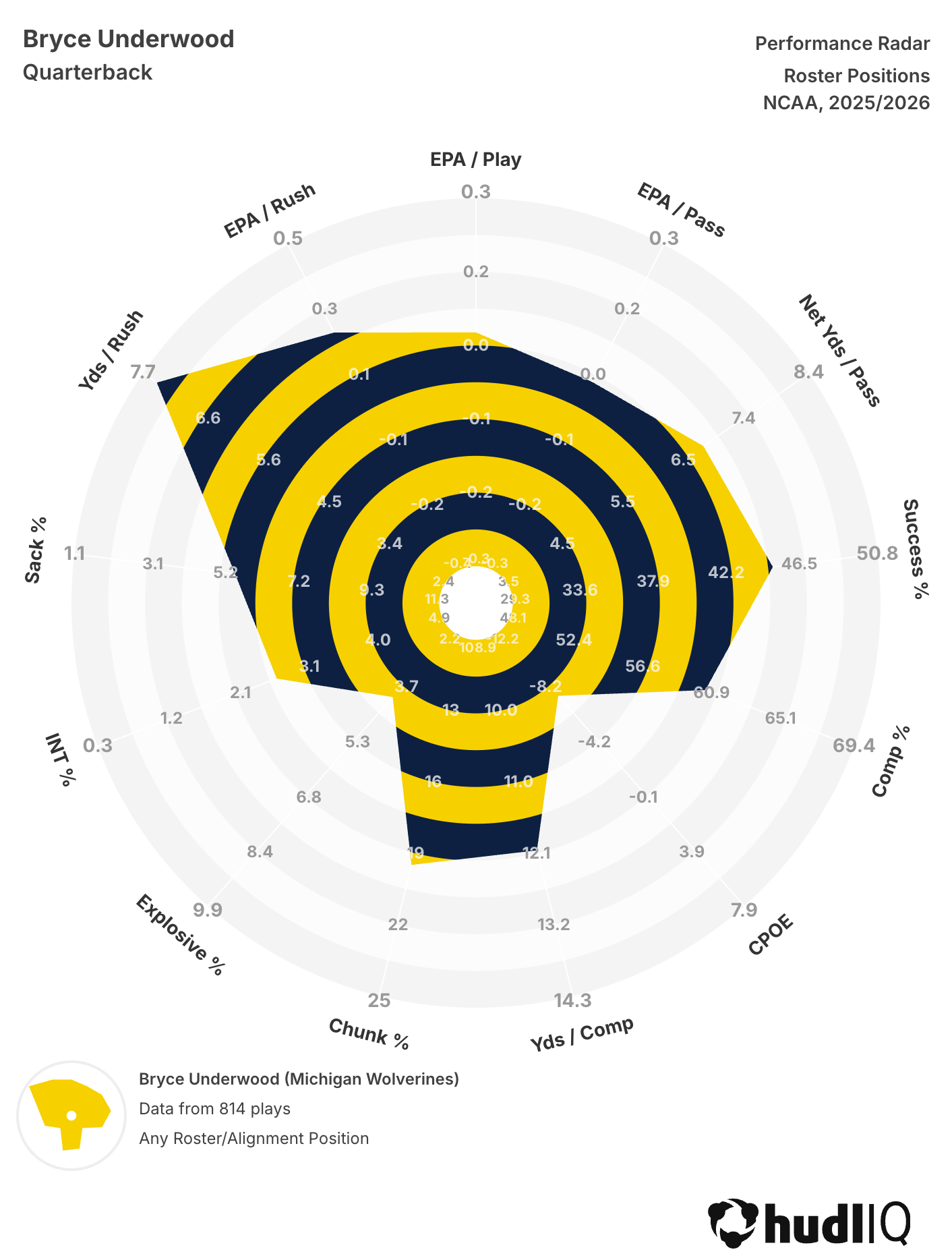
In 2025, Underwood was an efficient runner of the football. He averaged 7.5 yards per carry and finished with a 0.25 EPA/Rush figure. He did a nice job of moving the chains on designed quarterback run plays and possesses enough mobility to evade pressure on passing downs.
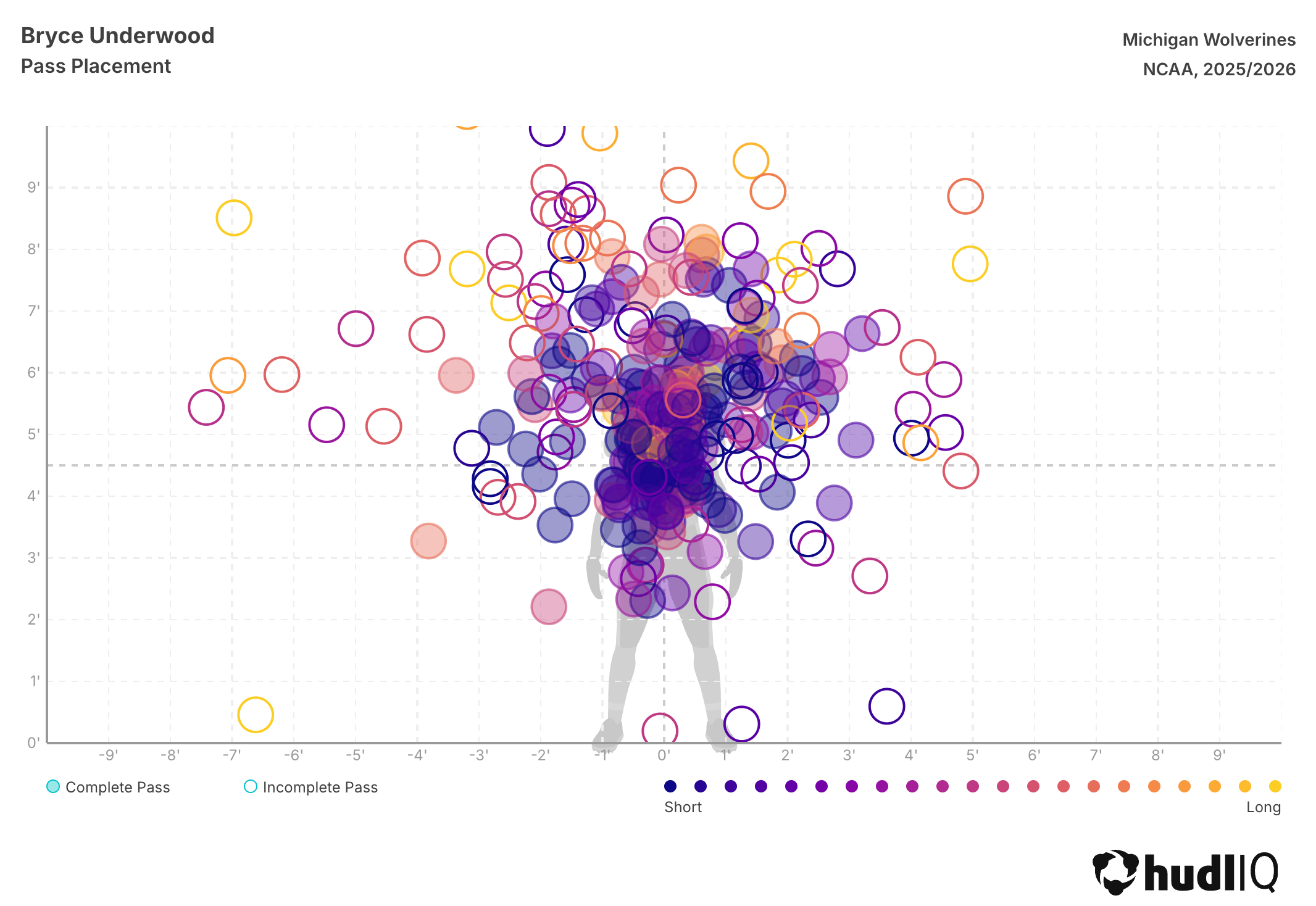
The area of his game where he could stand to improve the most is his passing. During the 2025 season, he barely eclipsed the 60% completion percentage threshold. He also posted a -7.4% CPOE (Completion Percentage Over Expectation), which means he completed fewer passes than an average quarterback would in similar situations. That number is an indicator that he consistently struggled with accuracy and missed throws.
Standing at six-foot-four-inches tall and weighing around 230 pounds, Underwood has all the tools in the world. He’s got a big arm. He can run like a deer. He was the No. 1 recruit in the country for a reason.
For Whittingham and Beck to get more out of Underwood, they need to find ways to simultaneously simplify the offense while also putting Underwood in a position to let it rip. Too often last season, Michigan played with an ultra-conservative mindset, and it likely hindered Underwood’s development as a passer.
Last season at Utah, Beck got a lot out of Devon Dampier in the designed run game. Dampier is a gifted runner, but doesn’t possess the same top-end abilities as Underwood. Underwood would benefit from more designed QB run plays and one or two-read pass plays.
Michigan's Champagne Problem
Landing a five-star quarterback is a Champagne problem, but a problem nonetheless.
It’s the ultimate “be careful what you wish for” in college football. You’ve spent the NIL dollars. You nabbed the high-profile recruit. Now, before the bubbles go flat, you have to figure out what to do with him.
Underwood’s freshman season in Ann Arbor was a side step. He looked the part in the running game, but looked every bit like a freshman as a passer. But with Whittingham at the helm and Beck calling the offense, there’s room for optimism that Underwood can deliver in 2026 and push Michigan back into the College Football Playoff conversation.