Examining the 2026 NFL Draft QB Board


What matters more, proven production or traits?
On the eve of the 2026 NFL Draft, the buzz surrounding the quarterback position isn’t just about blue-chip pedigree. In a sport where the ability to process under pressure can make or break a season, the men leading these offenses are always the most scrutinized group of every draft cycle.
For those running a Division I player personnel department, the message is clear: The NFL values processing speed and mental resilience over sheer physical traits.
Projecting Quarterbacks at the Next Level
The 2026 NFL Draft quarterback class is a fascinating argument in production vs. traits.
On one hand, you have the “Heisman Trophy polish” of a player like national title winner (and presumptive first overall pick) Fernando Mendoza. On the other hand, you have a smattering of signal-callers like former Alabama quarterback Ty Simpson or former LSU quarterback Garrett Nussmeier with high-upside traits that don’t have the consistent level of production usually associated with a first-round draft grade.
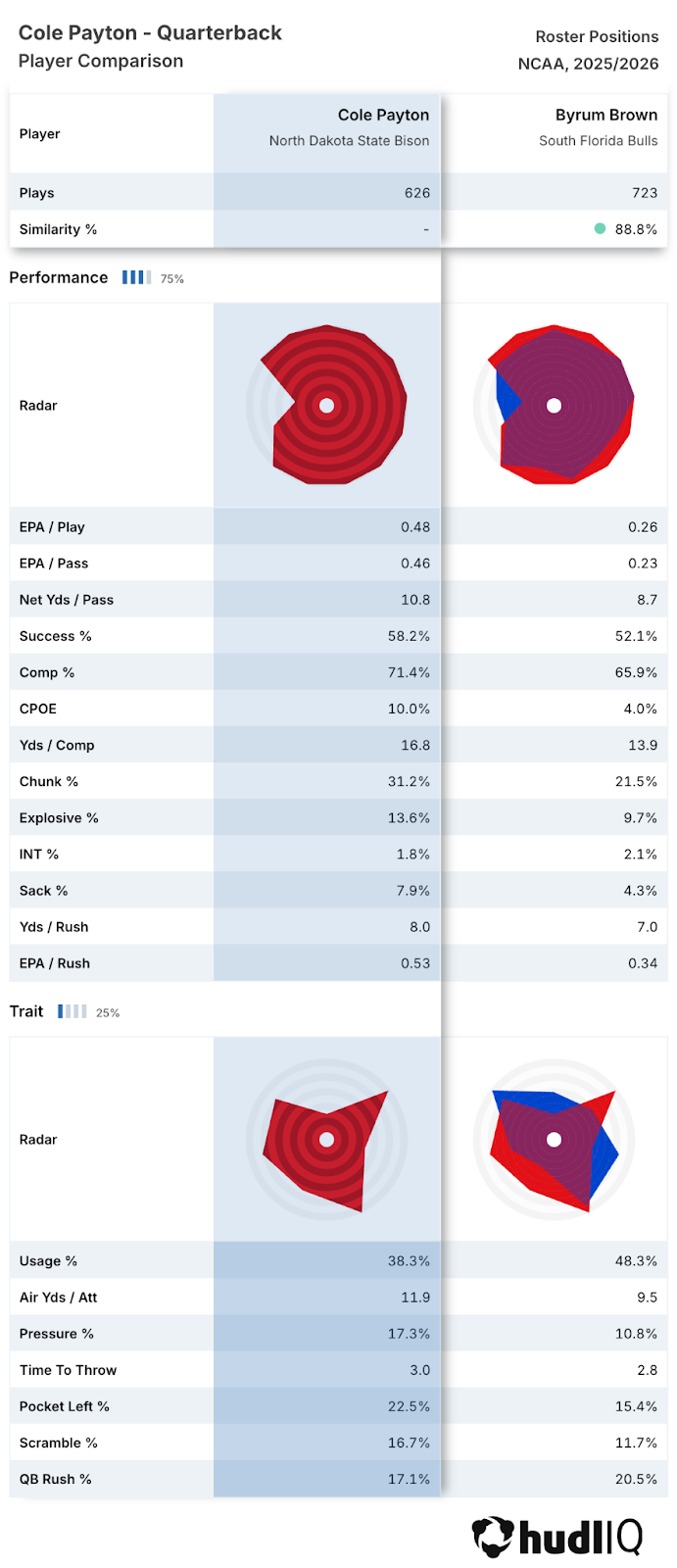
And somewhere in the middle is someone like former North Dakota State quarterback Cole Payton, who possesses both the polish of a winner AND intriguing traits, but lacks the experience of playing at the pinnacle of the FBS game.
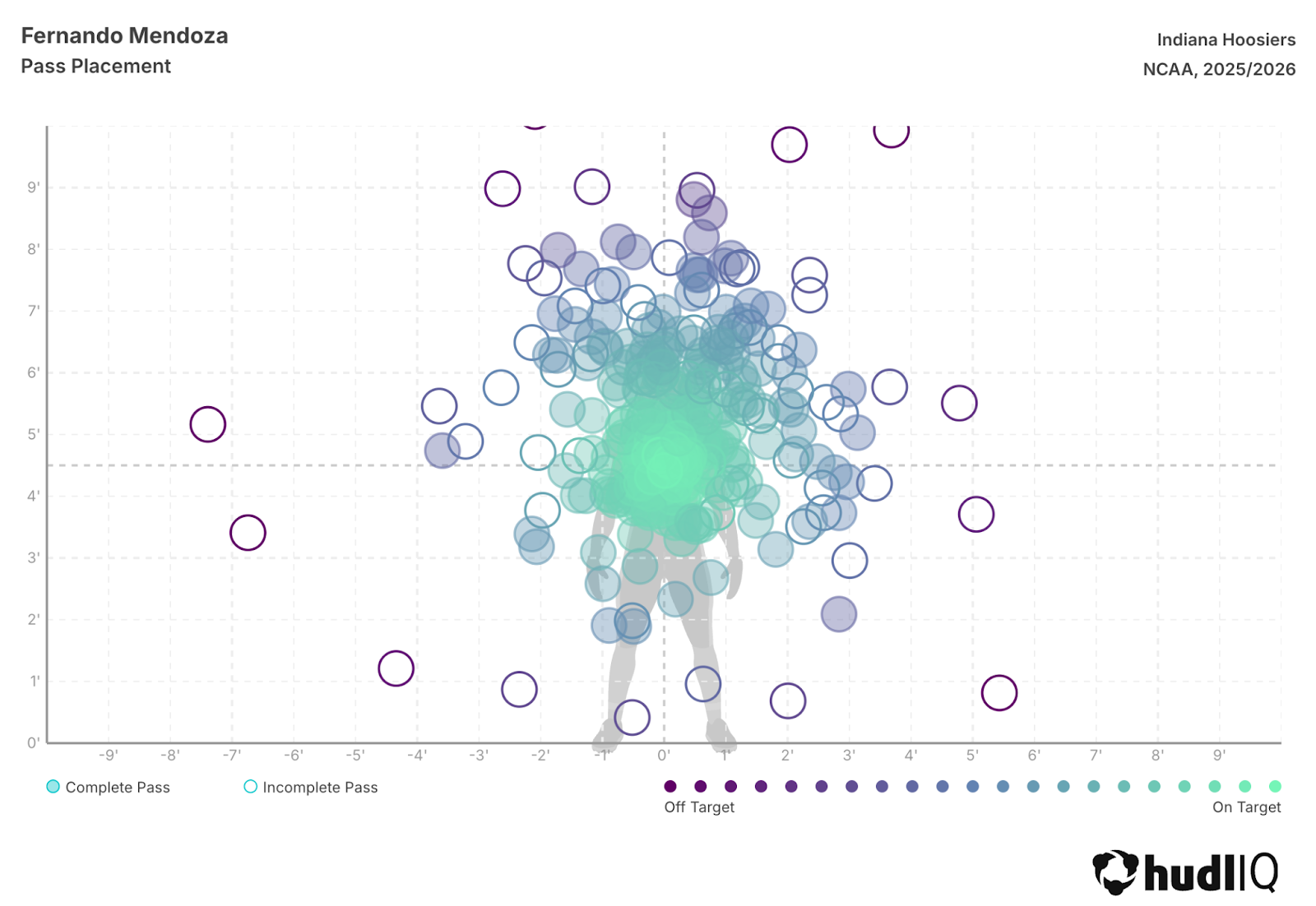
Last season at Indiana, Mendoza was an extremely accurate passer with elite-level ball placement. He’s the type of player who performs well when he’s in rhythm and plays within the structure of the offense. In 2025, he completed over 75% of his passes from within the structure of the pocket, often relying on excellent decision-making skills to place passes only where his wideouts could make the play. Combine his incredible processing skills with above-average athleticism in the run game, and it’s no surprise that he’s the presumptive first overall pick.
Further down draft boards are guys like Alabama’s Ty Simpson and LSU’s Garrett Nussmeier.
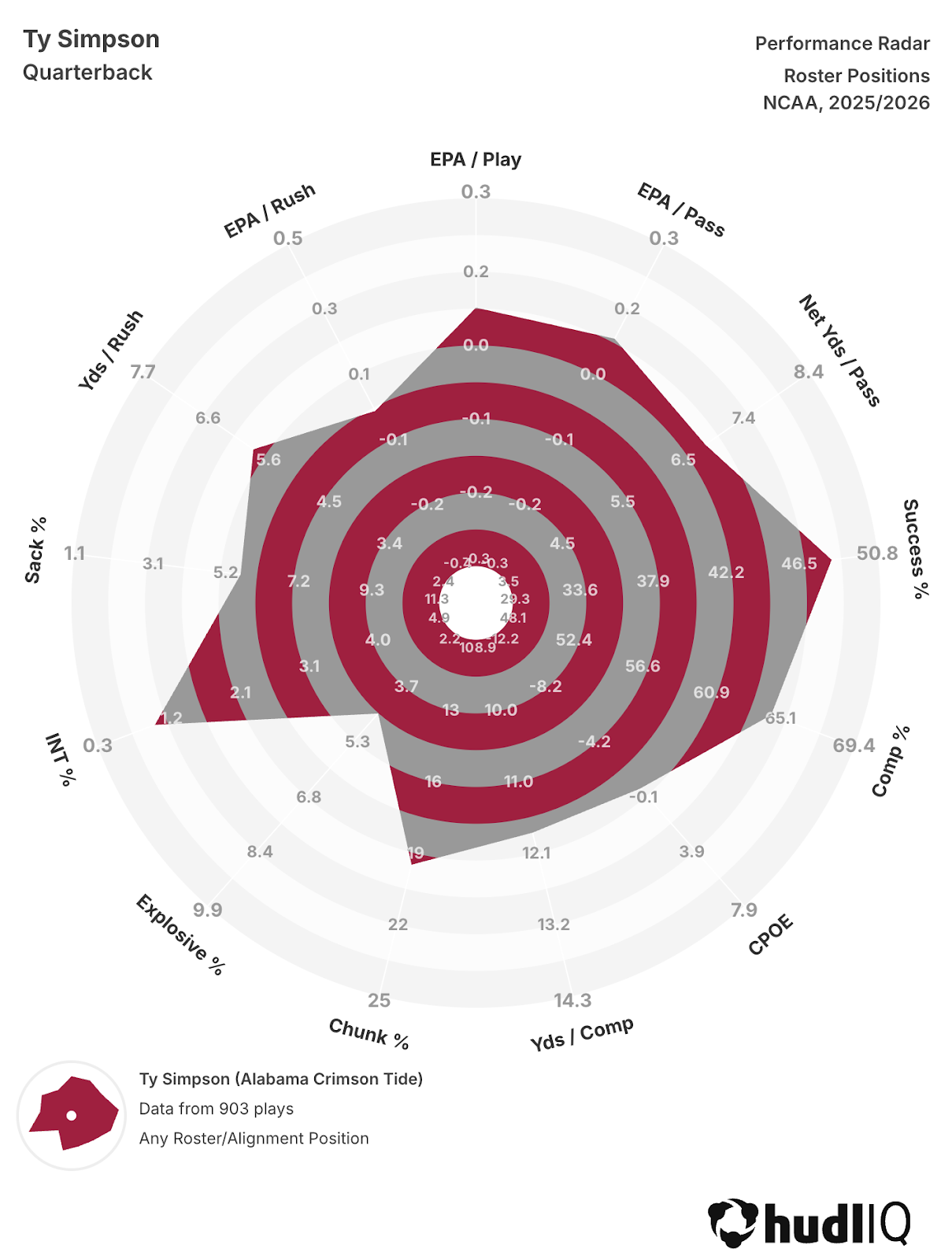
Last season, Simpson was an above-average quarterback in a wide variety of areas, but where he really stood out was with his 1.1% Interception %. Simpson posted a 28-5 TD:INT ratio, and rarely put the ball into harm's way. He could probably stand to be less risk-averse when he gets to the next level, but perhaps that’s something that will come with more seasoning and playing in an offense for more than one season.
The case of Garrett Nussmeier is an interesting one. He had a standout 2024 season and looked like a sure-fire first-round talent. But a nagging injury suffered in fall camp derailed both Nussmeier and LSU’s season, sending him falling down draft boards.
Despite playing hurt last season, Nussmeier posted plus EPA/Pass (0.05) and EPA/Play (0.05) figures, along with a respectable 67.3% Completion Percentage. He was good in the short game, but regularly failed to push the ball down the field with any venom, as evidenced by his low 3.1% Pass Explosive %.
Nussmeier is the son of a coach and “gunslinger” at heart. But that injury rocked his 2025 campaign, and he was rarely able to showcase what he could do against an SEC schedule. He did have a strong Senior Bowl showing (and appears to finally be healthy), which means it’s plausible that, as a rookie, he looks more like 2024 Nussmeier than the one we saw last season.
That brings us to the wildcard of the group: North Dakota State’s Cole Payton.
Payton was a serial winner at NDSU, showing flashes of brilliance with both his arms and legs. Payton, unlike Mendoza, Simpson or Nussmeier, is a true dual-threat player, frequently doing damage in the run game with battering ram-style run plays.