Examining the 2026 NFL Draft D-line Board

NFL teams are putting a premium on disruption.
If you’ve glanced at a 2026 NFL Mock Draft Board, one message is clear: the quick-twitch athleticism of the modern edge rusher is one of the most valuable assets in an NFL building outside of the quarterback position. In a draft where only one quarterback is guaranteed to go in the first round, the NFL is telling us that you can’t put a premium on disruption and striking fear into offensive units.
For the people running a Division I player personnel department, this isn’t just draft news—it’s a blueprint for roster construction.
When the NFL values freaks on the edge this highly, it means your evaluation of a three-star defensive tackle or portal EDGE player becomes that much more critical.
Projecting Defensive Ends at the Next Level
When evaluating the next crop of first-round edge rushers, it’s clear this group has a nice mix of skillsets, ranging from incredible physicality and tenacity (Miami’s Rueben Bain Jr. and Auburn’s Keldric Faulk) to quick-twitch speed (Texas Tech’s David Bailey) off the edge.
While the tape shows off ridiculous speed or impressive hand-fighting abilities, Hudl IQ data helps evaluators see beyond the film and dig into what makes players at this level special.
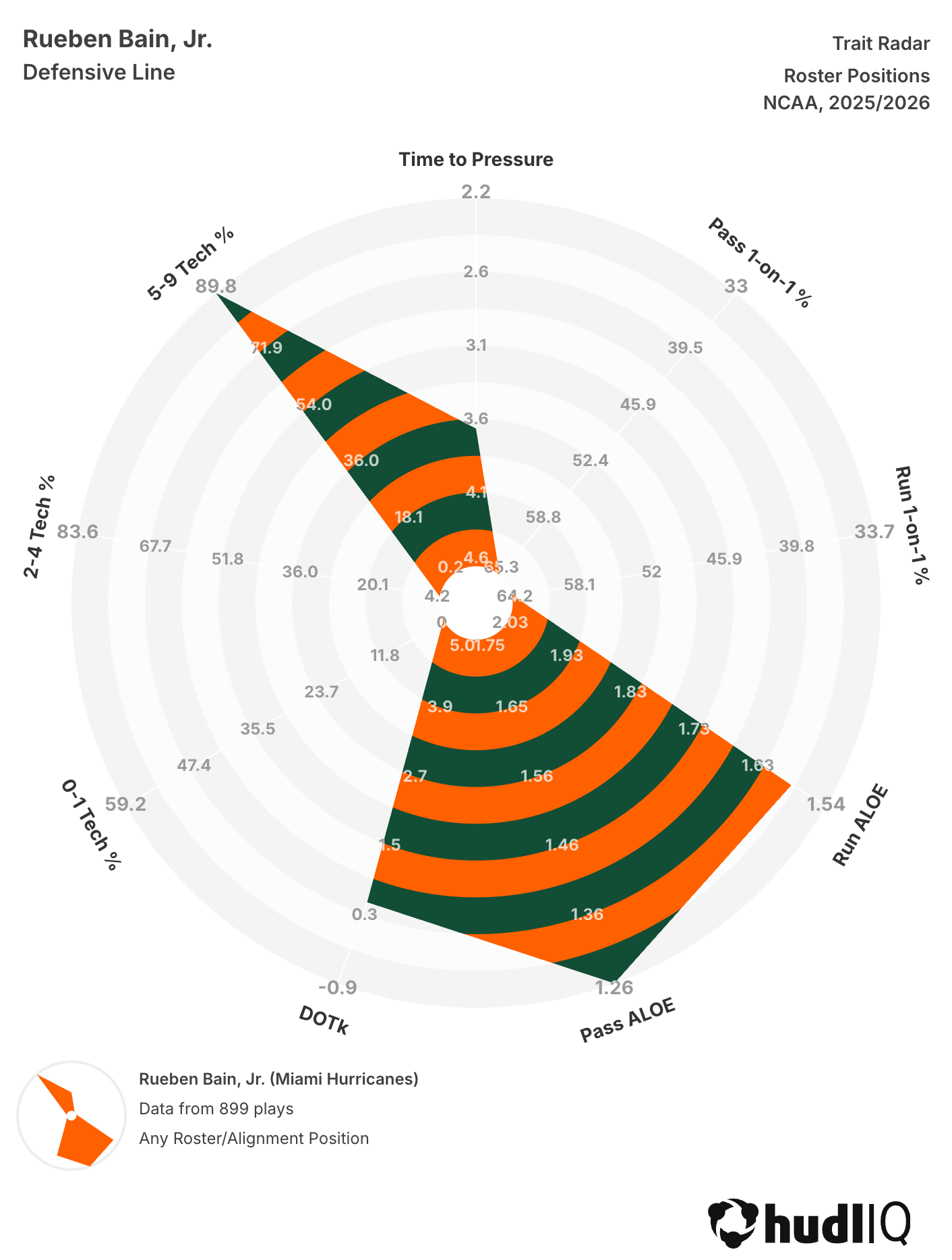
Using the Hudl IQ Trait Radar, we can see that Bain Jr.’s special talent is his ability to quickly disengage from blockers in both the pass and run games. During the 2025 season, Bain Jr. posted a 1.60-second Run ALOE (Average Length of Engagement) and 1.20-second Pass ALOE – both great indicators that he does an excellent job of using his hands to swat away blockers, get off blocks and make plays in the backfield. Bain Jr.’s arm length is an understandable concern for NFL teams, but it’s difficult to deny his talent despite some obvious physical limitations.
Unlike Bain Jr., former Auburn defensive end Keldric Faulk possesses little to no physical concerns for a player with first-round aspirations. Standing at 6-foot-6-inches and weighing 275 pounds, he has all the physical traits to be a game-wrecker in both the run and pass games off the edge for an NFL franchise.
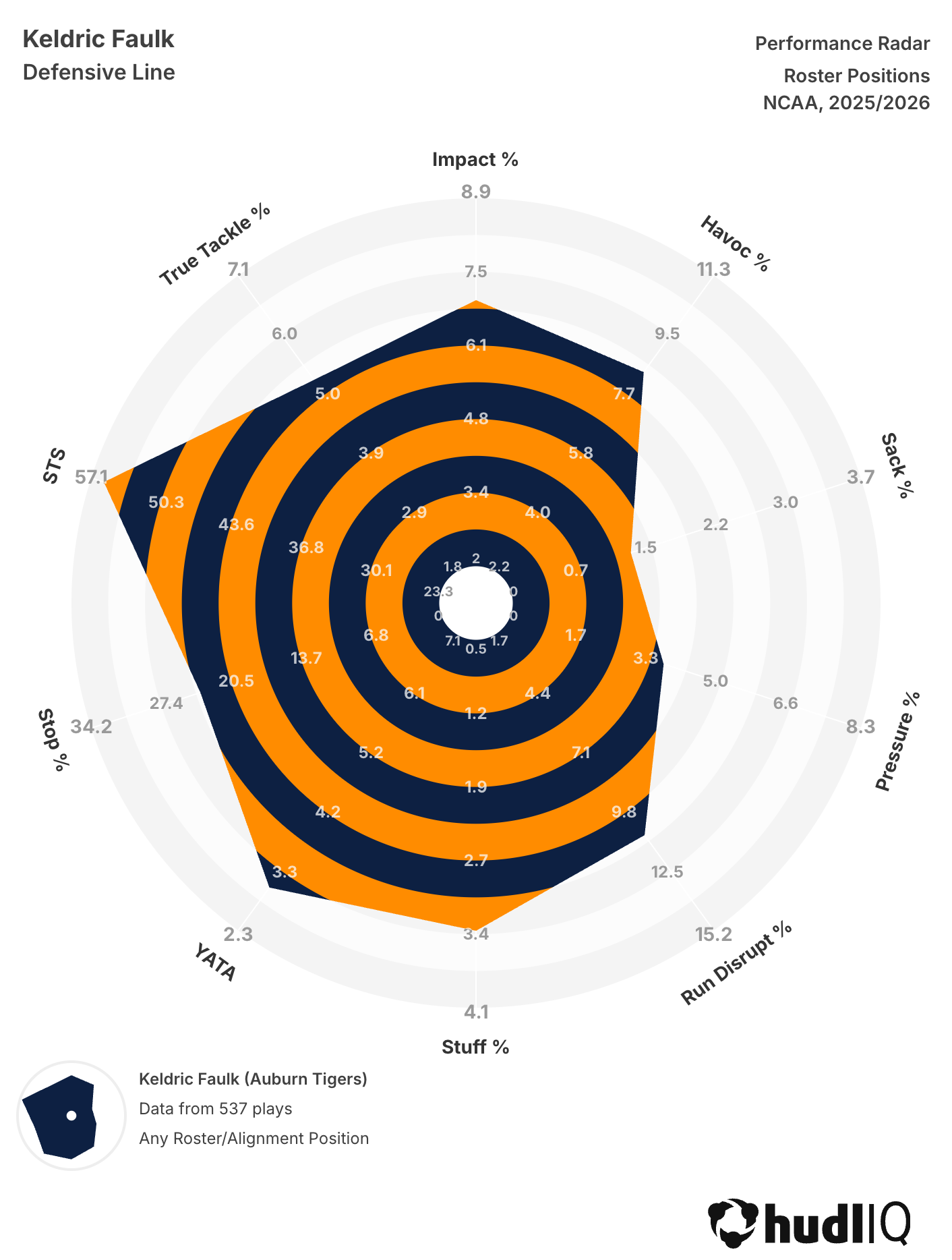
One of the unique things about Faulk is that he’s an excellent tackler in both phases of the game for someone of his stature. Using the Hudl IQ Performance Radar, we can see that during the 2025 season, Faulk posted a 55.9% STS (Solo Tackle Success Percentage) and 3.0 YATA (Yards After Tackle Attempt) figures. Both of these metrics are indicators that Faulk is a good tackler for a player in his position, and that when he makes contact with a ball-carrier, they don’t often pick up excess yards after contact. The data and tape tell the story of a player who possesses elite physical traits and the type of tenacity to play at the next level.
That brings us to Texas Tech EDGE David Bailey. Bailey, formerly of Stanford before transferring to Lubbock, put up back-to-back ridiculous seasons at the college level and has all the tools to be a prototypical pass rusher at the next level.
One of the unique things about Bailey is that he doesn’t possess the hulking frame that others at his position do. But what he lacks in beef and weight, he more than makes up for with his disruptive playing style and quick-twitch speed off the edge.
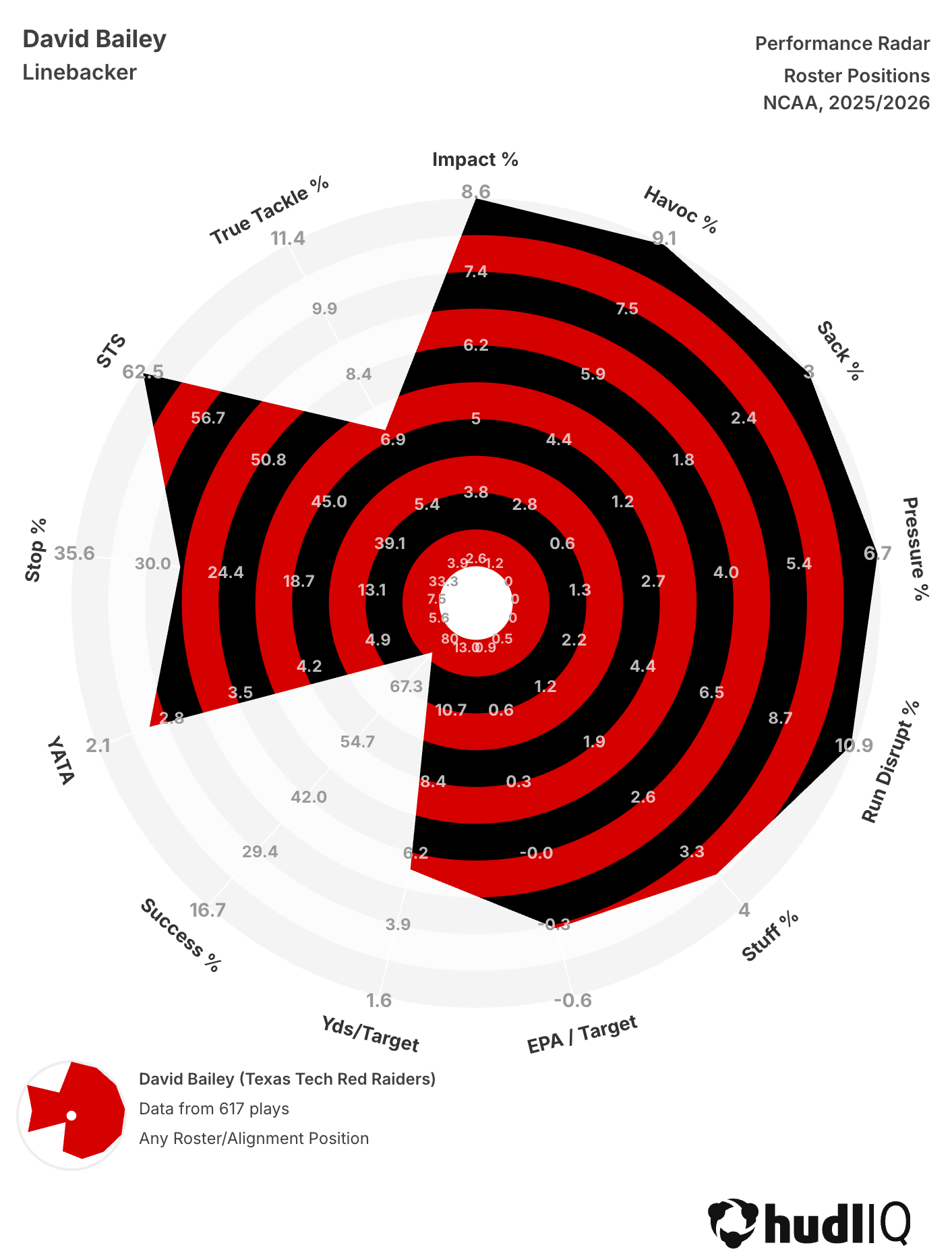
Using the Hudl IQ Performance Radar, the thing that immediately jumps out about Bailey’s 2025 season is his jaw-dropping Impact % (10.2%) and Havoc % (11.9%). Bailey made a living of disrupting plays in the backfield, blowing up plays in the run and pass game and being a nightmare of a 1-on-1 matchup – and the data backs that up.
The High Cost of the "Eye Test"
In a landscape where the top Power Four programs are reportedly operating with $40M rosters and elite portal entries are commanding seven-figure NIL deals, the margin for error has vanished. You can no longer afford to spend a scholarship—or a massive portion of your budget—on a player because they look the part in a highlight reel.
When the NFL signals that edge disruption is a premium asset, the college market reacts instantly. The price for "beef" and "twitch" is at an all-time high. To stay competitive, your personnel department must move beyond the eye test and into the realm of verified impact.