How to Watch Soccer: Why the Score Lies (and xG Doesn't)

Expected goals (xG) is the stat that tells you who created the better chances — even when the scoreline says something different. Here’s how to read it, and why it changes the way you watch.
You've seen this match before. One team pins the other back for 70 minutes — three posts hit, a goal ruled out for offside, a goalkeeper having the game of his life. The other team touches the ball six times in the final third and scores twice on the break. The scoreboard reads 2-1 to the wrong team. You know it. Everyone in the stadium knows it.
The data knew it long before the final whistle. That number is expected goals. xG.
What is xG?
Every shot taken in a soccer match carries a probability. Based on where it was taken, the angle to the goal, whether it was a header or a foot, and how it was created, analysts can calculate the likelihood that any given shot results in a goal. A penalty is worth roughly 0.76 xG. A header from 18 yards is worth around 0.05. A tap-in from two yards is close to 1.0.
Add up every shot across a full 90 minutes, and you get a number that captures the quality of the chances each team created — based on how often, statistically, shots from those situations lead to goals.
It does not care about who scored. It does not care about lucky deflections or the goalkeeper who woke up and decided today was their day. It just describes what the game actually produced.
What it Adds to the Final Score
The scoreboard is the result. xG is the story underneath it.
Teams tend to regress when they consistently score more goals than their chances suggest they should. Teams tend to improve if they consistently underperform their xG. Over a long enough sample, results catch up to the underlying quality of chances being created.
In a single match, the gap between a team's xG and their actual goals gives you useful context for what you watched. A team that wins 1-0 with an xG of 0.4 against their opponent's 2.1 got a result. Whether they deserved it is a different conversation. A team that loses 1-0 with an xG of 2.6 against 0.3 was the better team by a wide margin — and probably knows it.
The scoreboard is the result. xG is the story underneath it.
There is a subtlety worth knowing: not all xG is created equal. When shots happen in sequence — a penalty, then a rebound off the save — adding those numbers together overstates the actual threat. The rebound only existed because of the missed penalty, which means it was never as independent as the raw figure suggests. Analysts who work with this data every day account for those conditional sequences, which is why the xG picture of a match can look different from the numbers a broadcast graphic gives you.
What to Watch for
The next time you watch a match, start paying attention to the quality of chances rather than the volume. Ask yourself: was that shot actually dangerous?
A team peppering the keeper from 30 yards is not creating pressure. They are inflating their shot count while building almost no xG. A team that plays slowly and deliberately, then carves out two clear looks at goal from inside the box, is doing something far more threatening — regardless of how it looks on the surface.
A few things that reliably push xG up: shots from central positions inside the penalty area, chances that come from cutbacks across the face of goal, and situations where the defense is pulled out of shape before the shot is even taken.
Those are the moments analysts circle. Those are the moments that decide matches, even when they do not become goals.
The Number Underneath the Number
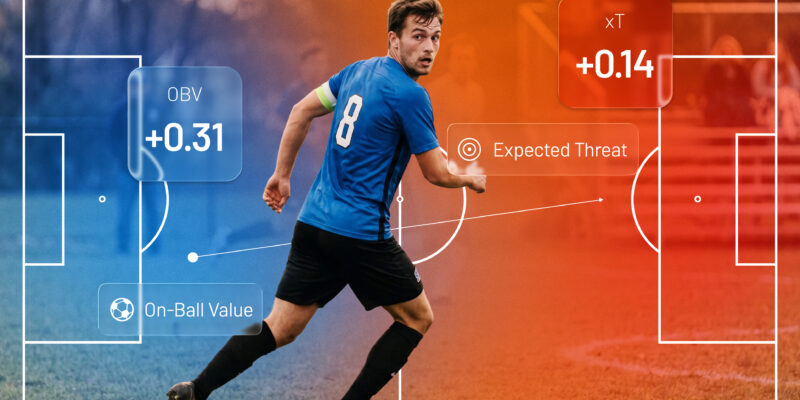
One thing xG does not capture on its own: everything that happened before the shot. The pass that split the defense. The carry that dragged three defenders out of position. The run that pulled the center back six yards left and opened the channel. All of that work happens before the shot, and all of it contributes to how dangerous that shot becomes.
Analysts at the highest level of the game have built models that assign value to every single action on the pitch — not just shots — to capture that full picture. xG is the entry point. Once you understand it, you start wanting to understand how teams build toward those high-quality chances in the first place.
That is where the modern game gets interesting. And it starts here.