A Deep Dive into Europe’s Women’s Goalkeepers 2024/25

As the top Women’s leagues around Europe start their new seasons, we use Hudl Statsbomb data to explore some of the top performing goalkeepers from the previous campaign.
Right before the 2025 UEFA Women’s Euros started, I was interviewed by Flashscore for an article on the development of female goalkeepers. Drawing from my past experiences as a goalkeeper and my time working in women’s football, I used data from previous Euros tournaments to discuss how the game and the position have both evolved.
Despite the limited sample size from a tournament environment, the initial analysis, nevertheless, revealed compelling takeaways.
Then, after seeing some incredible goalkeeping performances during the Euros, I had the urge to delve deeper. To properly explore this unique position, I needed to look at more games and more data points from the women’s game.
So, using Hudl Statsbomb data from the 2024/2025 seasons of the domestic leagues of the four nations that reached the Euros semi-finals – England, Germany, Spain and Italy – I analyzed the key data points of all the goalkeepers with at least 900 minutes played to find the top performers across the most important skill sets.
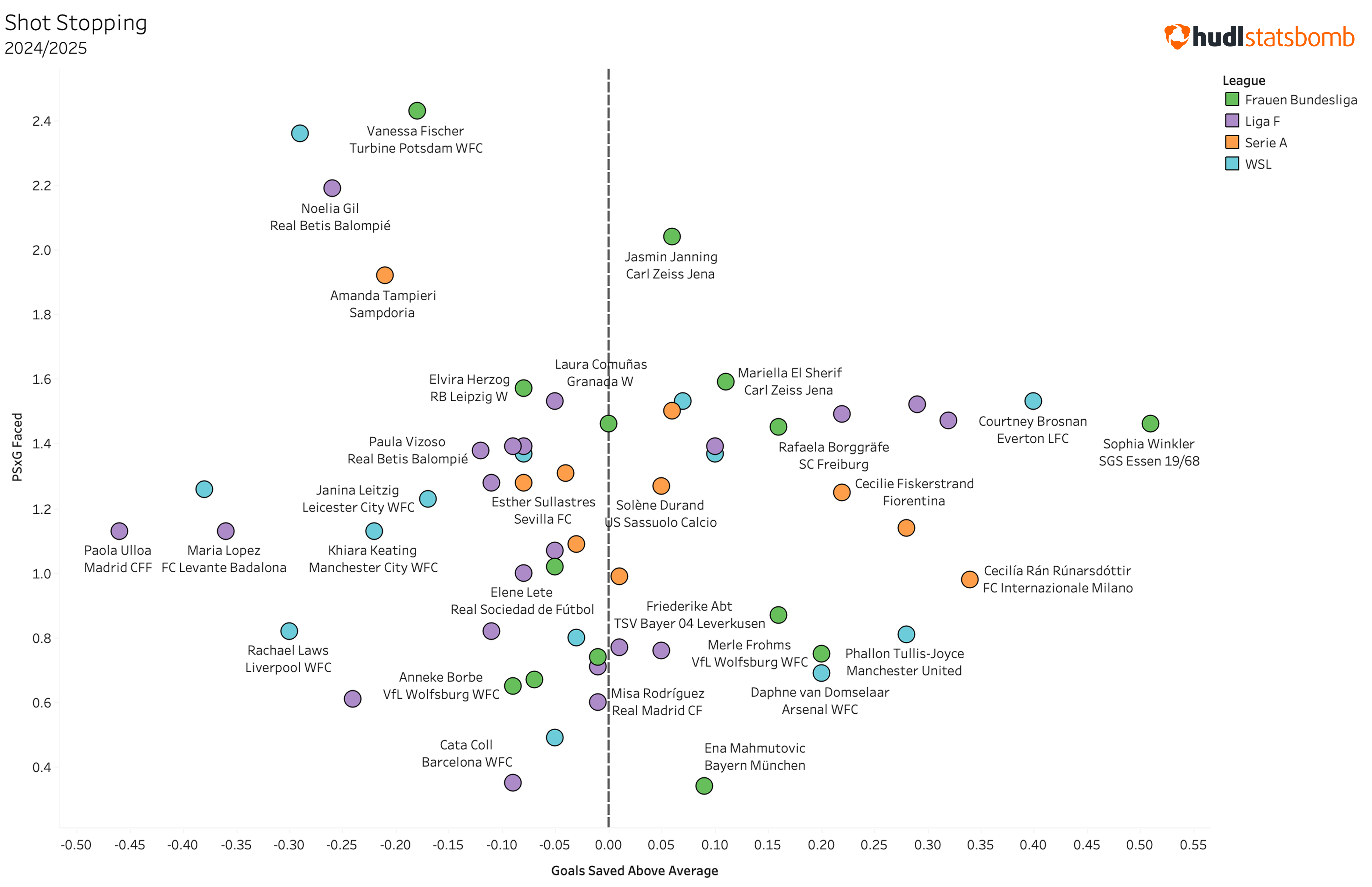
A quick glance at the bottom of the graph sees Cata Coll and Ena Mahmutovic stand out. They both have one of the lowest PSxG Faced per 90 minutes - thanks in part to playing for championship winning teams - but dealt with the shots received differently. Based on the quality of shots received, Mahmutovic appears on the positive side of the graph for effectively preventing an extra goal every ten games, while Coll conceded one more than expected in the same amount of games.
We also notice one of the two goalkeepers that played for Frauen Bundesliga side Carl Zeiss Jena last season. Jasmin Janning ranks in the top five for PSxG Faced from the four leagues, but despite the high quality of chances against her, kept herself in the positive side of Goals Saved.
Absolute goals-saved numbers aren't necessarily the optimal way to evaluate a goalkeeper's shot-stopping, though, as those that face more shots have more opportunity to over- or under-perform their numbers.
Therefore, we need to account for the volume of shots faced and look at the results on a per-shot basis.
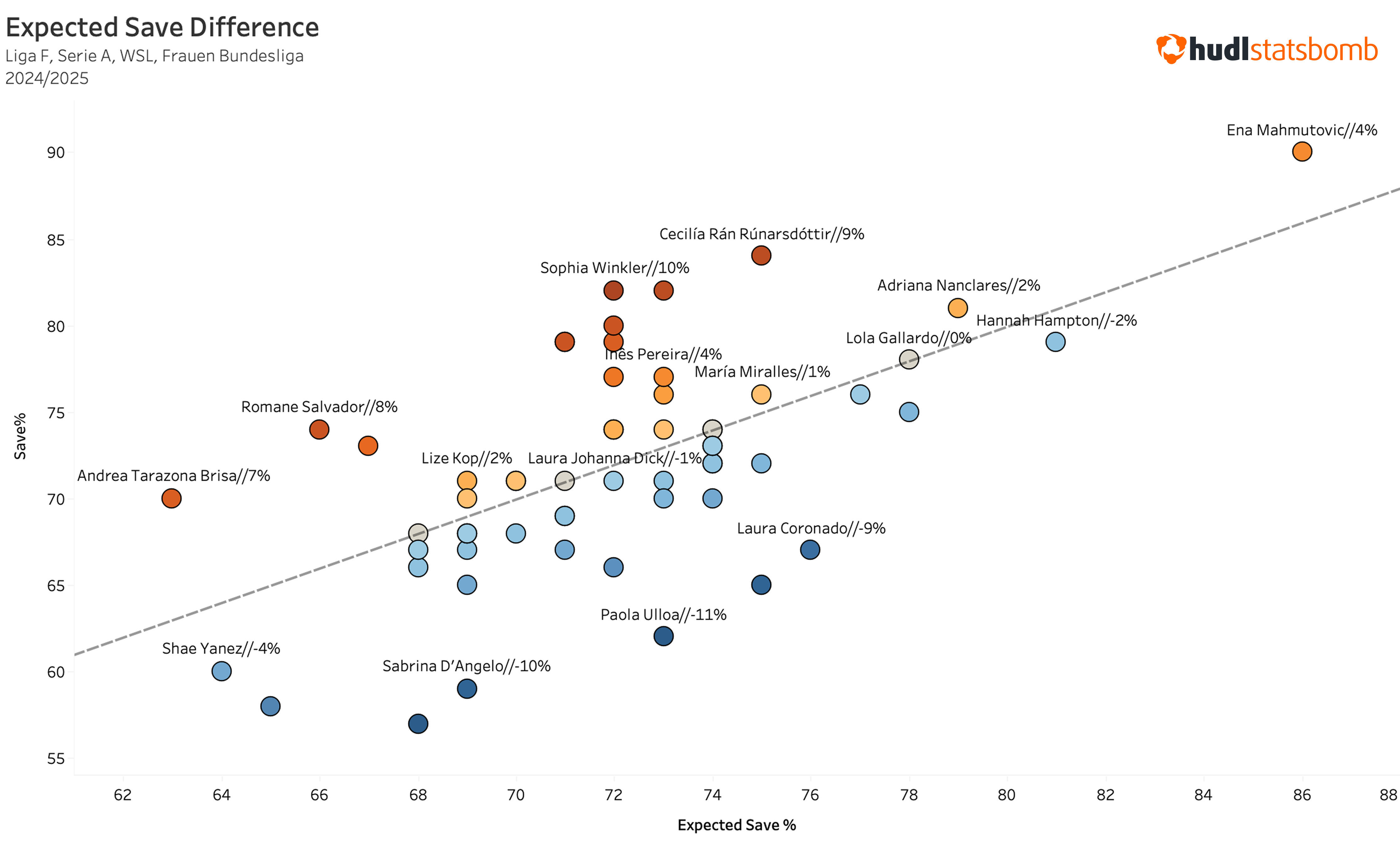
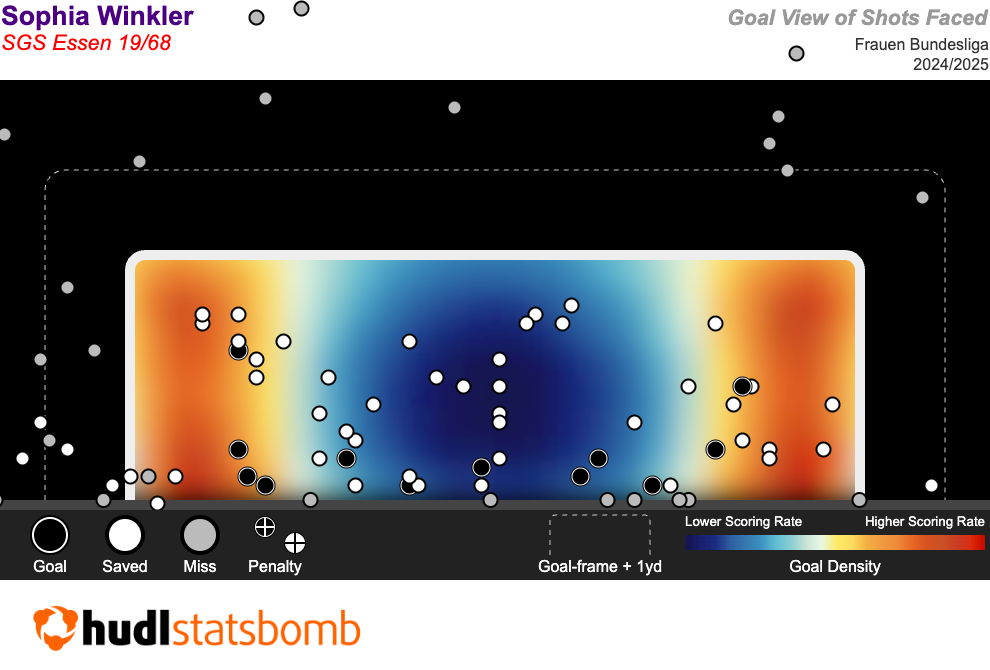
Comparing the percentage of on-target shots saved with the expected based on the PSxG, Sophia Winkler from SGS Essen was only expected to save around 72% of the shots faced but actually saved 82% of them, overperforming by 10% – the highest of any player from the four leagues. Winkler is also the top goalkeeper in our GSAA metric saving more than two goals on average every four games.
To break down Winkler’s shot-stopping ability further, we can look at the Goal View on the Statsbomb platform. Here we can see Winkler’s right hand side is her strongest one, saving a good percentage of shots in the top and bottom corners, as well as mid-air shots close to the post on her left side.
Positioning Errors
Sharp reflexes, reaction times and agility all contribute to shot stopping but can be nullified if a goalkeeper is not in the right place to reduce shooting angles, maximise goal coverage, and control their penalty box.
Based on our model that calculates how far a player is from the optimal position to face a shot, we see that Positioning Errors have been declining in women’s goalkeepers, suggesting that they have been improving their positioning.
Looking at the model for the 2024/25 season in our featured leagues, overall the WSL is the league with the lowest Positioning Error Average, with Champions League-winning Daphne van Domselaar at the top.
Serie A Femminile is the next best league for the least Positioning Errors, while also boasting the most compact range within all the goalkeepers. The ‘keepers with the best and worst positioning errors are not too far from each other, especially compared to the Frauen Bundesliga for example, where it varies a lot more.
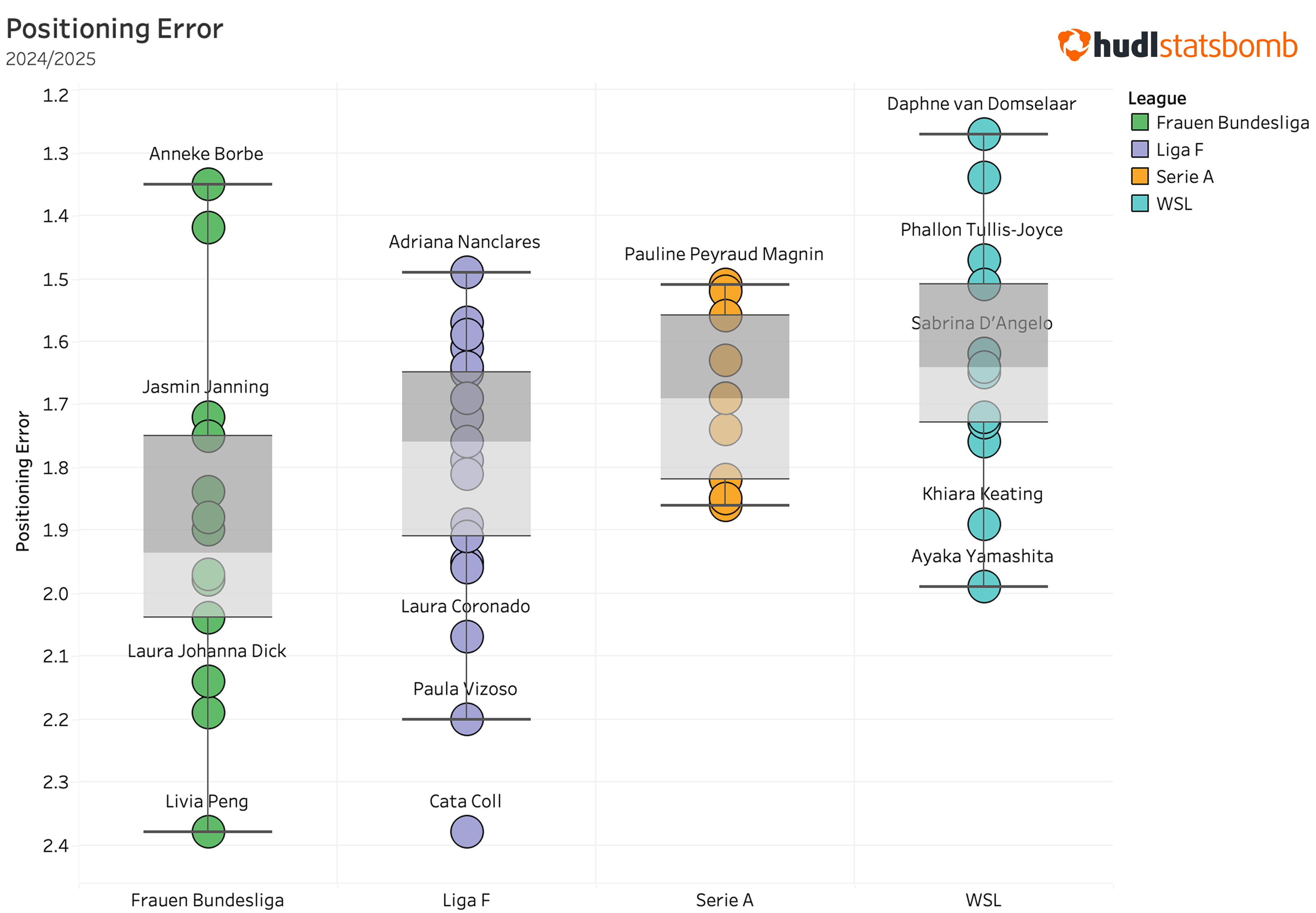
Interestingly, Cata Coll ranks as the Liga F goalkeeper with the most positioning errors, despite Barcelona topping the league and having the best defensive record, with just 16 goals conceded in 30 games. This Positioning Error could explain why Coll was on the negative side of our GSAA earlier.
Sweeper Keeper
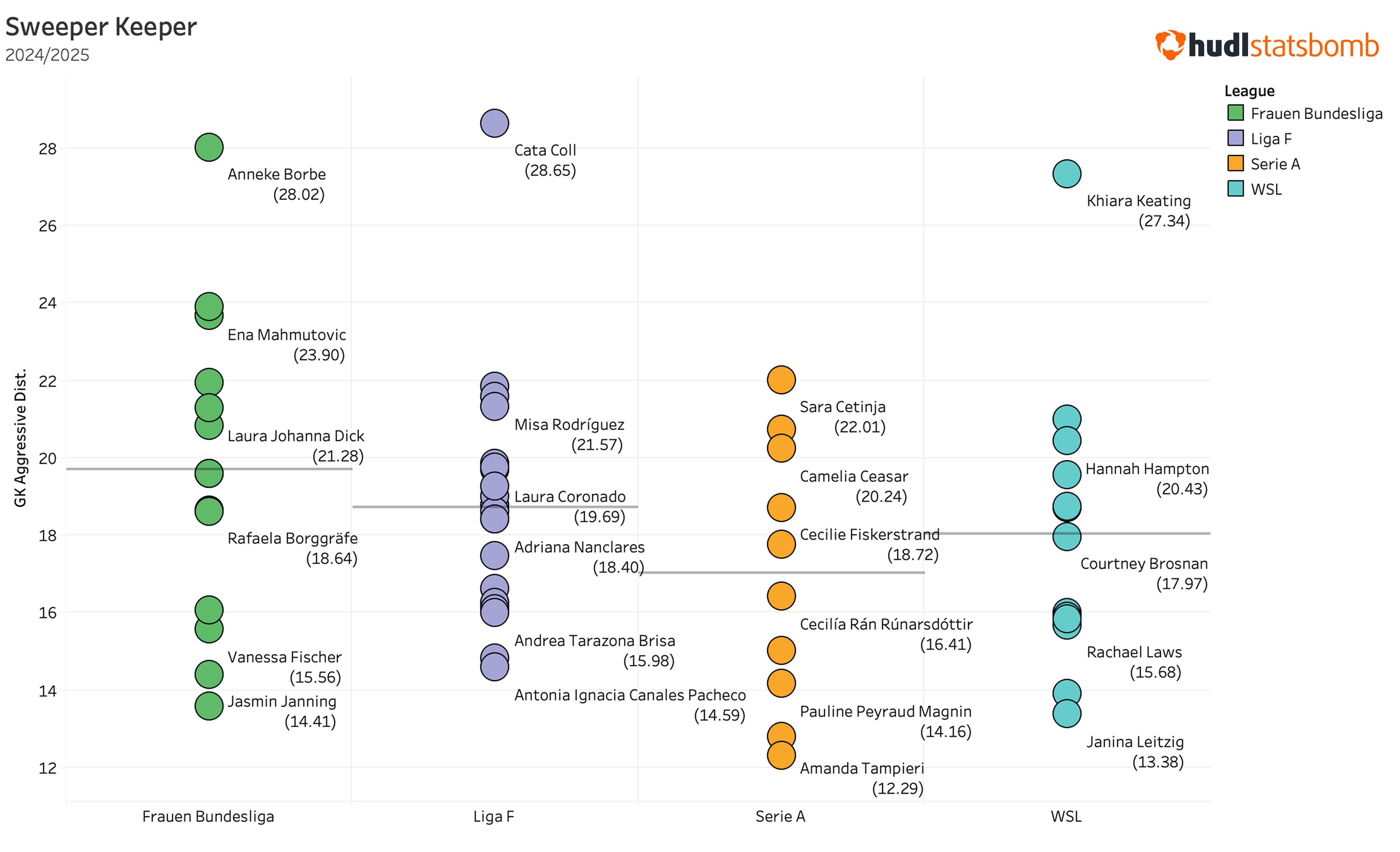
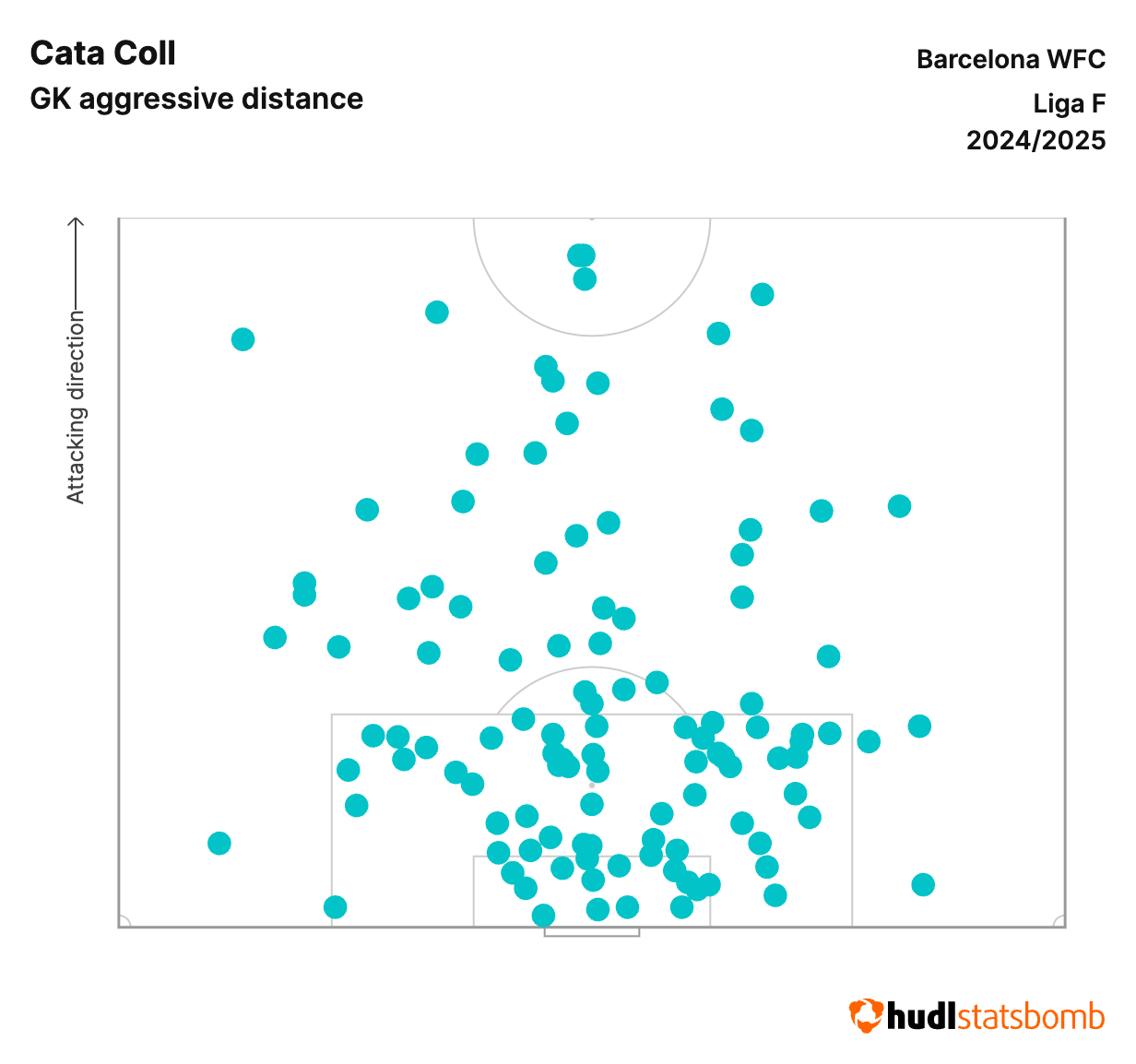
Now turning our attention from the last line of defence to preventive actions that snuff out attacks earlier, let’s look at who are the most aggressive sweepers.
When playing for a possession-based team, goalkeepers tend to encounter a higher percentage of counter-attacks. With outfield players pushing forward into the opposition's half, a ball in-behind, a fast break or a long carry can be a great chance for the opposition to get a clean run at goal.
As a result, goalkeepers have to be high up the pitch and aware of these situations to cut out the danger as soon as possible. Being confident and successful with this is, therefore, a very important skill in a goalkeeper.
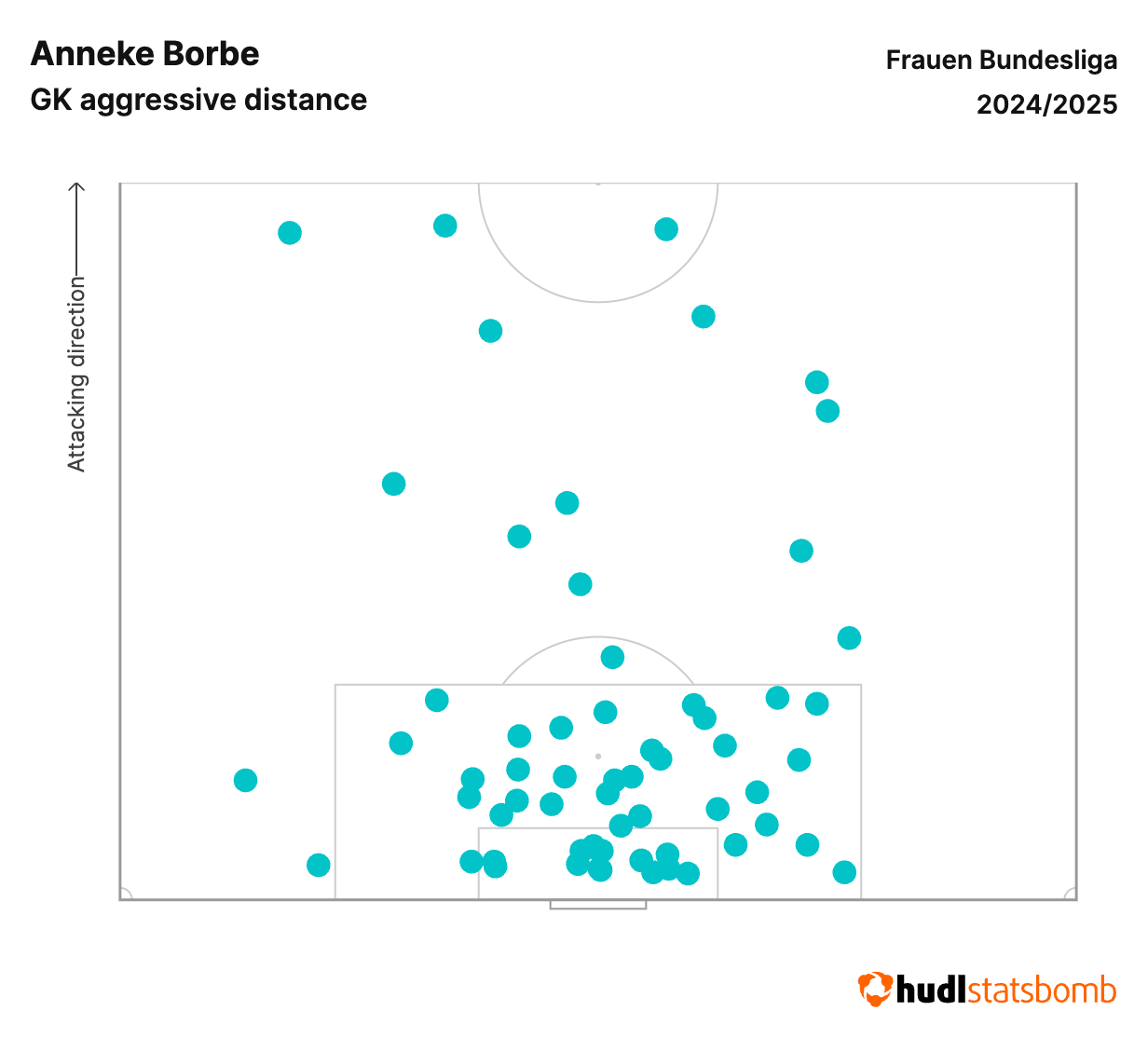
Goalkeeper Aggressive Distance is an average of how far from the goal the goalkeeper is when coming forward to perform defensive actions, that is to say tackles, interceptions, blocks, and ball recoveries.
Distribution
A goalkeeper's main job will always be to prevent goals. However, in more recent years, they have also been asked to be more involved in the in-possession phase. Managers are looking for players that not only can save goals but also help in their creation too.
To explore this further, we can use the Hudl Statsbomb On-Ball Value (OBV) model to measure how valuable goalkeepers passes are.
For example, a goalkeeper can have a 98% passing rate but it doesn’t mean much if they’ve only had around five passes per game and all of them were just to the nearest centre back. What we want to understand is how much value a goalkeeper is creating with the passes they make each game.
By comparing OBV and Hudl Statsbomb metric ‘Pass into Danger’ – which measures the percentage of passes made where the recipient was deemed to be under pressure or was next engaged with a defensive action – the data reveals which ‘keepers take more risks with higher potential rewards or those that choose to play it safe.
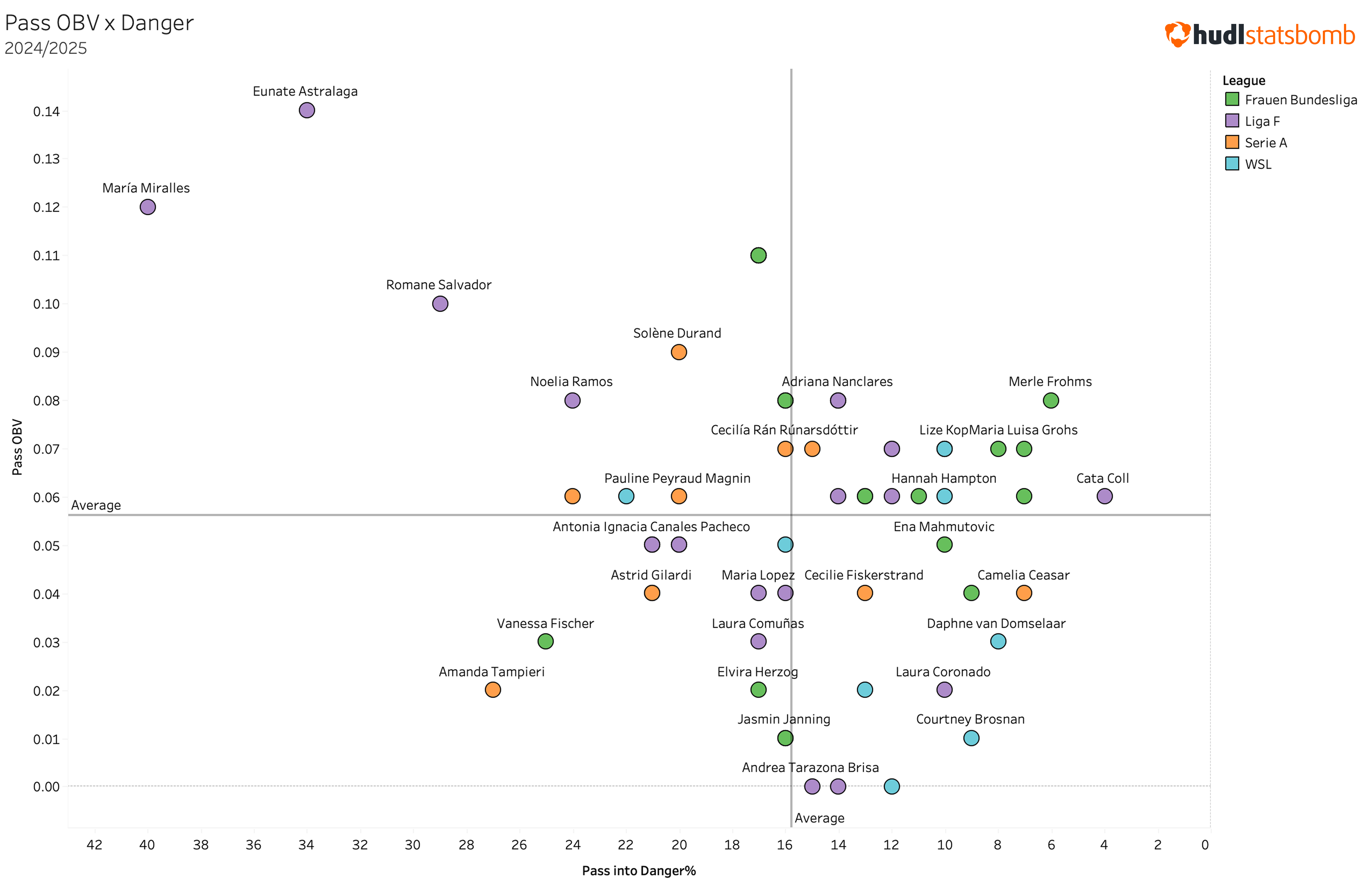
The players in the top right quadrant are the goalkeepers that add the most value with their passes without being overly risky. Here we find both of the Euro finalist ‘keepers, who with their clubs tended to play safe but valuable passes. Here, we also find the majority of Frauen Bundesliga keepers are very safe when playing out from the back.
The bottom right quadrant is where you encounter the ‘playing it safe’ keepers; no risk but no reward either. The majority of WSL keepers are on the right hand side of the graph where passes are not dangerous but offer little towards goal creation.
Now going over to the other side of the graph, particularly in the upper left quadrant, we find four Liga F keepers who reap the most reward from their high stakes passing. Above all, Maria Miralles stands out as being the most risky ‘keeper, having 40% of her passes followed by a pressure or defensive action.
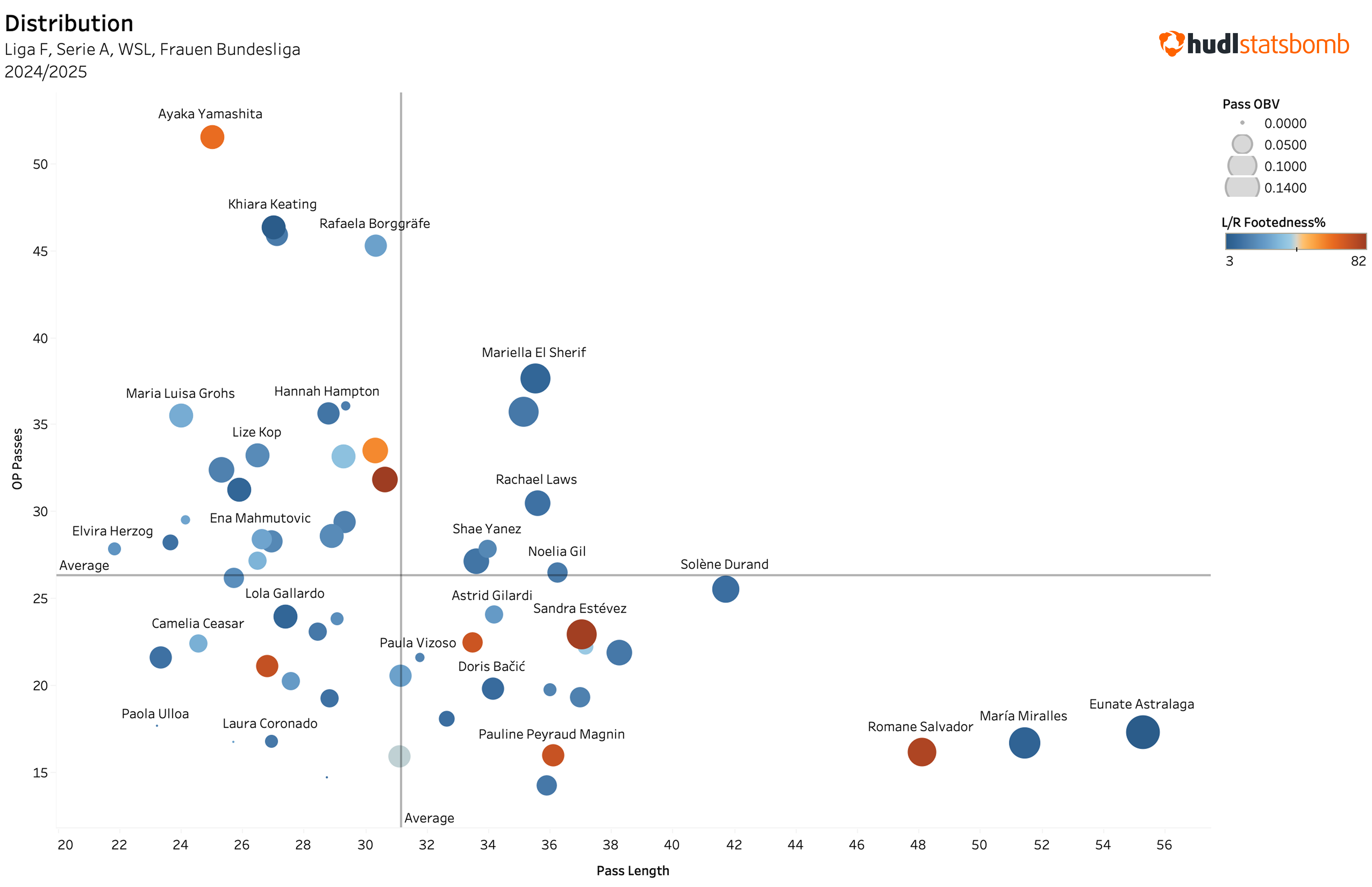
Diving deeper into goalkeepers passing, in the next visual I’ve looked at Open Play Passes per 90 minutes played and the average length of those passes, combined with their OBV. I’ve also used Hudl Statsbomb pass footedness, to see which goalies are left-footed, to add an extra layer of depth to the insights that emerge.
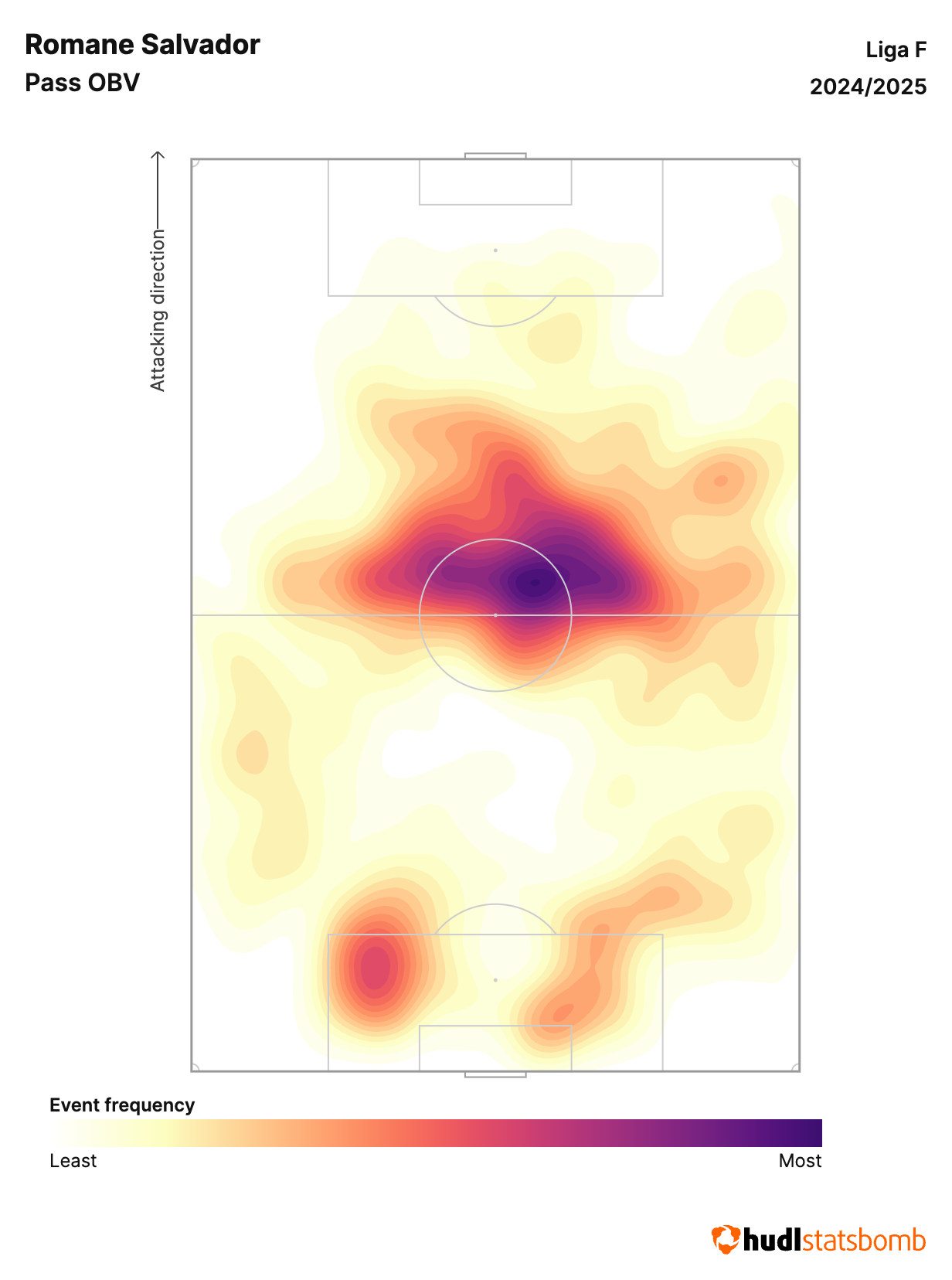
A couple of lefties with differing styles immediately jump out. Romane Salvador from Espanyol had less than 15 passes per game and on average looked for the long pass, adding value and finding the middle of the pitch. Alternatively, another left-footer, Ayaka Yamashita, had more passes per 90 than anyone in the four leagues, while also adding plenty of value to them, but choosing to do it with shorter ones on average.
So, for clubs on the look out for a goalkeeper, data can quickly narrow down the search for one that best fits their style of play – from those who favour long balls to hit target players to those looking to build out from the back with short intricate passes.
Hudl are proud to support the women's game by offering free access to the Hudl Statsbomb platform for their own league to teams in England, France, Germany, Italy, Spain, United States, Canada, Australia, Brazil, Denmark, Finland, Japan, Mexico, Netherlands, Norway and Sweden. Request your access today.