A Deep Dive Into Europe's Goalkeepers In 2023/24


A unique position, the goalkeeper. But also one of the most measurable, given a large aspect of their role is simply to keep the ball out of the net. It possibly gets overlooked just how much a good or bad goalkeeping season can impact the outcomes of a team's season relative to other positions on the pitch, with there often being a gap of 10-20 goals between the best- and worst-performing shot-stoppers in a league in any given season.
Of course, in the modern game, goalkeepers are expected to do much more than save shots. At the elite level, goalkeepers must be aerially confident and penalty box dominant, quick off their line to sweep up behind, and be comfortable and at ease with baiting then beating a press when the ball's at their feet. Today we're going to work through each of these skill sets to identify some of the best-performing ‘keepers around Europe this season.
All viz and analysis in this article have a 1200 minutes played cutoff.
Shot-Stopping
As mentioned, the shot-stopping aspect of a goalkeeper's job is both the most important and the most measurable.
When we upgraded the Hudl Statsbomb xG models a couple of seasons ago, one of the metrics we revisited was the shot-stopping model. Where it previously only included the shot placement to measure how difficult a shot faced was to save, we now incorporate the velocity of the shot as well, plus a host of other upgrades (see the article for details).
So, here's who the Hudl Statsbomb post-shot xG models think has been the best (and worst…) shot-stoppers in the Big 5 leagues this season:
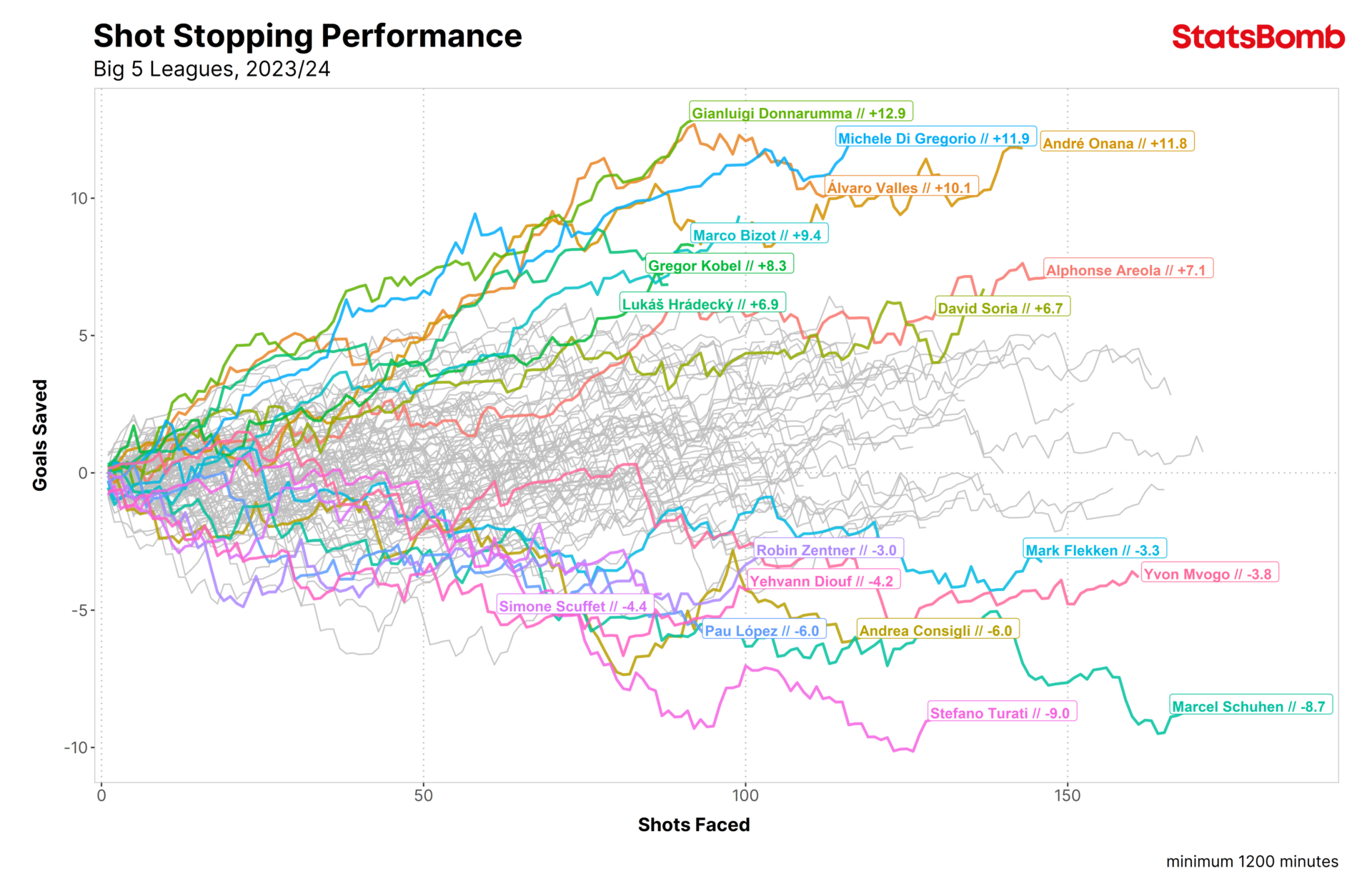
So far in 2023/24, Paris Saint-Germain's Gianluigi Donnarumma has saved +12.9 goals based on the shots he's faced and their difficulty, closely followed by Michele Di Gregorio (Monza, +11.9) and André Onana (Manchester United, +11.8). Interestingly, Álvaro Valles of Las Palmas was tracking close to Donnarumma a few weeks ago, but a run of conceding goals at a rate above expected has seen him drop away from the top three.
Absolute goals-saved numbers aren't necessarily the optimal way to evaluate a goalkeeper's shot-stopping, though, as those that face more shots have more opportunity to over- or underperform their numbers. So, we need to account for the volume of shots faced and look at things on a per-shot basis.
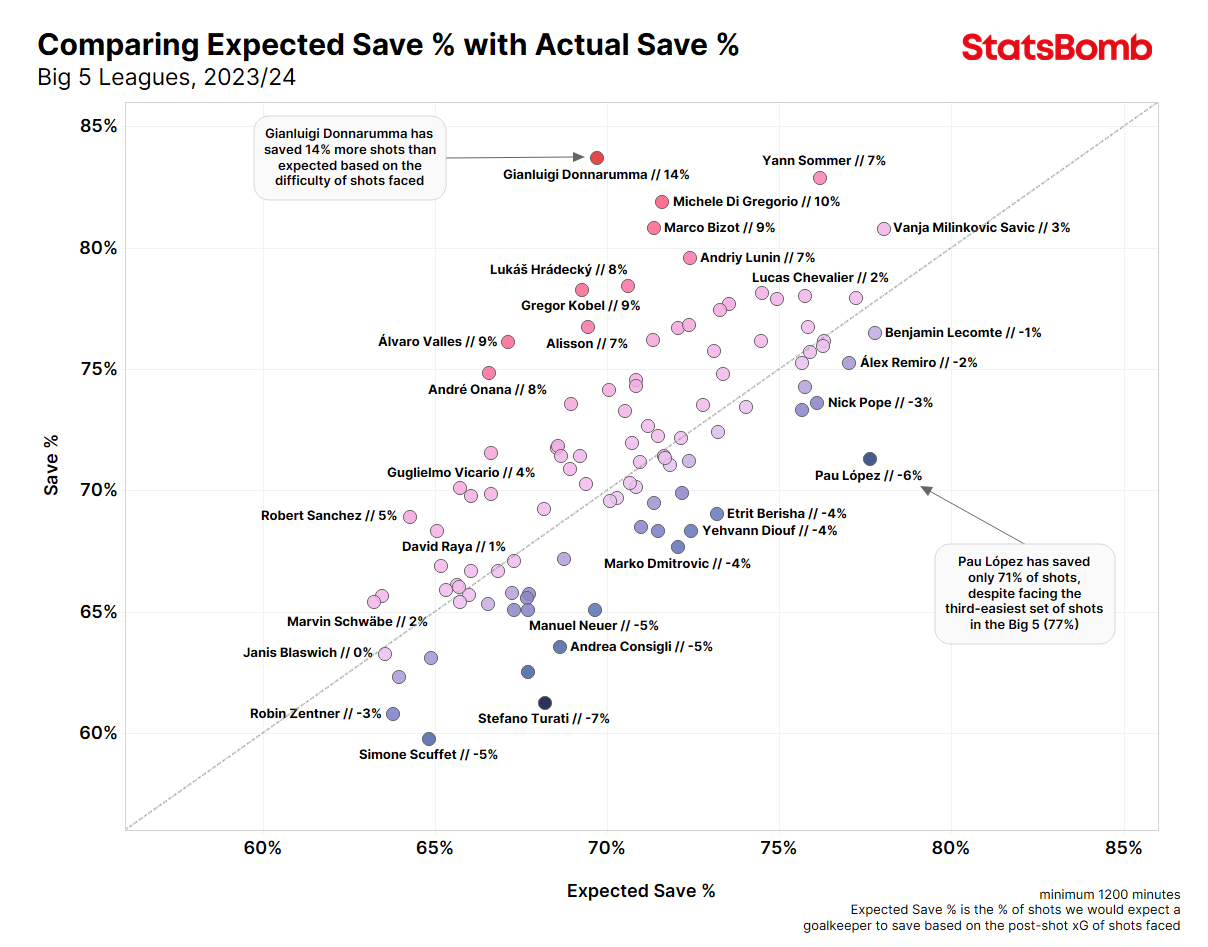
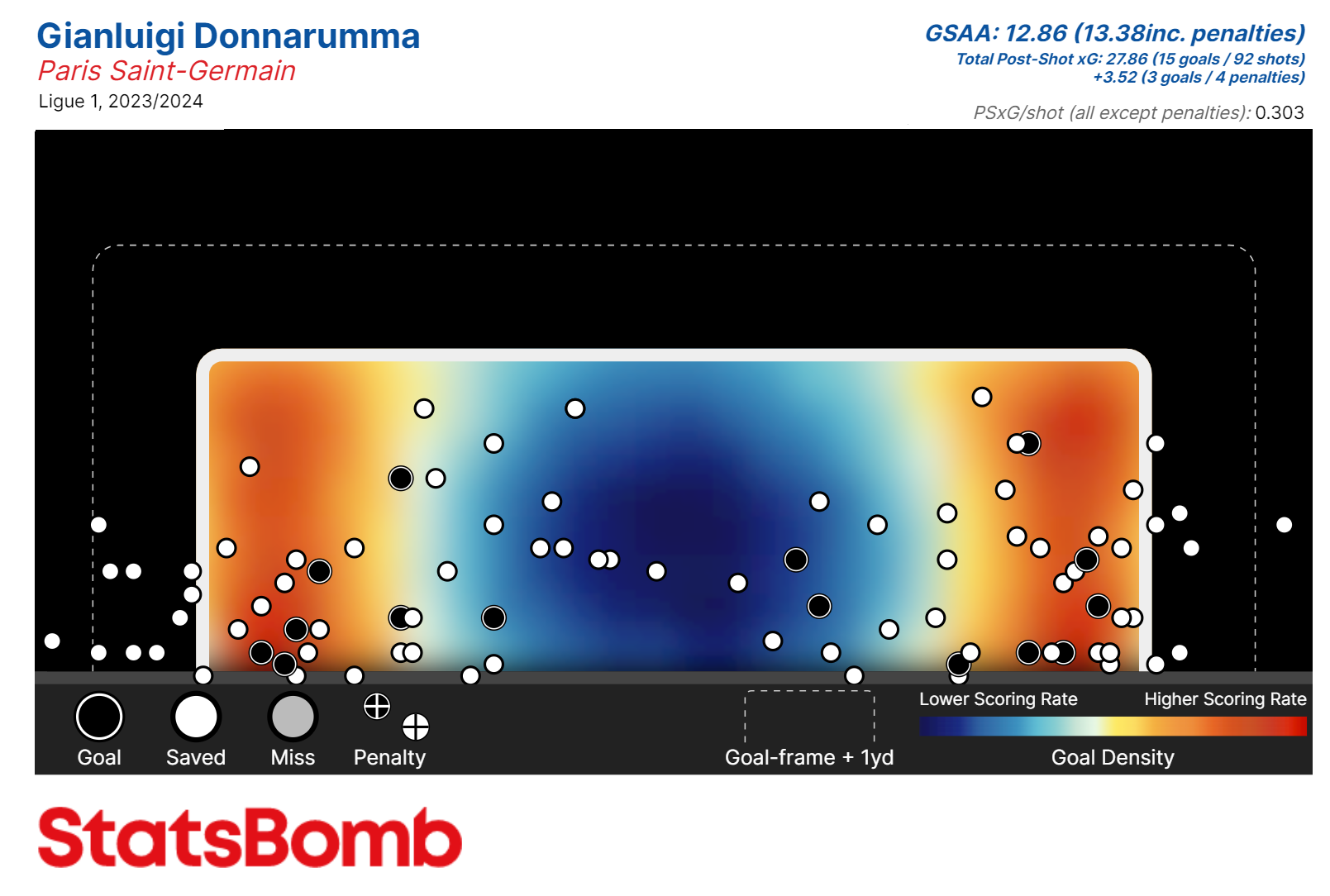
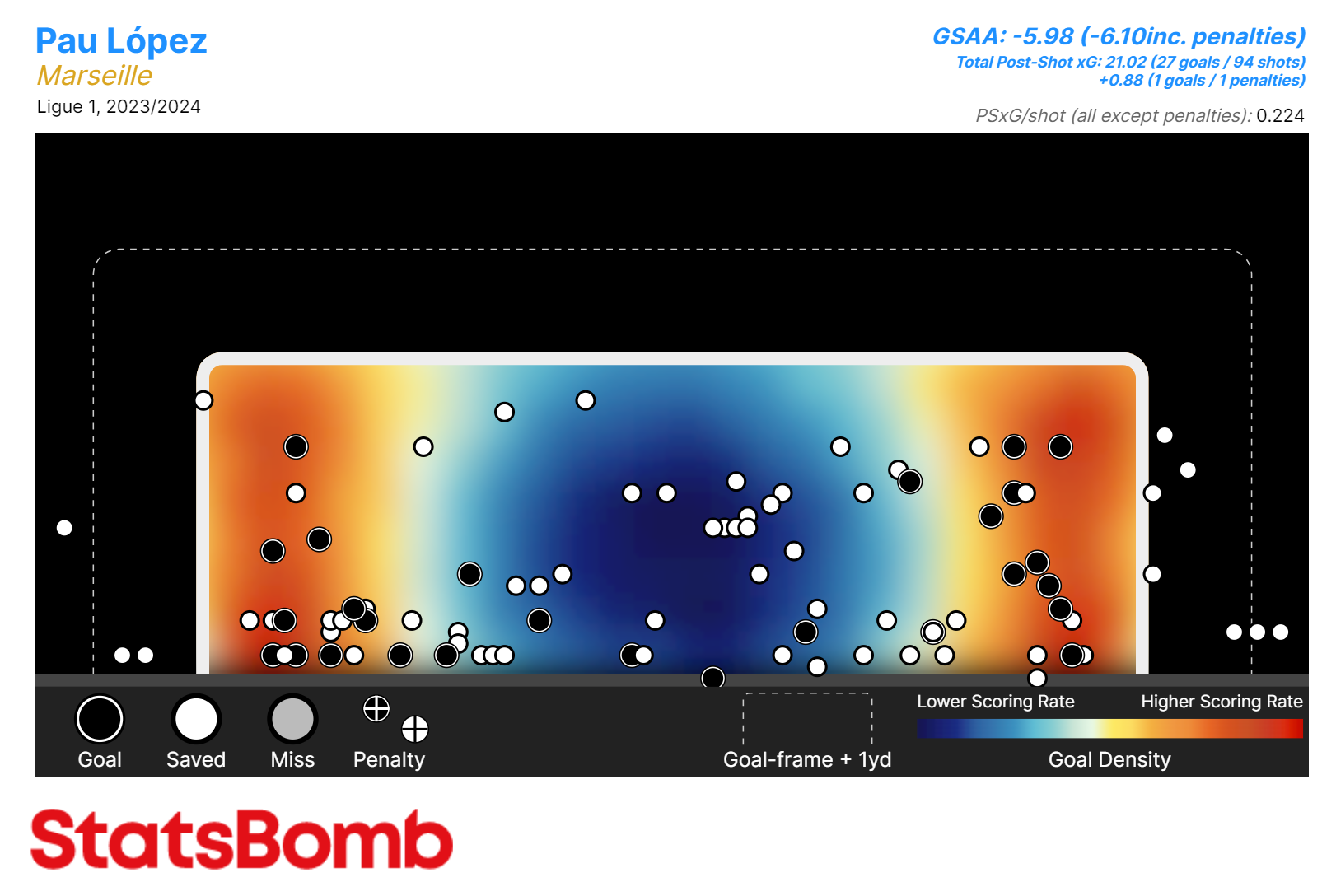
Compared to Donnarumma's shots faced map, López has faced many more shots straight at him in the middle of the goal -- he's managed just fine with those. Cast your eyes to either side, though, and it's clear where the problems lie, saving just 6/15 shots to his left (viz-right) and 8/17 to his right (viz-left).
To reiterate the point in the opening paragraph, Donnarumma's saved nearly 13 goals in Ligue 1 this season; López is at -6: a 19-goal swing that will undoubtedly impact the league table.
Cross Claiming & Aerial Ability
It's up for debate which skillset in a goalkeeper's range has the next most significant contribution behind shot-stopping, but claiming crosses has been around the longest, so we'll start there.
Cross claiming can be a complex one to measure with event data. It's a pretty low frequency event, and even the decision to come for a cross or not has risks on both sides. Not coming for a cross can mean a goalkeeper is better positioned to save the subsequent shot than they would've been if they'd attempted to claim, but that's counterbalanced by the fact they could stop the shot occurring in the first place if they successfully deal with the cross.
We can model how aggressive a goalkeeper is in deciding to come for a cross by assigning each pass into the box an "xClaim" number – basically, how likely is this pass to be claimed by a goalkeeper, based on the start location, where the pass ends, the height of the pass, etc. We can then look at how many passes a goalkeeper actually comes for and see whether they're more or less likely than average to attempt a claim.
That's what our Cross Claim Attempts over Average % (CCAA%) model does.
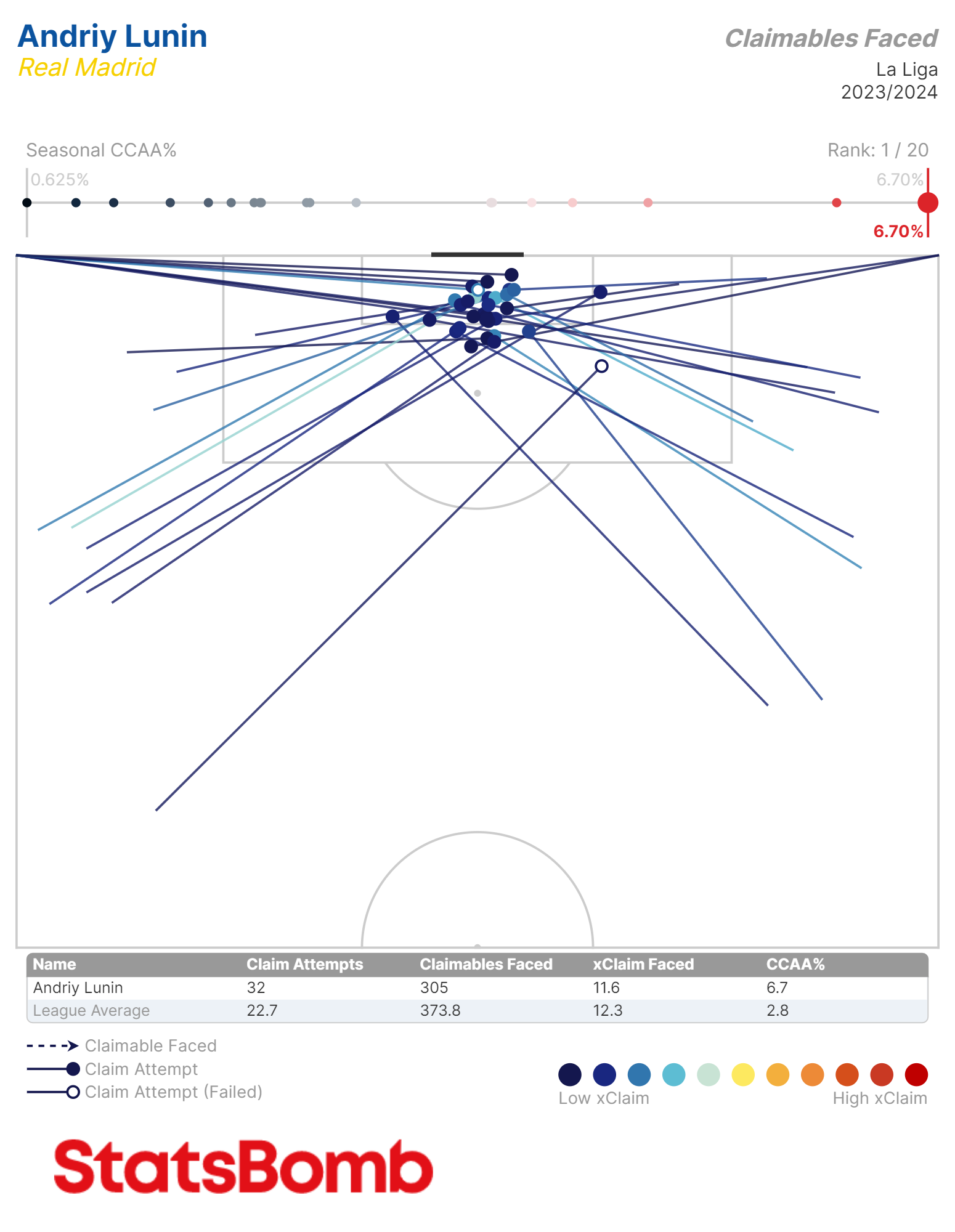
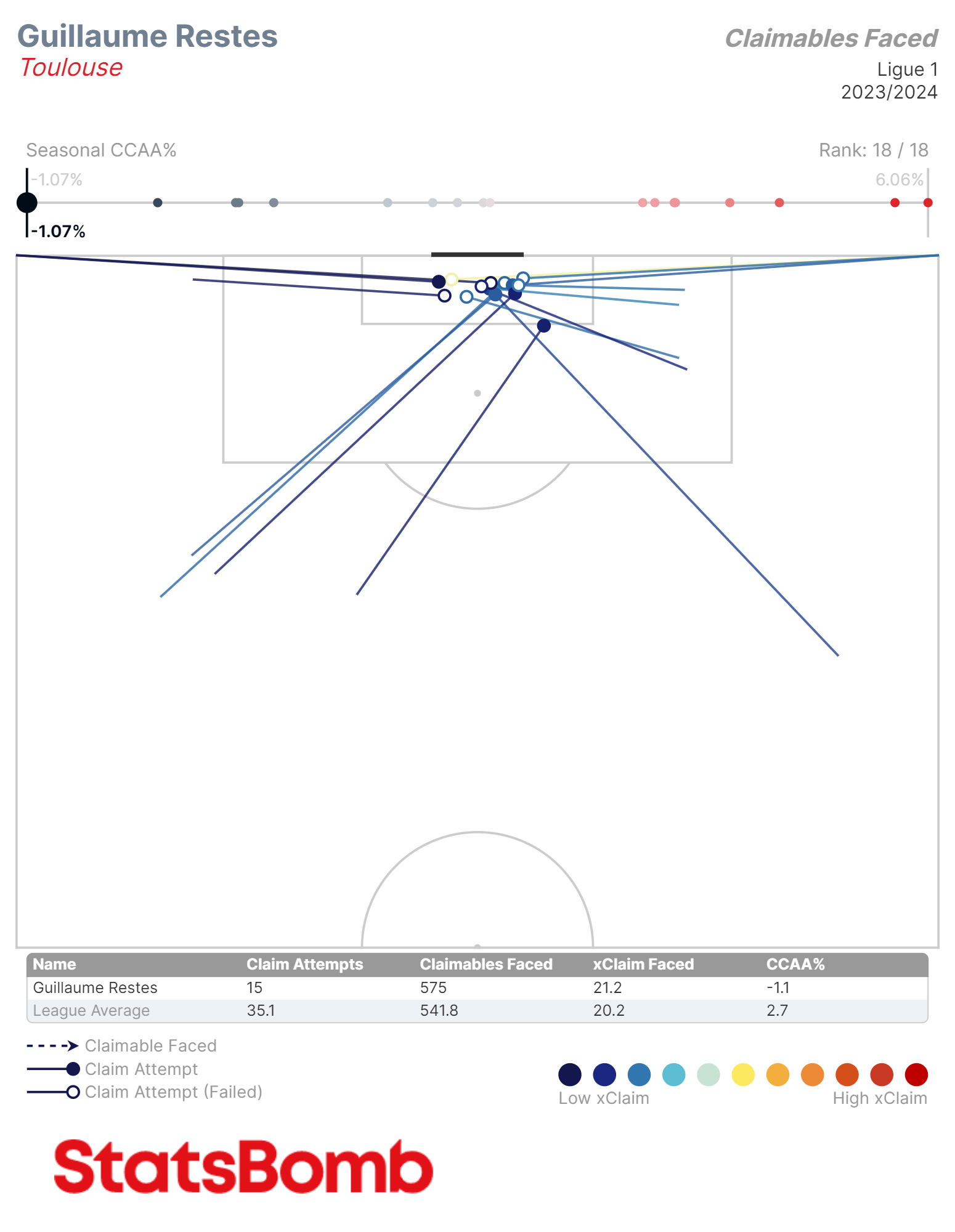
Here, we will again compare two goalkeepers at opposite ends of the metric: Andriy Lunin (Real Madrid) and Guillaume Restes (Toulouse).
Since winning the gloves from Kepa in the battle to be the long-term successor to Thibaut Courtois, Lunin has won the hearts of Real Madrid fans with some complete goalkeeping performances in nets: keeping the goals out but also displaying excellent command of his box.
By our CCAA% model, Lunin is the most aggressive cross-claimer in the Big 5 leagues, attempting to claim 7% more crosses than we'd expect the average goalkeeper to try and collect. How this looks in reality is 32 cross attempts in La Liga, with 30 of them successful (94%), at a rate of close to two claim attempts per 90.
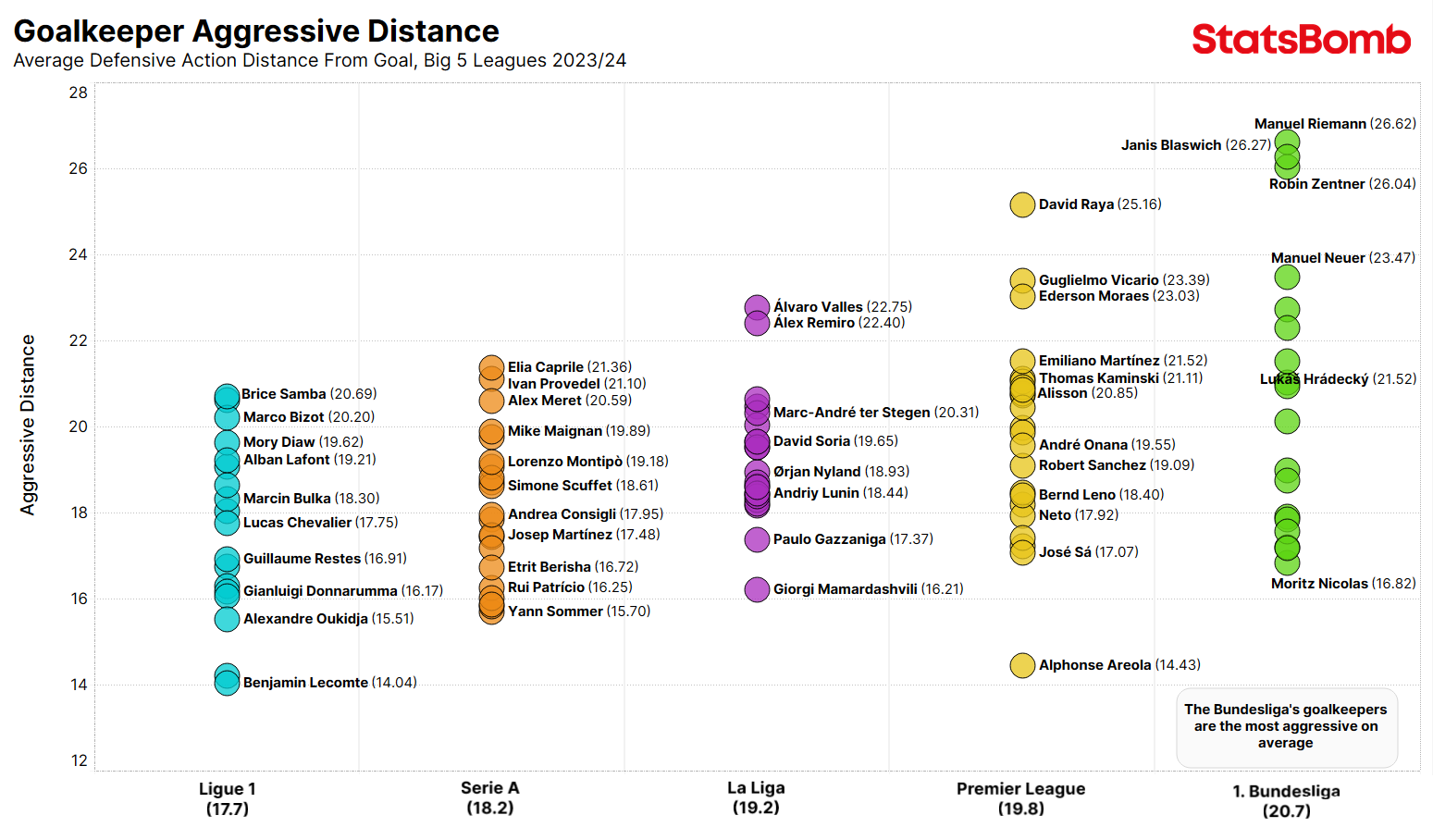
If it's sweeper 'keepers you're into, look no further than the Bundesliga. Half of the goalkeepers in the German top tier sweep up higher up the pitch than Ligue 1's most aggressive sweeper, Brice Samba. Watching Manuel Neuer playing on the halfway line for over a decade has evidently rubbed off on them.
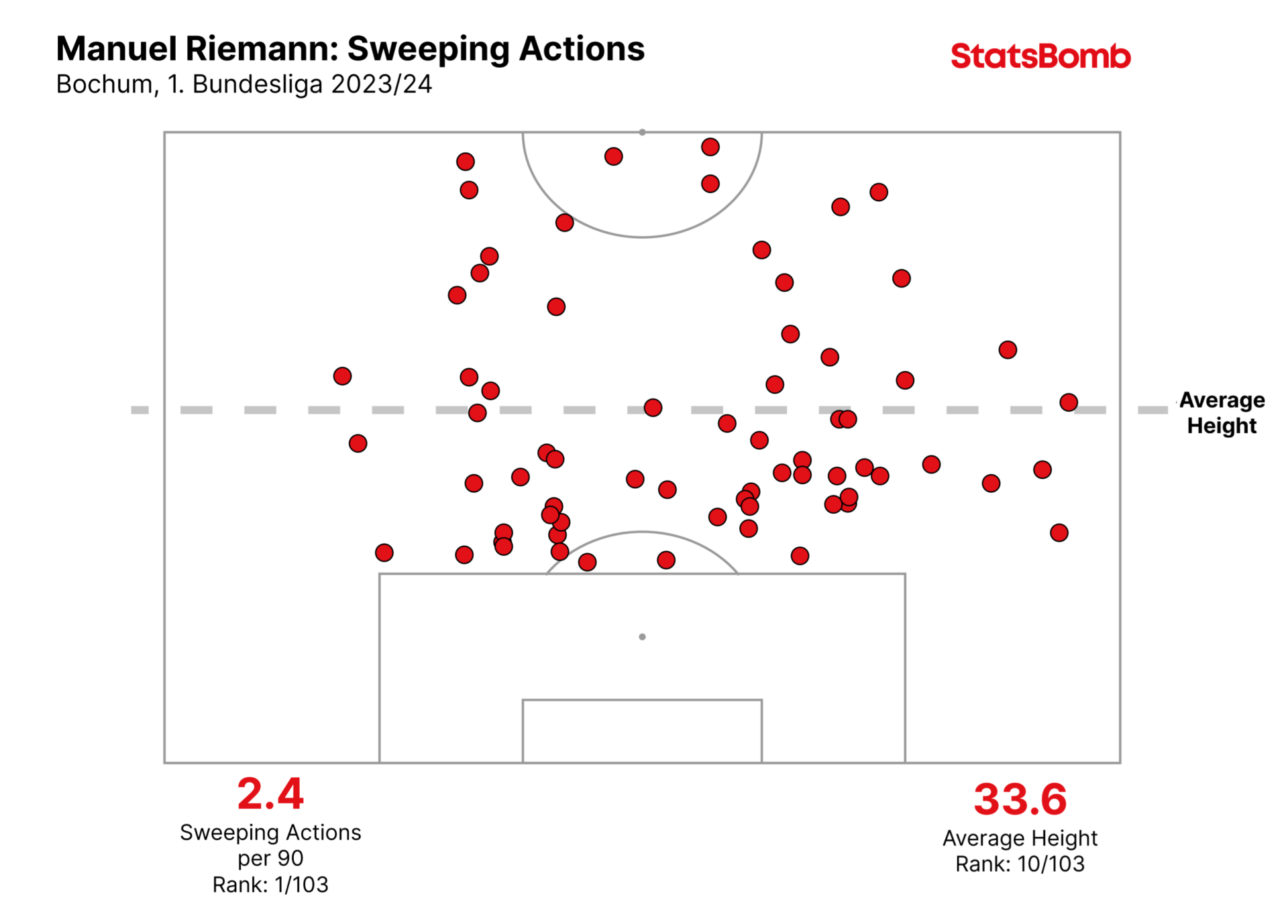
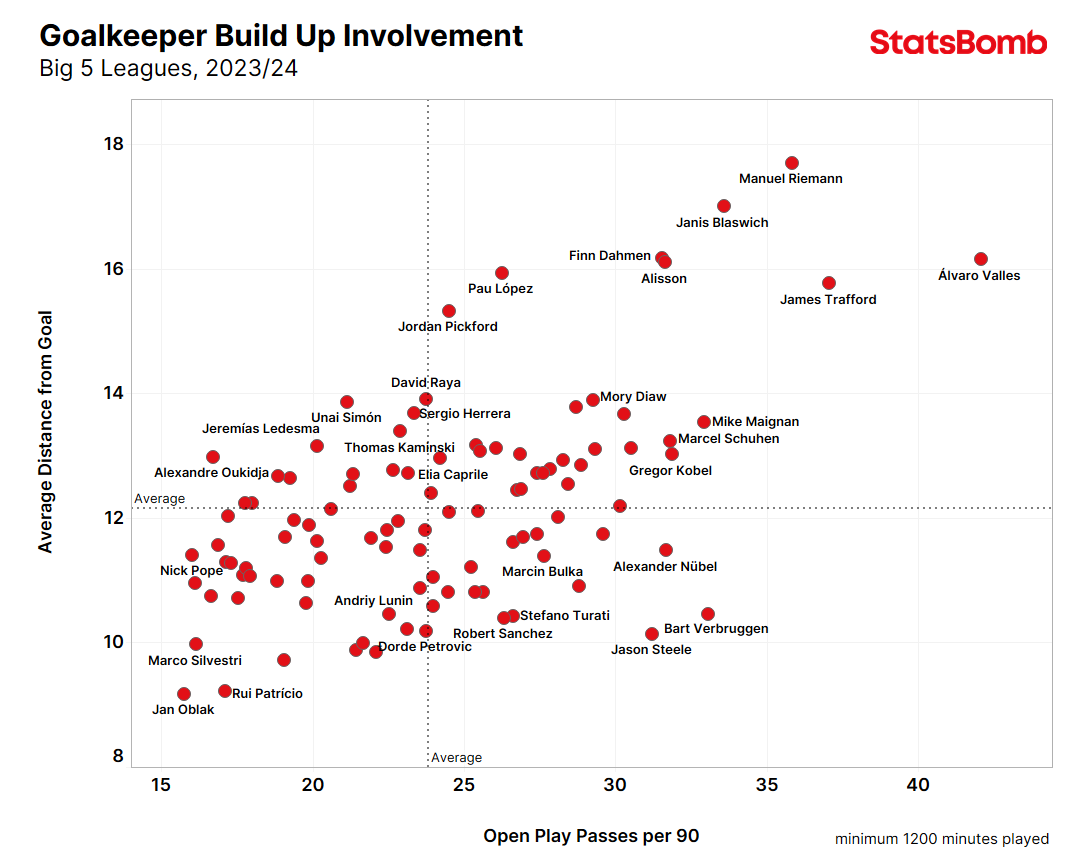
None more so than Manuel Riemann. Riemann's only been playing Bundesliga football since 2021/22, having spent 15 years in the 2. Bundesliga and below before then, but has since gained a reputation for being one of the most aggressive goalkeepers in coming off his line in the world. Not only does Riemann come out further than any other 'keeper in the Big 5 on average, but he does it more frequently than any other 'keeper, too (2.4 sweeps, interceptions, and ball recoveries outside of the penalty box per 90).
The viz below and Average Height calculation only includes sweeps that occurred outside of the penalty box.
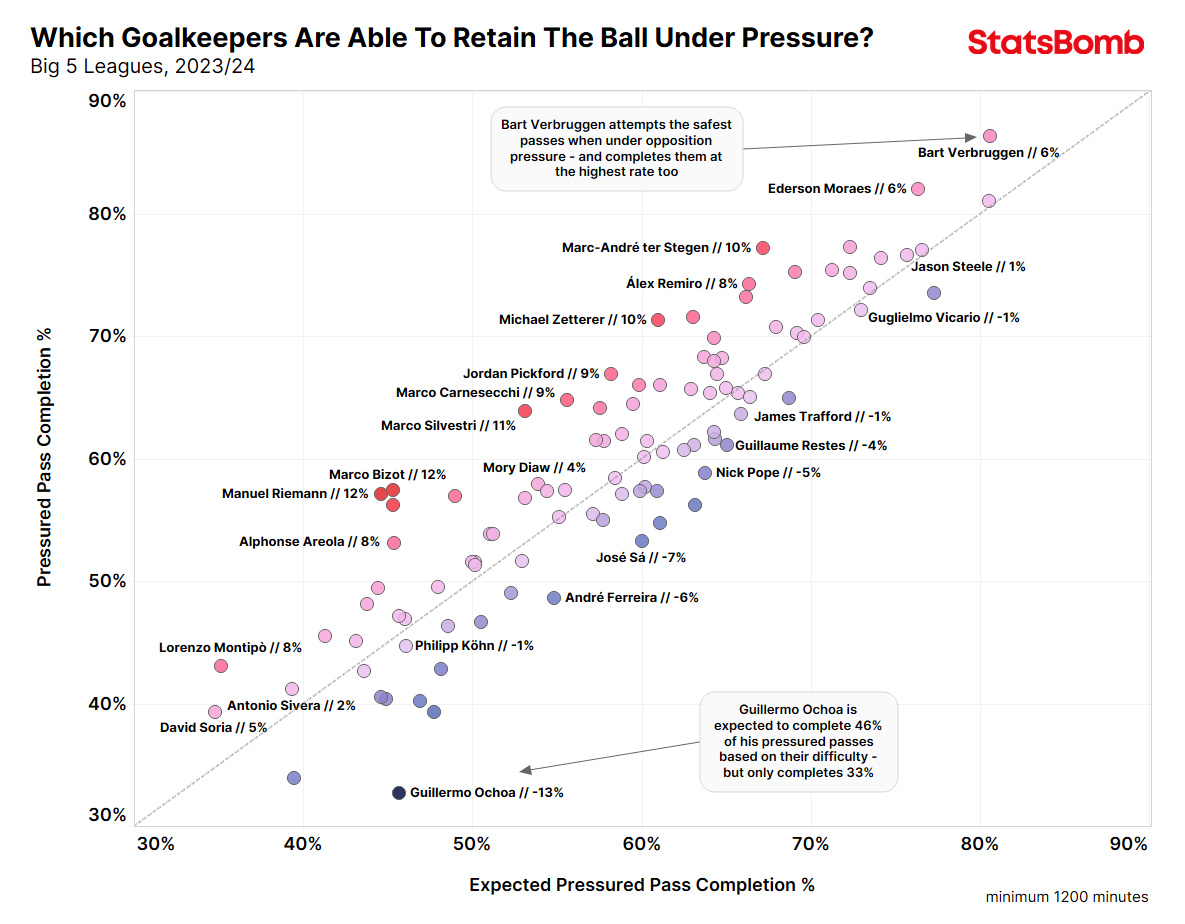
To wrap up this mini-Brighton-goalkeeper-analysis, where Verbruggen had the advantage in retaining the ball under pressure, Steele appears to have a slight advantage in actually being able to break the press (though, it should be said, these are fairly small samples to be making definitive conclusions with).
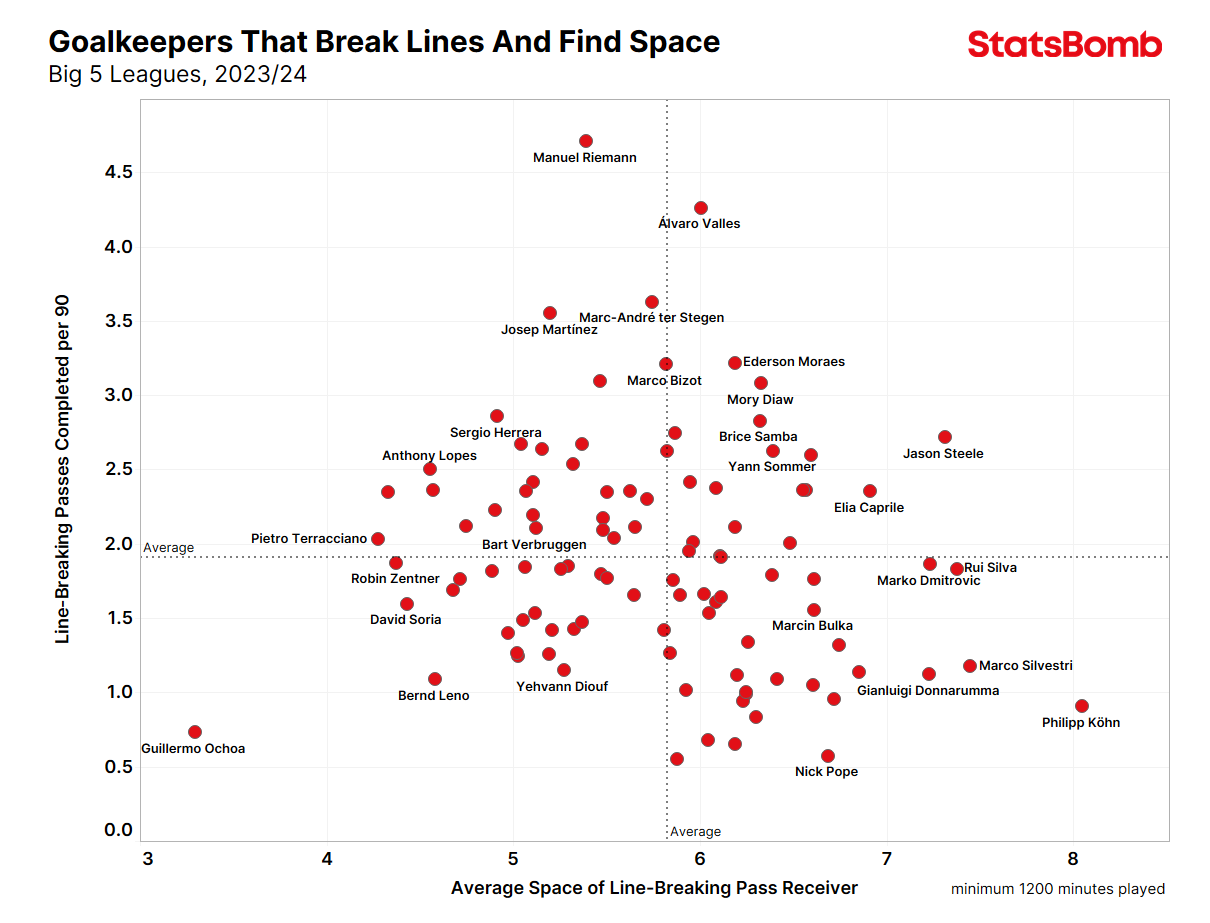
Both complete similar volumes of line-breaking passes when they're on the pitch, but on average, Steele has been able to find a teammate in ~2m more space than Verbruggen does. In some ways, it feels like De Zerbi could pick either based on how aggressive he wants to be: Verbruggen when he wants Brighton to play safer and keep the ball a bit more, and Steele when he's happy to take more risks in build up to try and play through more quickly.
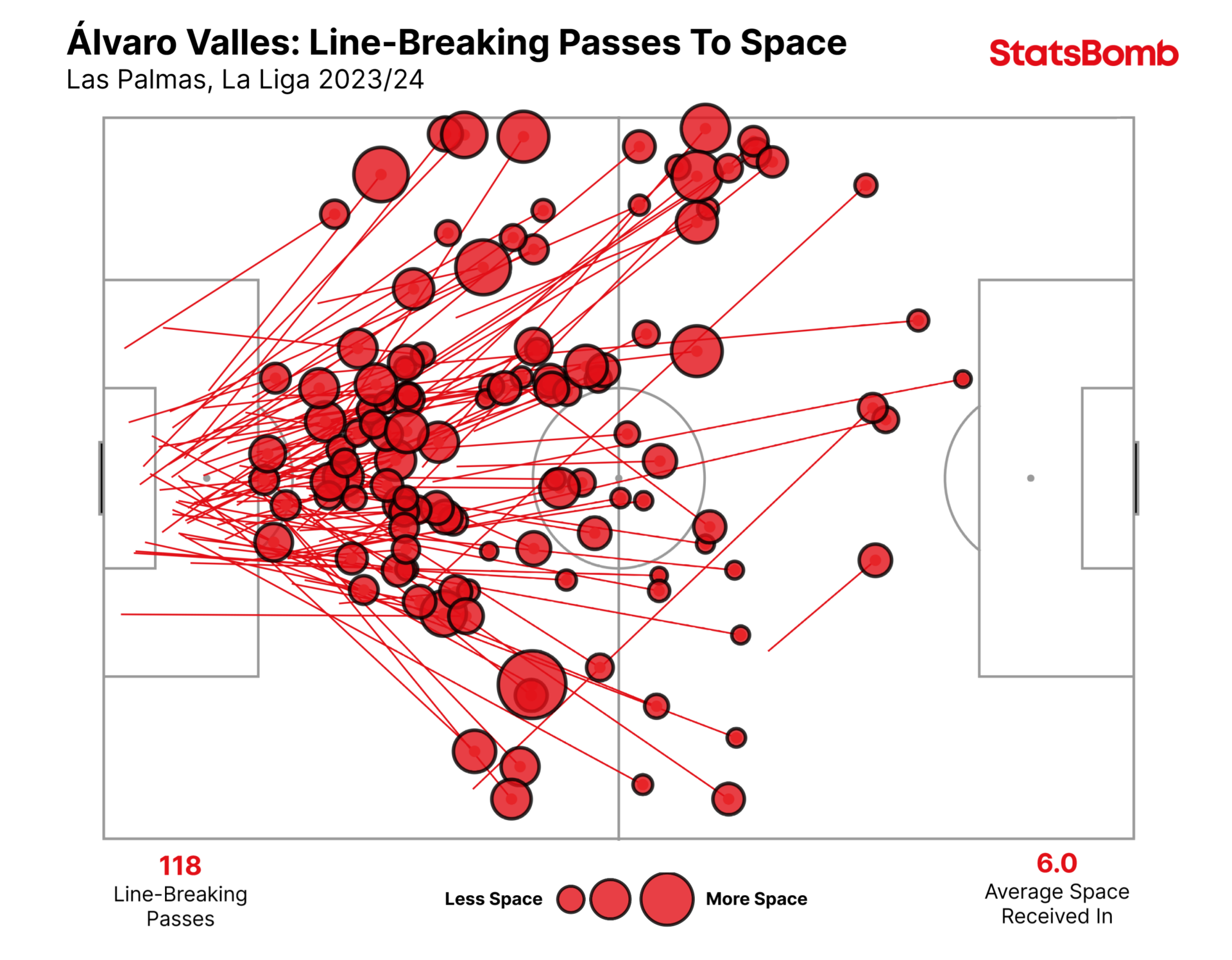
Manuel Riemann and Álvaro Valles complete more line-breaking passes than the other goalkeepers, though this is partially to do with them being much more involved and having more opportunity to make those passes, as they have more touches of the ball.
We'll look into Valles' line-breaking passes more deeply, especially as he finds teammates in space at an above-average rate.