
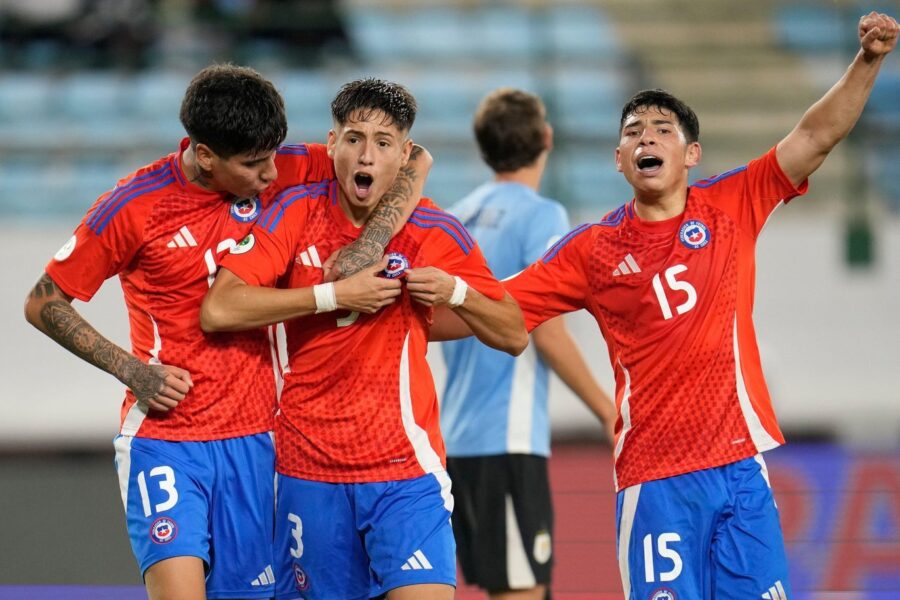
With Chile hosting the 2025 edition of the U20 World Cup this month, we analyze the state of youth football in the country.
More a mission statement than an official tagline, ‘Legends in the Making’ is how FIFA describes the Under-20 World Cup. From Lionel Messi to Erling Haaland, it’s a competition where emerging stars announce themselves to the world, scouts look to spot the next big thing, and careers can be transformed in a matter of weeks. This year, that spotlight lands on Chile, the host nation for the first time in the tournament’s history.

Living up to the Golden Generation
To understand where Chilean football stands today, it helps to look back at what it once was. The 2007 Under-20 side featuring Alexis Sánchez, Arturo Vidal, Gary Medel and Mauricio Isla was more than just a promising youth team. They finished third at that year’s U20 World Cup, and many of its standout names became pillars of the senior squad that would go on to define an era. That group didn't just symbolise potential; it delivered on it.
Chile’s tremendous World Cup campaigns, reaching the knockout stages in both 2010 and 2014, were followed by the peak, when that same core powered La Roja to back-to-back Copa América titles in 2015 and 2016. It was the culmination of years of development. But as that generation has faded, a clear successor group is yet to truly emerge.
Of course, it was in every sense a golden generation, the best Chile has ever produced. Perhaps expecting a continuous stream of talent at that level may have been unrealistic. Chile had never before produced such a volume of elite players all at once, many of whom not only reached Europe’s top leagues but thrived there.
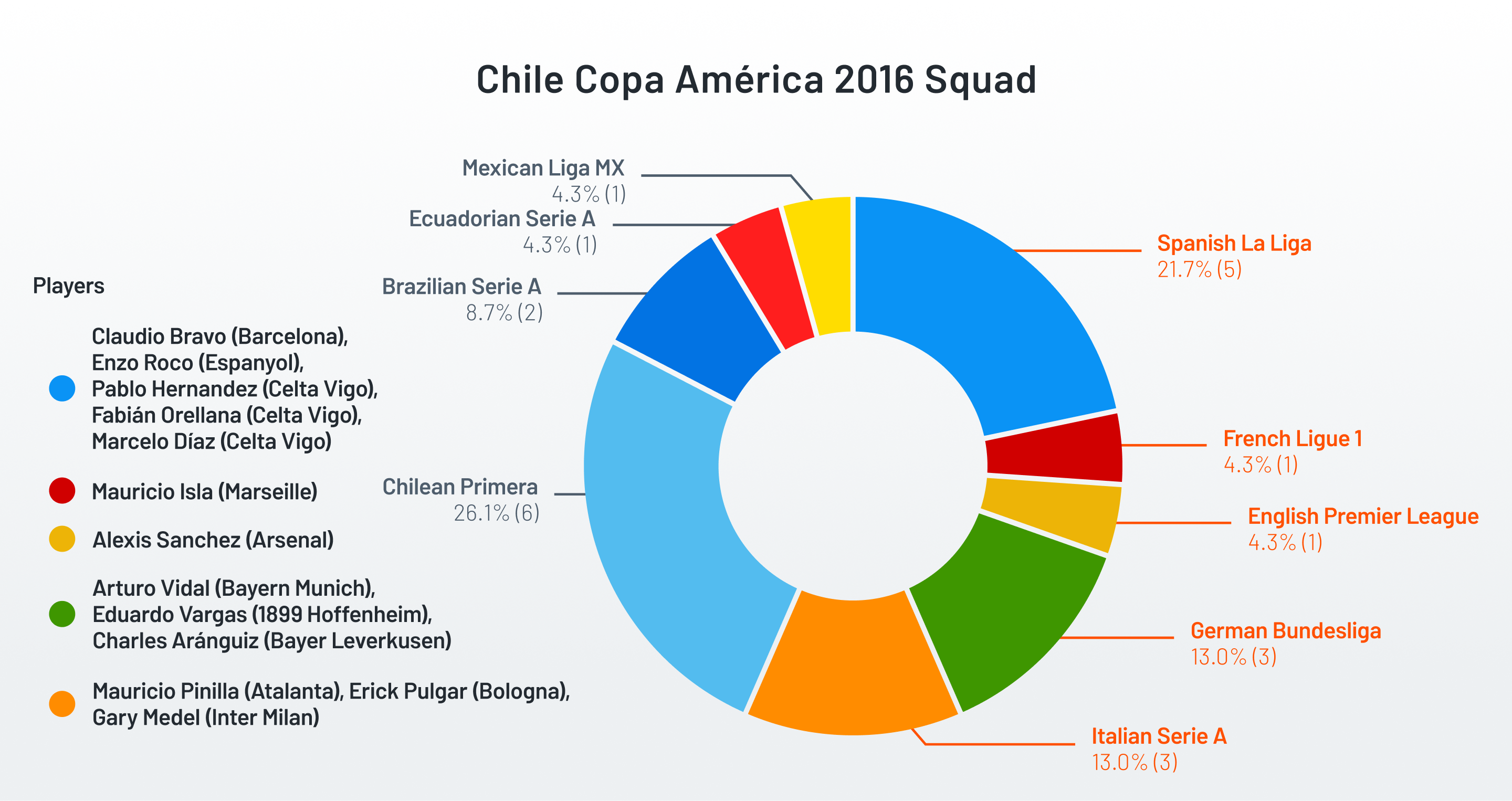
But even with that perspective, the contrast is hard to ignore. In 2016, 13 of the 23 players in Chile’s Copa América-winning squad were playing in Europe’s top five leagues, from Barcelona to Bayern Munich. Today, in the latest squad, only two players in the senior squad fall into that category - Guillermo Maripán (Torino) and Gabriel Suazo (Sevilla). The rest are scattered across Brazil, Mexico, or second-tier European clubs.
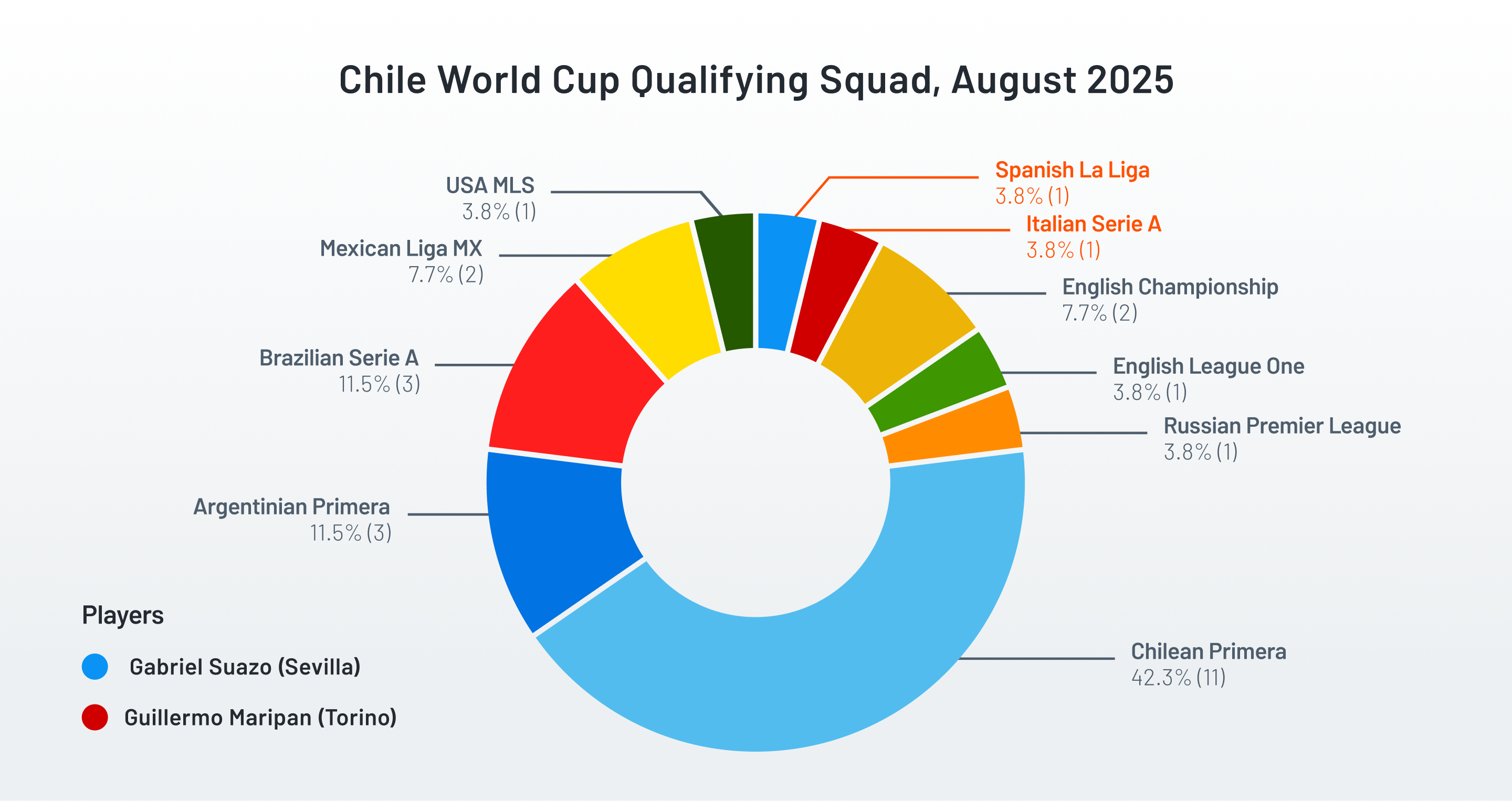
It’s worth noting that, with Chile already out of the running for World Cup qualification, their latest squad selection was slightly more experimental and youth-focused than usual. However, a look at the wider talent pool shows only the now 36-year-old Sánchez and Auxerre’s Francisco Sierralta as the only other recent regular call ups playing in top five European leagues. As such, the comparison remains a pertinent one – and highlights just how much has changed in under a decade.
Analysing the Root Causes
There are several factors behind the decline, both structural and cultural. In contrast to neighbours like Argentina or Uruguay, football doesn’t quite seem to dominate daily life in the same all-consuming way. That obsessive, almost singular commitment to the game, often visible in how young players carry themselves, can feel less ingrained.
At the systemic level, longstanding issues persist: underinvestment in youth infrastructure, outdated development models, and a lack of clear scouting pathways to Europe. Even when talented players do emerge, questions linger over their mentality – many excel in the domestic league, but far fewer show the maturity or drive to push themselves to the next level.
The numbers tell their own story. In the calendar year leading up to the tournament, according to data from Transfermarkt, only two under-23 players from Chile’s domestic league made the jump to a top-five European league: goalkeeper Thomas Gillier, who signed with Bologna as a free agent before being immediately loaned to CF Montréal and defender Matías Pérez, who left Curicó Unido for Lecce.
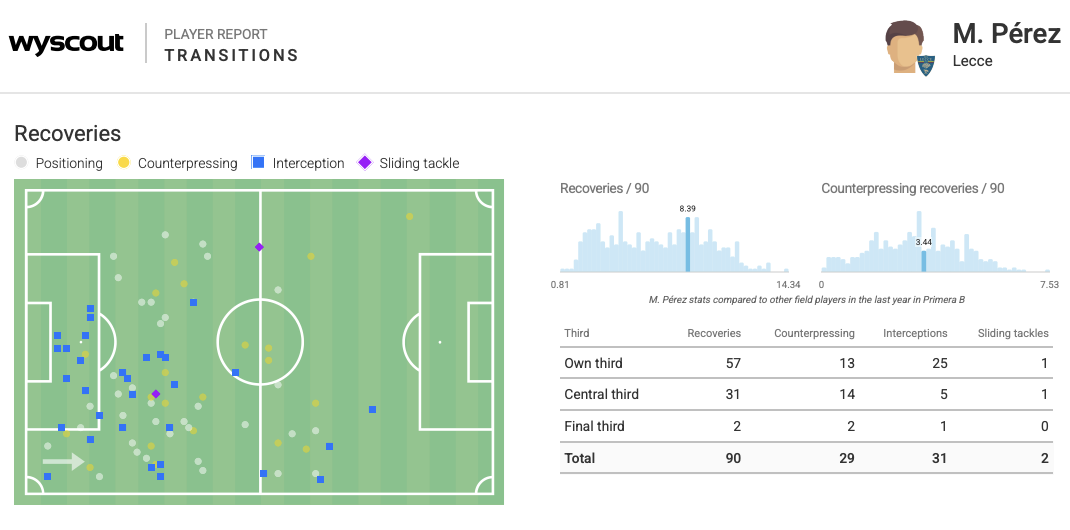
By contrast, Argentina saw 17 U23 players secure moves to Europe’s elite leagues in the same period - not including those bound for secondary destinations like MLS, Saudi Arabia or Russia. Even nations with smaller populations and infrastructures, like Uruguay and Ecuador, continue to outperform Chile when it comes to exporting young talent. It’s a clear signal that while promising players may exist, the pathways to global relevance are either blocked, broken, or barely visible.
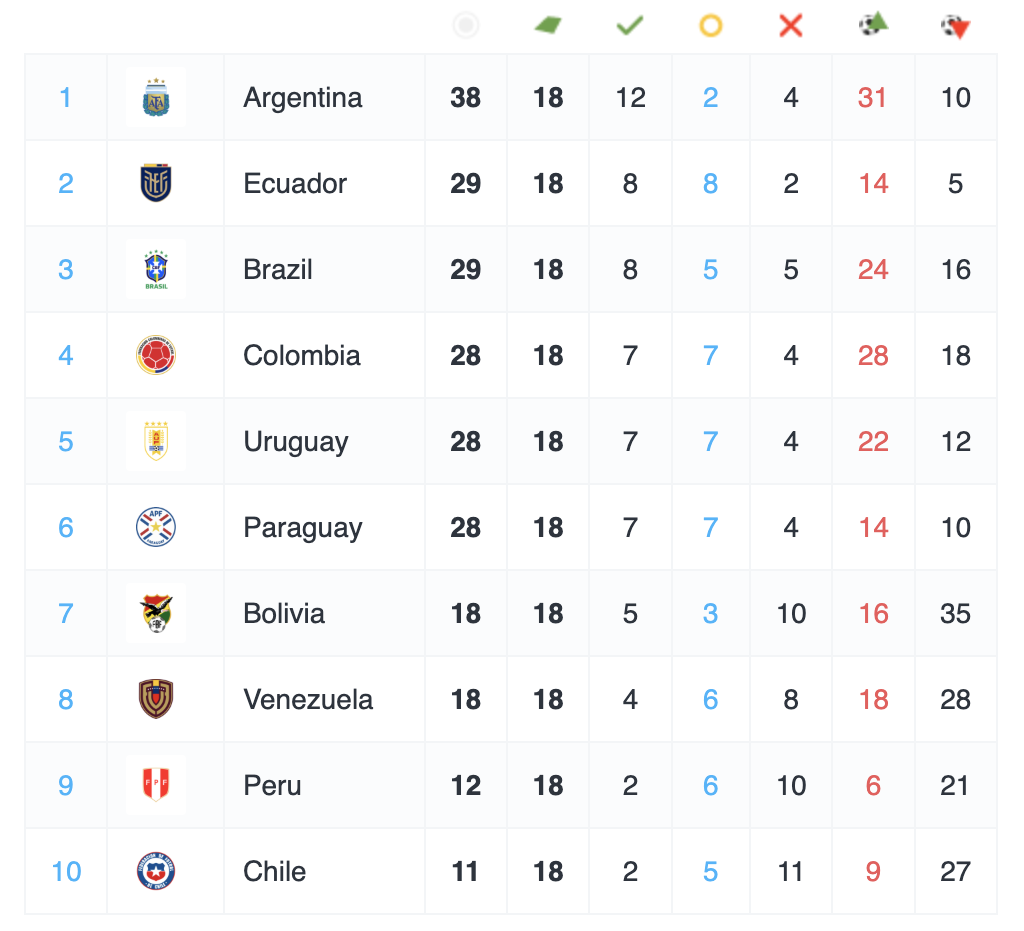
International performances - often the proving grounds where global scouts take serious notice - haven’t helped Chile’s cause either. The senior national team hasn’t qualified for a World Cup since 2014, a stark decline for a side once considered among South America’s elite.
At youth level, the results have been mixed. After four consecutive first round exits, the U20s finally reached the final phase of the 2025 Sudamericano, finishing sixth. The U17s have shown more promise, placing fourth in 2025 and sixth in 2023, following a brief period of success as runners-up in both 2017 and 2019.
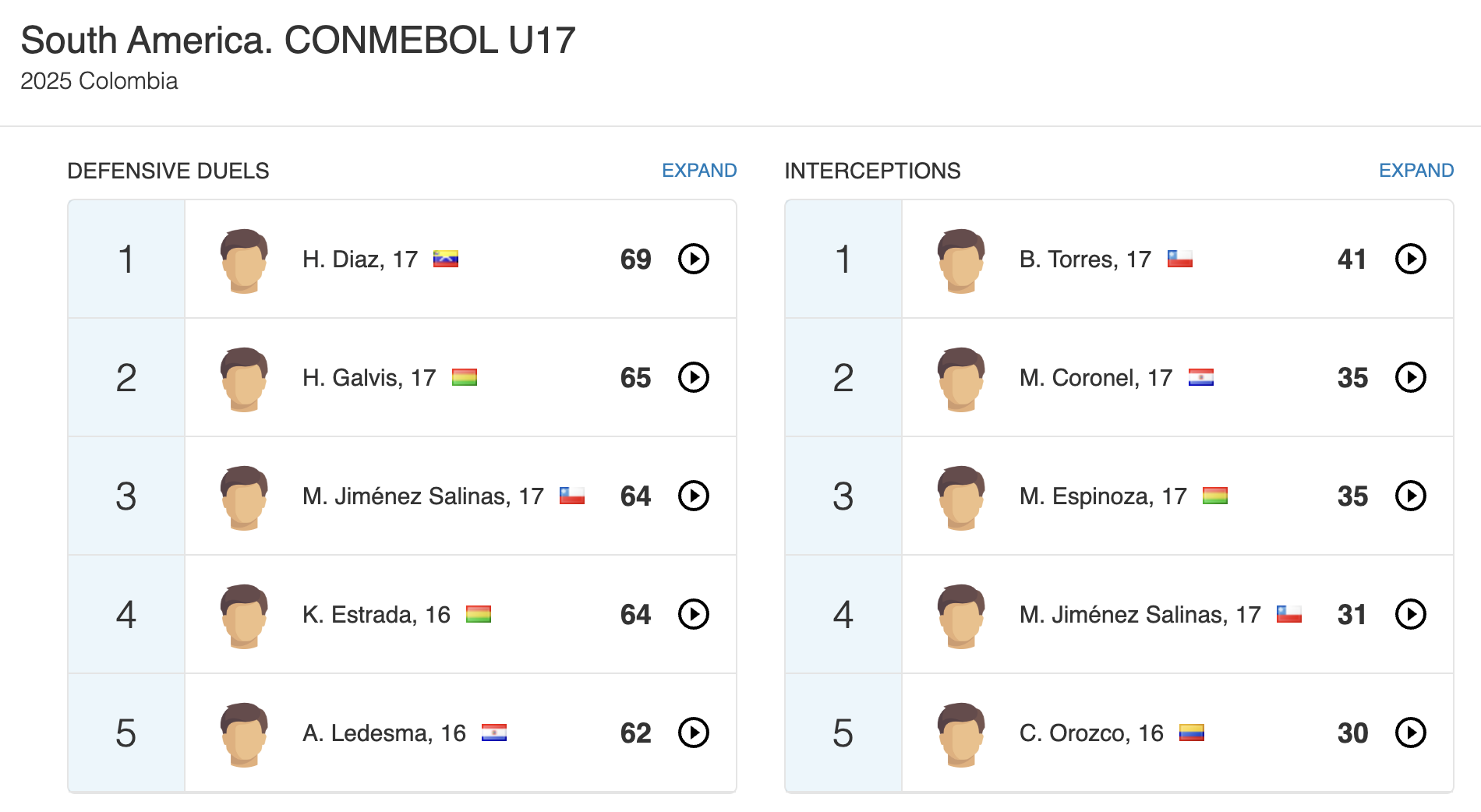
But the pattern is clear: early promise at U17 level is rarely being converted into progress at U20, let alone senior success. The developmental bridge that should carry top talents through each stage of the pathway is too often collapsing before they arrive.
Iván Román: Leading the Revival or a Rare Outlier?
Even Chile’s most promising talents often find themselves rerouted to secondary markets rather than Europe’s top tiers. Defender Iván Román, one of the country’s standout young prospects, signed with Atlético Mineiro in February – a move that speaks to his potential, but also to the shifting perception of Chilean exports.
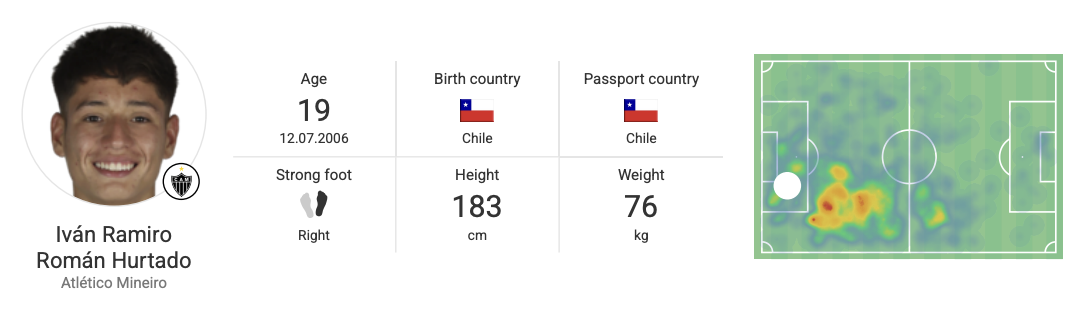
When watching the footage on Hudl Wyscout, what immediately stands out about Iván Román is his composure under pressure and his proactive style in defensive situations. Despite being just 19, Román is already playing senior football at a level few Chilean players his age have reached. He made headlines in 2024 by becoming the youngest Chilean to score in the CONMEBOL Libertadores, netting a winner for Palestino against Portuguesa when still only 17. That early exposure to high-stakes continental football has accelerated his development, and the numbers back that up.
Since his move to Atlético Mineiro in early 2025, Román has featured regularly in Brazil’s top flight and the CONMEBOL Sudamericana. According to Wyscout, he ranks first among centre backs in the 2025 Brasileirão for defensive duels per 90 minutes, highlighting his active role in disrupting attacks and asserting control. That level of performance deservedly earned him a senior Chile debut against Brazil this month.
Among his U20 peers, Román is seen as a rare outlier: a player not just with potential, but with a realistic shot at becoming a mainstay for La Roja in the years to come.
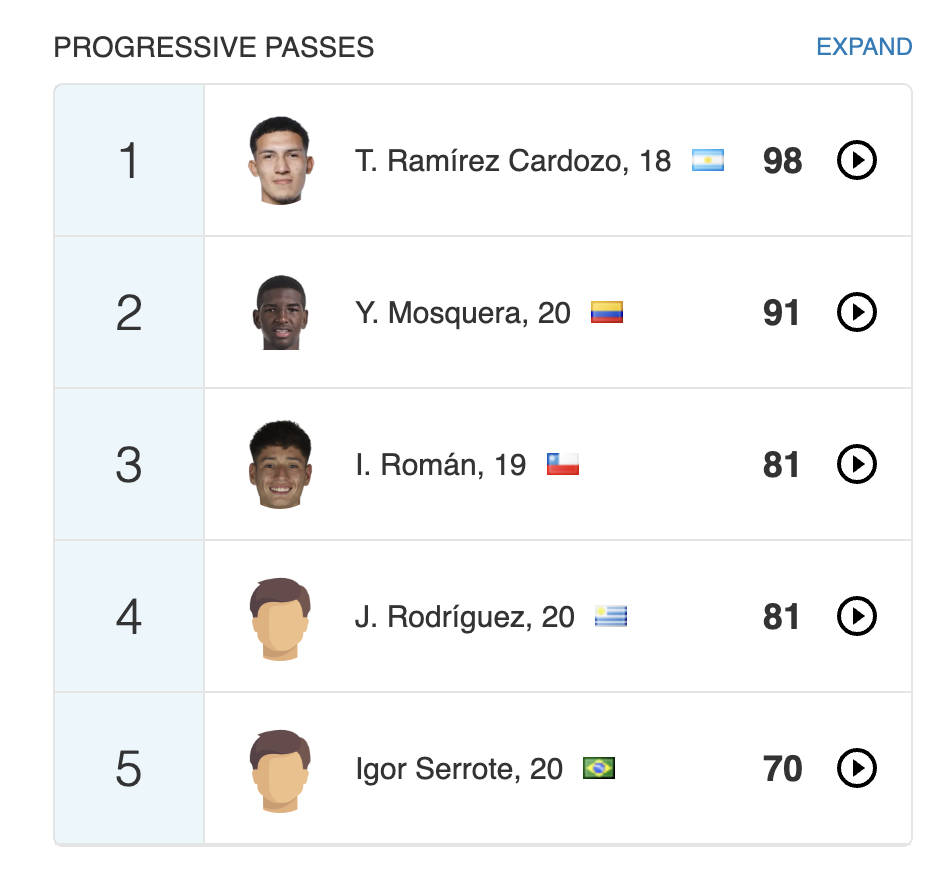
In previous cycles, a player of Román’s profile might have been snapped up by a European club looking to invest early. Today, that first leap is more often into leagues like Brazil’s Série A or Liga MX - environments that offer strong competition but lower global visibility. These markets could be seen as stepping stones for South American talent, but for many Chilean players, they increasingly feel like ceilings.
Chile U20 Squad Standouts
While Iván Román is widely seen as a long-term prospect for the senior national team, he won’t be part of this U20 World Cup. But even without him, the squad still features several players who are beginning to catch the eye – for both their performances at youth level and their clear potential to break through.
Juan Francisco Rossel, a Universidad Católica product since age four, captained Chile’s 2025 U20 Sudamericano team, leading from the front with five goals in nine matches and finishing as the team’s top scorer. He also impressed at the 2023 Copa Mitad del Mundo, another key tournament included in Wyscout’s Youth Pack that scouts use to track emerging talent. While goals have been a little harder to come by for Católica’s first team, Rossel’s resilience and maturity remain clear, even when faced with setbacks.
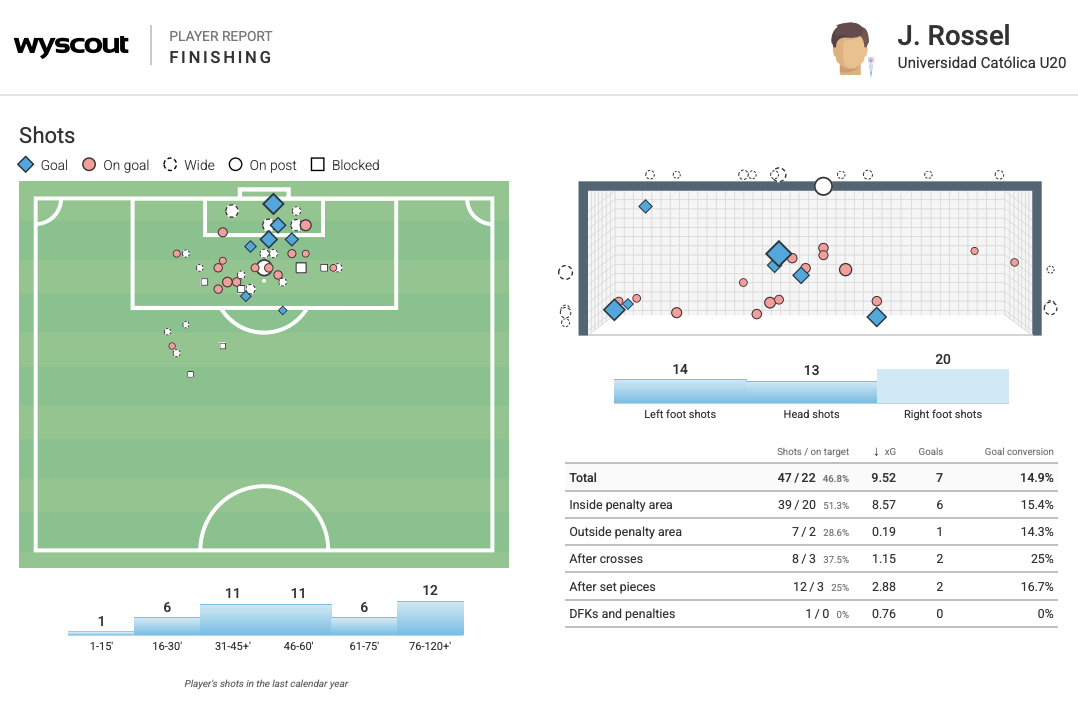
Watching Rossel on Wyscout, his game combines sharp movement, intelligent positioning, and strong link-up play, making him a well-rounded modern striker. If he maintains this trajectory, he’s set to become one of Chile’s most promising attacking talents in recent years.
The aforementioned Matías Pérez is viewed alongside Iván Román as one of the most promising defensive prospects Chile has produced in recent years. Tall, rangy, and composed in possession, he’s primarily a centre back but equally comfortable at full back when needed.
Now part of Lecce’s squad in Serie A, he has yet to make his senior debut, but his profile stands out: comfortable driving into midfield with the ball, quick across the ground, and able to recover in transition. For scouts watching this U20 World Cup, Pérez offers a valuable mix of physical tools and technical confidence – a modern defender with upside across multiple roles.

So, for Chile’s young prospects, this tournament represents more than just a platform, it’s a proving ground. The squad contains potential, but converting that into long-term success has been an ongoing challenge and that makes visibility all the more important.
What happens after the spotlight fades will determine whether this tournament sparks meaningful progress or simply highlights how far there is still to go.
If you want to find out more about how to use Hudl Wyscout for your scouting, recruitment, and talent evaluation workflows, click here.
Click here to find out more about the Youth Competitions Pack.
Follow Golazo on X.