

If you’re evaluating Mexican prospects for European leagues, this report identifies which leagues are the strongest statistical fit — potentially saving your recruitment department hundreds of hours spent on video analysis or in-person scouting.
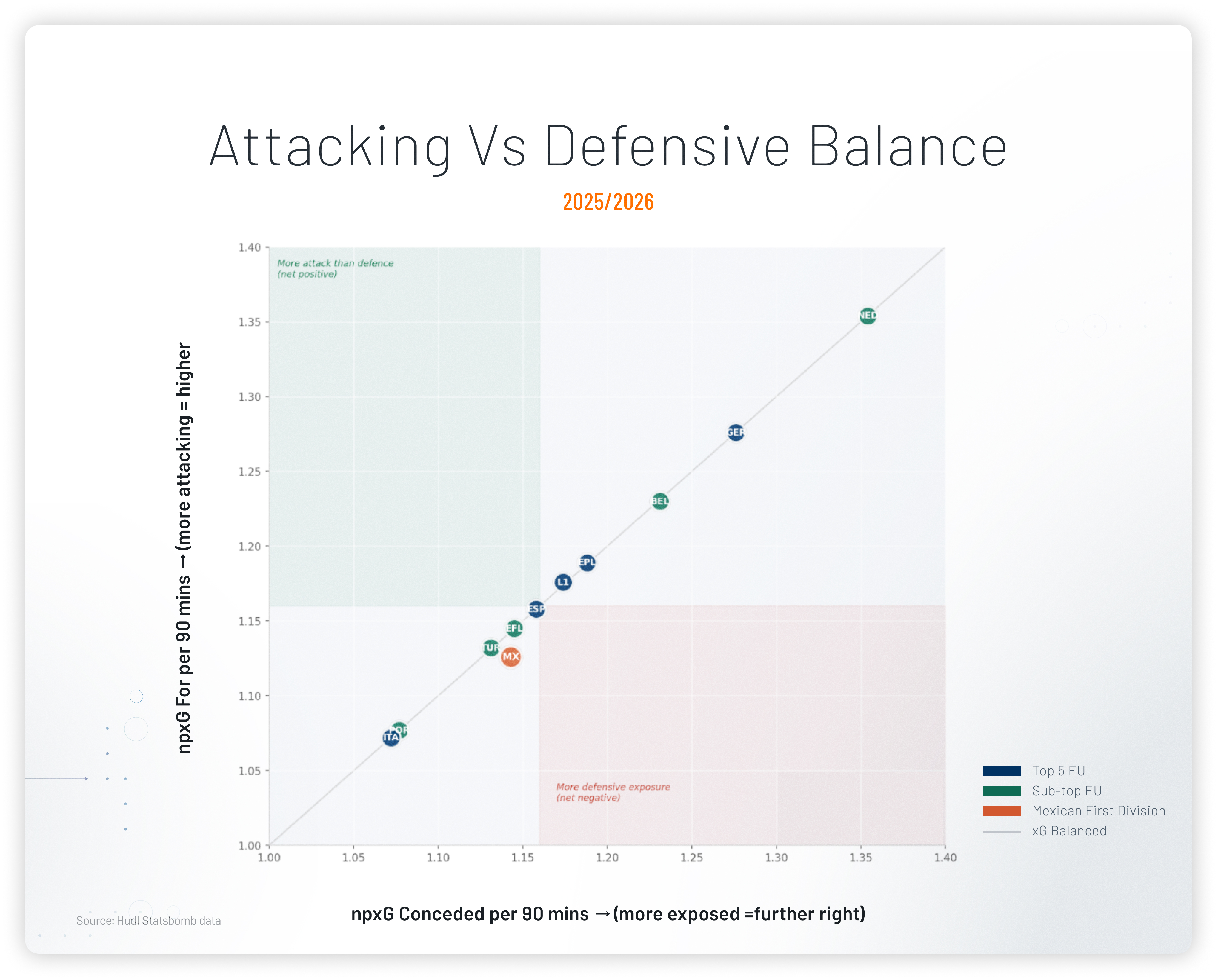
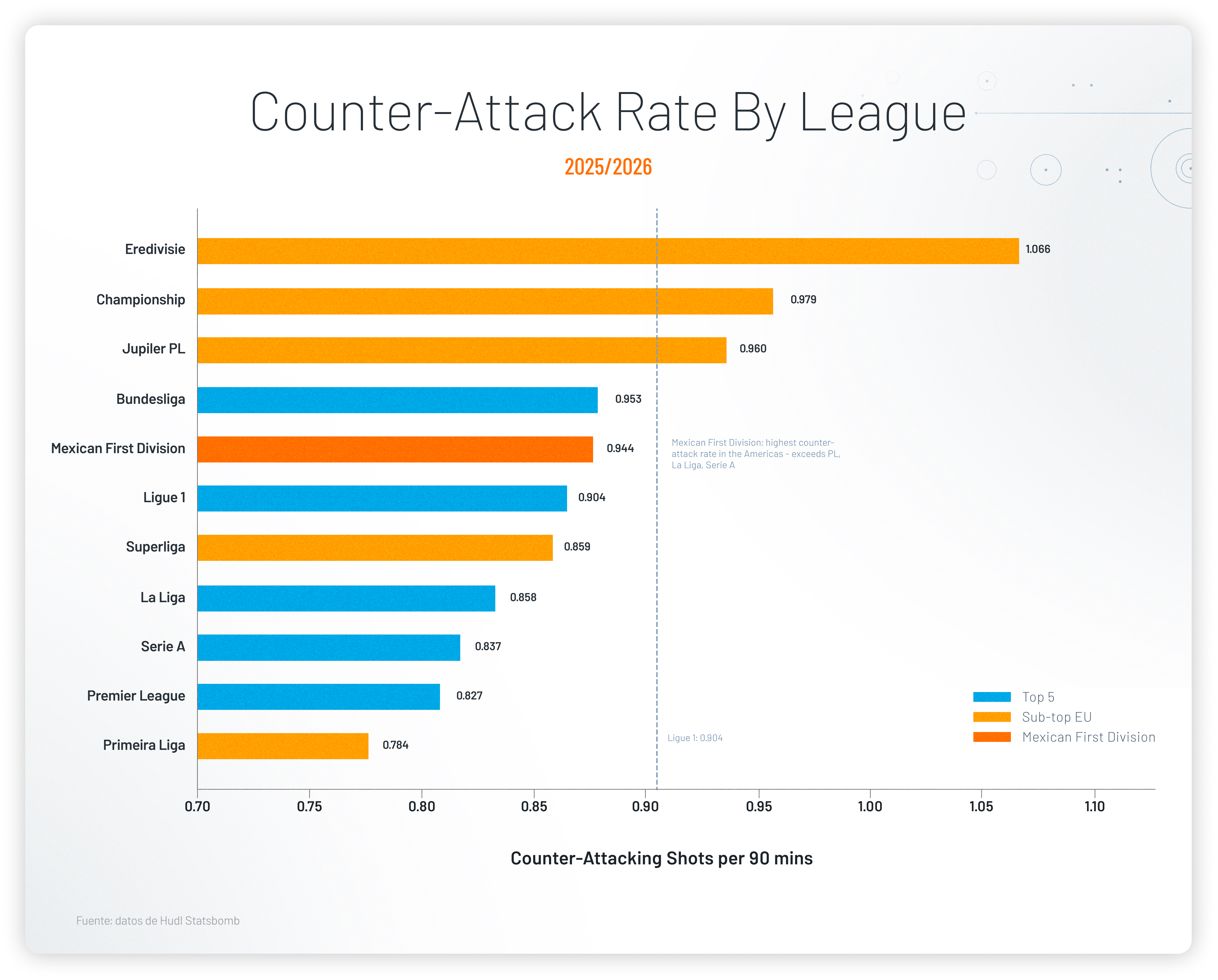
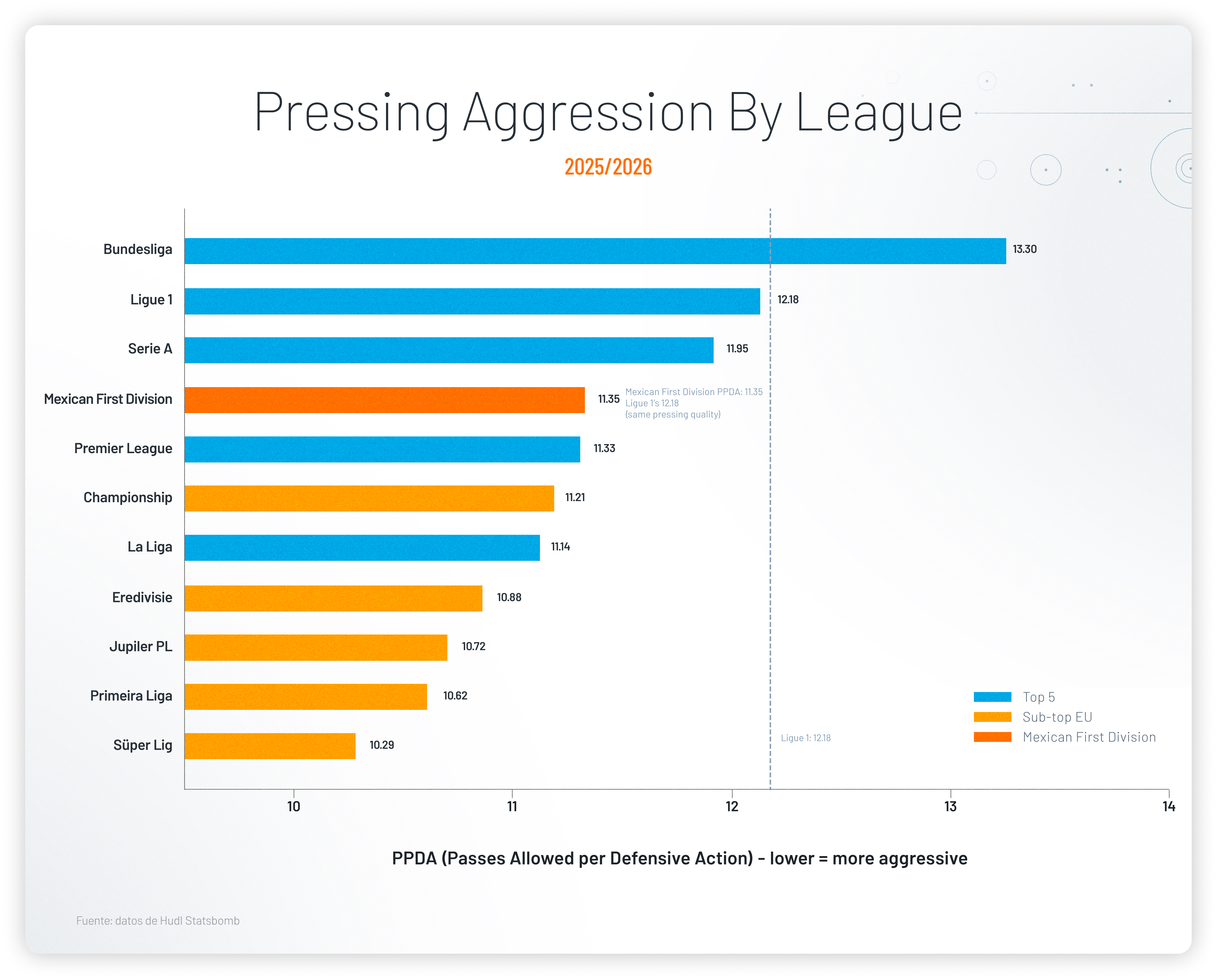
The implication for scouts: Mexican prospects arriving in elite European competition don’t require a complete overhaul. They need adaptation in pressing frequency and positional press-triggers, but their pressing instincts and aggression are already calibrated close to a European standard.
In other words: the gap is bridgeable. So who are the players best placed to cross it?
Creating a Shortlist: U23 Player Profiles of Note
Having established that the Mexican first division emerges as a viable scouting option for its European counterparts, the next step is identifying which players within it are best placed to make the transition.
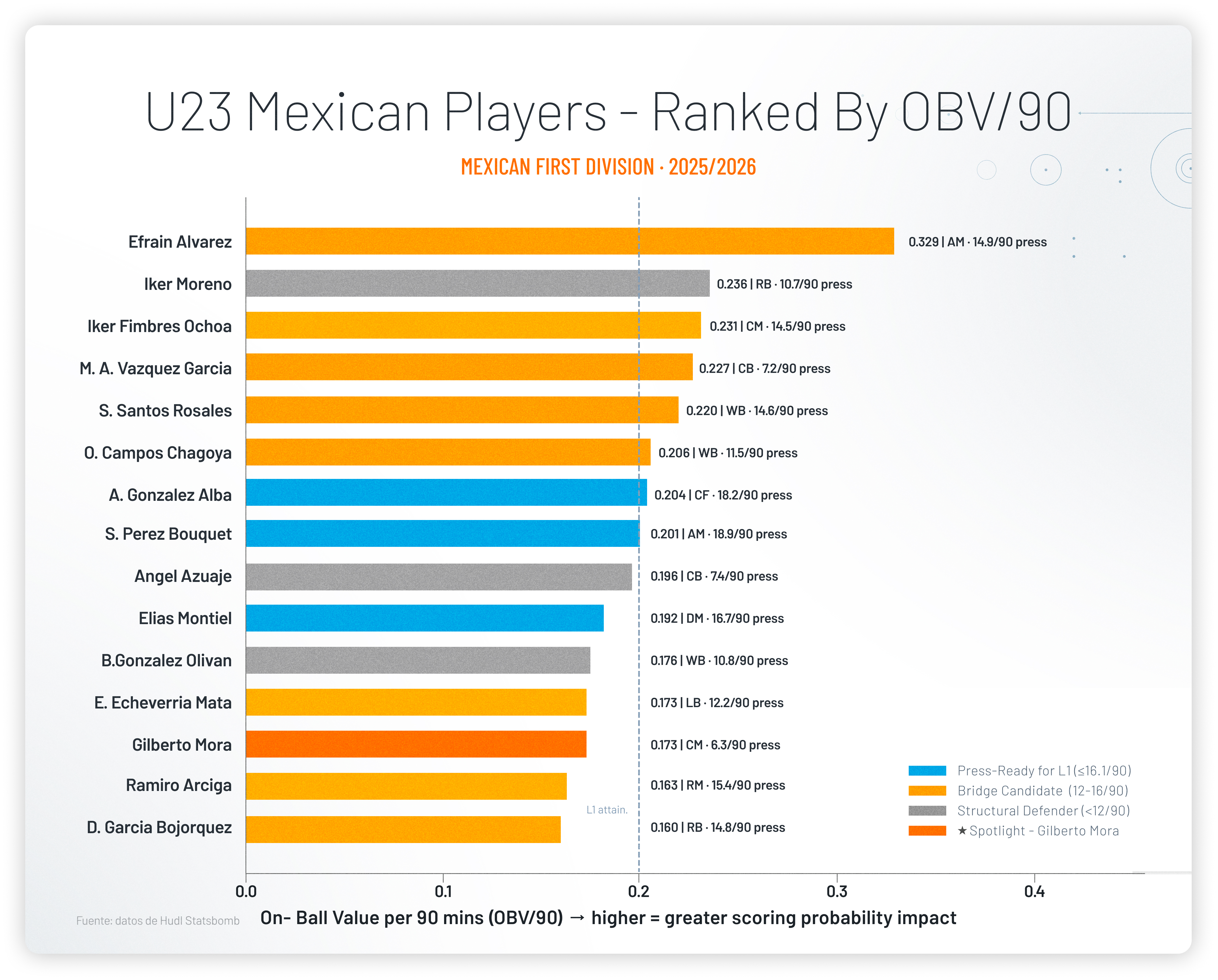
The starting point for our search is On Ball Value (OBV) – Hudl Statsbomb’s composite metric that captures the probability-of-scoring impact of every touch, pass, carry, dribble and defensive action. As a single number that reflects overall contribution to a team's chance of scoring, it provides an efficient first filter for separating high-impact players from the wider pool.
Applying a minimum threshold of 450 minutes of action from the 2025/26 season — sufficient to ensure statistical reliability without excluding players who have broken through mid-season — returns a shortlist of 15 players aged 23 or under at the start of the campaign.
OBV alone, however, only tells half the story. A player can produce elite creative output in Liga MX and still struggle with the pressing demands of European football.
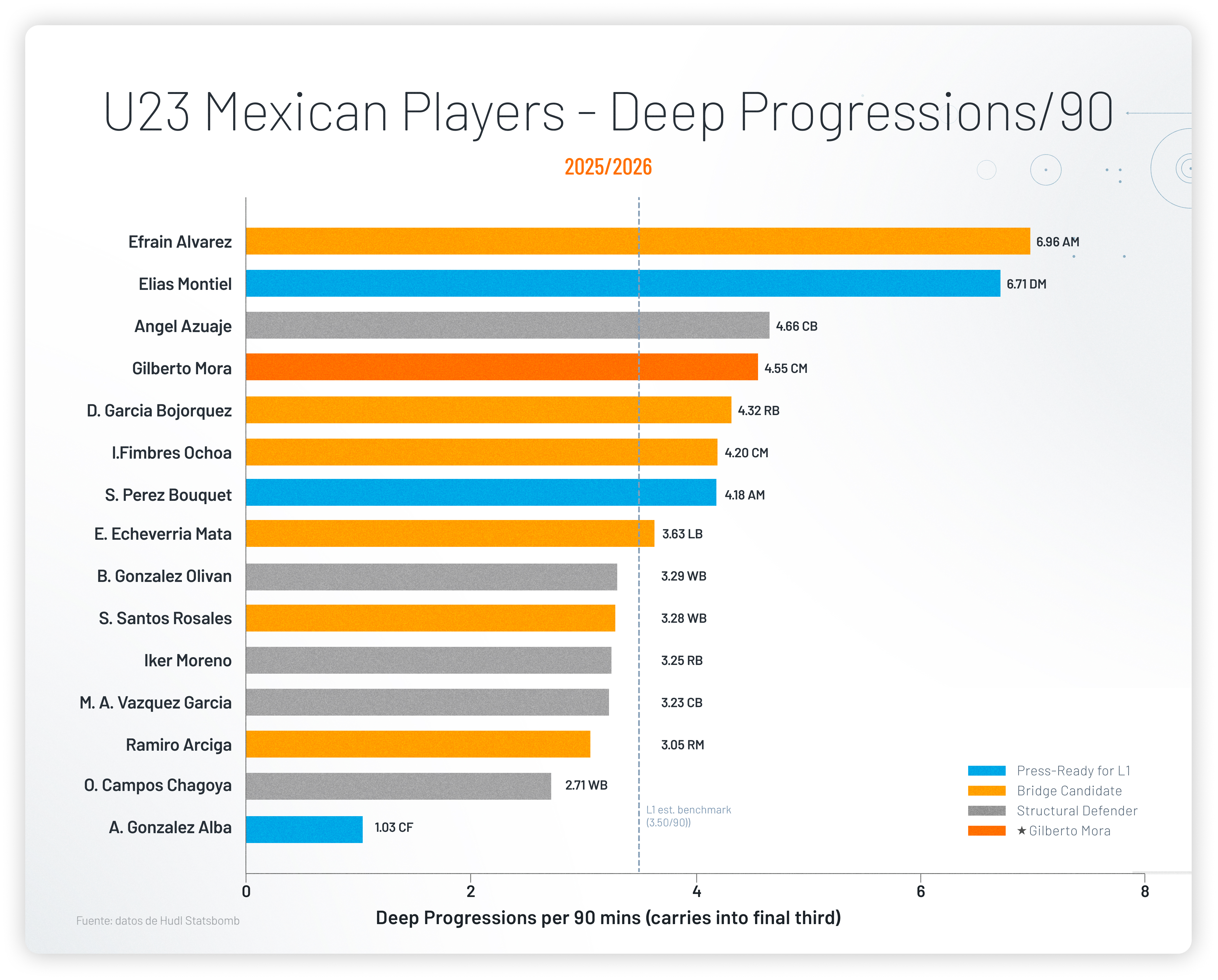
To address that, we cross-reference each player's pressing volume against the Ligue 1 average — selected as a realistic entry-level benchmark for top European competition rather than the most demanding pressing environment. Players who already meet that threshold are credible candidates for an immediate move. Those who fall short are better assessed as candidates for a bridging league first.
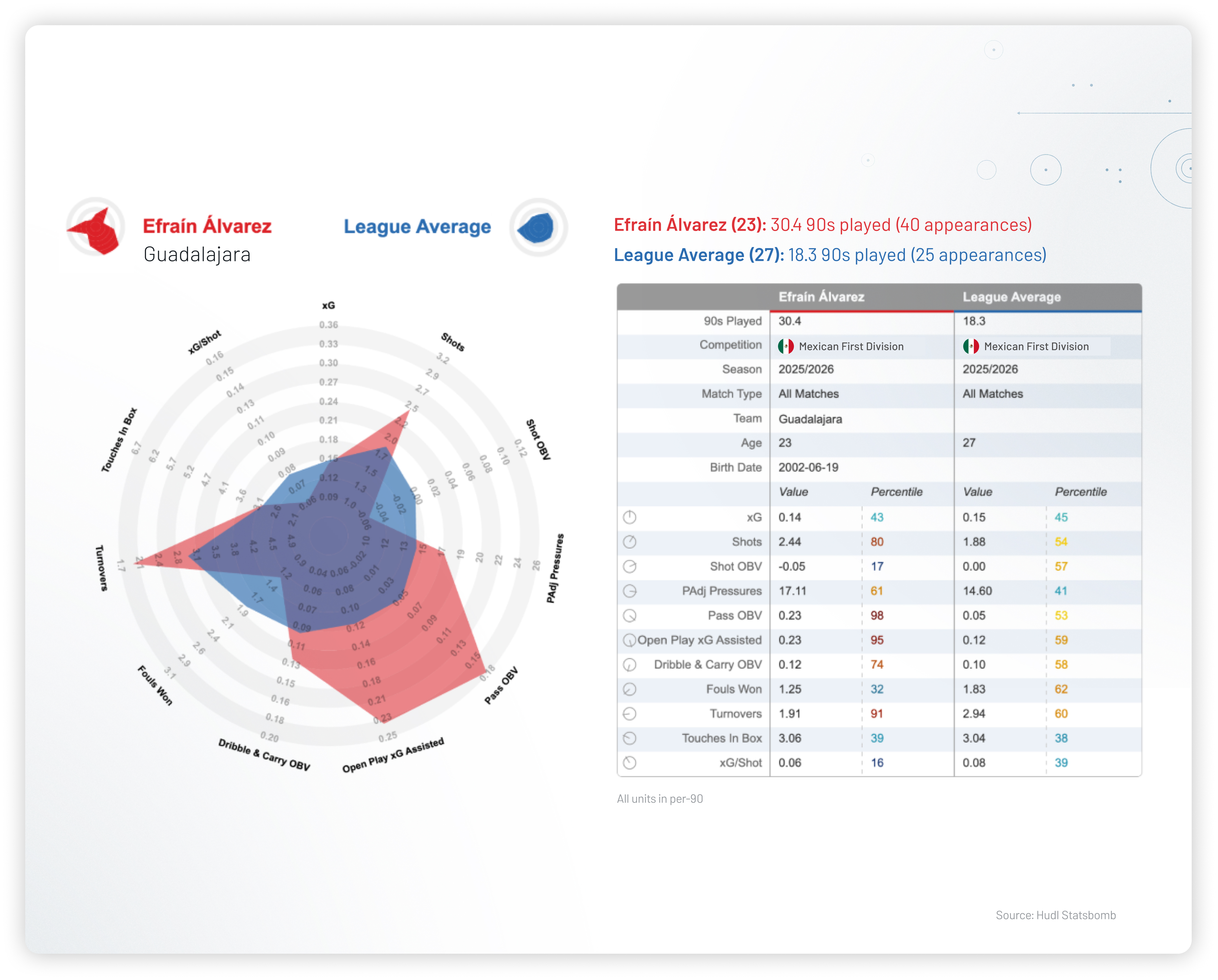
The US-born progressive midfielder is dynamic between the lines and his non-penalty xG+xA of 0.486 per 90 reflects direct chance-creation involvement. What’s more his 6.96 deep progressions per 90 place him among the most dangerous progressive carriers at his age in the Americas.
Using the Similar Players tool on Hudl Statsbomb, players like Atletico Madrid’s Alex Baena and Lille’s Felix Correia emerge as stylistic comparisons. Though his pressing numbers might not reach the threshold we have set out, the Mexican international nevertheless has the capability to translate his talents to Europe – even if a bridging move to a Tier 2 league could be a good initial landing spot.
Gilberto Mora: The Prodigious Teen
Born October 2008, Mora has already accumulated a significant amount of first-team experience by the age 17 and is one of the brightest prospects in the country.
An energetic midfielder, Mora already has a very well-rounded profile. With the ball, he is an elite dribbler for his age, boasting a 62.5% success rate, and an average for 4.55 deep progressions per 90 point to a future as a top-level midfielder.
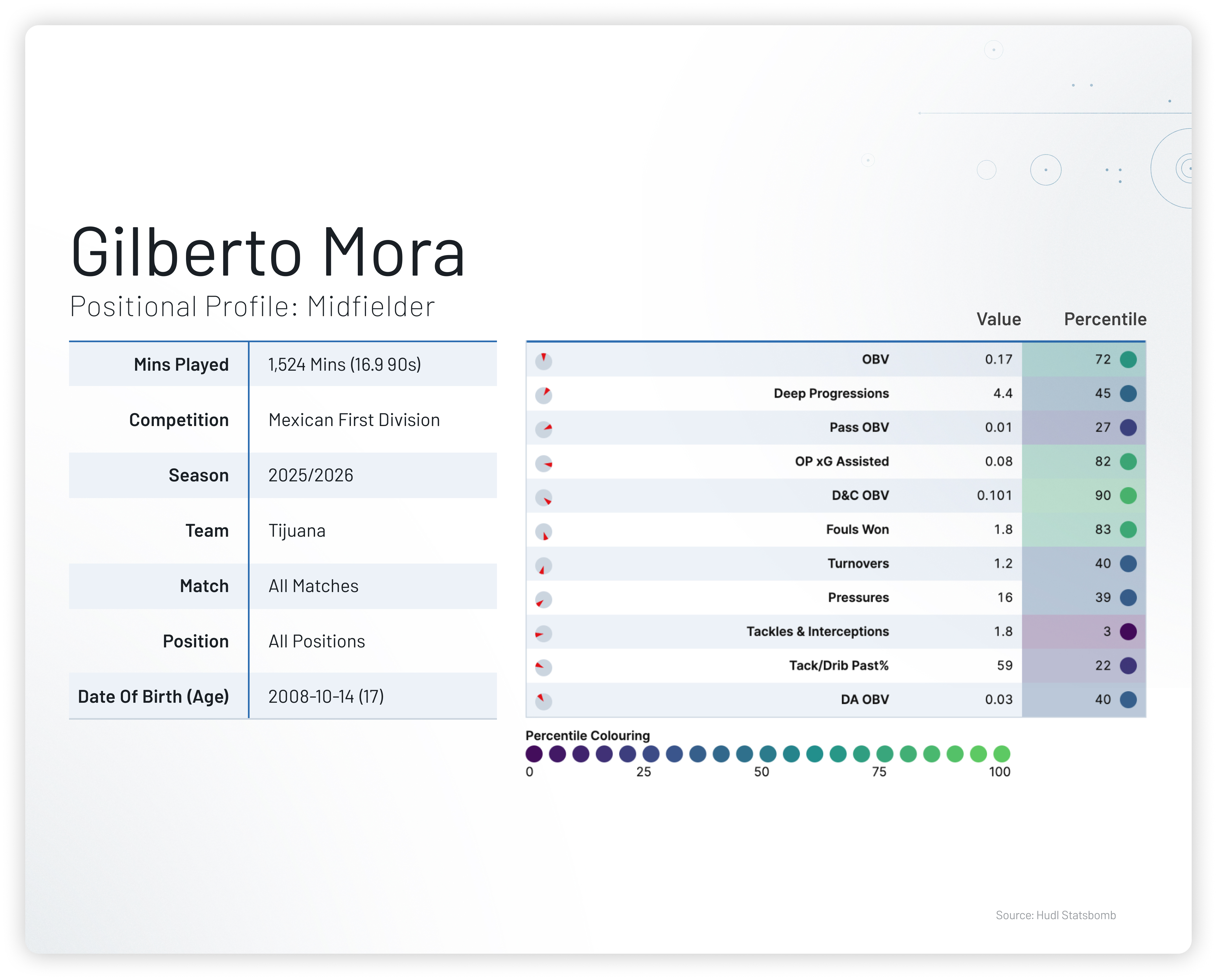
Watching footage of him corroborates the stats. The teenager has incisive passing, velcro close control in tight spaces, good shooting off both feet, and an excellent understanding of when to retain possession and when to progress the ball — along with the ability to pull it off. Matched to his defensive work rate and pressing, and it is clear why he is seen as a standout talent of the cohort.
Given his profile and high ceiling, he might be the type of prospect that is only accessible to clubs with deeper pockets. A team that meets that criteria and has a focus on youth development, such as Strasbourg for example, might be the type of profile best suited for Mora for the next stage of his career.
Armando Gonzalez: The Ant with a Bite
Gonzalez was one of the revelations of the 2025/26 season, scoring 25 goals in 35 games across all competitions. Nicknamed “Hormiga” due to a childhood fear of ants, his npxG+xA per 90 of 0.75 is the best among all U23 Mexican forwards, and his 18.2 pressures per 90 make him a modern, high-energy centre-forward whose press rate would see him comfortably fit into elite European competition.
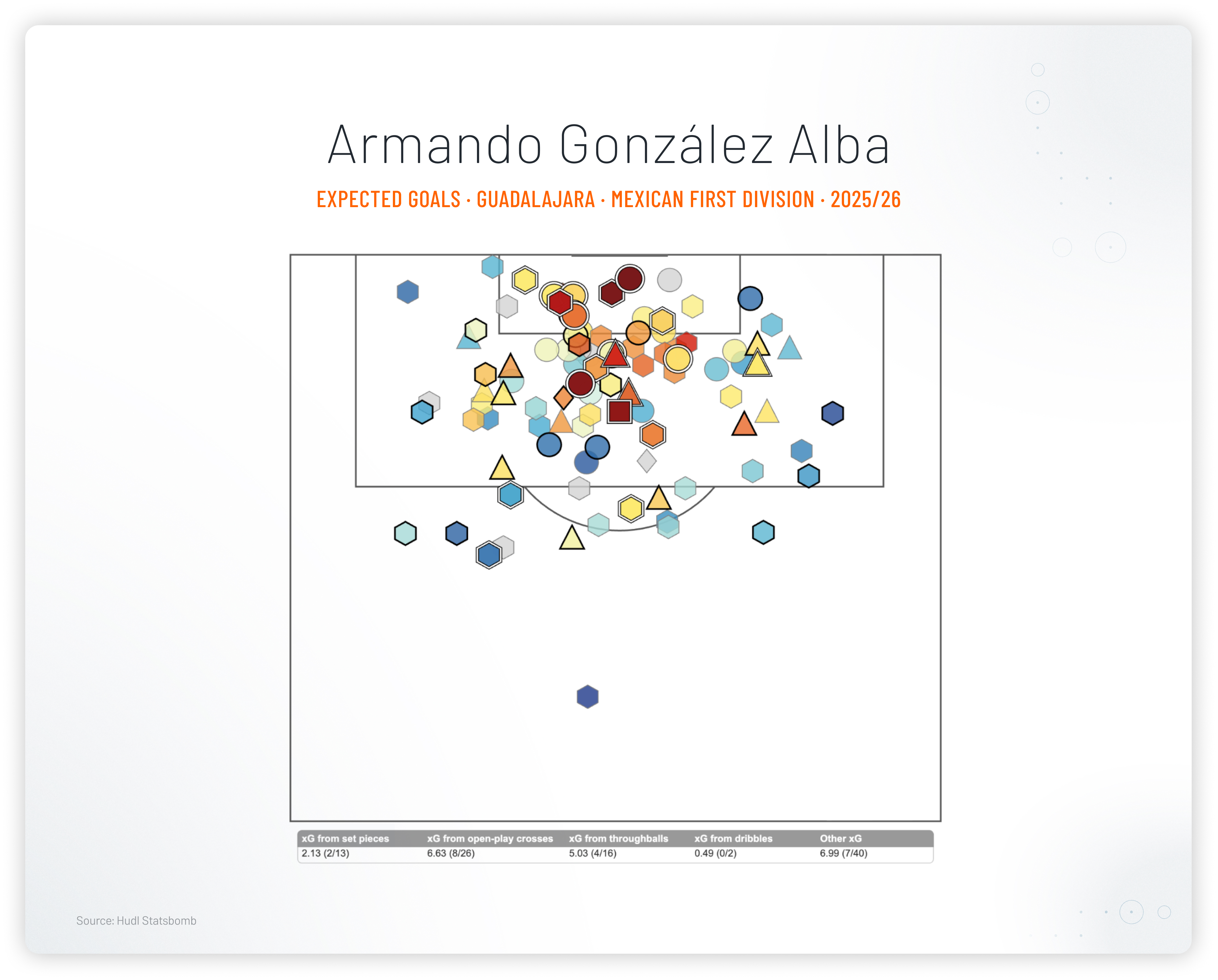
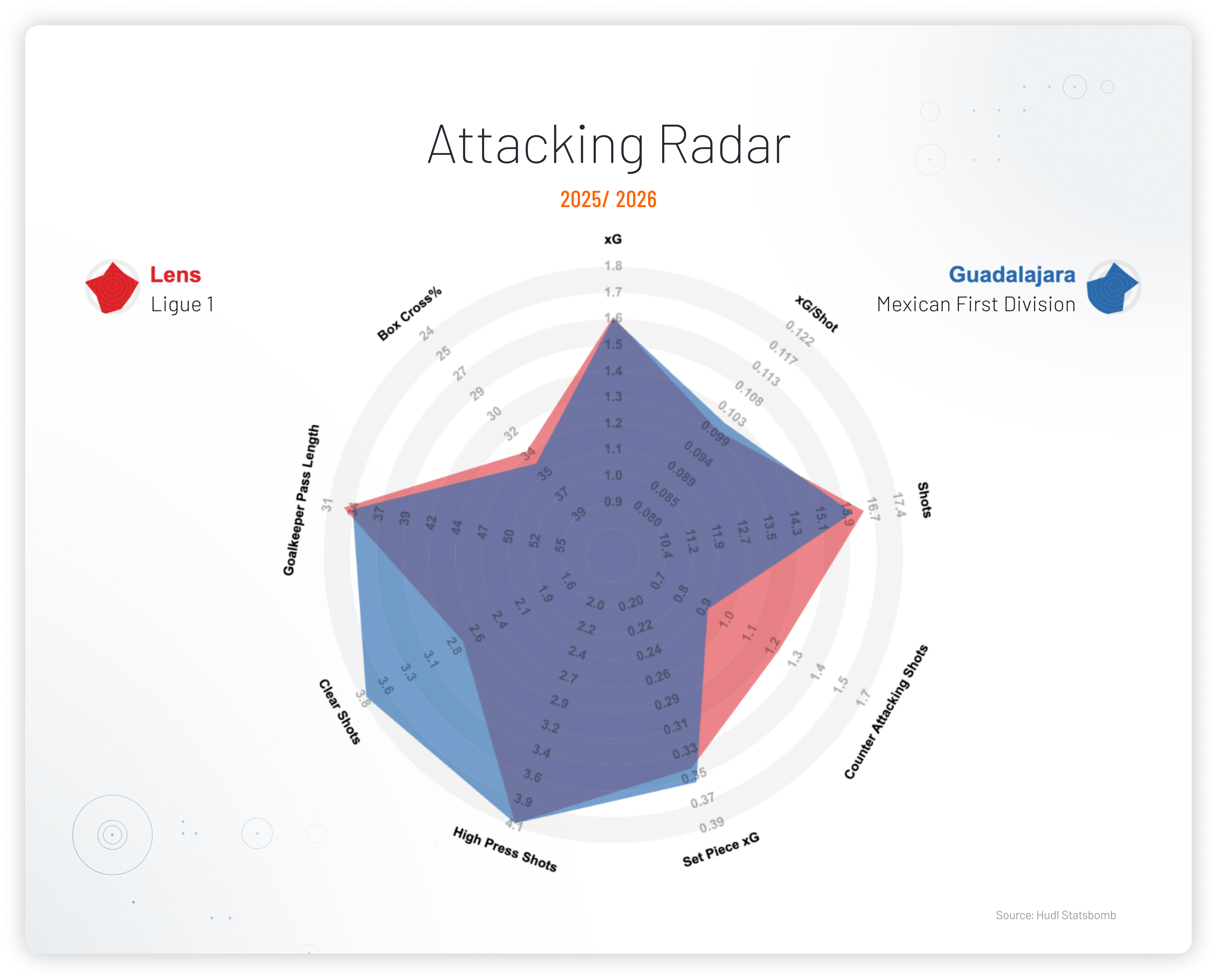
Context adds to the picture. Part of the Mexico U20 team that reached the quarter finals of the U20 World Cup, he has returned from a recent injury in persuasive form, scoring against Toluca and Cruz Azul. A senior international call-up feels inevitable. For European clubs, the window to act before that changes his market value is narrowing.
Fimbres and Perez Bouquet: More Midfielders to Watch
Rounding out the shortlist are two midfielders who don't quite have the profile of the names above — but who deserve more than a footnote.
Monterrey's Iker Fimbres profiles as a textbook modern box-to-box midfielder. His pressing output (14.5 per 90), deep progressions (4.2 per 90) and dribble success rate (66.7%) all point to a player who contributes across the full length of the pitch.
At 20, he is at the optimum age for a development move — and the Belgian Pro League represents a logical destination, offering a competitive environment in which he could develop the additional pressing volume his game currently lacks.
Sebastián Pérez Bouquet is the least-heralded name on this list, which is precisely what makes him worth attention.
San Luis' quietly effective midfielder is among the highest-pressing U23 players in the league, finds space between the lines through positional intelligence rather than pace, and has the agility and technical base to answer the physical questions European clubs will inevitably ask. Players who consistently underperform their market value are the ones recruitment departments are built to find. Pérez Bouquet is that profile.
Conclusion
So, the problem was never a lack of options. In an era where data has made every league in the world visible, the real challenge is knowing where to concentrate your effort — and having the conviction to act on it.
Mexico makes a compelling case. Stylistically, it shares more DNA with the Belgian, Portuguese and Turkish leagues than the very top tier — but the gap to elite European football is narrower than its export numbers suggest. The pressing instincts are there. The counter-attacking quality is there. And crucially, the talent is there.
For many European clubs, Mexico has been hiding in plain sight. Those willing to look first won't just find footballers — they'll find an audience too.