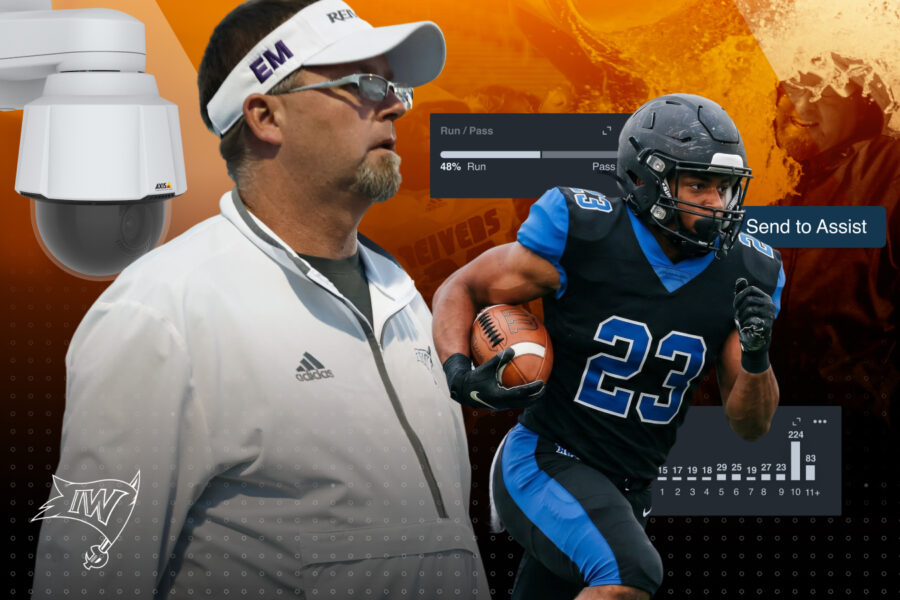
Iowa Western football isn’t a pit stop. It’s a launching pad. Reclaiming time is how the coaching staff helps make it possible.
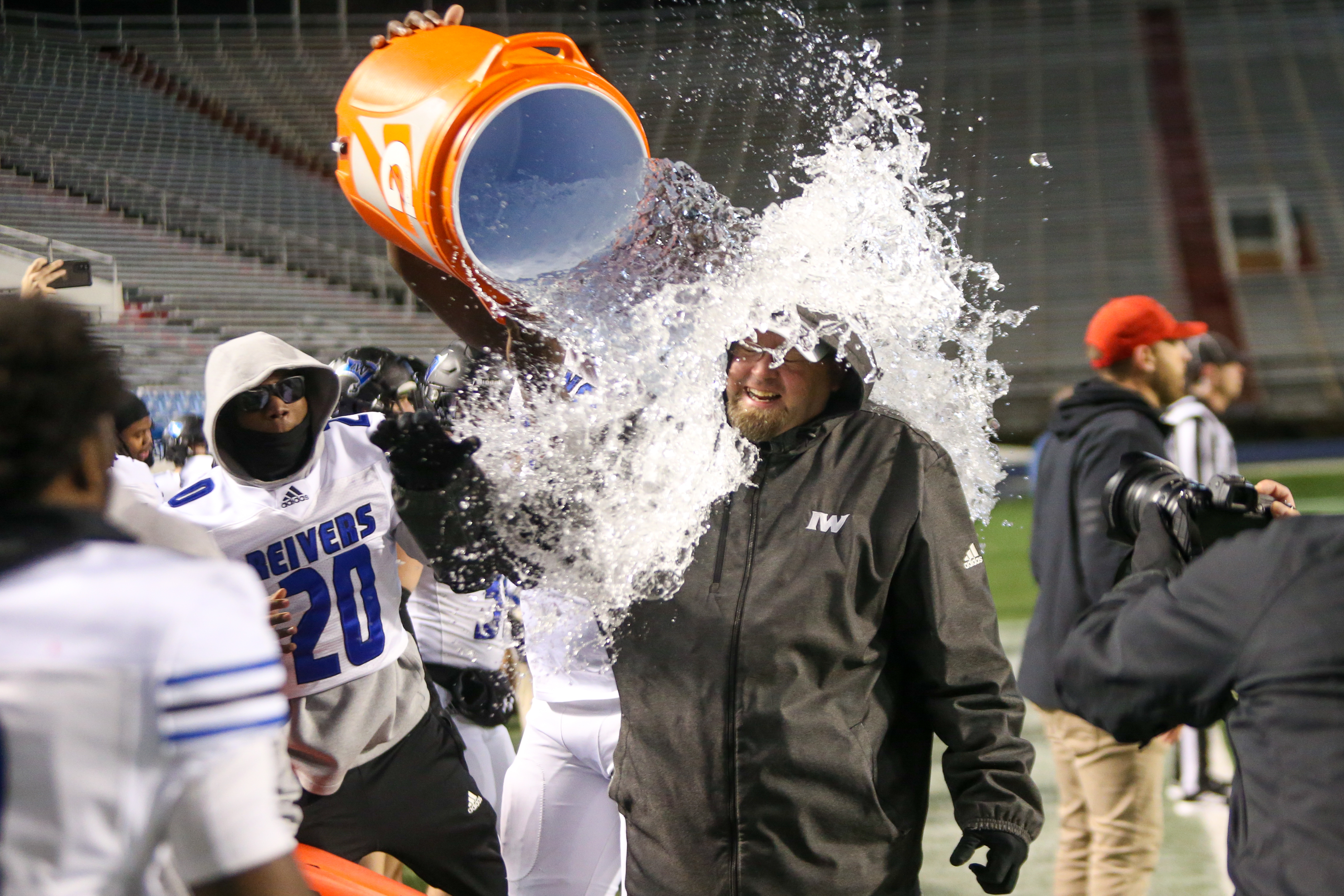
Scott Strohmeier has sent somewhere between 40 and 50 players a year to the next level for nearly two decades. He's won a national championship. In 17 seasons as head football coach at Iowa Western Community College, his program has never finished below .500.
That's not luck. That's infrastructure.
The kind of infrastructure that takes years to build — the right staff, the right administration, the right tools — and the discipline to protect what matters most once you have it. For Strohmeier, what matters most has always been the same thing: time with his players.
Getting there, though, took a long time. And it started with a lot of things that looked nothing like football.
Everything Except Coaching
Ask Strohmeier what junior college coaching looked like when he started, and the picture he paints isn’t glamorous.
"I've painted the fields before," he said. "I’ve done laundry. I’ve put on helmet stickers — in [my] spare time, plus on top of your coaching duties and any other issues you've got to deal with on a day-to-day basis."
The film work was its own ordeal. Every play, charted by hand. Down and distance, formation, defense — written out one at a time, then imported into a spreadsheet or some other program, then cross-referenced with VHS tape.
"We used to literally watch every play from a VHS tape and hand-chart every single play," he said. "That's when you're staying up until 1:00, 2:00 in the morning to do it."
And beyond the film, there was everything else. On road trips in those early years, coaches drove the minibus. "From Council Bluffs to Grand Rapids, Michigan — 10 hours, coach a game, then we had to get on the bus and drive home."
Every hour spent driving a minibus or hand-charting a VHS tape was an hour stolen from a player’s development. In the JUCO world, where the window to get recruited is small, that’s a cost Iowa Western can’t afford.
Getting Their Time Back
Iowa Western has used Hudl for years, and Strohmeier is direct about what it changed. "We just bring our computer and we can do work from home," he said. That sounds like a small thing. It isn't. It meant his staff — many of whom have kids of their own — could actually be home.
"I want my coaches to be able to go watch their kids," Strohmeier said. "Monday is kind of that day. And if you have to start early in the morning and stay later some nights, I want our guys to be able to get home with their families."
When Iowa Western added Hudl Focus cameras to their practice and game fields, the shift got more significant. The student filmer problem — the missed clips, the dead batteries, the angles that were off — went away overnight.
"I didn't have to worry: is my filmer there? Is he on time? Are the camera batteries charged? Is he paying attention or is he missing clips?" Strohmeier said. "We got them all."
After practice, the process that used to take the better part of a morning now runs on its own. Film is uploaded, cut and ready before the coaching staff finishes breakfast. They come back in, and it's waiting for them.
Game film tells the same story. "If we finish at 4:00 or 5:00, I can start at 5:05 watching the other team," Strohmeier said. That used to be a next-morning task, at best.
Hudl Assist brought the same logic to breakdown work. Down and distance, formations, tendencies — the time-consuming manual charting that used to swallow entire evenings — now happens automatically.
"Formationally is probably a big one offensively and defensively," Strohmeier said. "Those are the first ones we're going to pull."
With those hours back, the staff can divide and conquer. Coordinators pull their specific reports. Position coaches build their own playlists. "We can get double the duty in the same amount of time," Strohmeier said.
From a recruiting standpoint, Hudl turned a full-time logistics operation into something he can run from his phone. "I'll get text messages at all times. 'Take a look at this kid' — I just click the link that was sent to me," he said. "I don't even have to search for it."
Their recruiting database now has highlight film links attached to every prospect. A school that's never recruited Iowa can pull a player's film and evaluate him in minutes. "It's made it a lot easier to find kids," Strohmeier said. "And a lot easier for people to find ours."
What He Does With the Time
Here's what the reclaimed time actually looks like.
When a quarterback needs individual attention, Strohmeier doesn't wait for the next team film session. He pulls that player's clips, adds comments — what he did right, what needs to change — and sends them directly to the kid's phone. "They don't have to watch every clip from practice," he said. "They can watch just their own."
It's a level of one-on-one coaching that would've been logistically impossible before. Now it's part of the weekly routine.
That extends to the culture Strohmeier has built around his staff. Practice at 7:00 a.m. means afternoons are for position meetings, development and, when the work is done, going home. "There's a million ways to do it," he said. "I've been successful the other way — staying until midnight, 1:00. But we found our way of doing it."
The result is a staff that stays. His defensive coordinator, Mike Blackbourn, has been with him for two years at his previous stop and all 17 at Iowa Western. That kind of continuity is rare at any level. At the junior college level, it's extraordinary.
And it shows in the players.
Iowa Western sends 40 to 50 players a year to the next level. The wall in Strohmeier's office tells the story of who went where. Kaden Wean — a two-time Jet Award winner who headed to the NFL Combine — came through Council Bluffs as a relatively unrecruited prospect. So did Jake Waters, now the quarterbacks coach at Penn State.
"That's why you get into the profession," Strohmeier said. "To help the kids. And for us, it's a little bit different — because we get them, and then we get to go see them do it at the next level."
A Program That Never Stops Building
Iowa Western isn't standing still.
Strohmeier is now looking ahead to the Hudl Focus Point LR, which will provide them film from the end zone angle. What he describes is the ability to film multiple segments of practice simultaneously — four things going at once, all captured automatically, all ready to review without chasing down footage or syncing mismatched clips.
"That is really exciting," he said.
It's the same instinct that's driven the program since 2009: find a better way to do it, so you can spend more time doing what actually matters.
"At the end of the day, it comes down to coaching the guys who aren't just your starters," Strohmeier said. "Those are the easy ones. Don't discard the guy who's third or fourth on the depth chart. Give him the same amount of time."
That philosophy — applied consistently across 17 seasons, with better tools every year to support it — is the real legacy of Iowa Western football. Not just the national championship. Not just the players on NFL rosters. But a program where kids come back, talk about their time fondly and mean it when they say they're proud to have played there.
"Hopefully," Strohmeier said, "they say he did it the right way."