
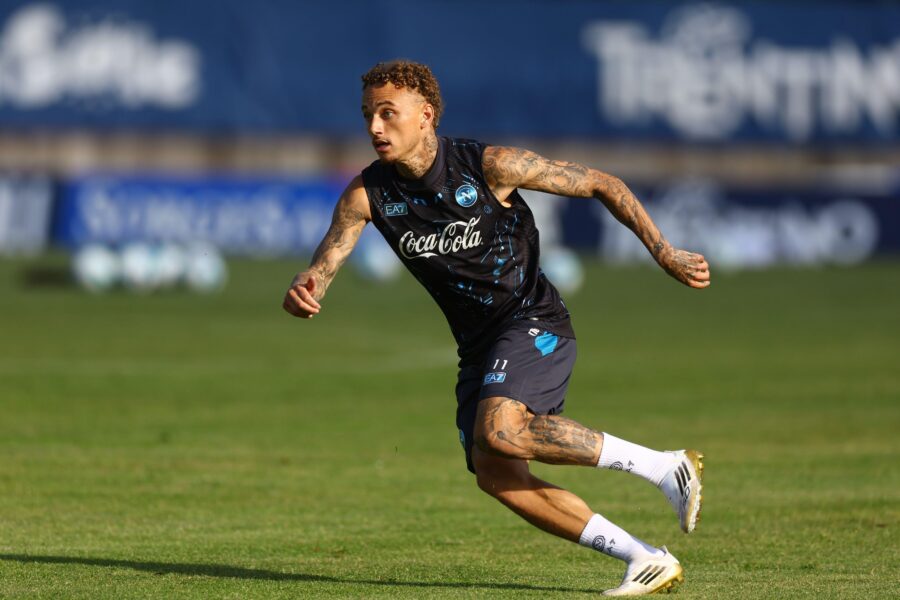
With the new Serie A season around the corner, L’Ultimo Uomo uses Hudl Statsbomb advanced data to analyze a handful of players ready to make a splash.
Noa Lang (Napoli)
Before arriving in Naples, Antonio Conte had not been in the habit of using wingers for 13 years. As a coach who revived the 3-5-2 system in Europe, when he worked with attacking wide players – such as Hazard, Pedro and Willian at Chelsea, or Kulusevski at Tottenham – he had converted them into inside forwards in a 3-4-2-1.
At Napoli, however, due to the characteristics of the squad, the Apulian manager had to go back to his roots, to the days when wingers were among the main protagonists of his football. Not even the sale of Kvaratskhelia to PSG was enough to make him change his mind: Napoli had to play with two wingers.
It was only natural, then, that immediately after winning the league title one of the first moves was to secure a brand-new attacking winger. And his decision, somewhat surprisingly, landed on Noa Lang.

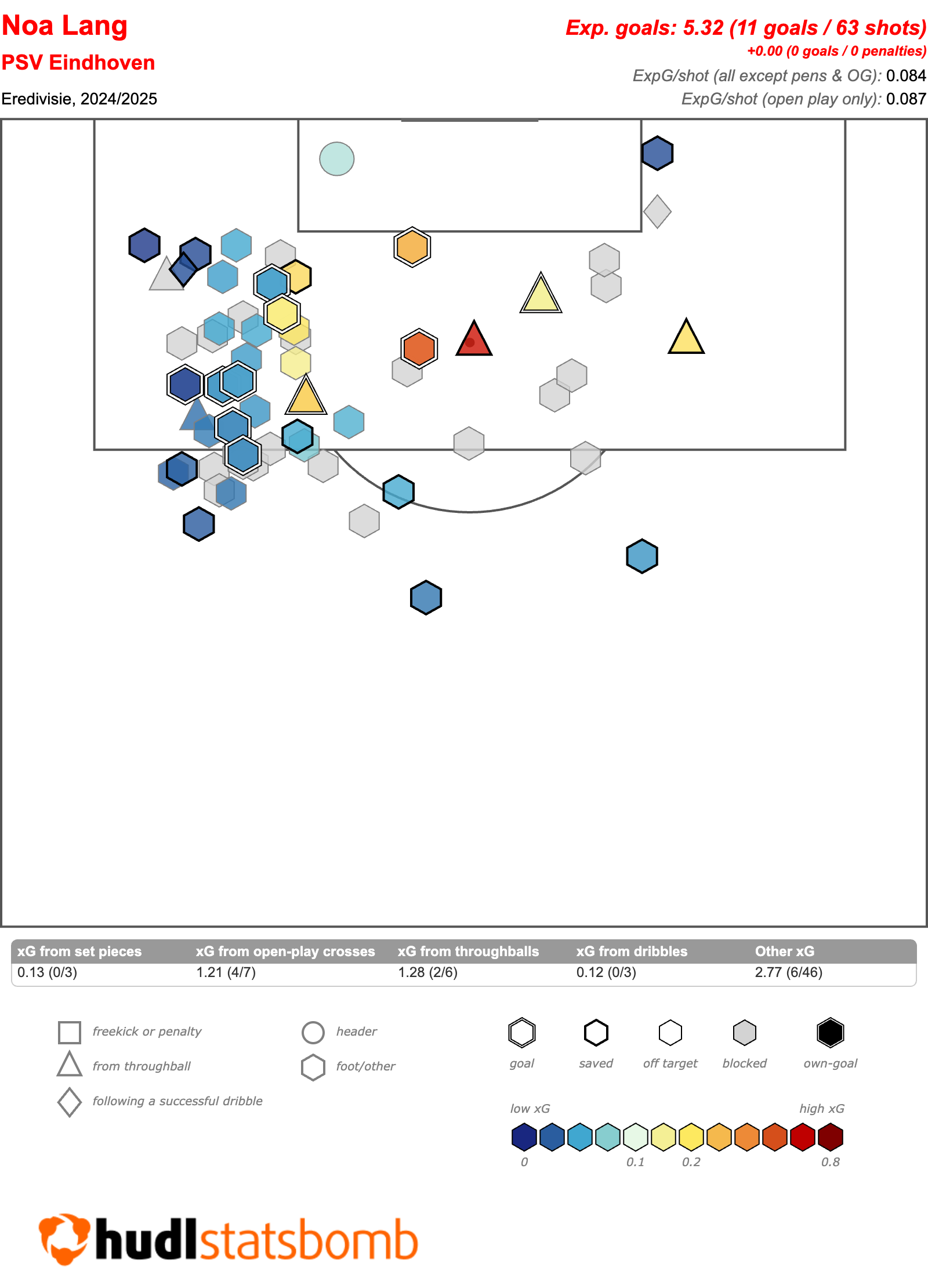
Carrying the ball from the flank to the centre – something unusual compared to the wingers currently available to Conte – Lang’s main aim was to get a shot on goal. As shown in the graphic below, we see the propensity to take shots from the inside left channel, with a cluster of goals from the edge of the area demonstrating his ability from range.
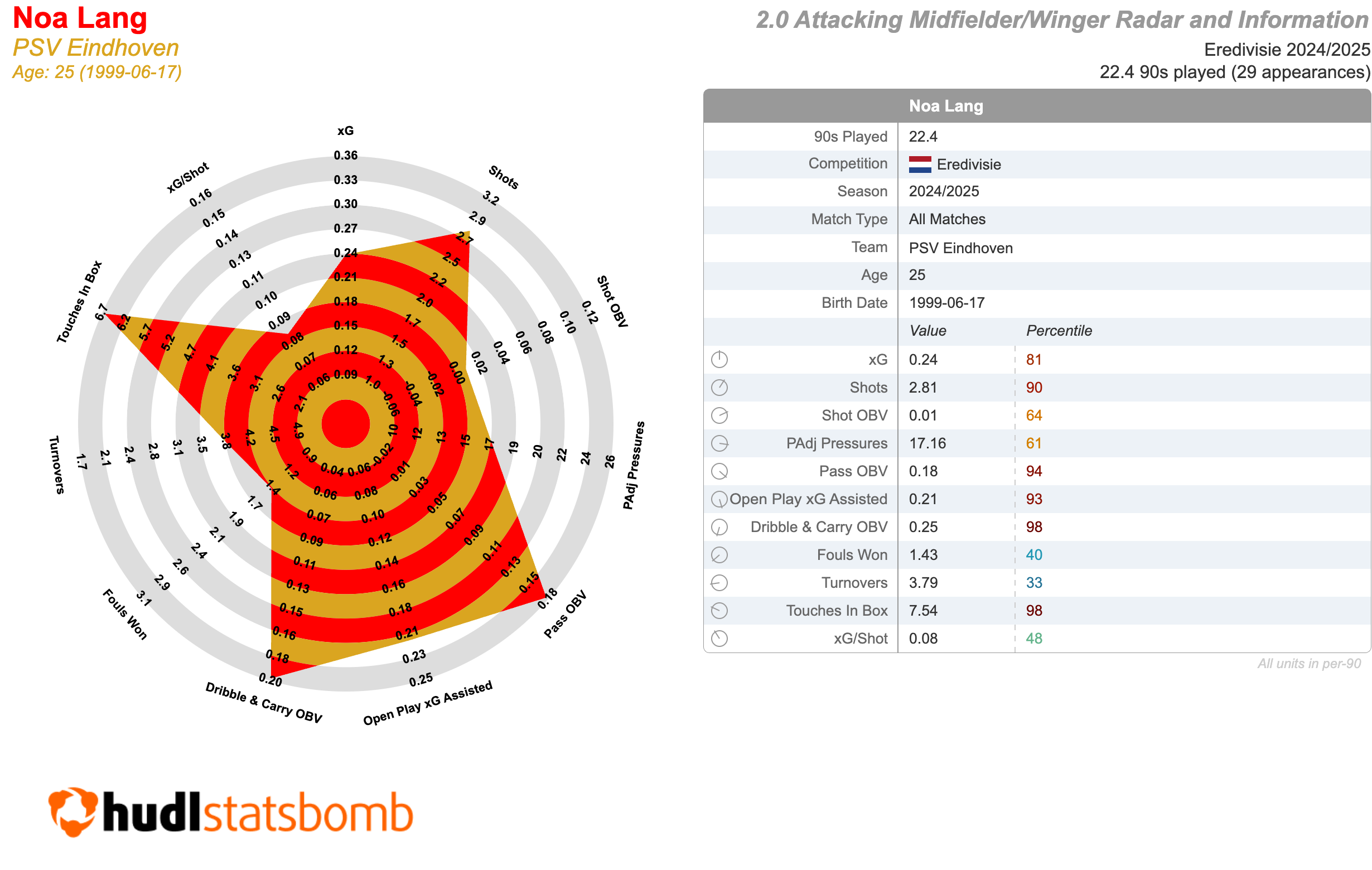
When not going for a shot, Lang would look to combine with players on the edge of the box. In particular, he would make use of the lay-offs from a back-to-goal specialist like Luuk de Jong. Given these characteristics, it is easy to imagine that Conte might try to replicate the same kind of dynamic with Lukaku, another player who excels with his back to goal.
Of course, the context has to be taken into account. Since Bosz’s arrival, PSV have been an extremely dominant side in the Eredivisie, pinning their opponents back almost relentlessly, so Lang spent the majority of his matches camped in the final third.
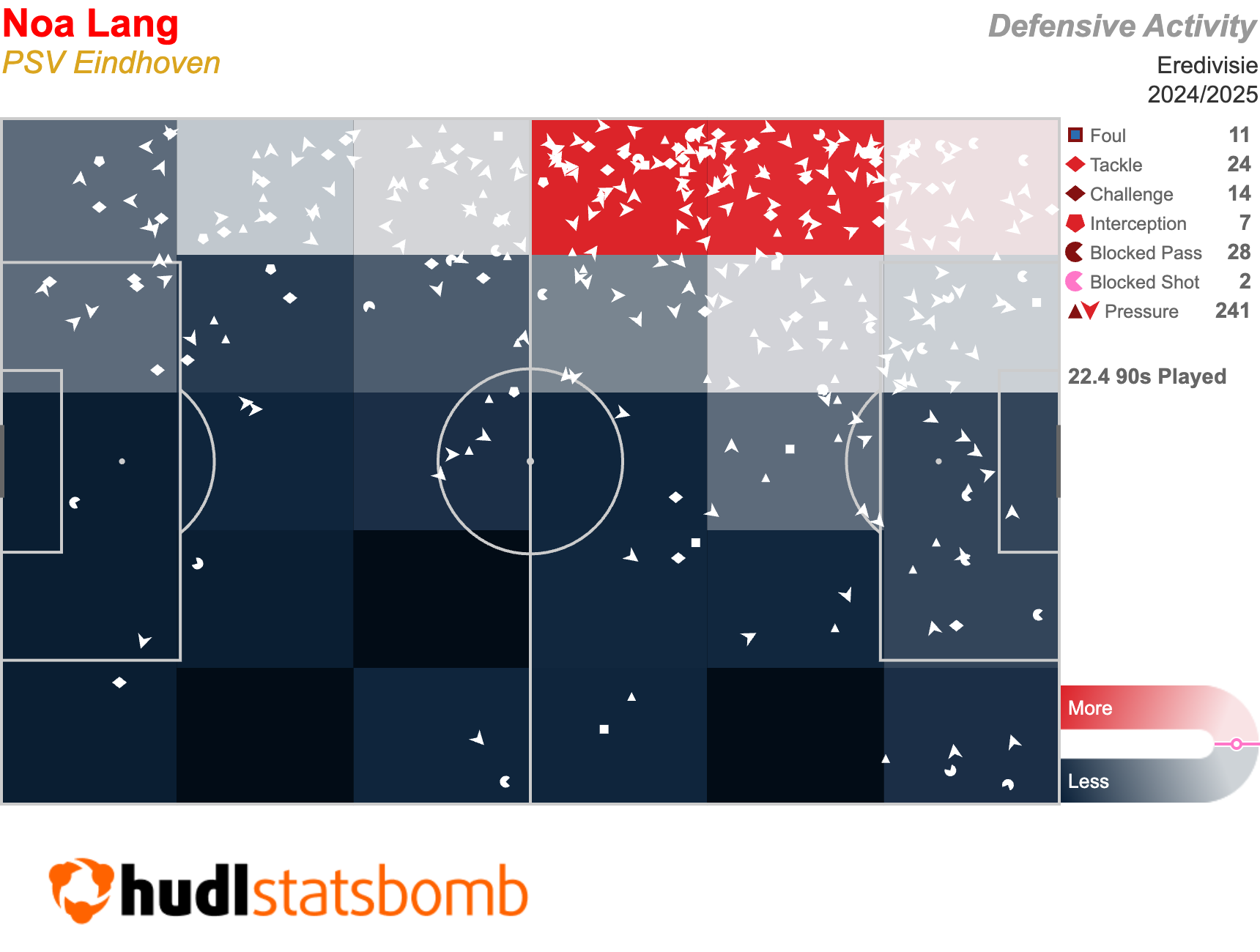
By contrast, Conte’s Napoli are a less spontaneous attacking side than PSV, with wingers encouraged to play in a more mechanical fashion and required to show great willingness to work hard. With the ball, Lang loves to improvise and is more used to pressing than tracking back.
It is by no means certain that he will succeed at Napoli, but he has all the technical and athletic qualities needed to make his mark in Serie A.
Neil El Aynaoui (Roma)
One of the soap operas of the Italian summer was the rather brief love triangle involving Roma, Colombian midfielder Richard Rios (then at Palmeiras), and Lens’ Neil El Aynaoui.
Roma fans had already fallen in love with Rios’s highlight reels – more attacking with the ball at his feet, flashier, better suited to “social media football” – but the deal collapsed and Roma fans took it out on El Aynaoui online.
El Aynaoui may be a more practical player, with qualities closer to the average, but nevertheless the numbers point to a player with potential still to be discovered.
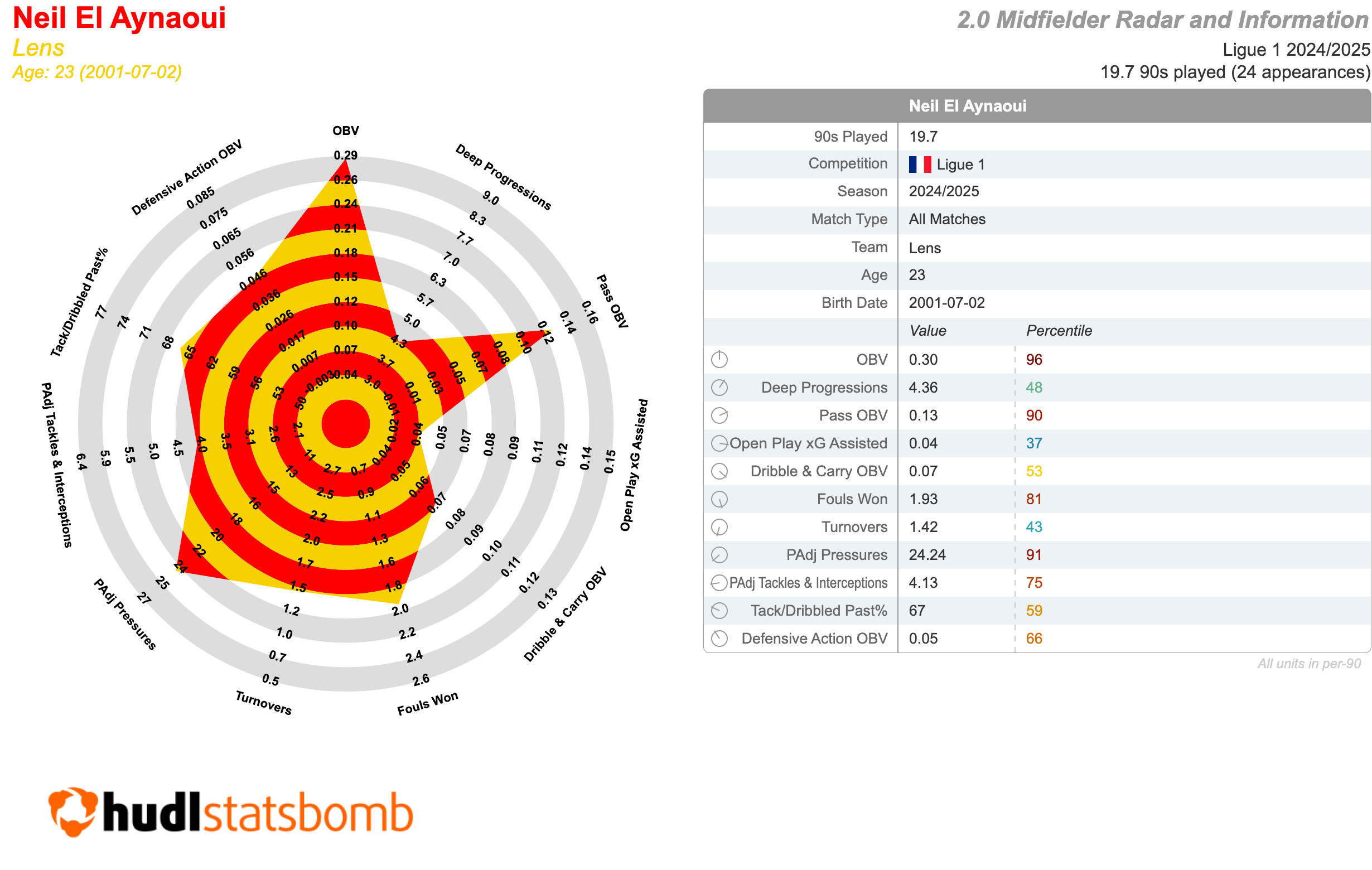
The 23-year-old has played just two seasons in Ligue 1, maintaining a consistent performance level, although at the end of the 2023/24 season he suffered a knee ligament injury. Gradually, he established himself as one of the most dynamic and complete midfielders in the league, finishing last season with five goals from open play, plus three more from the penalty spot.
What’s more, El Aynaoui was managed by two coaches who play aggressive and vertical football: Franck Haise, who coached him in his first Ligue 1 season, is a fan of Gian Piero Gasperini’s style—now Roma’s new manager—while Will Still led Lens to become the team with the fourth-lowest lowest PPDA (8.6).
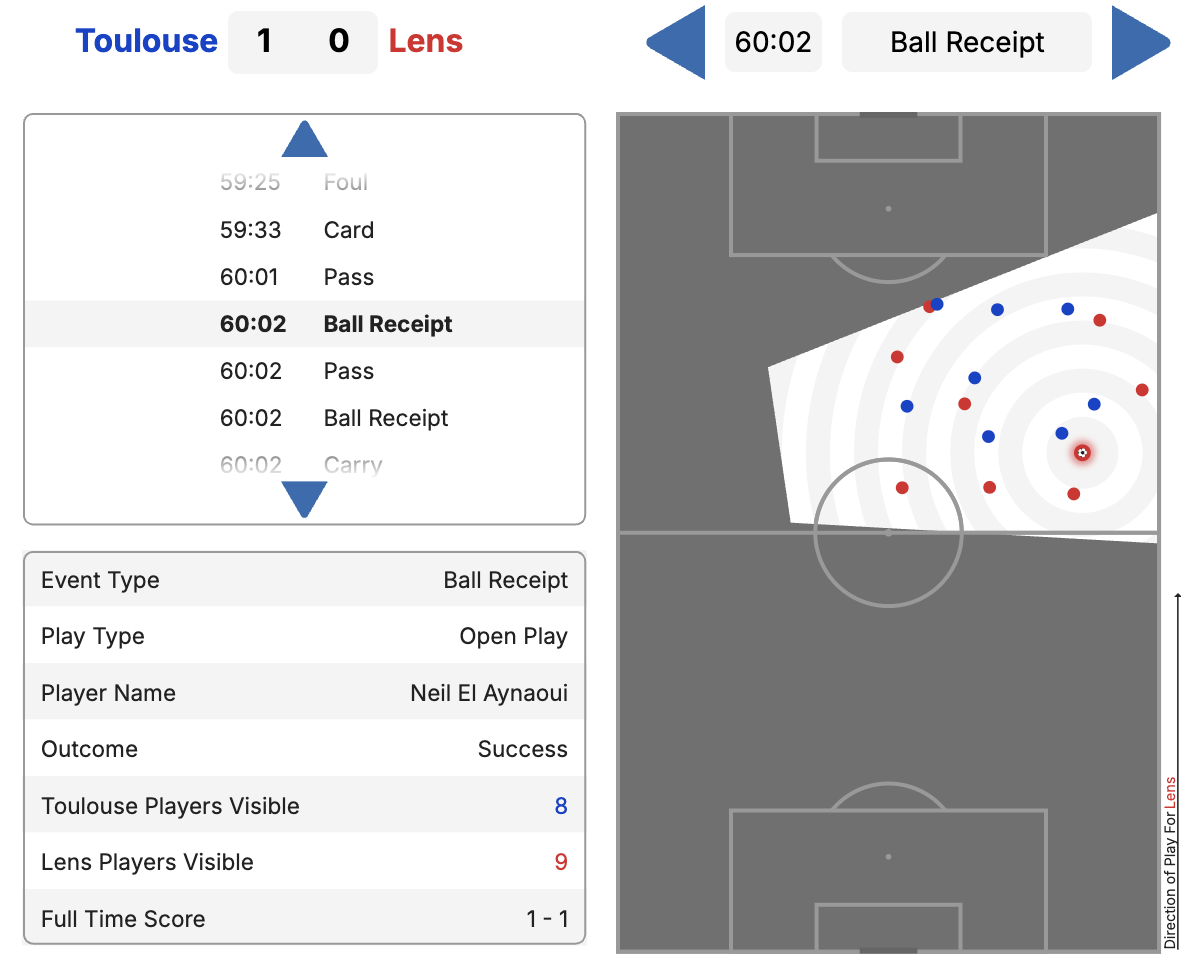
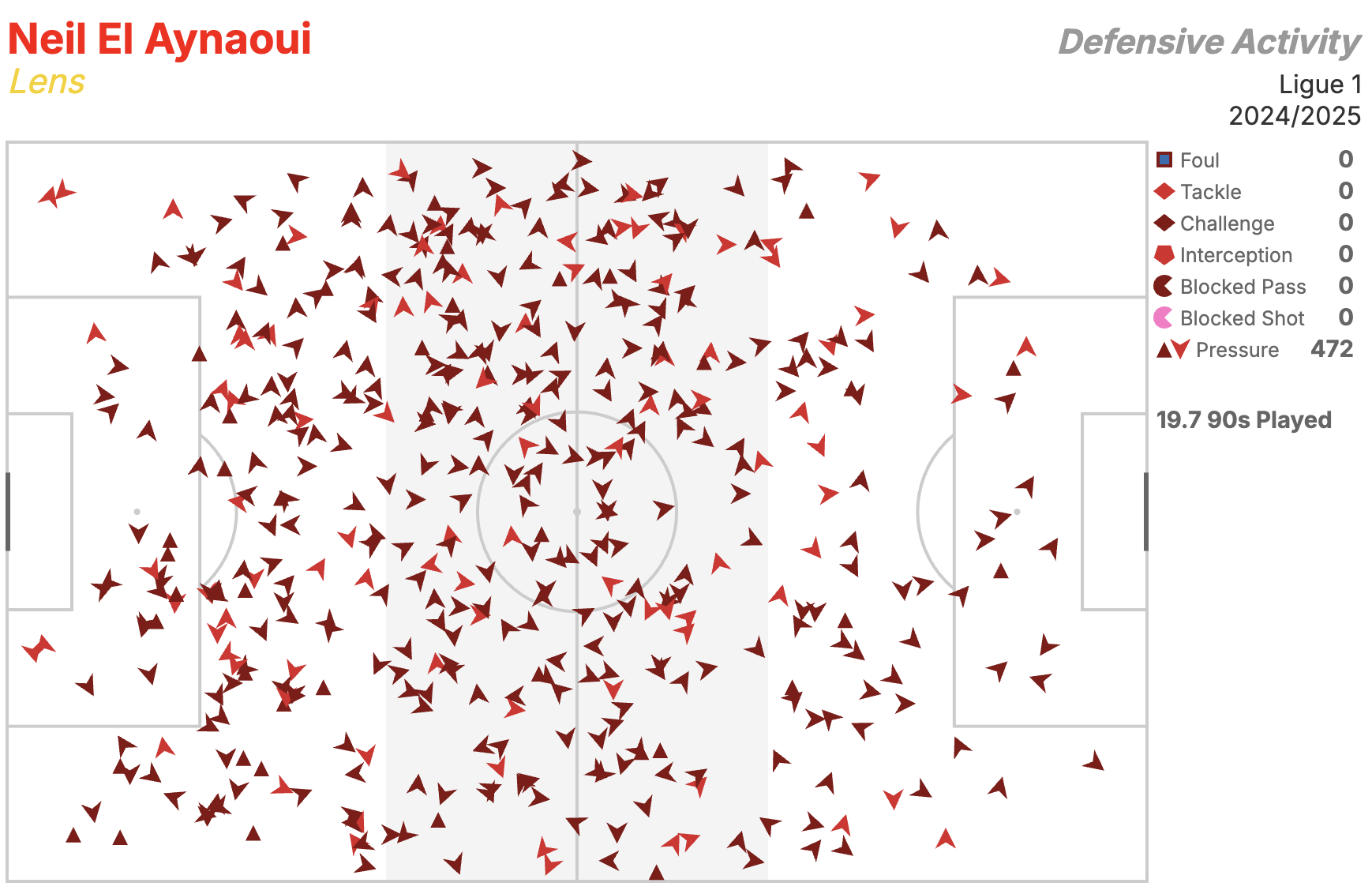
Last season, Lens was the third highest team in Ligue 1 for counter-pressing and counter-pressing in the opponent’s half, and after Thomasson and Diouf, it was Neil El Aynaoui who made the most pressures, counter-presses, and recoveries during the season. With an average of 4.82 ball recoveries under pressure and 23.96 pressures per 90, El Aynaoui ranked in the 94th and 92nd percentiles respectively last season.
El Aynaoui was also the tenth-ranked player in the league for aerial duels won, averaging 3.5 tackles and 1.7 interceptions per 90 minutes – numbers nearly identical in the previous season under Haise). He often chases shadows or acts too instinctively, allowing opponents to get past him (54th percentile for dribbles conceded), but he still puts in a good volume of defensive interventions. His room for improvement will lie in making those efforts more effective.
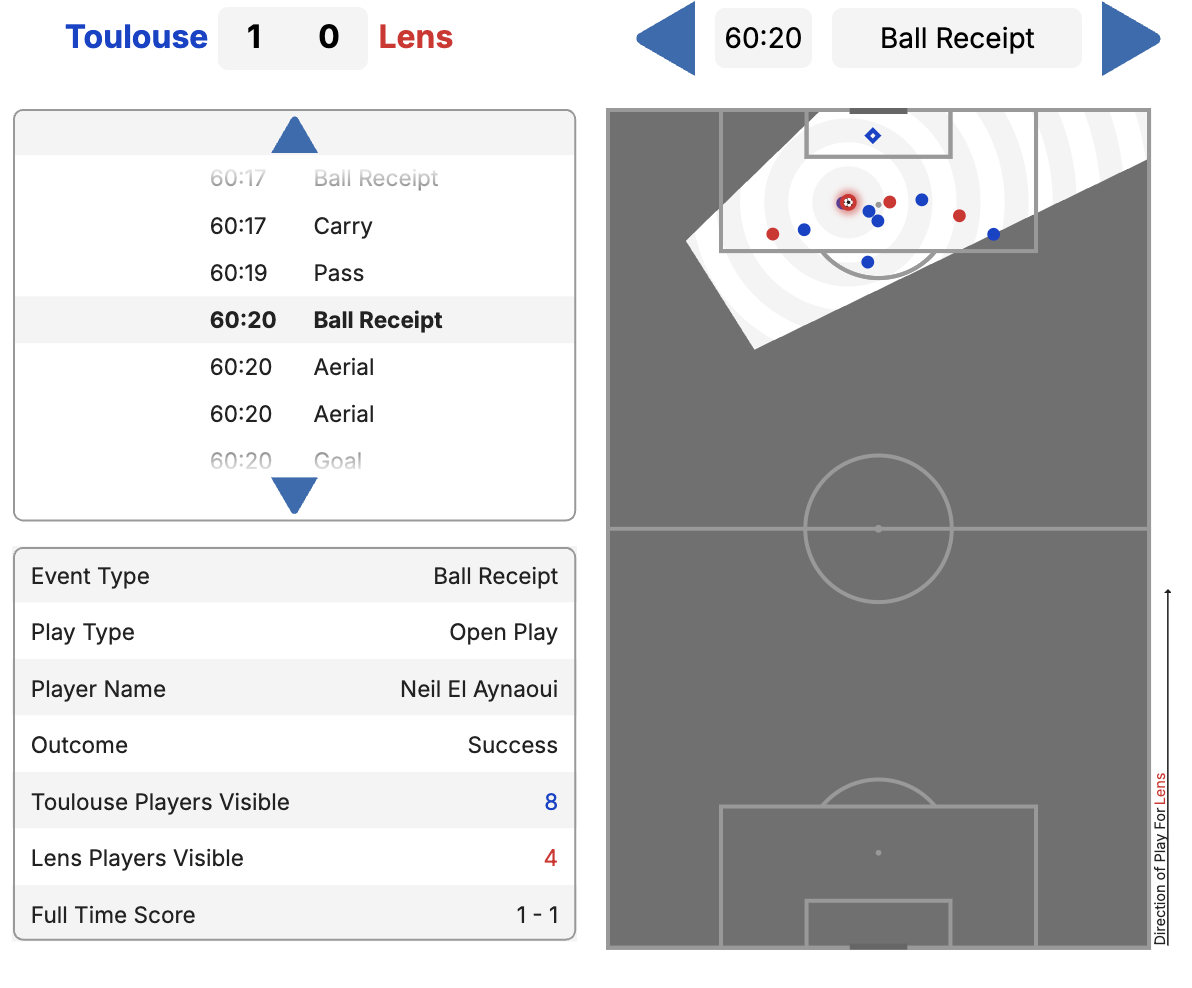
Certainly, the end of last season made an impact, with the brace against Monaco and the goal against Toulouse suggesting he is a player in the prime of his development. For El Aynaoui, the time had come for a step up. Gian Piero Gasperini will need to act like an expert gardener, shaping a flourishing plant by making the most of his defensive and offensive qualities.
Serie A is undoubtedly a league well within his athletic capabilities, but tactically it represents an interesting challenge that could help him grow significantly — possibly even giving him the chance to debut with Morocco’s senior national team.
Martin Vitík (Bologna)
Even before selling Sam Beukema to Napoli, Bologna had already chosen his replacement: Martin Vitík. A Czech central defender with an imposing physique (1.93m), he has already made 155 appearances for Sparta Prague, including nearly thirty in European competitions, at just 22 years old.
But the role Vitík will have to fill is far from simple; Beukema was one of the best centre-backs in last season’s Serie A. Will he really be able to replace him?
For Bologna, it’s a delicate matter: Beukema was not only an excellent defender in one-on-one duels against Serie A strikers, capable of being aggressive and not losing out in open play, but he was also a key figure in building out from the back. Two qualities that are fundamental for central defenders in Vincenzo Italiano’s system.
At Sparta Prague, Vitík played on the right side of a back four, just as he will at Bologna alongside Lucumì, and had similar responsibilities to Beukema, as seen from the comparative radars from last season.
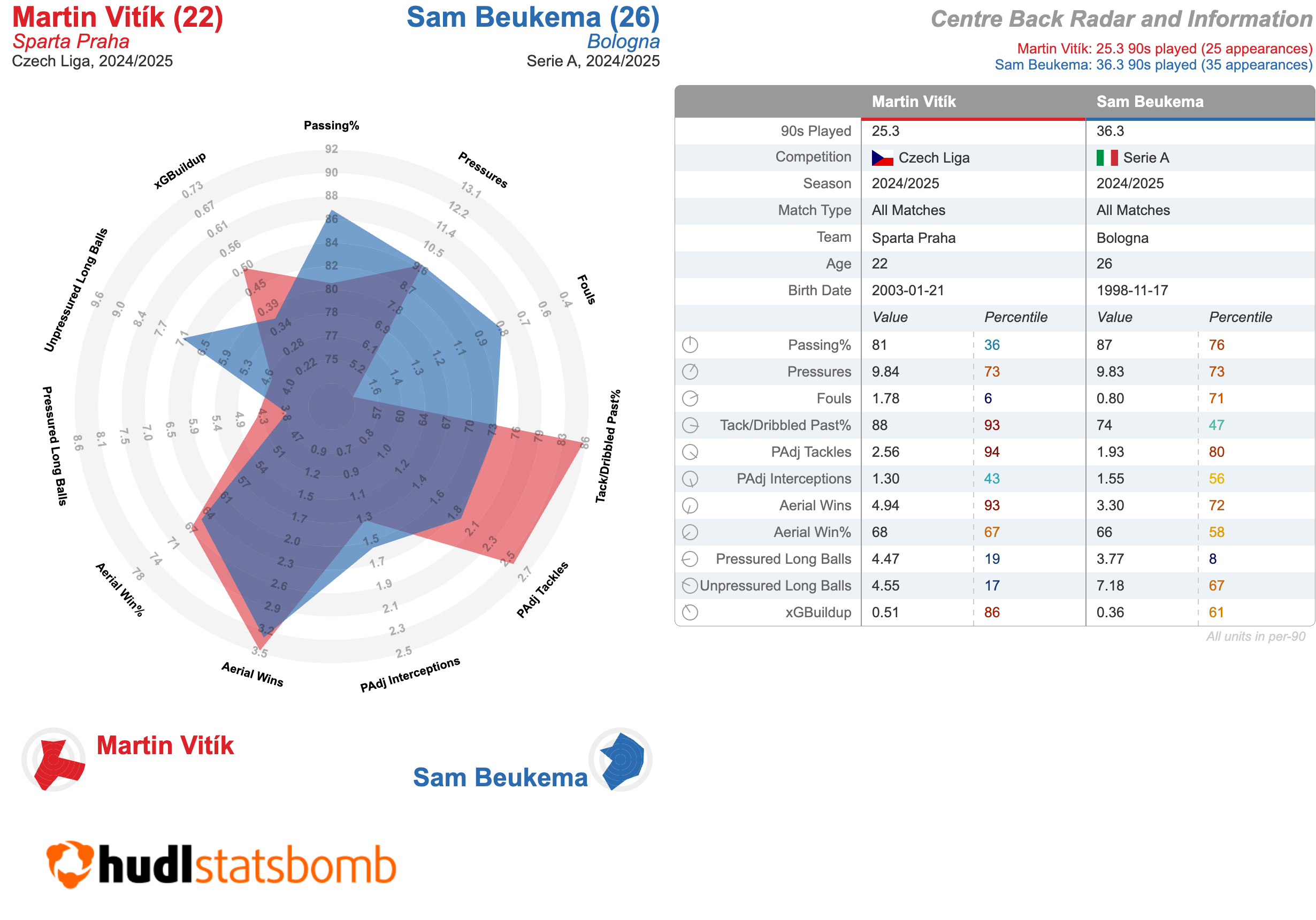
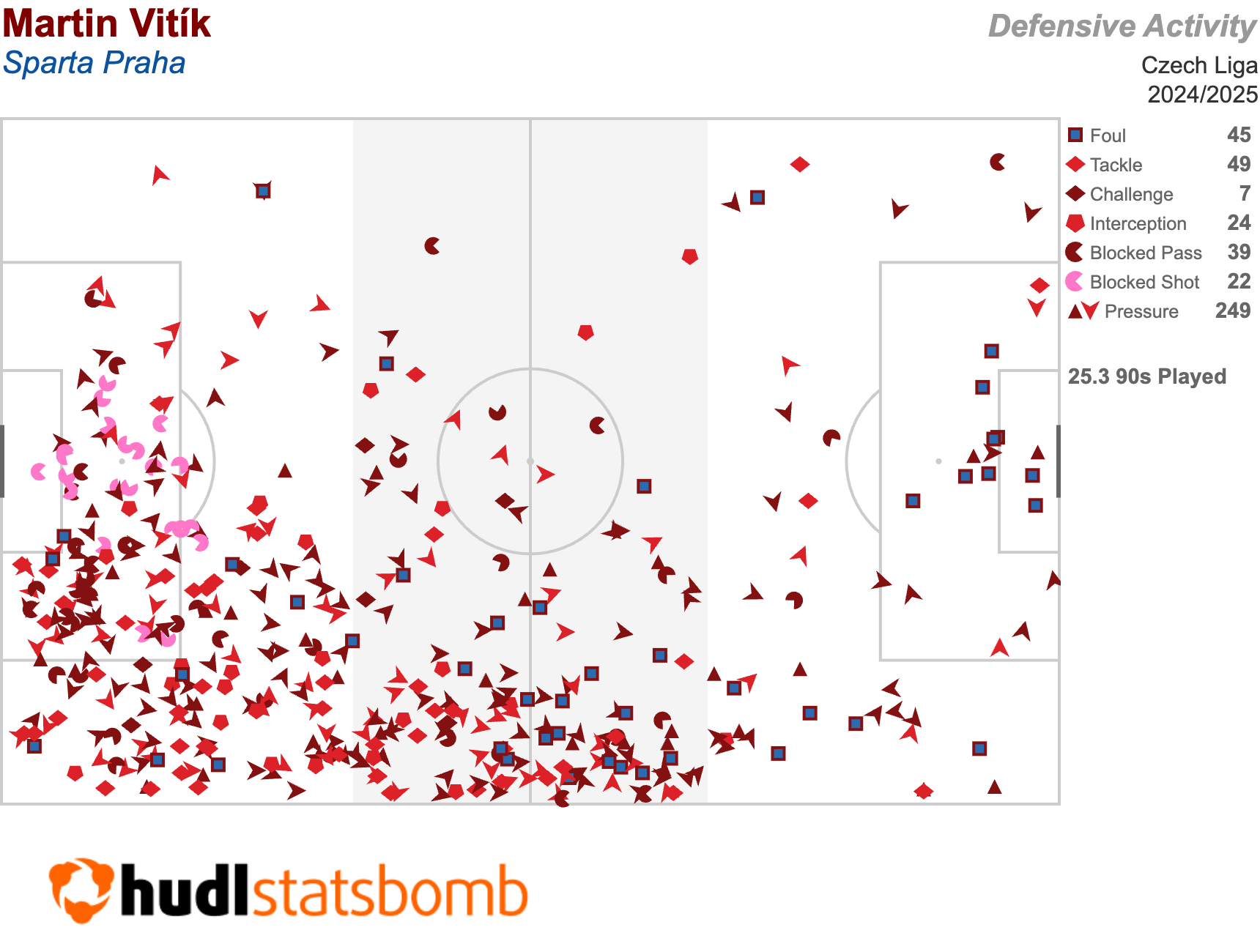
Italiano is an excellent teacher for his defenders, but he also asks them to take risks: defending one-on-one in open play, running back to cover large areas of the pitch. In this respect, Vitík is still somewhat physically immature and shows some limitations when covering a lot of ground, especially retreating.
If Bologna’s pressing were to falter, their defence might struggle with the speed of opponents’ counter-attacks. However, Vitík often manages to compensate for these weaknesses with excellent defensive instincts and clear superiority in the air, where he uses not only his height but also good positioning. He is also a threat in the opponent’s box on corners and free-kicks, having already scored 16 career goals, almost all headers.
That said, today a defender is no longer judged solely on defensive phases, or at least not only that. Vitik also has a good right foot, which he uses to direct play from the back.
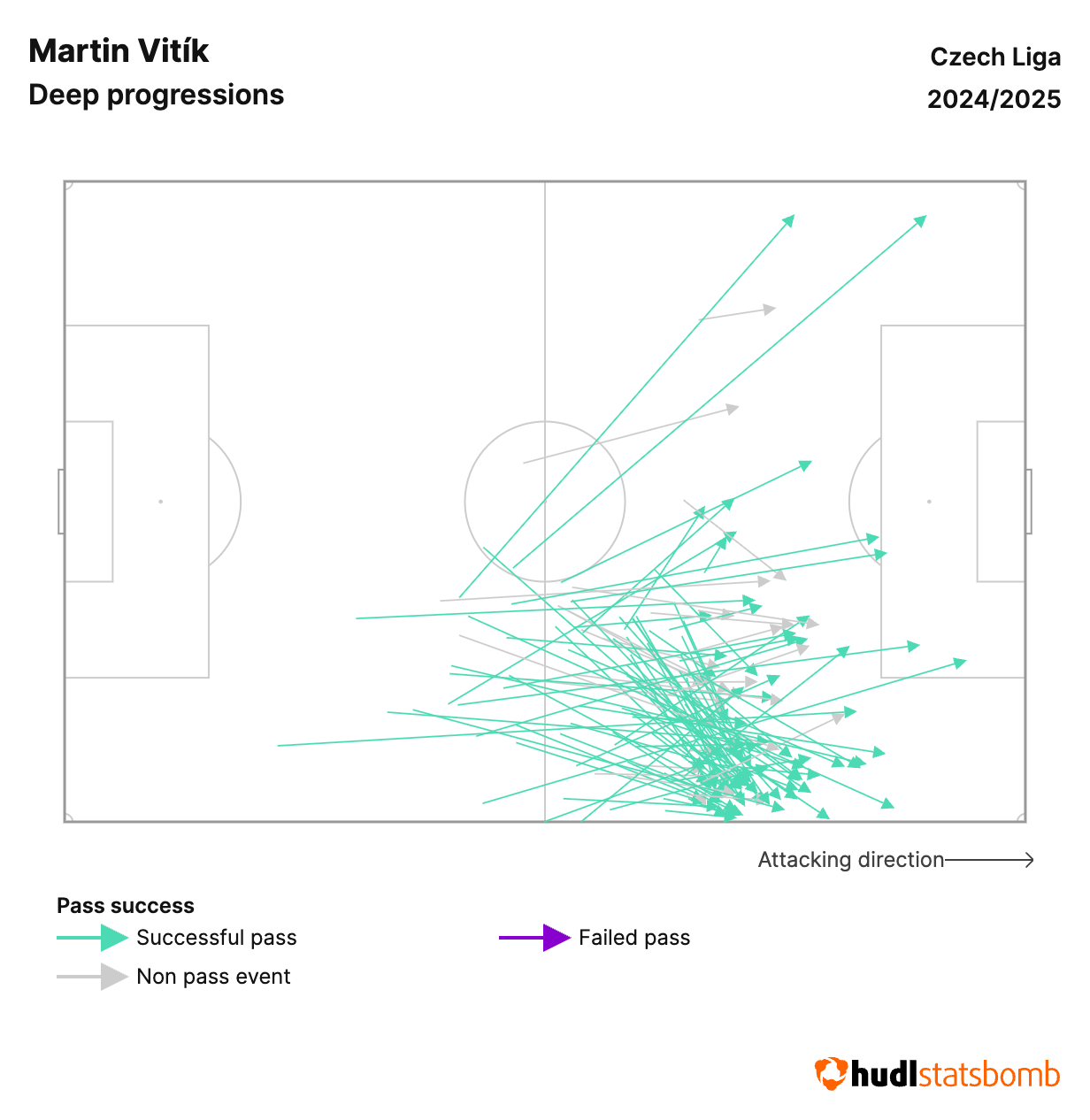
Vitík is effective when it comes to progressing the ball forward. Thirty-two percent of his total passes are forward, well above Beukema’s 21%, while he averaged 4.31 deep progressions per 90. However, one area for improvement would be his passes under pressure where he had a 27% completion rate drop off when pressured.
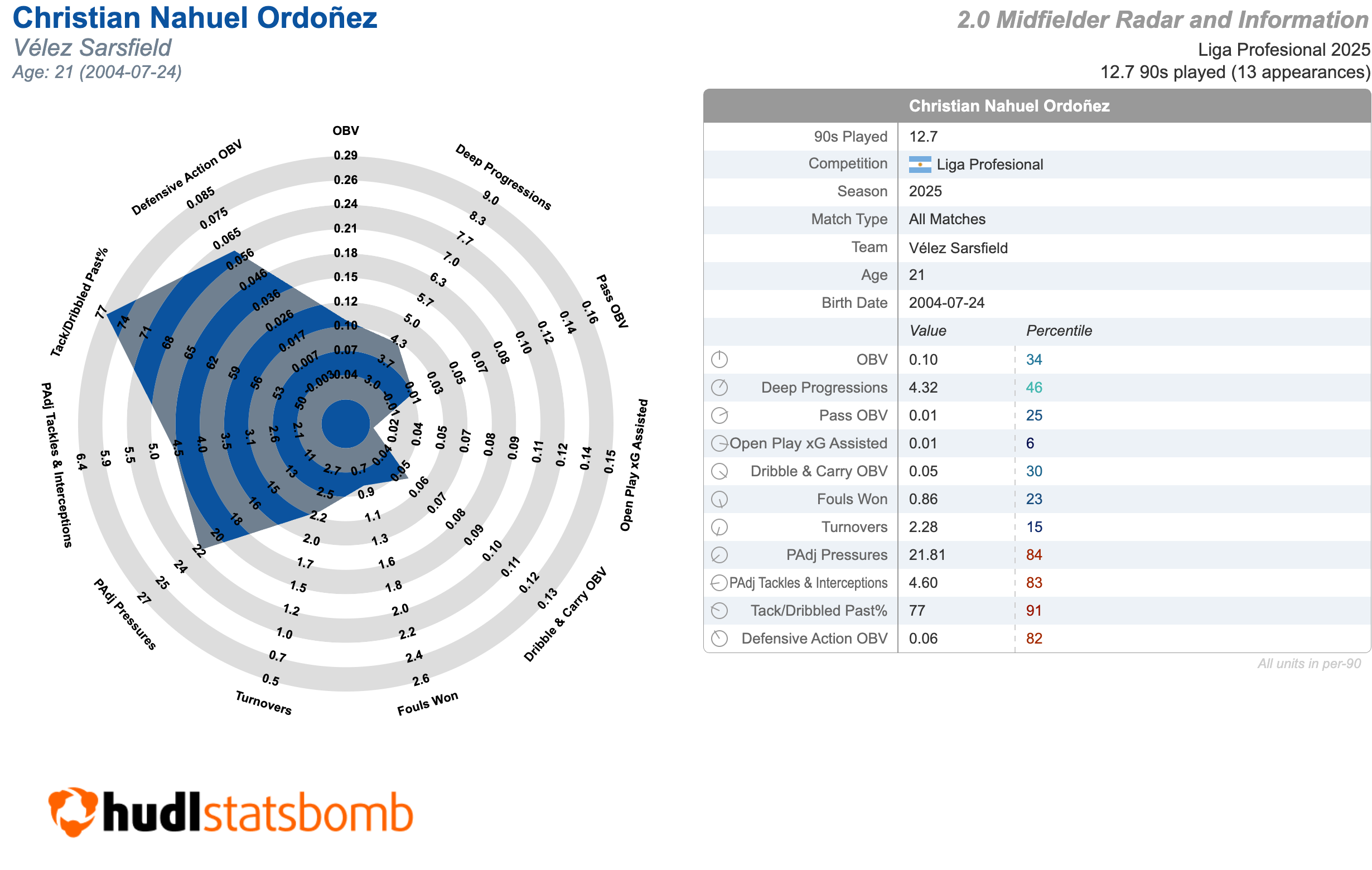
Ordóñez’s arrival likely reflects the awareness that Parma’s best talents are in midfield and that it would be difficult to keep them in Serie A. Mandela Keita, Adrian Bernabé, and Simon Sohm — already sold to Fiorentina — formed a strong unit for the survival battle, and for this reason expectations around Ordóñez will inevitably be high.
That’s not the only reason, of course. Around €10 million is no small sum for a midfielder with modest goal-scoring numbers, even one who’s a starter for a major Argentine club by the age of 21.
So why did Parma bet so heavily on him? Ordoñez is a very elegant mezzala, with a light stride despite not being particularly fast, technically skilled with his right foot, and excels at shielding the defence.
His nickname — El Tractor, meaning “the tractor” — can be misleading: he’s not a particularly physical midfielder and he doesn’t possess the athletic dominance of Sohm when carrying the ball forward.
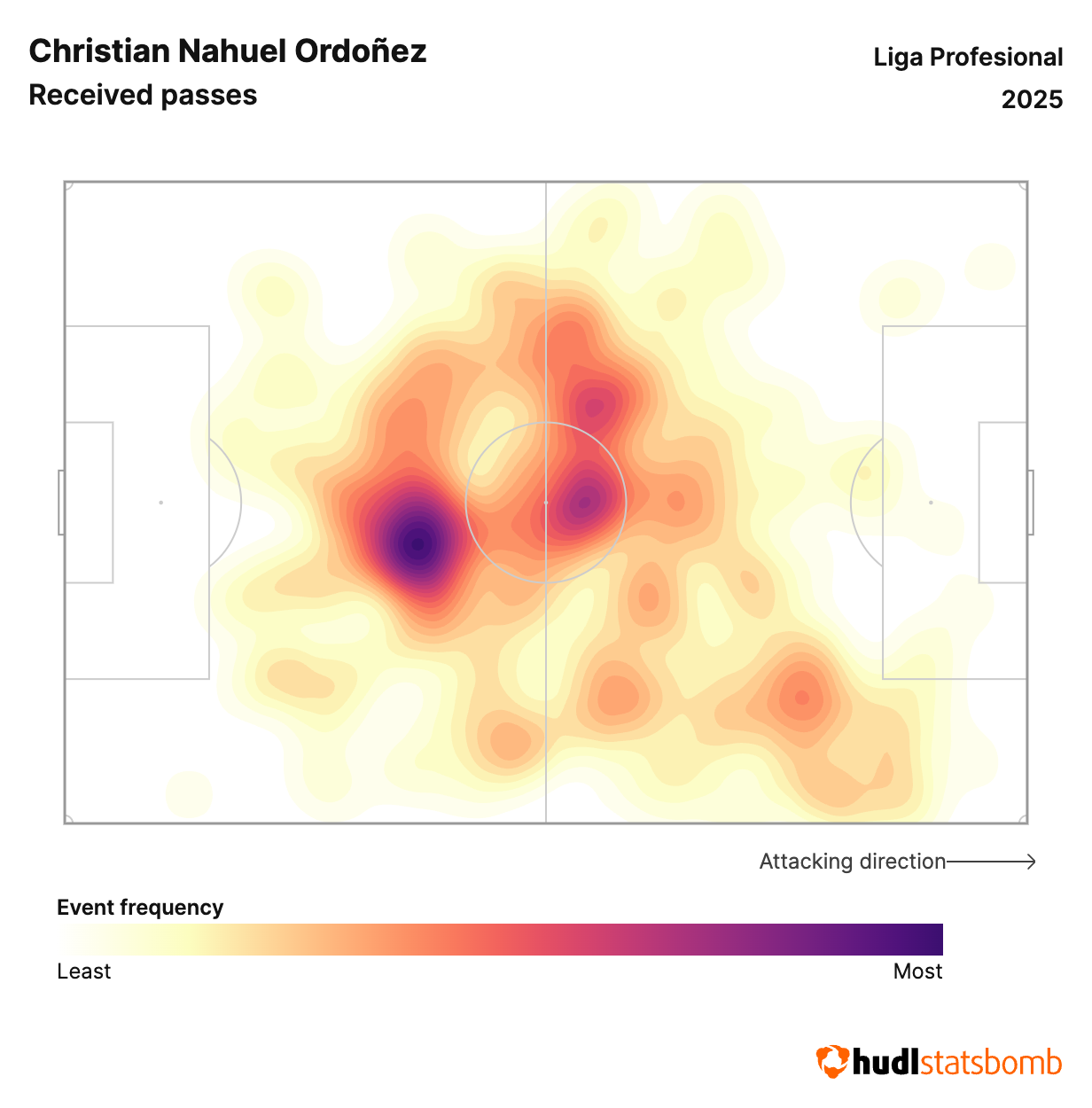
Ordóñez prefers to play short passes, using his body to evade pressure and deceiving his marker about which foot he prefers to receive on and where he intends to turn. Taking the ball off him isn’t easy, but he’s not a self-sufficient player and will need a supportive environment around him—where Carlos Cuesta, Parma’s young coach, will play a crucial role.
Ordoñez is the type of midfielder who aims to bring order and slow the tempo, though he has good vision and sometimes comes up with illuminating solutions that tear apart opposing defensive setups.
According to Hudl Statsbomb data, among Velez Sarsfield players, only three players made more through balls than him (he averages 0.16 per 90 minutes) this season. It’s no coincidence, then, that his current idols are players like Enzo Fernández and Alexis Mac Allister.
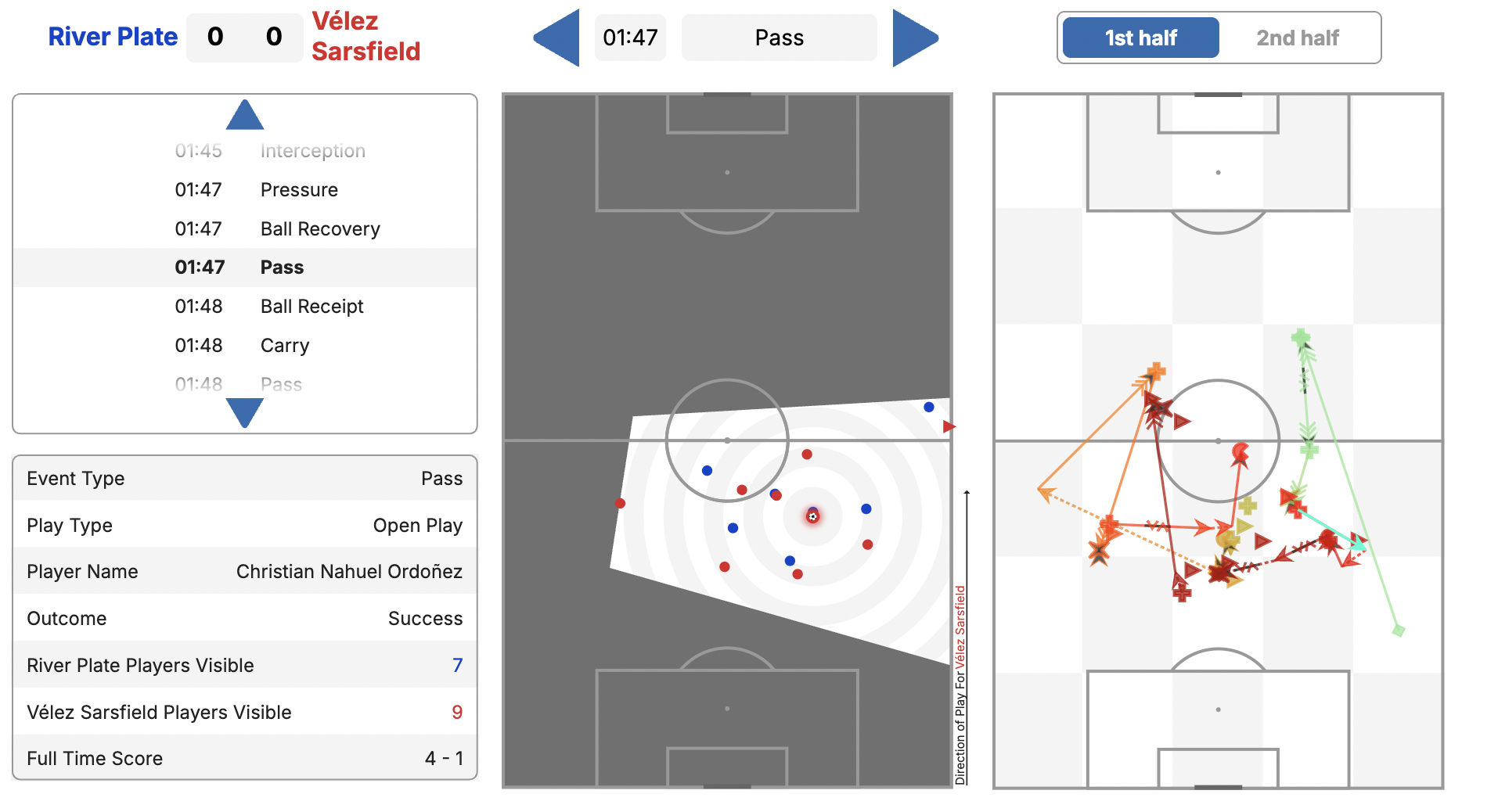
Off the ball, he’s more instinctive: like the vast majority of midfielders, he prefers to defend higher up the pitch, doing so with solid commitment. In one-on-ones, he always goes for the ball with a decisive tackle. This makes him a difficult opponent to handle, but sometimes also too reckless, and indeed he picks up his fair share of yellow cards.
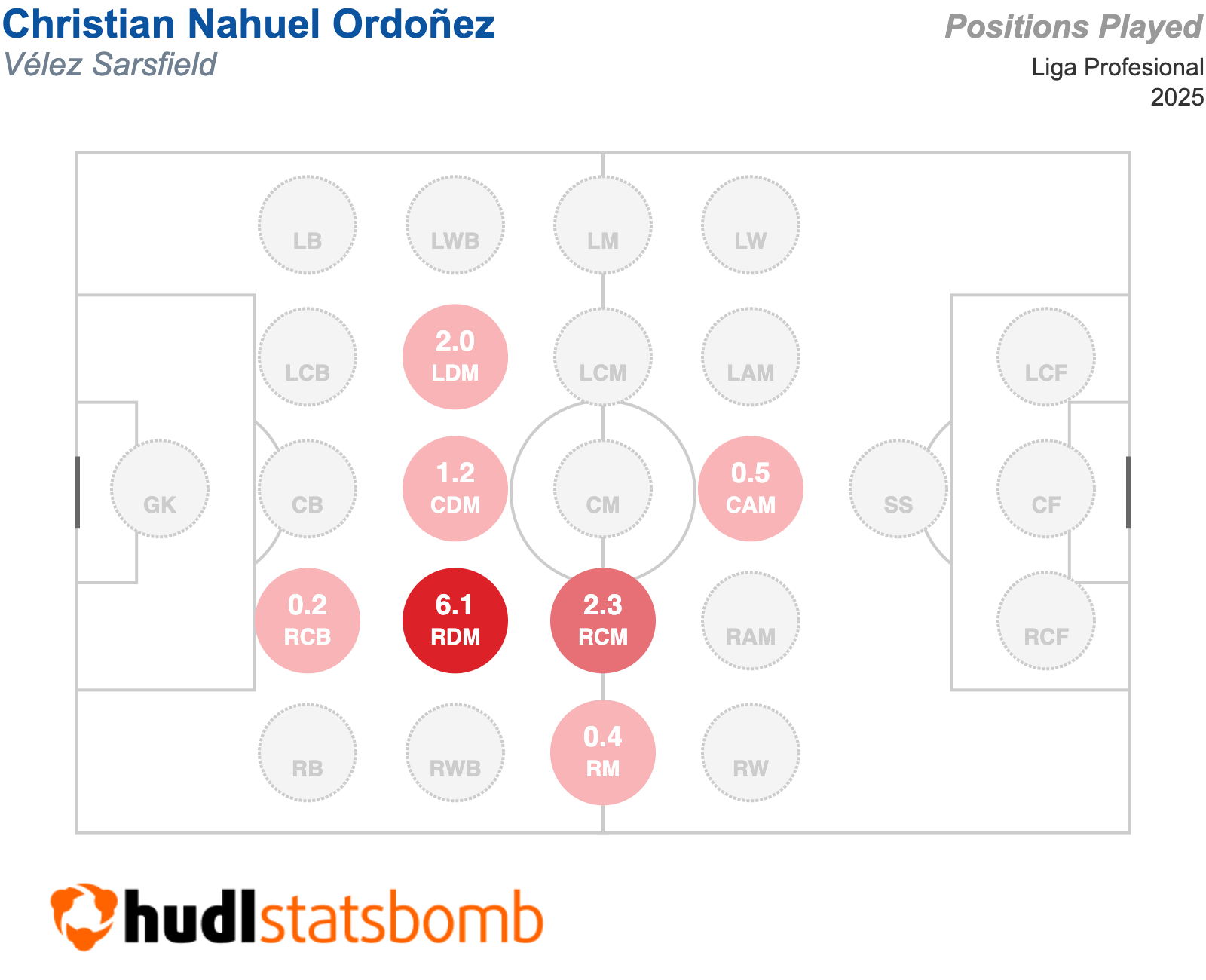
Ultimately, Ordoñez seems to make versatility his defining trait — a characteristic that can be a double-edged sword. Taken to its fullest extent, versatility is the hallmark of the best midfielders, but for those who don’t reach that level, it can also signal a lack of true exceptionalism. Ordóñez is still young, and adapting to Serie A will be a gradual process, but it is within this spectrum that expectations of him will be realised.