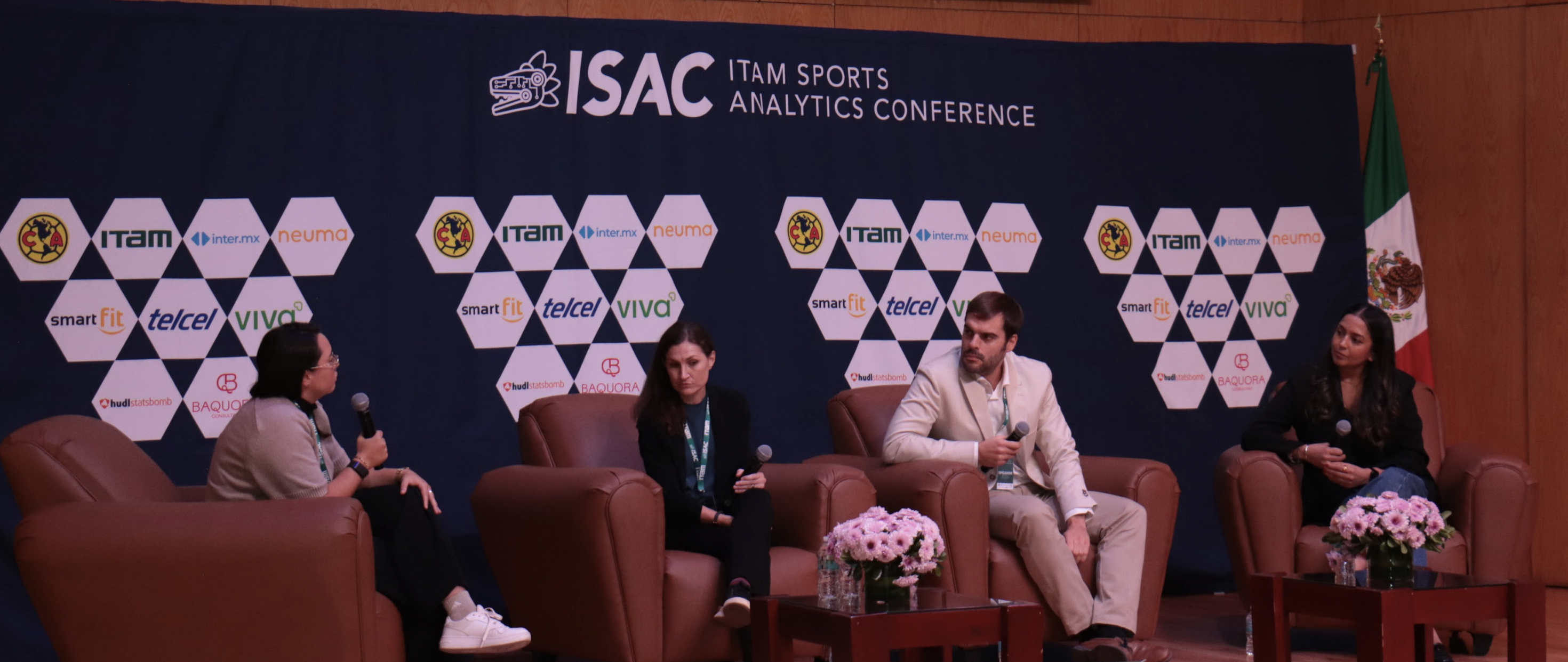
Hudl was the official Data Sponsor of the Hackathon at the 2025 ITAM Sports Analytics Conference. We relive the highlights and key insights from the event.
The biggest takeaway was that the quality of analysis demonstrated that Mexican and LatAm talent, when equipped with elite-level data, can produce insights on par with any top global club.
Five Hackathon finalists were whittled down from over 300 entrants – up from just 20 last year – and presented their projects in front of a group of expert judges. The winners were then announced the following day as part of the conference’s packed line-up of panel-led discussions and speakers from elite sporting organizations.
For those who couldn’t attend, this article recaps the main takeaways from the event, including insights from the finalists, perspectives from the judges, and highlights from the conference.

The Challenge: From Corner Kicks to Transfer Targets
Effective analysis isn't about counting what happened; it's about understanding the full context of why it happened—a level of insight standard event data often struggles to provide.
In partnership with Club América, one of Liga MX's most storied clubs, the hackathon presented participants with real-world challenges facing the team's technical staff.
Armed with four full seasons of Statsbomb 360 Liga MX data, the participants were given the task of solving complex analytical scenarios relating to two key tracks:
- Set piece optimization: turning one of the most important elements of the game, corner kicks, into goals.
- Player recommendation: looking beyond simple metrics to identify, value, and sign talent that fits the needs of their team.
This was designed to test their innovation, attention to detail, collaboration, and ability to come up with actionable solutions to authentic pain points.
With the insight from game-changing 360 data available, it allowed the participants to go deeper than simply tracking events, such as passes and shots, to modelling context, like pitch control and defensive pressure for example.
Ultimately, this is the difference top teams look for when it comes to making better-informed decisions faster – ensuring that the Hackathon accurately replicated the demands of elite sport.


Winners Spotlight: Player2Vec
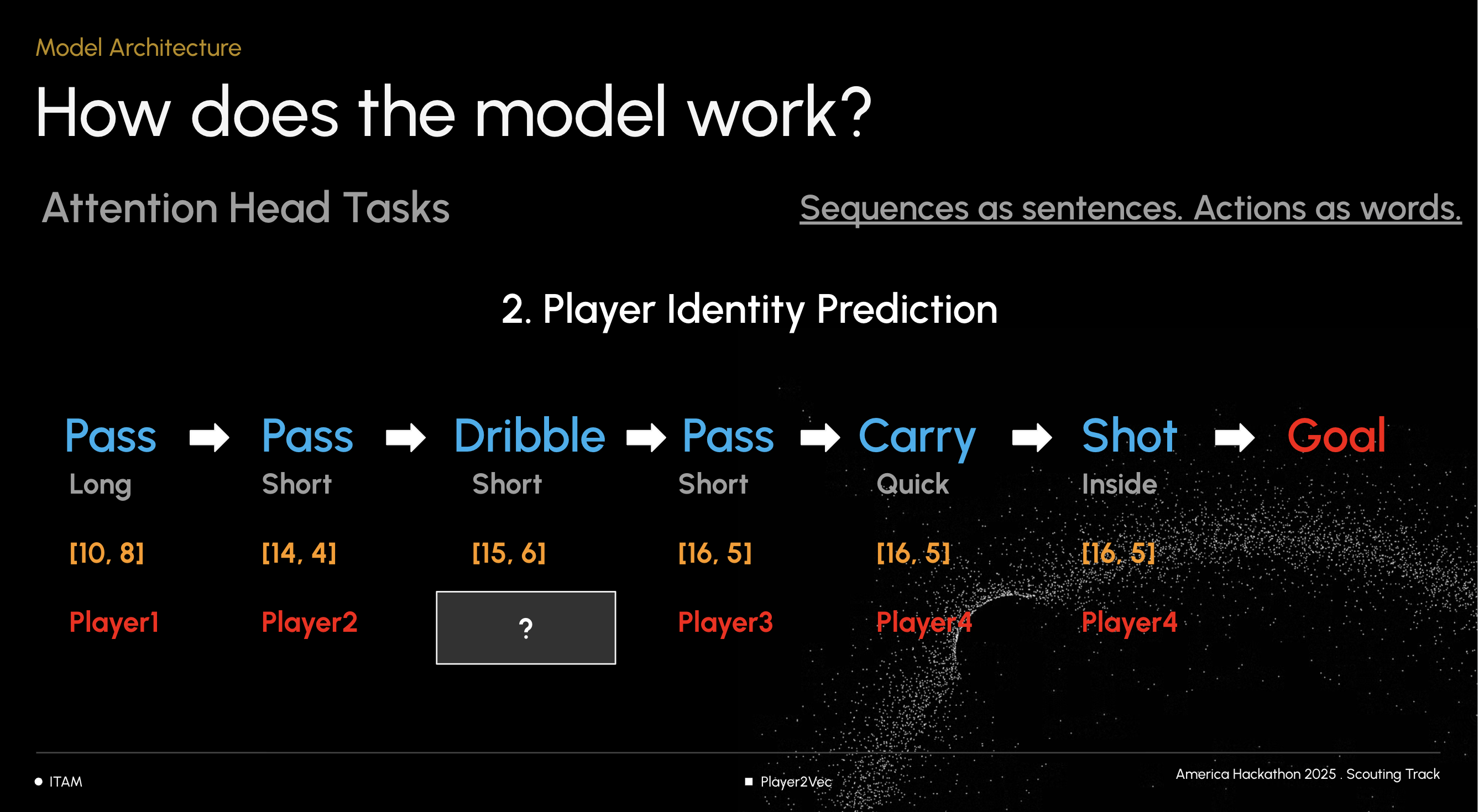
The standard was extremely high but, after hours of deliberation, the panel selected Player2Vec as the Hackathon winners for their project: ‘What if we could understand the context through data?’.
Using a Transformer model to encode player-action sequences as vectors, Player2Vec’s goal was to capture the nuance lost in traditional football statistics. Their model distinguished between various player roles and playing styles and featured vectorial representations that track player stylistic trajectories over time.
The result was an applied solution that used Statsbomb data to find similarities between context-based attributes to help narrow down potential transfer targets and inform recruitment and scouting decision-making.
Conference Highlights: Shaping the Future of Latin American Sport
Now in its third year, the well-attended ITAM Conference brought together leading names from a range of sports to incentivize innovation and encourage collaboration among the growing sports analytics community in Latin America.
Panels discussed topics such as the future of biometrics in applied sports, Expected Shots in Hockey, and the changing role of data in TV broadcasting and fan experience.
As well as announcing the winners of the Hackathon, Hudl’s Martha Reyna also chaired a conversation on how data is transforming how decisions are being made in football, including expert insights from Bayern Munich’s Dee Kundra, former NWSL player Lydia Jackson, and UEFA’s Gerard Cuenca – with the latter discussing how data shaped the new format of the Champions League.
Reyna also featured on the panel on Scouting and Recruitment in Latin America, alongside Club América Data Analyst, Emiliano Martinez, and Audax Italiano Data Director, Ricardo Bernal, discussing the role data providers play for decision-makers and analysts when finding and developing talent.