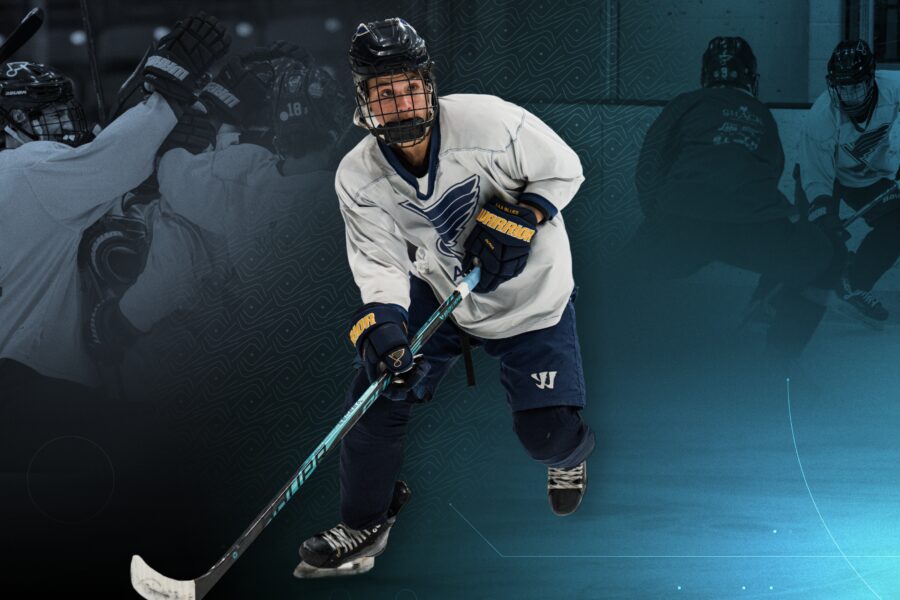
See how the AAA St. Louis Blues use Hudl to bridge the gap between elite video workflows and 1‑on‑1 coaching– that’s resulted in a 40% jump in player advancement.
Every young hockey player across the US dreams.
They dream of winning a faceoff in the final minute with a Stanley Cup on the line. They dream of the scouts in the stands scribbling notes after a heavy hit or a pinpoint pass. They dream of that scholarship offer, their name being called on draft night, and the day they get to feel a jersey pulled over their head with that NHL logo pressed on the collar.
In America's heartland, in a small suburb outside of St. Louis, you’ll find a budding mecca for youth hockey. For the players that play for the AAA St. Louis Blues, that dream has a specific destination: the wall.
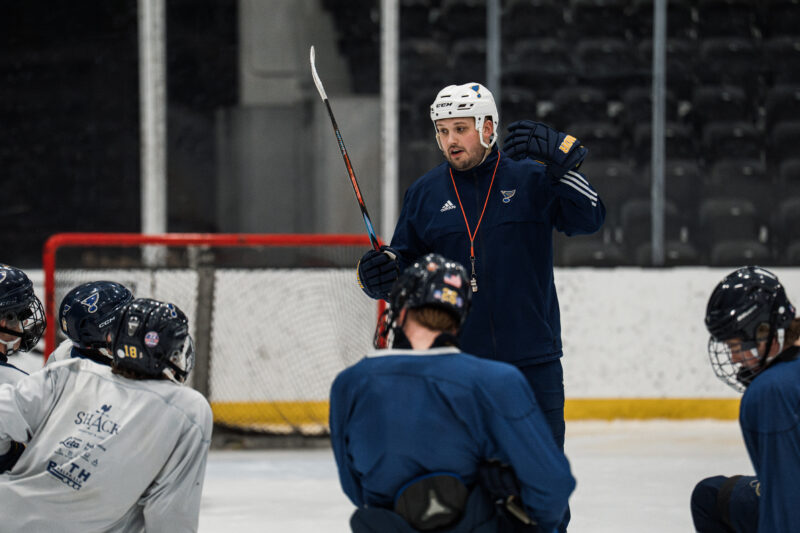
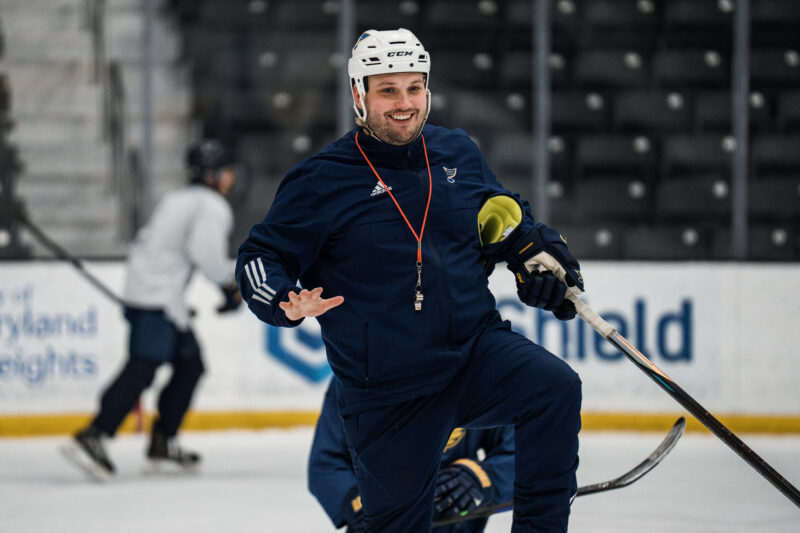
"You walk into this facility, you can look around, you look up on the walls... we've got pictures all over the place of all the kids that are born and raised in St. Louis that have moved on to NHL opportunities," said Sam Canfield, Head Coach of the Blues’ 16U team.
Those names, as Canfield puts it, “serve as an example of what is possible."
Names synonymous with the games best. Brady and Matthew Tkachuck, Clayton Keller, Logan Brown, Trent Frederic, Pat Maroon. They aren’t just up there for decoration, they’re proof of what’s possible.
What’s unique? Those names are of Midwest youngsters, many born and raised in St. Louis, who made it all the way to the big time. Not just the NHL, but plying their craft to win a gold medal for the stars and stripes.
For players like Charlie Barnes, who picked up his life and moved to St. Louis from Omaha, Nebraska, those photos are a roadmap. "That’s obviously the dream," he said. "So if [Clayton Keller] can do it, I don't see why I couldn't."
From VHS to Video Analytics: How AAA Hockey Has Changed
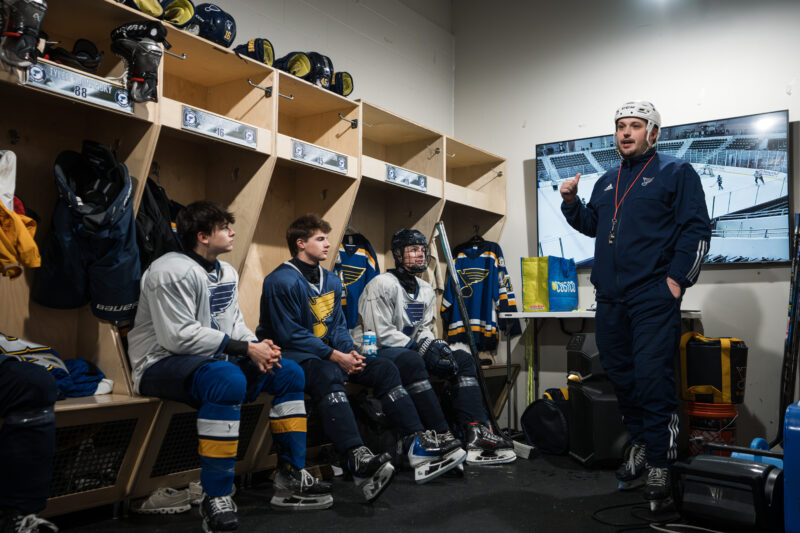
Everything about the AAA Blues is modeled after what the pros do — which adds even more meaning to the old adage: if you see it, you can be it. When the Blues are home, the players practice on the same ice as the NHL club. They eat in the same cafeteria and watch film in the same rooms. Development starts the second players walk into the locker room, down to the way their lockers are organized and structured to mimic an NHL setup.
It wasn't long ago that development was a loud, subjective process. But the AAA Blues decided that if their mission was to give players the best opportunity, they had to move past the "computers vs. coaching" debate. They committed to a player-first approach that used technology to make development undeniable.
For a kid in St. Louis — not exactly a historical hockey hotbed — the lack of objective data was a real barrier. If a player's physical attributes didn't immediately pop, they risked falling through the cracks. Carey recalls the days of VHS cassettes and coaches hovering over the rewind button. It was a slow process that left talent hidden.
"Back when I played here, they'd get the old VHS cassette out and you've got the coach fast-forwarding and then rewinding," Carey said. "It's come a long way."
"A large part of the battle was proving it wasn't just computers making decisions — it wasn't all just pointless technology," Canfield explained. "It was a way to become more efficient and give players and coaches the best possible tools."
Now, that commitment is felt from day one. When a player joins the club, the standard is clear. As Carey noted: "Now that all of our teams are using it, it's huge. It's a message from day one — there's always eyes on you."
How Hudl Focus Flex Saves Coaches an Hour Per Game
That "always on" mentality is powered by a workflow that respects the coach's time and the player's appetite for feedback. Since implementingHudl Focus Flex, the coaching staff has reclaimed hours every week.
"It's probably shaved 45 minutes to an hour per game from my workflow," Canfield said. "It's made me a ton more efficient."
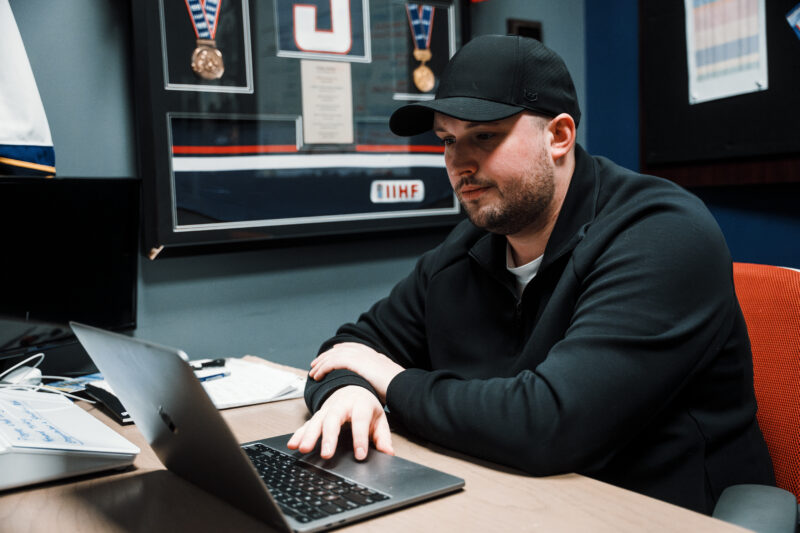
That efficiency translates directly to the ice. Carey now uses that extra time for one-on-one video sessions — and he sees results almost immediately. For players, the film room isn't a destination. It's wherever they are.
"I have my laptop in the airport a lot of the time, in the car on the way to a long drive," said Barnes. "Really anywhere I have Hudl, it helps me learn."
The results show up when it matters most. When a GM calls asking for a player's shifts, the Blues don't scramble — they deliver. "We had a couple teams reach out — GMs — and they're like, 'Can you clip shifts for us and send them to me?'" Carey said. "We were able to do that so fast and efficiently now."
The proof is in the numbers. This past year alone, the club had seven players drafted. And when a player is struggling, the coaches don't have to guess. They go to the video, look at the scoring chances, and find the solution — fast.
Developing DI-Ready Hockey Players in St. Louis
Ultimately, the AAA St. Louis Blues are in the business of readiness. When their players move on toDI programs or even higher levels like the AHL, they don't just arrive — they belong. They've already lived a professional schedule. They've already mastered the tools the pros use.
"When they come back and they're at that next level, they're seeing how much the technology is being used," Canfield said. "I think there's a big part of them that's thankful and prepared."
The goal was never just to win games. It was to make sure that when the tools were handed to players, they knew exactly what to do with them.
"Ready would be a good word for it," Canfield said. "Prepared. We want them to know that they were given the tools."
The path from a cold rink in St. Louis to the lights of a DI arena, or even the NHL is built on more than just hope. It’s built on the work, the film, and the tools that turn potential into a professional standard.
The Blues are proving that when you bridge the gap between talent and visibility, the results are undeniable. Their players don't just dream of the wall—they prepare for it.