Your practice plan is based on habit and gut feel. Here’s what the data says you’re getting wrong.
Every weekend, high school football coaches sit down with the same set of questions.
What are we facing this Friday? What scheme adjustments do we need to install? How many reps do we need in third-down situational work? And, tucked underneath all those tactical decisions, the most critical question of all: Will we be prepared physically to execute well enough to win?
For decades, answering that question came down to estimation. We looked at how kids walked off the field on Thursday. We listened to who complained about tightness or soreness. We trusted our gut to decide whether to push through extra reps of a team period or pull back late in the week.
The problem with estimating player freshness is that when your gut is wrong, the price is steep. It costs you a key starter to a hamstring pull or deprives you of the performance required for a critical fourth-down stop. Without real data, you are simply guessing—and in high school football, guessing is never optimal.
When we brought Hudl Titan GPS into our program at Stewartville before the 2023 season, we didn't do it to replace coaching instinct. We did it to sharpen it. We wanted objective data to compare what our athletes' performance requirements were on Friday night and how our athletes prepared within our Sprint Based Football model week to week. We wanted to make sure they were meeting gameday demands during the week while keeping them fresh and fast for Friday night.
What Titan GPS Tells Us Before Their Legs Do
In-season football is a delicate balance between acute stress and cumulative fatigue. When managing a full roster of high school student-athletes—many playing both ways or on multiple special teams—workload compounds fast.
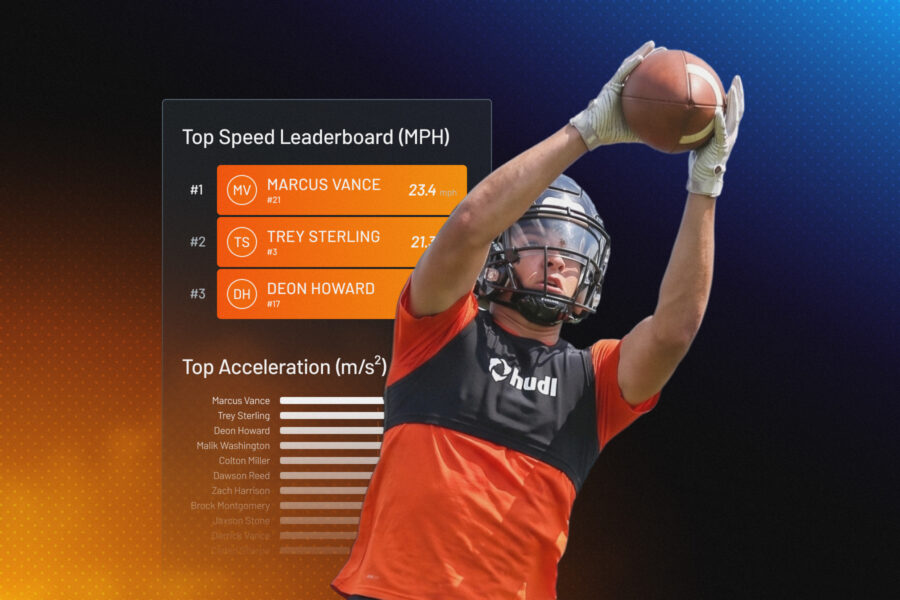
Using Titan GPS, we track core Key Performance Indicators (KPIs): Total Player Load, Max Velocity (MaxV), High-Speed Distance (80%+ and 90%+ of top speed), Sprint Efforts (16+ mph), High-Speed Acceleration and Deceleration (4+ m/s/s), and Truck Stick (Momentum).
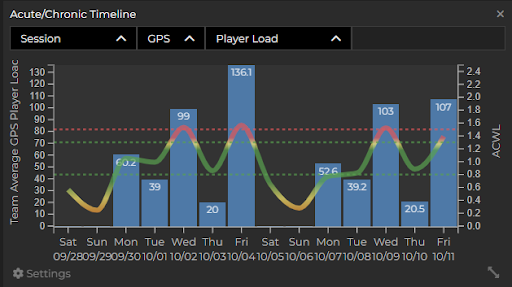
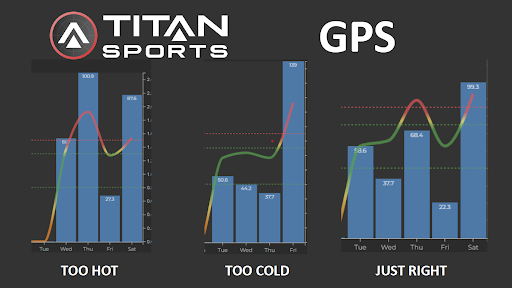
It is our mission each week for athletes to accumulate 1-1.5x their gameday load for each of the metrics we prioritize. This is tracked Monday through Thursday based on our practice schedule. No single practice day should be higher than a gameday. Friday nights should be the “hardest” day of the week.
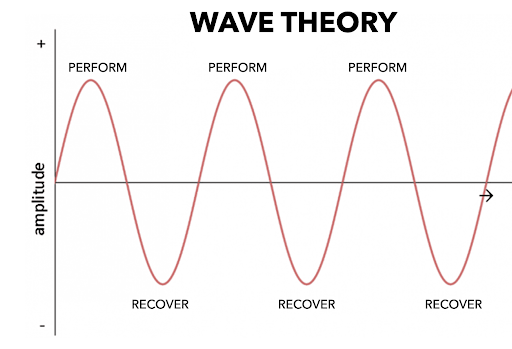
Tracking workload across the week dictates how we structure our weekly practice plan. We operate under a "Wave Theory" model, alternating High Central Nervous System (CNS) and Low CNS days. We deliberately undulate high-stress efforts with true recovery. Not just from day to day, but within a practice as well.
Here is how Titan data shapes our week:
Monday (High CNS): We turn the CNS on immediately with sprint work right after school. We then review the prior game and install the game plan for our next opponent. No practice on the field. Friday night counts as a sprint day, so Monday maintains our max-velocity stimulus early in the week when we are the freshest, without added stress or contact on the field.
Tuesday (Low CNS): 1 hr 45 min. Helmets only, limited contact, and strictly controlled group periods with low volume and distance. Alignment, assignment, screen drills, and blitz periods are prioritized. These periods are still done with high effort. We keep the total stress down by controlling the volume and high-speed distance the players travel.
*Note - Monday’s sprint work has a higher GPS player load than a Tuesday practice on the field based on our GPS data. Monday’s sprint work is more taxing on the CNS than Tuesday’s practice.
Wednesday (High CNS): 1 hr 45 min. Sprint work pre-practice. Shells and "thud" contact on the field. Titan data taught us that 1-on-1s and Skelly produce the highest GPS loads during the week, so we deliberately moved them to Wednesday to align high volume/load with our High CNS window.
Thursday (Low CNS - Readiness Check): We execute a tight, 75-minute scripted practice in helmets only, covering special teams, situational plays, and final play reviews.
Titan GPS data gives us complete clarity of our practice week. By reviewing our team's KPI workload numbers heading into Thursday, I know exactly where our starters stand. If Titan shows our top skill players trending toward overuse, Thursday isn't the day to squeeze in extra reps. We keep Thursday crisp, protecting their legs so they can be fresh and fast on Friday.
Data Meets Coach's Feel
Our Titan GPS data gives us a map, but we still have to drive the bus as coaches. Managing a high school roster requires weighing data alongside game-week context. If an athlete’s GPS load is getting high toward the end of the week, it sparks a conversation with that athlete about how he feels. The GPS data doesn’t dictate the decision; it just helps us better inform our decision-making as coaches.
Practice Quality Over Practice Length
One of the biggest breakthroughs Titan provided was exposing how taxing short, intense efforts are compared to longer, slower ones. A focused 30-minute high-speed session creates a higher GPS load and taxes the nervous system far more than a drawn-out two-hour practice that is stuck in 3rd gear. We are also meticulous in our practice planning with reps for players. Every group and team session is scripted out with plays and the players who are executing them. We know exactly the number of reps our players need to be prepared both mentally and physically for Friday night.
Because of this, traditional conditioning—endless gassers or full-field runs after practice—is a complete waste of time. Football is an intermittent sport of maximal bursts followed by recovery. We structure indy, group and team periods to mirror game conditions: high-intensity reps with a work-to-rest ratio of 1:5 or 1:6. We also undulate the practice periods within a practice so that a lower-intensity period follows a higher one, peaking at the end of practice during team time. We let the sport train the sport.
Managing Roster Depth and Return to Play
Titan allows us to individualize player needs. When a starter returns from an injury, we don't guess if he's ready for full team reps. We monitor his peak acceleration, deceleration, and high-speed distance during individual drills. If his peak speed or deceleration metrics lag behind baseline, we know his body isn’t ready. We gradually return him to play before he re-injures himself.
What Friday Night Looks Like Now
When you replace guesswork with intentional practice design, the results show up on Friday nights.
By protecting our players' CNS during the week and filling the correct "buckets," our athletes enter gameday primed to perform.
Gameday is consistently our highest peak GPS load, highest speed on the field, and highest acceleration event of the week. Allow Friday night to be the hardest day of the week. Your players’ bodies will thank you, and their performance will match.
We play faster, hit harder, are more violent and stay healthier… and we don’t lose games in the 4th quarter because teams are in “better shape” or are “tougher” than us!
Since adopting this sprint-based, data-informed model at Stewartville:
Virtually Zero Cramps: Players are rarely forced out of games due to cramping.
Healthy: Prior to the start of the 2026 season, we have only had 8 player-missed games since the start of the 2021 season due to injury. We’re not bulletproof, and we’ve had guys on the field who aren’t always fully 100%, but it has not been to the extreme where it has held them out of games and it does not linger throughout the season. Availability is a player’s best ability, and we’ve given our program the best chance to win because our guys are able to be on the field on Friday nights.
Speed Gains: Speed is synonymous with health. I don’t think it’s possible to be at your fastest and unhealthy at the same time. Since we started our Sprint-Based Football approach, every year we have gotten FASTER as a team from the start to the end of the season. We are at our fastest as a team in the postseason when it matters the most!
High Performance: Our team record since implementing a Sprint-Based Football approach is 70-10 with 2 state championships.
A Question for Every Coach
As coaches, we spend hours studying film, designing game plans, and scripting call sheets. But if you could look at a dashboard on Thursday afternoon and see exactly how much your athletes had left in the tank, would it change the way you practice?
Your practice plan shouldn't be defined by habit or the clock. Build it around how your kids are required to perform—and let the data guide you to Friday night wins!