Top 10 Things to Focus On During Football Film Study
Feb 16, 2026
4 min Read
If you’re not intentional with your football film study, you’re falling behind. The game is too multiple, too fast and too creative to just “watch tape.” Film has to build anticipation. It has to sharpen eyes. It has to answer questions before they show up on Friday night.
Here’s a suggestion of the top 10 areas to structure your weekly review around.
1. Read Coverages and Confirm Post-Snap
Pre-snap shells lie now. Safeties rotate late. Corners trap. Teams show two-high and spin to Cover 3 buzz. If your quarterback doesn’t confirm coverage after the snap, he’s guessing.
Football film study should train post-snap eyes. Tag coverages in Hudl by down and distance so your QB sees how often they rotate on third down or in the red zone. When he’s seen it 40 times during the week, it’s not a disguise anymore—it’s a tendency.
2. Study Front Structure, Not Just the Box Count
It’s not just “odd or even” anymore. You’re seeing tite fronts, 4i techniques, mint looks and simulated pressure packages at the high school level.
During football film study, focus on how those fronts adjust to formations. Who’s the conflict player in RPO fits? How do they set the front to trips? What changes in the low red zone?
Build front-specific cut-ups in Hudl so your offensive line sees structure clearly and repeatedly. Clarity up front eliminates hesitation.
3. Identify Real Pressure vs. Simulated Pressure
Pressure today is about illusion. Defenses mug backers and bail. They bring four and drop a defensive end. The picture changes fast.
In football film study, chart when and where pressure shows up—field zone, hash tendency, down and distance. Your quarterbacks should study alignment indicators all week. When they recognize it early, the ball gets out on time.
Film trains instincts.
4. Break It Down by Position Group
Team film has value. Position-specific football film study wins games.
Receivers get every press rep from the corners they’ll face. Linebackers get every gap-scheme run the opponent majors in. DBs get every explosive pass that the offense has completed this season.
Hudl playlists let you isolate exactly what matters to each group. When players see only what affects them, their focus sharpens.
5. Self-Scout With Brutal Honesty
The best teams fix themselves first.
Devote serious time in your football film study to correcting your own mistakes—poor eye discipline, route depth, pad level, missed fits, bad situational decisions.
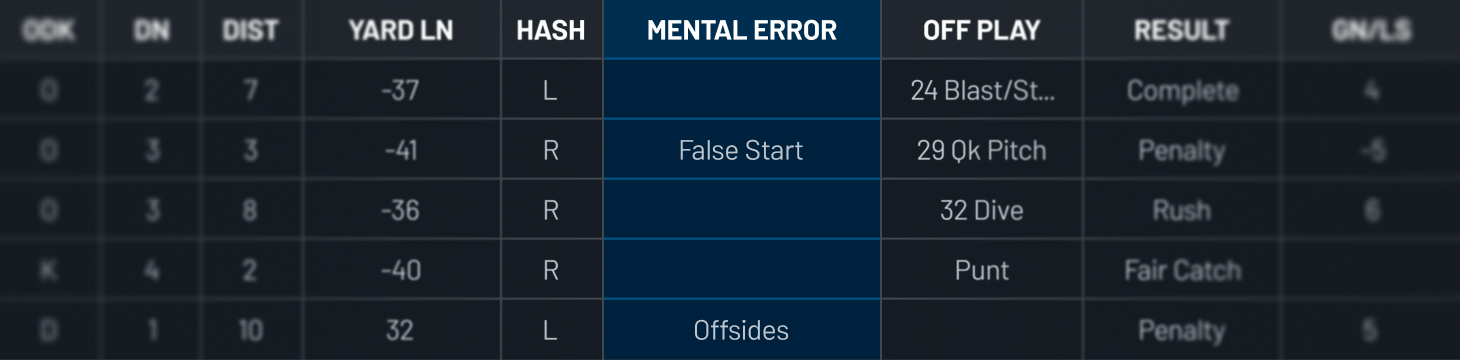
Some teams tag mental errors separately from technique errors in Hudl to identify patterns. If the same formation keeps hurting you, that’s not bad luck. That’s something you need to correct immediately.
6. Find Their “Have-To-Have-It” Call
Every team has something they trust when the game is tight. Third and medium. Low red zone. Two-minute drill. Backed up inside their own 10.
Football film study lets you filter by situation and uncover what your opponent leans on when they need it most. When your defense expects that concept in crunch time, they play faster and more confident.
Anticipation wins critical downs.
7. Let Tendencies Shape the Call Sheet
This isn’t random watching. It’s structured analysis.
Track run/pass splits, formation tendencies, play action frequency and where your opponent prefers to attack — boundary or field. Assist+ makes it easy to sort and filter, allowing you to work off percentages, not feelings.
If they run the ball 70% of the time on first down from the pistol, plan for it. If they love play action on 3rd and short, train your eyes for it all week.
That’s disciplined football film study.
8. Identify and Stress Their Difference-Makers
There’s always a player who changes the game.
During football film study, search for explosive plays and impact moments. Who creates sacks? Who breaks tackles? Who gets targeted on third down?
Once you know who the difference-maker is, build a plan to limit him. You don’t let great players beat you without forcing someone else to step up.
9. Decode Motions, Shifts and Tempo
Modern offenses live in motion—jet, orbit, return, TE trades, compressed splits. But most motion has purpose.
In our football film study, tag motion types in Hudl and look for concept ties. Does jet motion consistently lead to split zone? Does an orbit motion signal play action? Is tempo triggered after explosives?
Patterns show up when you isolate them. Once players recognize the pattern, they stop reacting and start anticipating.
10. Win the Hidden Yardage on Special Teams
Special teams still flips games—especially in the postseason.
Isolate every kickoff, punt and field goal rep. Who struggles in space? How fast is their field goal operation? Where’s the weak link in protection?
Serious football film study includes every phase. One explosive return or blocked kick can swing momentum in a heartbeat.
See how Hudl gets your program Friday-night ready.