How to Use a Full Season of Titan Metrics to Plan Your Offseason


Every coach talks about “winning the offseason.” But what does that actually mean?
Why the Offseason Starts with Data
Before we ever hit the weight room or the track, we sit down as a staff for a sensor assignment meeting. It’s part depth chart, part all-conference debate. We’ve got 16 Titan sensors and a roster of 50-60 kids, so we need consensus on who gets them.
The first few are obvious—QB1, top backs and receivers, your best LBs and DBs. But after that, it gets fun. Coaches make their case for who deserves a sensor (linemen included). It’s competitive, it’s collaborative, and it sets the tone for how seriously we take performance tracking.
We want this meeting to happen as early in the offseason as possible. The sooner we assign sensors, the sooner we start building our data library. That library becomes the foundation for everything we do—from training loads to recovery plans to individualized goals.
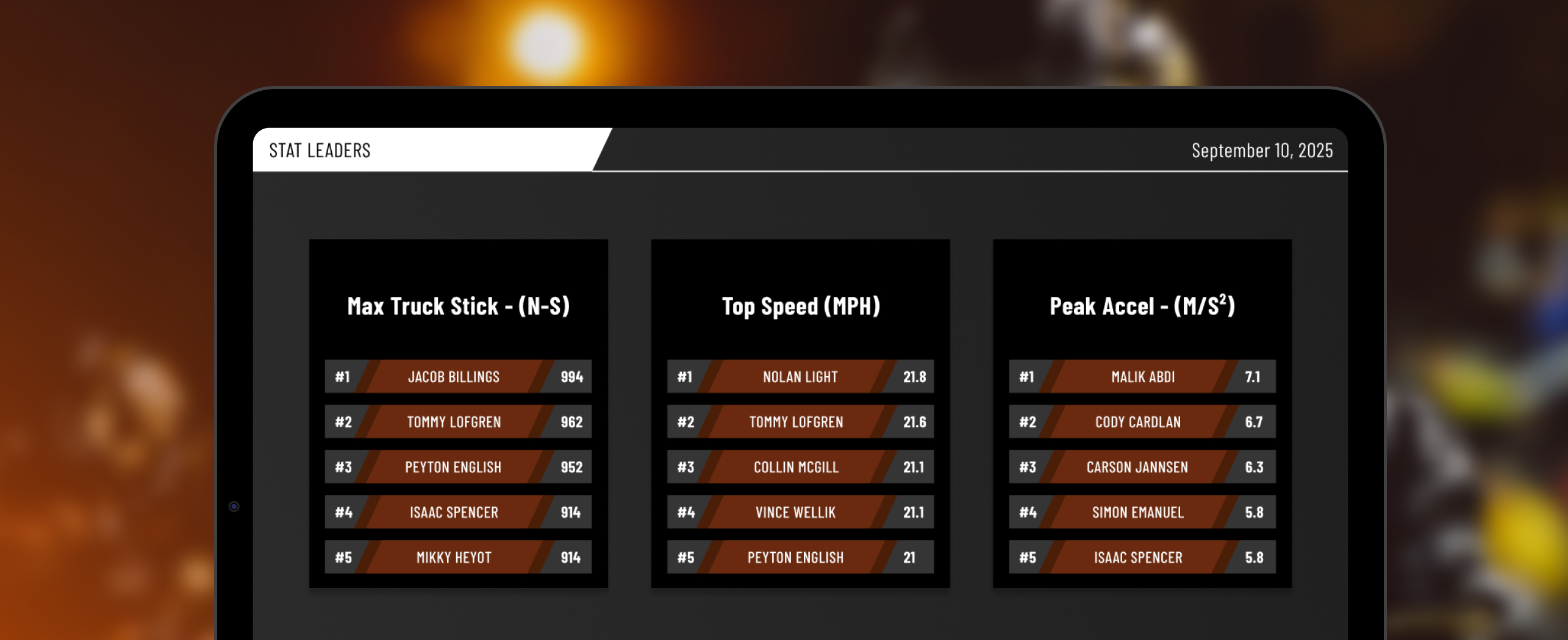
Creating a Feedback Loop
One of the most powerful things we do is share the data with our players. When they see their own metrics—how fast they ran, how hard they worked, how they’ve improved—it creates buy-in. They understand the purpose behind the training. They see progress. They take ownership.
This feedback loop extends to our staff. Everyone—strength coach, position coaches, trainer—is working from the same data. That alignment is key. It means our training, recovery, and development plans are all pulling in the same direction.
And when the offseason ends, we’re not starting from scratch. We’ve got months of data that tells us who’s ready, who needs more work, and how to adjust in-season workloads to keep our team healthy and explosive.
Tips For Coaches Getting Started
If this is your first offseason with Titan, here’s my advice:
- Start with a sensor assignment meeting. Get your staff together and decide who gets tracked. Make it collaborative and intentional.
- Don’t get lost in the numbers. Focus on a few key metrics—top speed, total load, recovery time. You can expand later.
- Track consistently. Week-to-week data is where the real insights live. Don’t just look at one big number—look at trends.
- Use the data to spark conversations. With players, with coaches, with your S&C team. The goal is alignment and growth.
And avoid common mistakes:
- Ignoring recovery data—it’s often the first sign of overload.
- Failing to compare early-season vs. late-season performance.
- Treating data like a report card instead of a roadmap.
Opening Pandora’s Box: Titan GPS Beyond Football
One thing we’ve realized—and it’s worth sharing— is that Titan isn’t just a football tool. Once you start using GPS wearables consistently, you begin to see the potential across other sports, especially those with high movement demands like track and field.
We’ve already seen it firsthand. Many of our football athletes run track, and we don’t stop tracking when the season changes. Whether it’s fly 10s, timed 40s, or interval work, we’re still in the sensors. It’s built-in speed development, and Titan helps us monitor progress, fatigue, and recovery—even when the sport shifts.
And it’s not just track. We’re starting to think about how GPS could apply to baseball and softball—tracking sprint bursts between bases, monitoring workload during long practices, or even understanding movement patterns in the outfield. The potential is huge.
We’re just scratching the surface. GPS wearables are opening a new frontier in high school athletics—one where performance data isn’t siloed by sport, but shared across programs to build better athletes year-round.