How Colleges Use Hudl Wyscout to Recruit

Former DI assistant and current Hudl Account Manager Scott Collins shows how the ECNL + Hudl Wyscout integration makes athletes more visible and discoverable than ever before by college coaches.
Before joining Hudl, I had the opportunity to coach women’s soccer at the University of Arkansas, Florida Gulf Coast University and Rollins College, serving as recruiting coordinator at both FGCU and Rollins. Recruiting was central to that work: watching players live, reviewing film, building recruiting boards and evaluating which athletes had the ability, academic fit and personal qualities to help our program succeed.
Club and college coaches understand that recruiting is rarely decided by one performance, one metric or one conversation. It is an accumulation of evaluations over time.
What has changed is the amount of evidence college staffs can access—and how efficiently they can organize it.
With ECNL video and player data integrated into Hudl Wyscout, recruiters can add full-season context to the work they already do: building shortlists, preparing for National Events, revisiting live evaluations and monitoring development.
For ECNL players, that creates a meaningful opportunity. Their recruiting story no longer has to depend entirely on a college coach being on the right field at the right time or seeing the right clips in a highlight video.
Here's exactly how it gets used.
Starting With a Profile, Not a Name
Recruiting needs rarely remain static. A staff may begin a cycle with a clear plan, but a transfer, injury, decommitment or unexpected roster change can quickly create a new priority. The shortlist is always evolving alongside the roster.
College staffs generally begin with a clear understanding of the player profile they need. Some attributes are non-negotiable across the program; others are specific to the position, role and way the team wants to play.
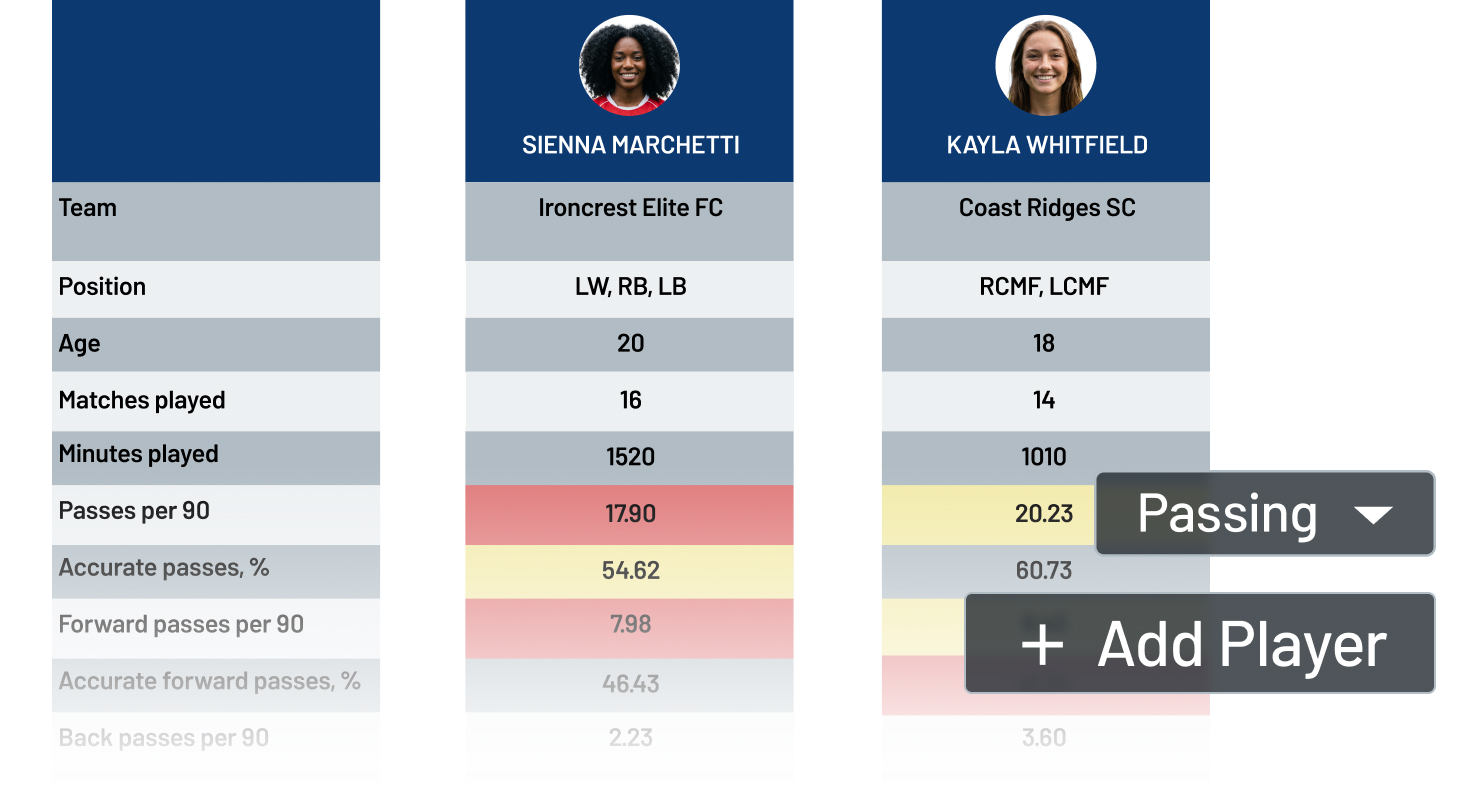
Hudl Wyscout allows a staff to turn that profile into measurable criteria and build a targeted list of players whose performances reflect those attributes. As the program’s needs change, coaches can revisit those criteria, expand their search and continue refining the shortlist.
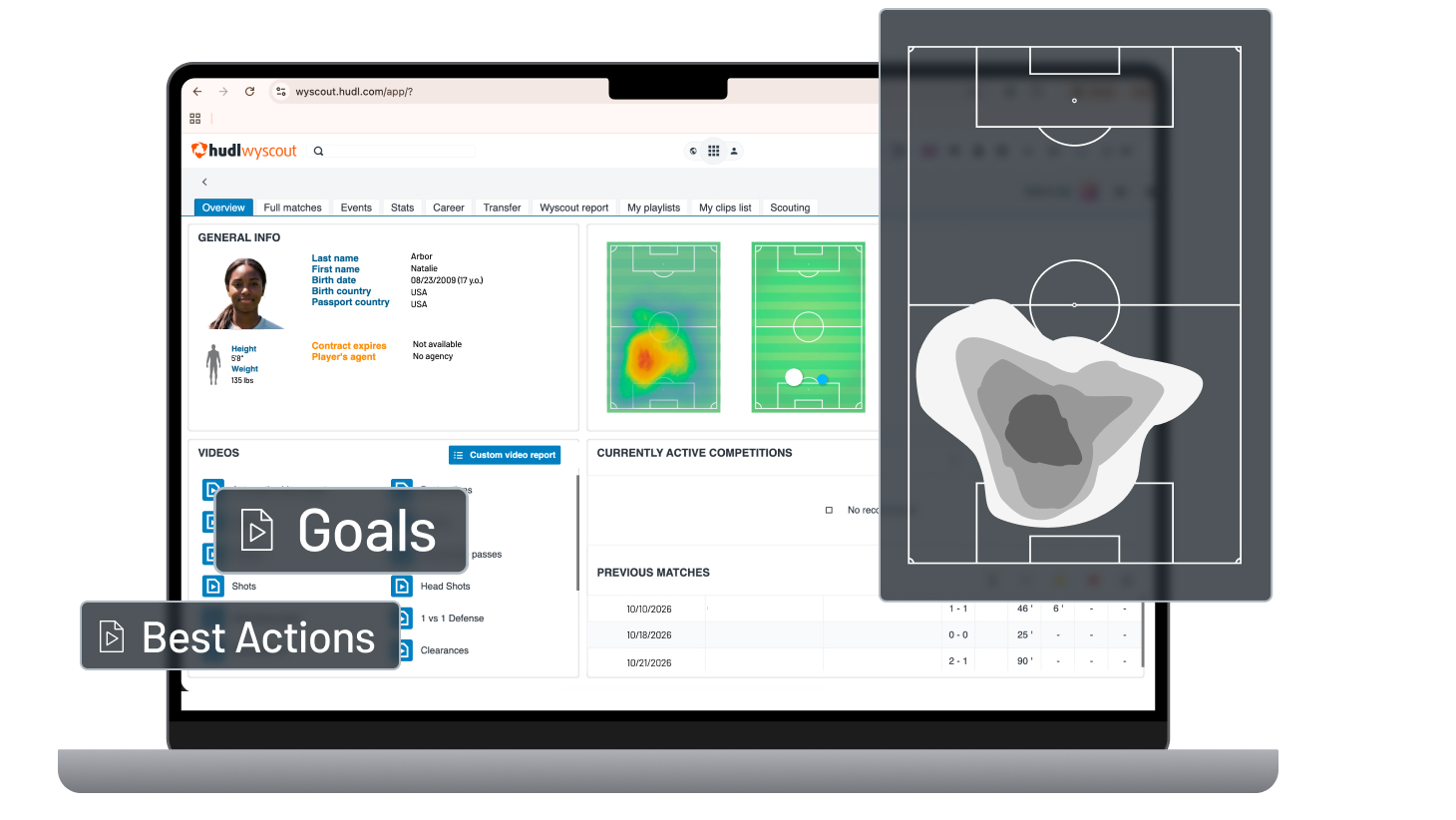
The question recruiters ask changes from "Who are the best strikers at this event?" to "Which strikers fit what our program needs?" Those are very different questions. The staff sets the criteria that matter to their program, and Hudl Wyscout surfaces every ECNL player who fits.
Including players they've never heard of, from clubs they've never visited. And every profile links directly to game footage, so a coach can filter and watch at a moment’s notice.
Finding Players Before They're on Anyone's Radar
Recruiting isn't just about filling the current cycle. It’s about looking ahead, forecasting what your team needs, and identifying which players can develop into the right fit.
At Arkansas, we were always watching freshmen and sophomores — players who weren't ready yet but who we wanted to track. It was mostly manual and imprecise. Hudl Wyscout makes it systematic.
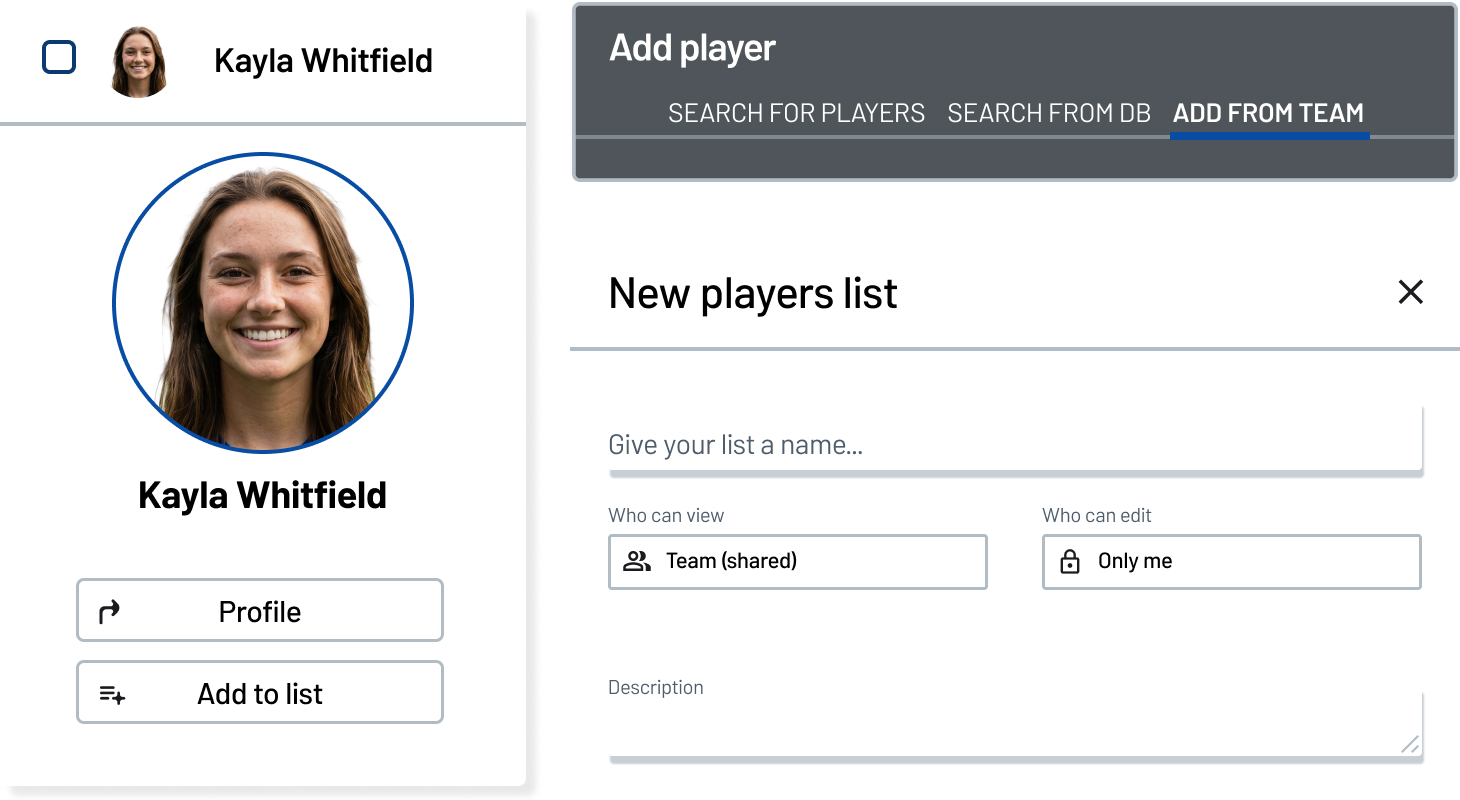
A staff can build a long-term watchlist based on data, set a baseline for a young player, and measure her development across the season. Is her passing accuracy improving? Is she winning more aerial duels? Is she showing up in the metrics the program values week after week?
The goal is to have the recruiting board built long before the class needs to be finalized — with players the staff has watched develop, not players they stumbled across late.
Recruiting Around Programs Instead of Positions
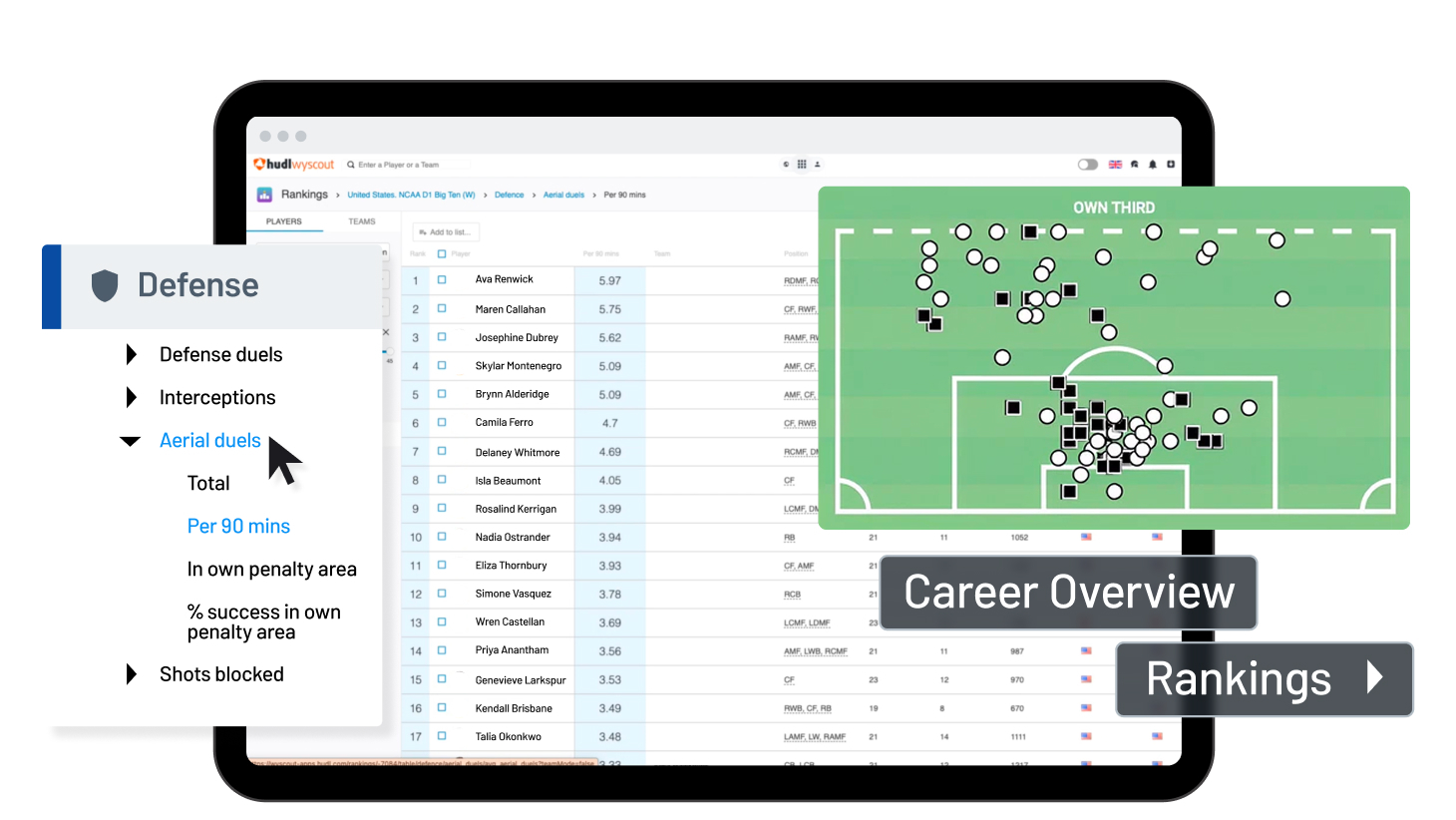
Every program has traits it believes are critical to winning. At Arkansas, one of ours was aerial ability. We believed it gave us an edge defending our box, attacking set pieces, and handling the physicality of the college game. It was also something our opponents can't develop quickly. So we wanted players who already showed it — or whose trajectory pointed toward it.