The 2025 College Football Transfer Portal Report

A data-driven retrospective on roster construction, success trends, and the 15-day recruiting funnel.
Since its inception in 2018, the transfer portal has gone through many changes. And it looks drastically different than it did just seven, soon to be eight, years ago. The first few years were relatively tame, with primarily graduate students entering the transfer portal due to the 1 year playing ban for students who have not completed their coursework. In 2022, that 1 year ban was lifted for all first-time transfers, and things exploded from there.
The most recent change will make this the most anticipated and most important transfer portal window ever. Starting this year, there is just one 15-day window from Jan 2-16 that both undergraduate and graduate student-athletes can enter the transfer portal. There are a few stipulations for teams that don’t finish their seasons until after the transfer portal window is closed. Additionally, there is a stipulation for schools hiring a new coach. But for the most part, those 15 days are going to be wild.
This has a major impact on the recruiting timeline. A typical recruiting process has multiple phases. A nice way to think of it is as a funnel of sorts.
Finding: Teams need to be able to identify who is recruitable.
Filtering: They then need to be able to filter through that list to get to who they should actually be recruiting.
- What are the needs roster-wise? Are there openings at Offensive Line? How many Wide Receivers are leaving the team? Etc.
- What are the requirements placed on the team by the University?
Fact Finding: Talk to the student-athletes, find out more about them from conversations with the student-athletes, coaches, etc.
Finishing: Offer a scholarship, and get them to commit!
For High School recruiting, this process typically happens over a number of months, potentially years. For this upcoming transfer portal window, the process will need to happen in a matter of days, if not hours. The transfer portal, I would argue, is the primary reason for the rise in GM positions and building out the structure of recruiting/scouting departments. Teams need to be able to move fast and have better infrastructure around, keeping everything organized.
All of that sets the stage. Now let’s look at the closest thing we have to a dress rehearsal: last year’s portal season.

There are a few caveats with position groups, but splitting them up by these chunks makes the most sense. Defensive Backs are broken up into Corners and Safeties, and Offensive Line is split up into Interior OL and Offensive Tackles. Although these players play similar positions (and might even be coached by the same coach), the demands and what is asked by these positions are different enough to be their own section. Wide Receivers however, can all be grouped together. There is some uniqueness to a true X Receiver and a slot receiver, but they generally do the same thing.
A few major things stick out with this data. First off, Offensive Tackles are genuinely scarce in the portal. We only saw 283 OTs enter. In a sport where every team needs two starters at tackle, that’s a tight market before you even start separating playable from plug-and-play. Quarterback is the opposite. There were 311 QBs in the portal, basically enough for every FBS program to add two and still have 39 left over.
The skill positions sit closer to the QB side of the spectrum. There’s far more availability for teams shopping for wide receivers and defensive backs, and even tight end has enough volume that you can build real depth from the portal. Tackle? Not so much. And good tackles are rarer still.
Transfer Levels
Let’s start with a breakdown of where people started in their transfer journey:
- Small College (Division II or III): 114 total athletes. 2 from Division III, and 112 from Division II.
- FCS: 665 total transfers.
- G6 (includes Pac-12 and Independents not named Notre Dame): 1,837
- Low P4 (ACC and Big 12): 916 (464 from the Big 12, and 450 from the ACC)
- Power 2 (SEC and Big 10): 928 (489 from the Big 10, and 439 from the SEC)
A couple of interesting things to note: the number of transfers from Power 4 conferences is about equal to the number of transfers from the rest of the Group of 6 teams. And then a noticeably smaller group of transfers from FCS teams. With a VERY small number of transfers from small college teams. (Small, obligatory, Hudl plug here: Hudl is the SOLE provider of small college recruiting video to teams. Trinidad Chambliss, everyone’s favorite former D-2 QB, found and evaluated with Hudl!)
So now we know where they started, let’s take a look at where people ended up.
- Unsigned: 737! Although this number seems high—and many recruiters and coaches will use this as a scare tactic to keep their student-athletes from entering the transfer portal—there are a lot of potential causes, and not just student-athletes lost in the mystical land of the transfer portal. One of the main reasons is that these student-athletes were not going to play football at their current school, and figured they might as well see if anything happens.
- Small College: 86. 3 to Division III, and 83 to Division II
- FCS: 671
- G6: 1,531
- Low P4: 807 (392 to the ACC, and 415 to the Big 12)
- Power 2: 645 (343 to the Big 10, and 302 to the SEC)
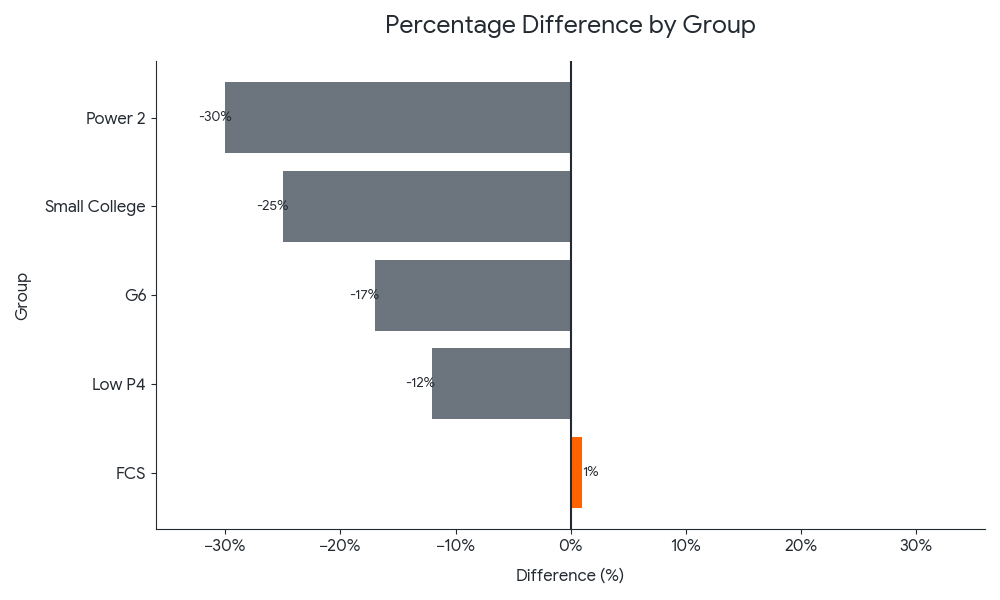
The group with the biggest disparity of student-athletes transferring out and transferring in is the Power 2. The SEC and Big Ten are like a machine, and they will spit student-athletes out that aren’t ready for that level. They can just sign whoever they want in the next recruiting cycle, no problem. Group of 6 (as the middle ground) sees a large changeover every year, and also sees a big drop in transfers out vs back in. FCS, interestingly, is the only group that sees an actual uptick in student-athletes due to transfers. Whether it’s Small College up to FCS, or FBS down to FCS.
Breakdown of upward/downward movement
A lot of airtime was spent on Trinidad Chambliss this season. His jump from star Division II QB at Ferris State to starting QB for Ole Miss on their way to the CFP and one of the best seasons in school history is well documented at this point. Part of what makes it so interesting is that not only did he transfer up to the SEC and have success, but he actually transferred from group 1 (small college) to group 5 (Power 2) and had success. This isn’t Riley Leonard or Sam Hartman transferring from the ACC to Notre Dame; this is 4 steps up our proverbial ladder.
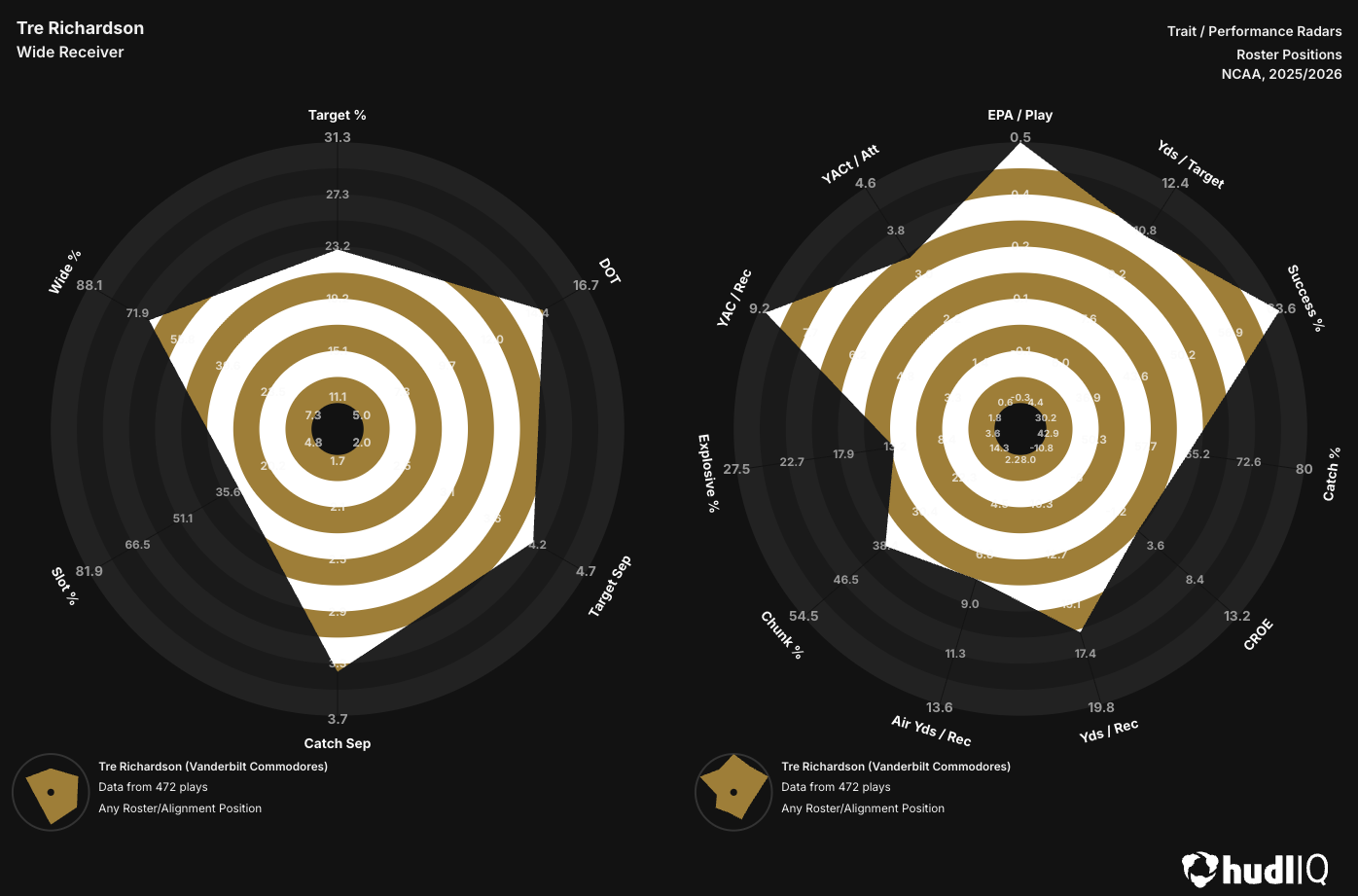
It turns out that Chambliss is not the only student-athlete to transfer up 4 steps. In fact, last year, 12 players transferred up from small colleges to the SEC or Big Ten. Some sat out the year as they are potentially adjusting to the change in competition level, but there’s another player who landed in the SEC who had a big impact on the team's best year in school history. Tre Richardson transferred to Vanderbilt from Division II Washburn and had an immediate impact. Richardson was the #2 WR and had 40 catches for 679 yards and 6 TDs.
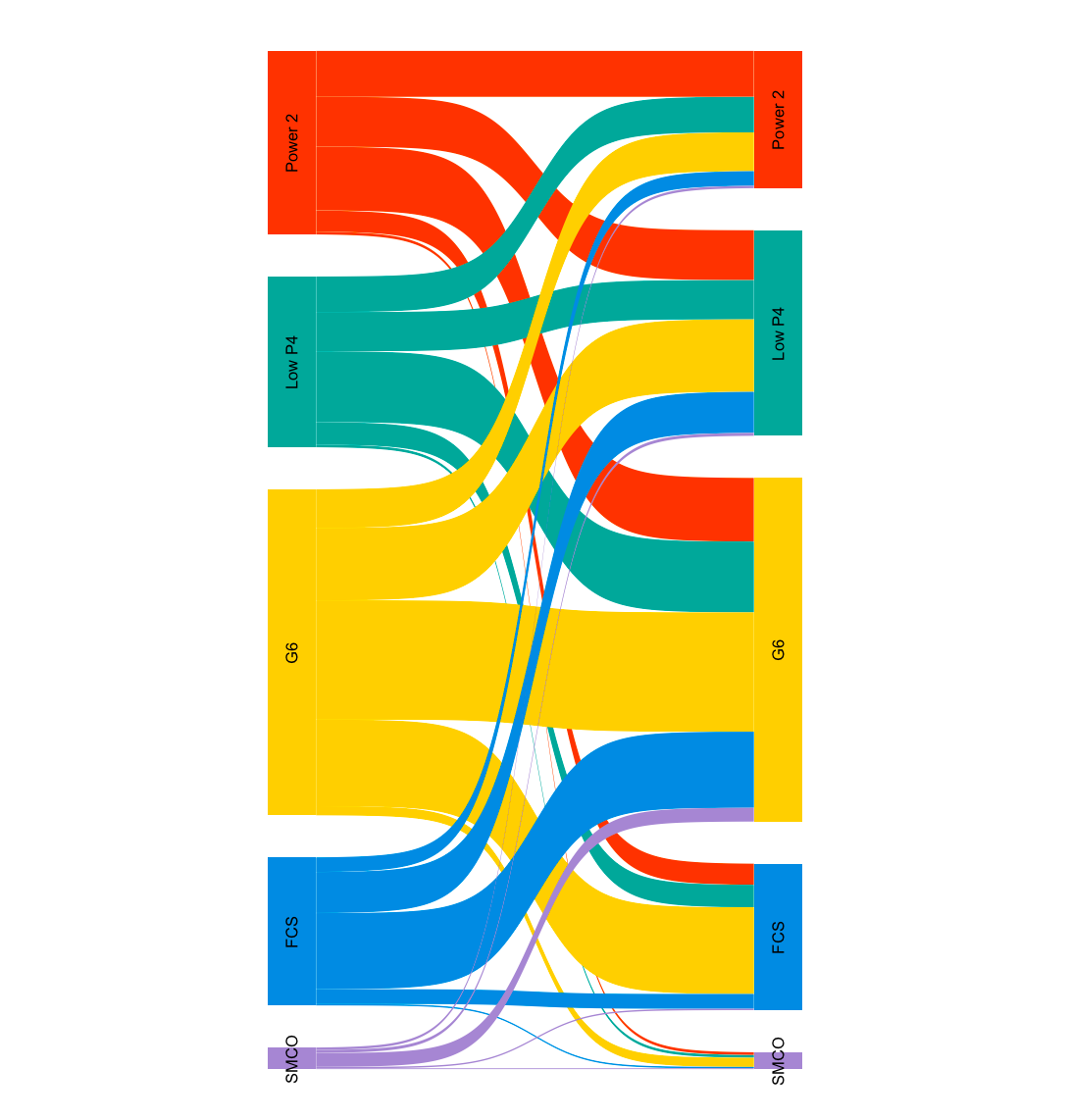
Although there are uncommonly large movers, the biggest group of the transfers actually stayed in the same group. 26% of all transfers stayed at the same level. While another 46% transferred either up or down one group (almost 25% transferred down one group, and 22% transferred up one group). As stated above, more student-athletes transferred down than transferred up. All of this is shown in the Sankey chart below that documents the journeys of the transfers.
Success Stories
I’ve mentioned two success stories from this year's transfer portal window already, with Trinidad Chambliss and Tre Richardson. And there are other examples of high-profile transfers from earlier portal windows that have made a big jump and found success, including Heisman finalist Diego Pavia, Star WR for Indiana, Elijah Surratt, and, of course, Travis Hunter and Shedeur Sanders at Colorado.
The first team All-SEC and ALL-ACC RBs both made big jumps this season. Ahmad Hardy from Louisiana Monroe to Missouri, and J’Mari Taylor from North Carolina Central to Virginia. Before a freak injury following the Big Ten championship game, Stephen Daley was making a huge impact for Indiana after a jump up from Kent State. And Eric O’Neil was making a big impact for Rutgers following his transfer from JMU.
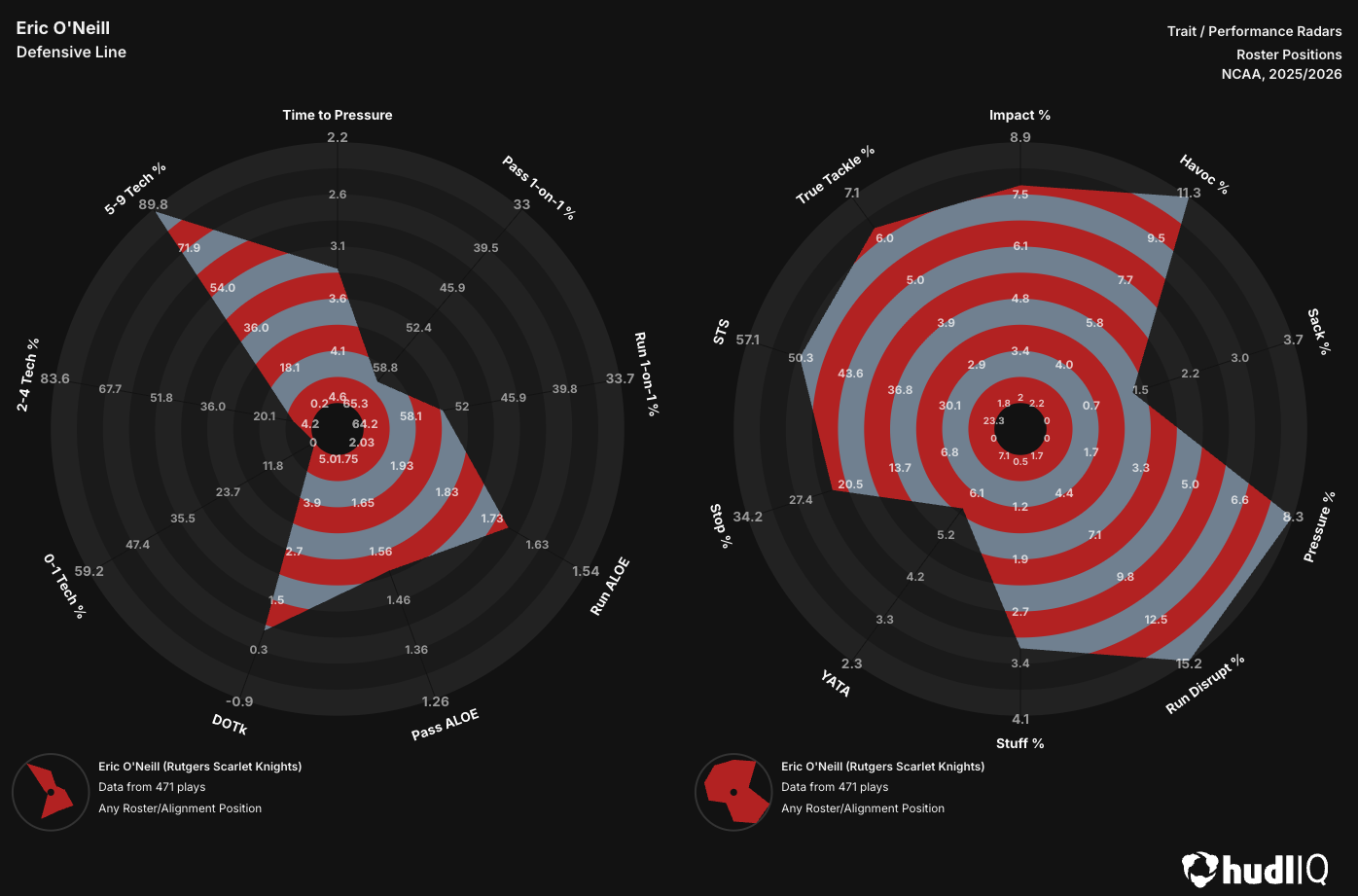

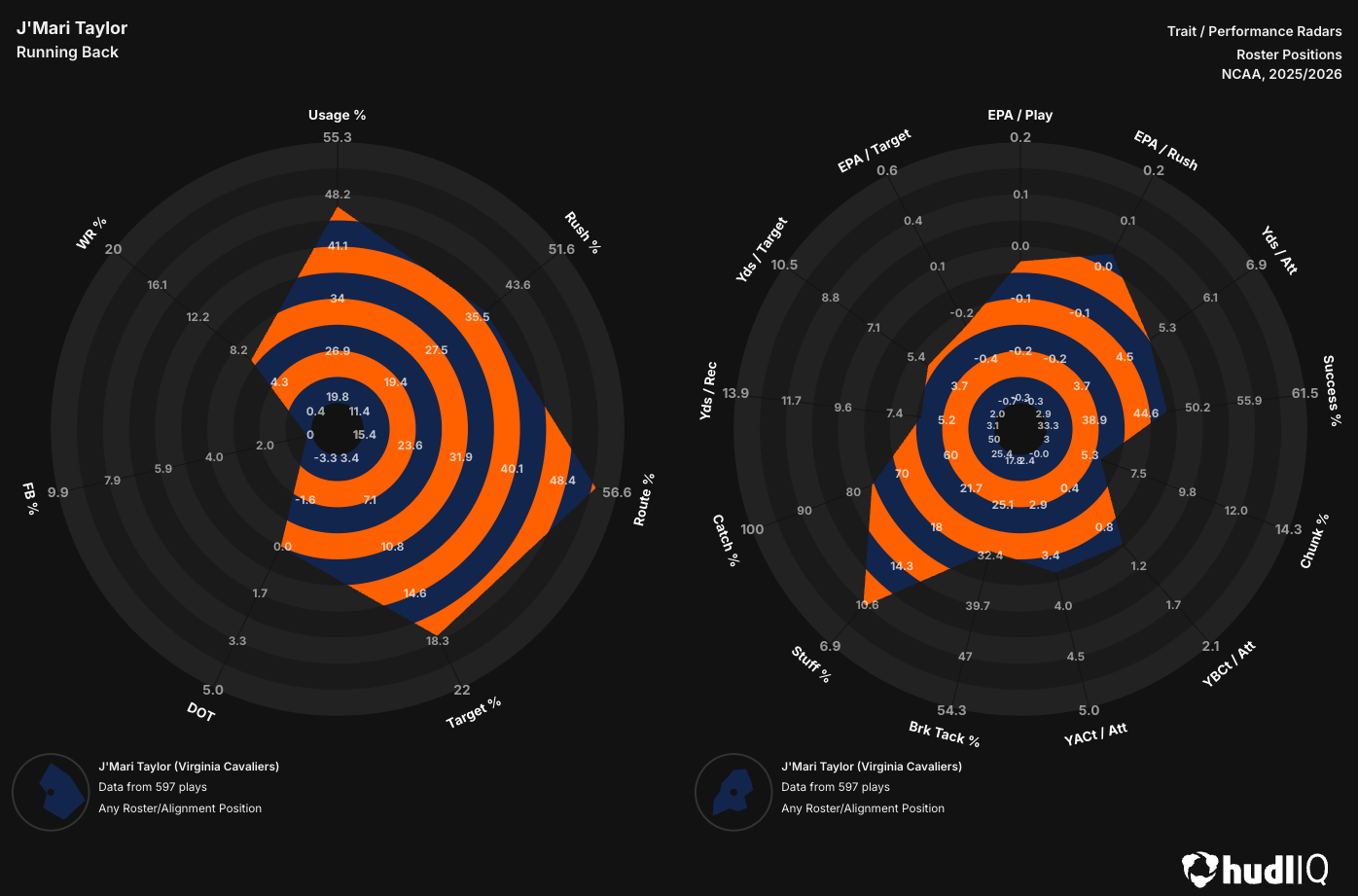
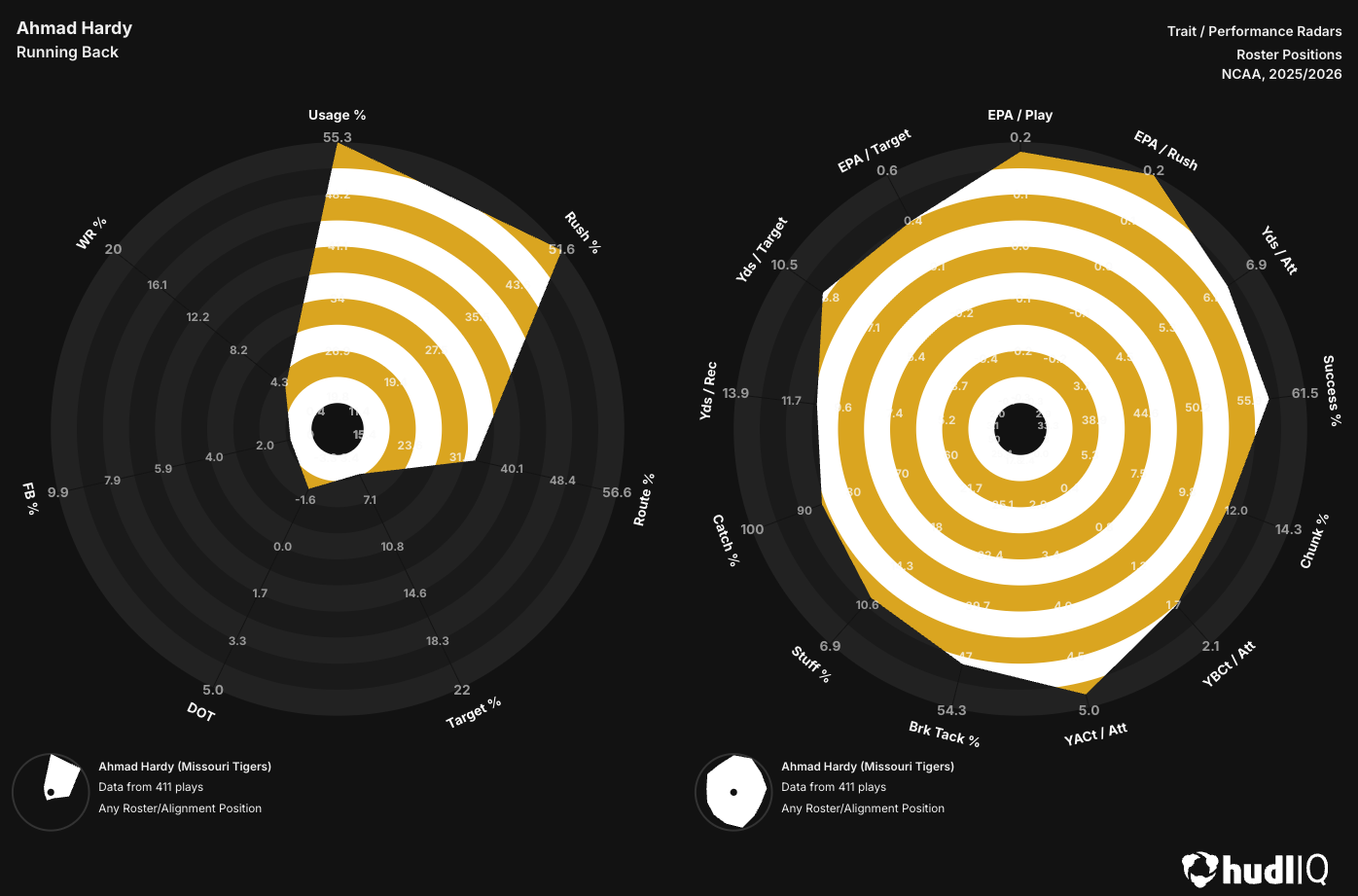
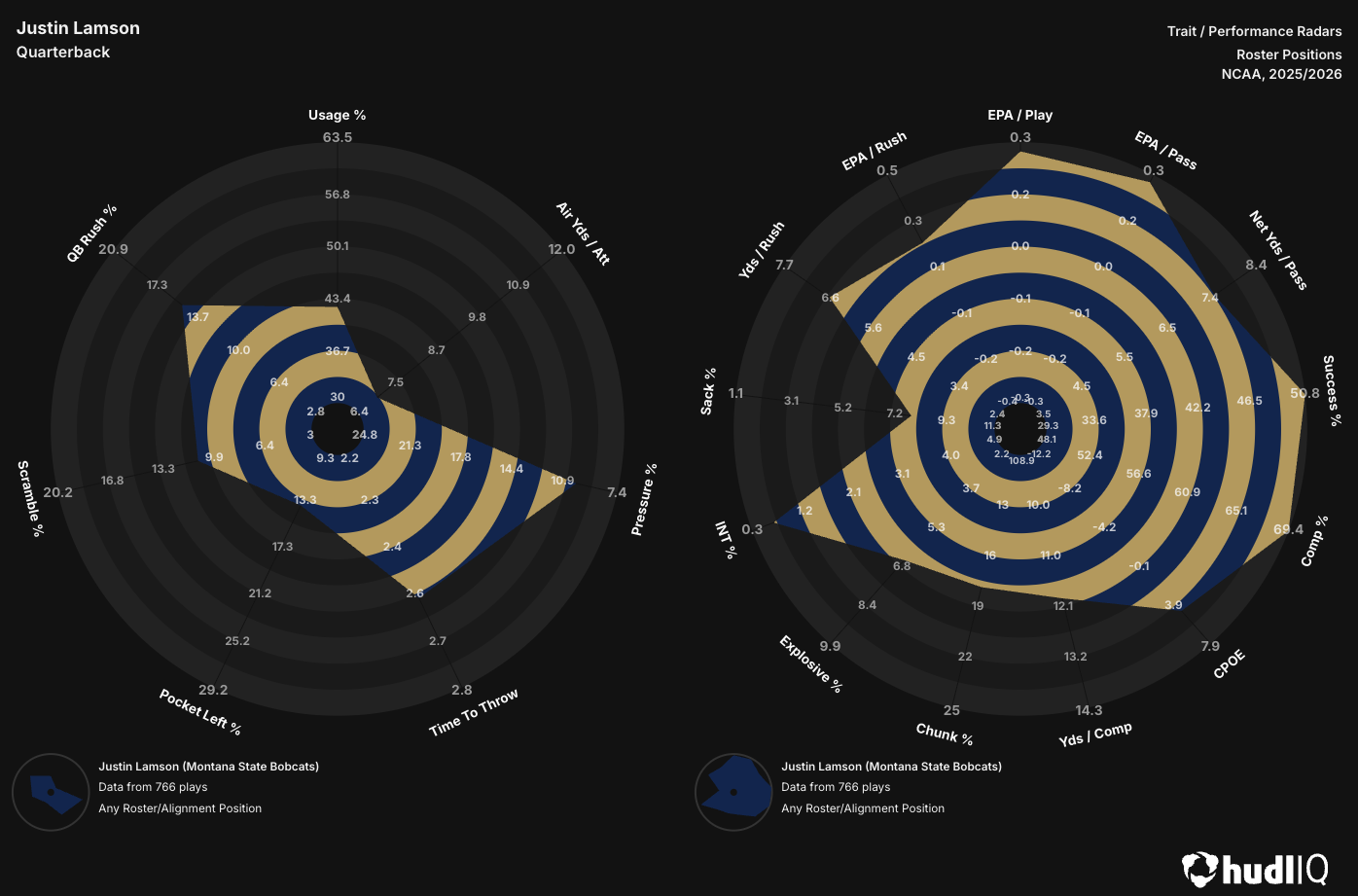
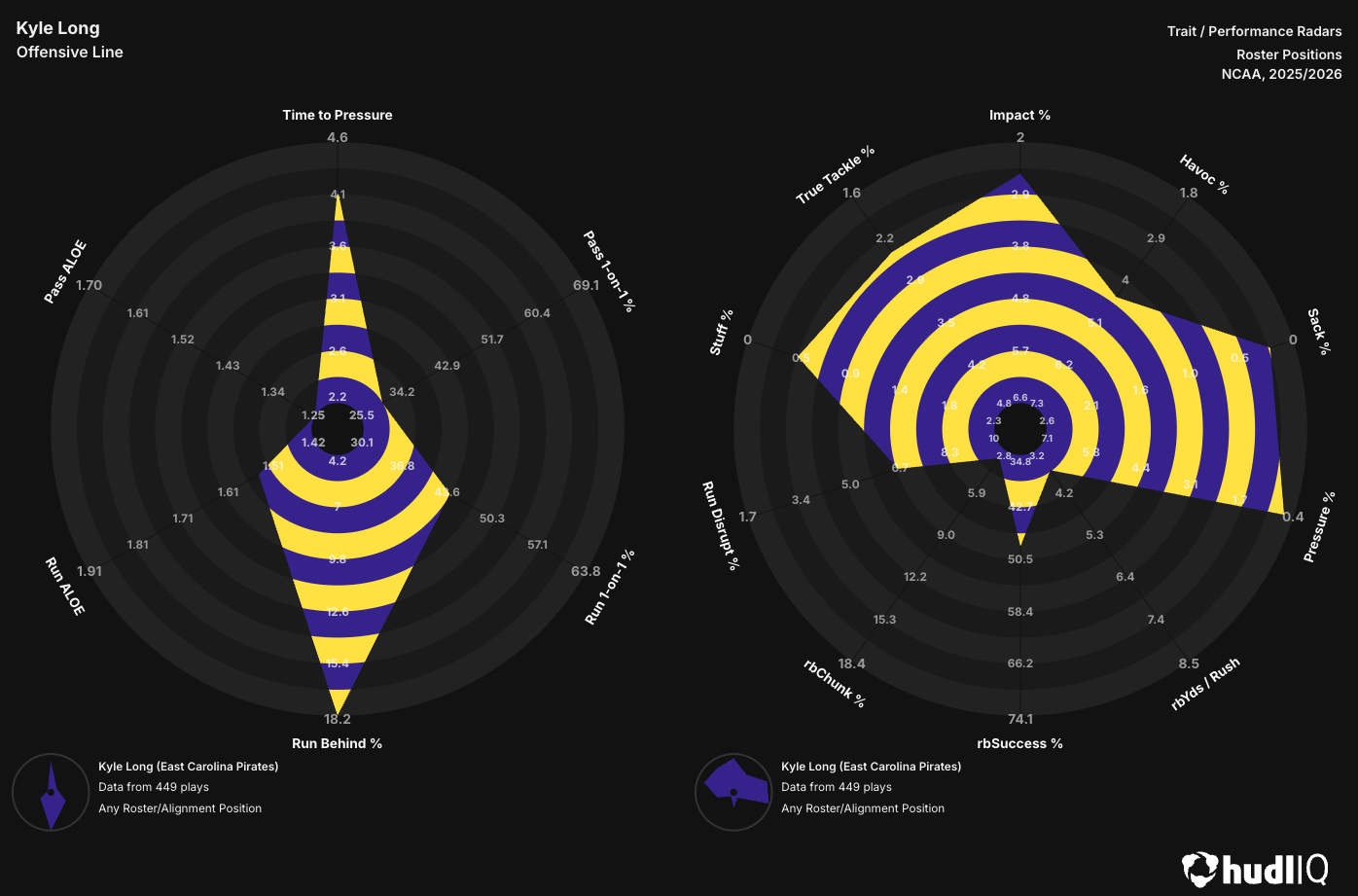
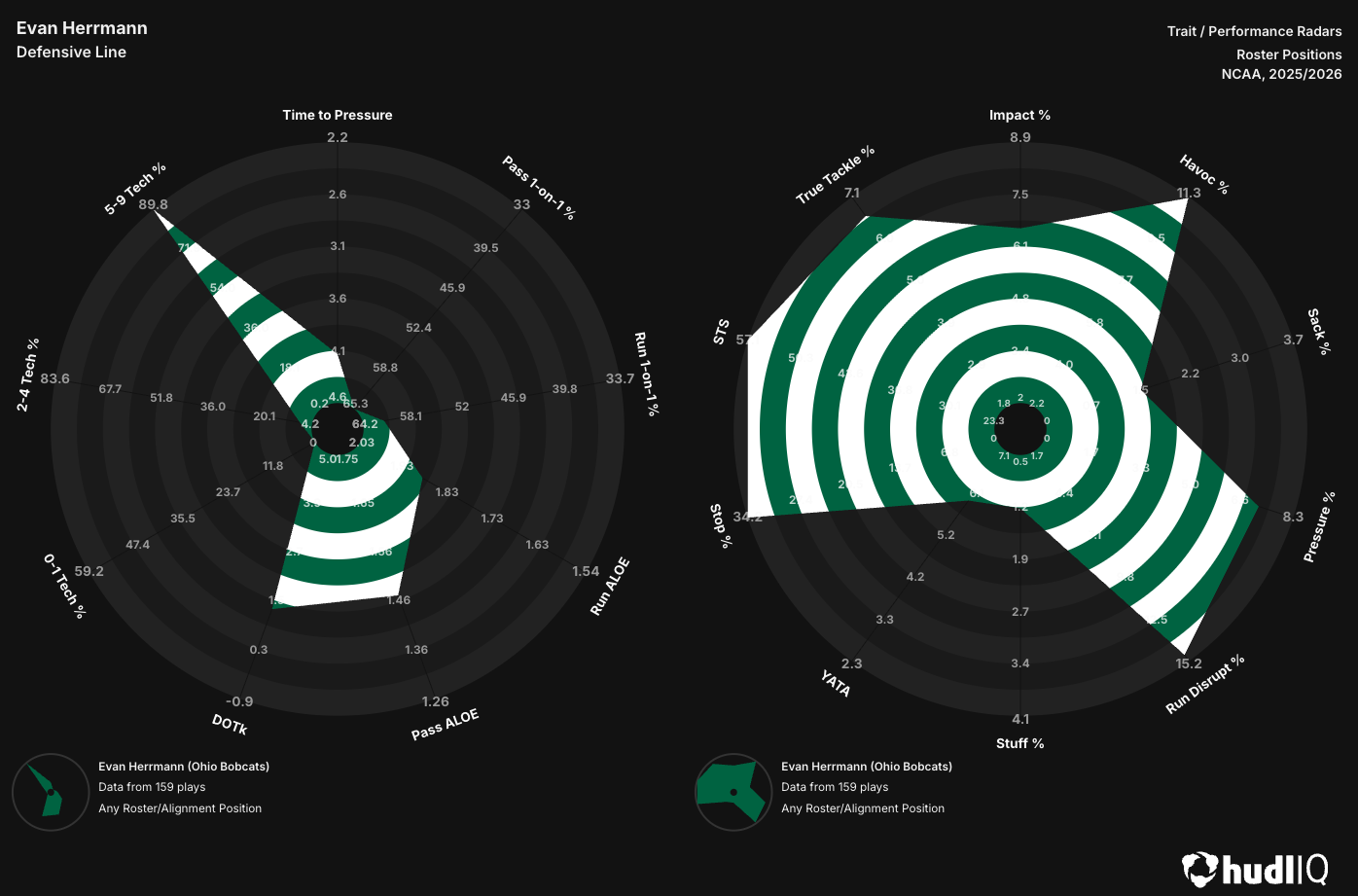
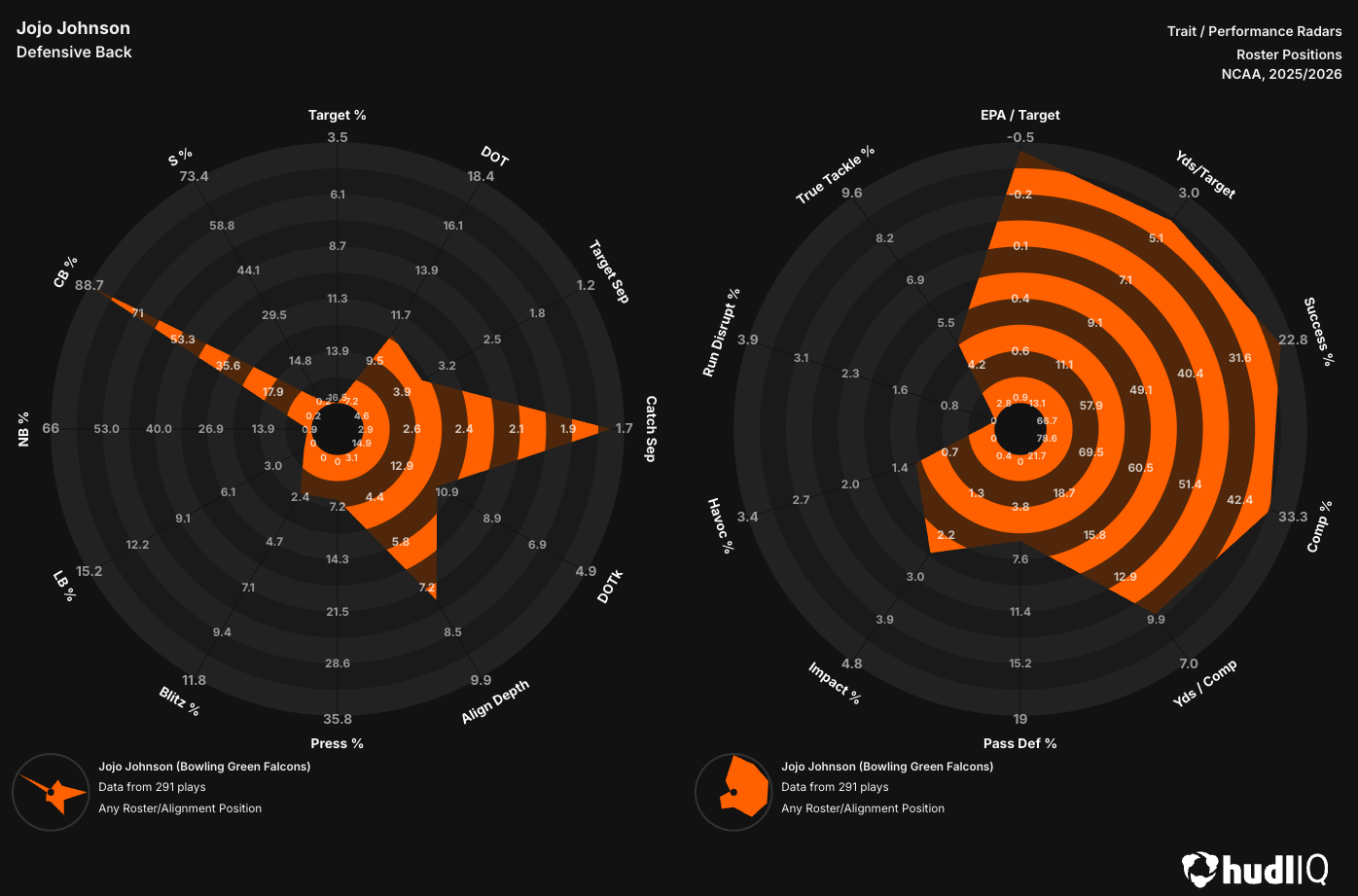
There are a number of players who “found their level” after transferring down as well. Stanford not only missed Bear Bachmeier at BYU, but another former Stanford QB transferred to Montana State with great success: Justin Lamson. Kyle Long transferred from Maryland to ECU and helped anchor an OL unit. Evan Hermmann transferred back a little closer to home, going from Vanderbilt to Ohio, and JoJo Johnson transferred out of Indiana to Bowling Green.
Conclusion
At the end of the day, successful players can be found at all levels of college football. There’s no wrong way for a student-athlete to go about their football journey. They can start low and transfer up, start high and then transfer down, or just stay put at their original school. For example, the four finalists for the Heisman this year all have different college career paths.
Julian Sayin - Power 2 to Power 2 transfer (0 change)
Fernando Mendoza - Low P4 to Power 2 transfer (+1 level)
Diego Pavia - Small College to G6, and then G6 to Power 2 (+2 levels, and then +2 levels again!)
Jeremiyah Love - No transfer
As far as the schools’ point of view, we’ve talked a lot about the transfer portal today, and haven’t even mentioned high school recruiting. Teams need to watch their roster building while balancing high school recruiting with the transfer portal. The early signing day just passed and High School classes are set for the most part, and now teams will be looking for how to finish up their roster. This could be small classes of a few hole fillers, or giant classes of 40-50 transfers. Either way, Hudl IQ helps these teams every day identify the right players to recruit for each team's unique schematic needs.
Want to learn more about how Hudl IQ can change your scouting workflows? Book a quick chat with a Hudl expert, and we’ll show you how.