Culture isn’t printed on posters. It’s what you allow, encourage and model every day.
Every football program has a culture—either by design or by default. The question every coach should ask is: Are we intentionally building ours, or just hoping it happens?
We have intentionally set a winning standard of performance when building the culture of Stewartville Football. Culture isn’t just a cool poster on a wall with some catch phrases that we hope we are living out. It’s a daily practice—something that players and coaches create together through habits, leadership, and communication. Winning starts long before Friday night!
When I took over as head coach for Stewartville Football back in 2018, one of my first missions was to develop a foundational culture that would last. Something that went beyond wins and losses. I wanted the players in our program to feel like they had a purpose and it was more than just football. I believed that if we built a culture based on our connection with each other, then the scoreboard would take care of itself.
I’ve detailed 10 different ways we've built our culture that has led to our program’s success. I am extremely proud of our performance on the field since I took over as head coach. We’ve won 2 state championships and multiple conference championships along the way. However, I’m most proud of the culture we’ve built with our players and our coaches. We try to make football the best part of our kids’ day and I think we’ve done a great job of delivering that experience.
Culture precedes the results. Champions behave like champions before they’re champions; they have a winning standard of performance before they are winners.
Bill Walsh, NFL Hall of Fame Coach
1. Start with “Why”
Our Stewartville Football Program’s mission is clear:
To produce individuals of high character who can build and maintain meaningful relationships throughout life and make a positive impact in their families, workplaces, and communities.
Every coach and player must define their personal “why.” When people understand their purpose, commitment deepens. A written “why” gives players ownership—it becomes their anchor when adversity hits.
Coach Takeaway:
At your next team meeting, have every player write down their personal “why.” Post them in the locker room or keep them in their playbooks. Purpose fuels persistence.
2. Culture = What You Practice, Promote, and Permit
Culture isn’t what’s printed on posters—it’s what you allow, encourage, and model every day. We define culture as:
Shared beliefs that drive behavior and create experiences.
If there’s a gap between what your team says it values (perceived culture) and what it actually lives out (actual culture), results will suffer. True alignment between belief and behavior creates the desired culture.
Coach Takeaway:
Audit your culture. List the words players would use to describe your team. Then, write what you want them to be. Compare the two—and close the gap through daily habits and clear expectations.
Create a BBO Chart (Belief, Behavior, Outcome). Have players list program beliefs (values), what the desired behavior for those beliefs should look like, and then what the program outcomes might be if every player followed through with those actions. Here’s an easy BBO Chart template you can use to get started!
3. Shared Values Drive Everything
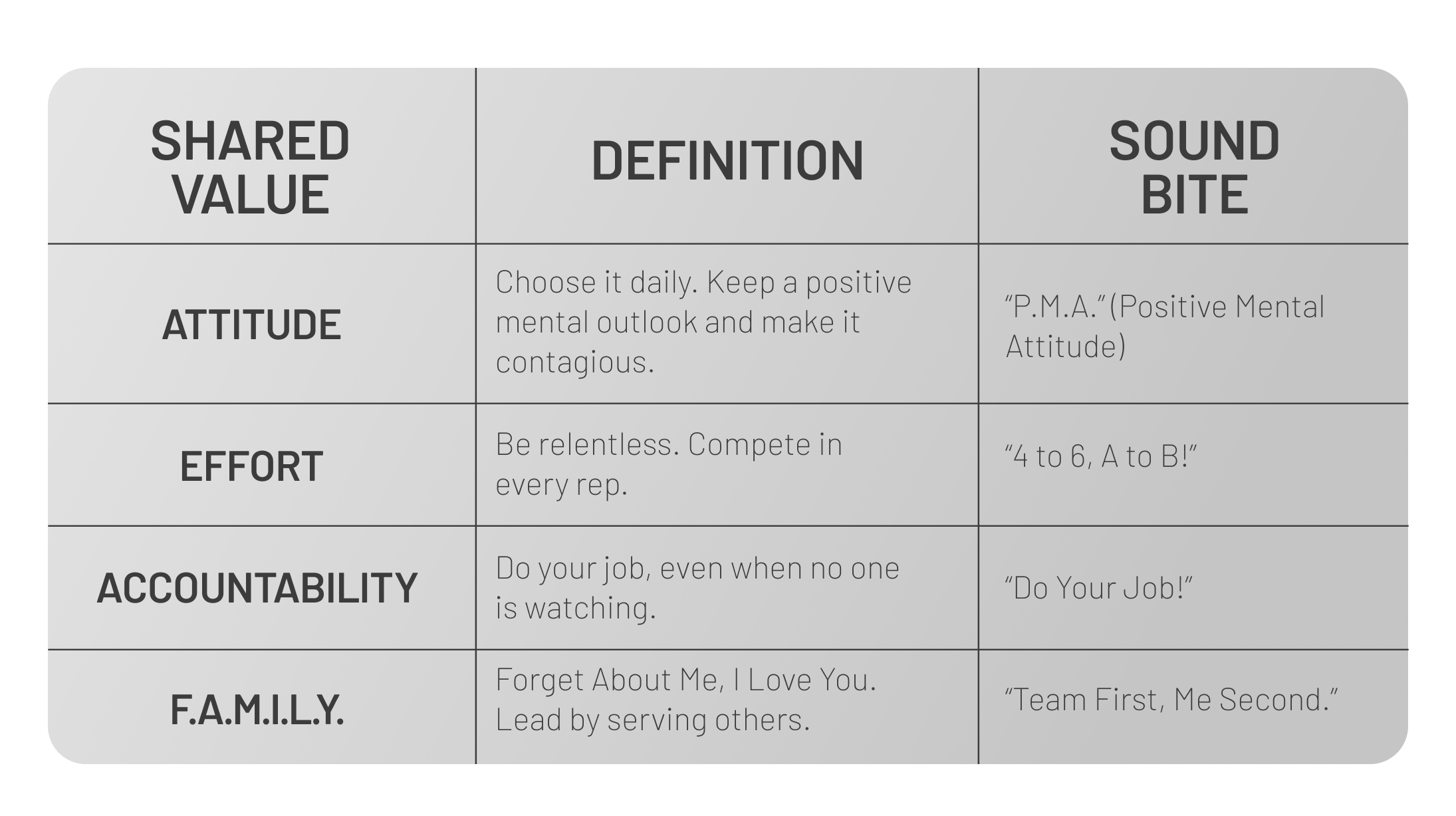
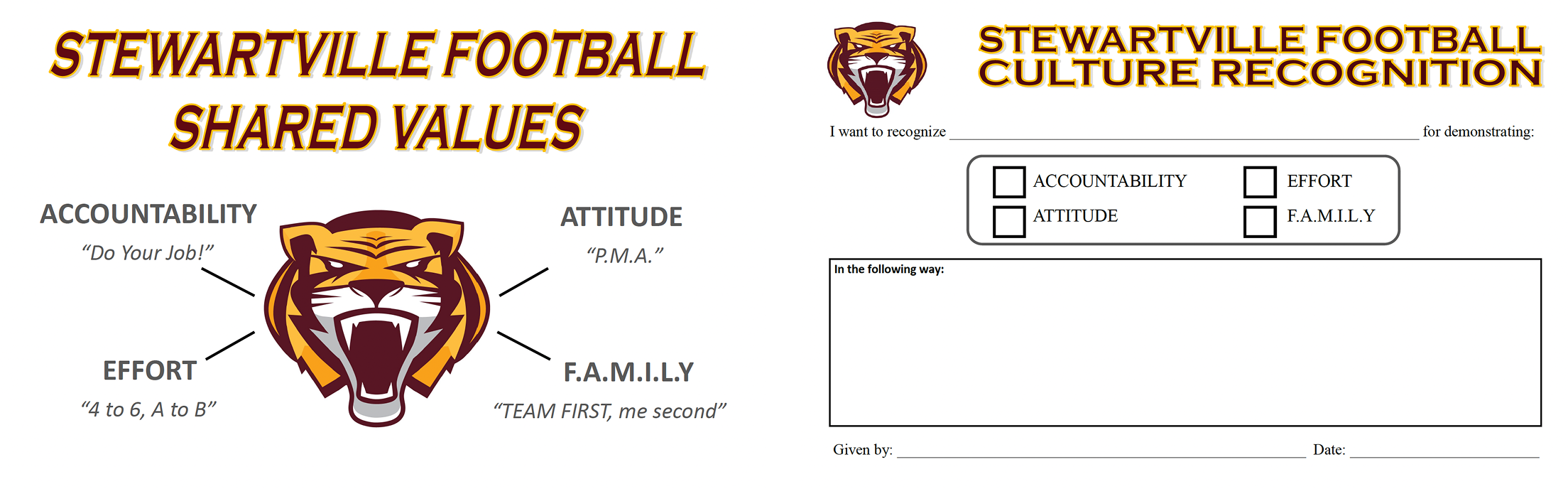
We believe our program’s shared values are simple but powerful:
Coach Takeaway:
Don’t just post your shared values—coach them and reinforce them. Integrate them into practice, film sessions, and team meetings.
We don’t have traditional “captains” in our program. Each week our coaching staff selects one player who best lived out each shared value during practice, and that player is selected as a team captain for the game on Friday night. Tuesday is “Attitude” captain, Wednesday is “Effort” captain, and Thursday is “Accountability” captain. Our players vote on a fourth “F.A.M.I.L.Y.” captain from the senior class.
We also have players present “Culture Cards” to teammates. These are handwritten cards that players use to describe examples of teammates living out our shared values during the week. Our players present these to their teammates during our pregame meeting on Friday nights. This is one of my favorite things our team does to build and reinforce our team culture!
4. Trust: The Foundation of Performance
Trust isn’t given because of a title—it’s earned through consistency. We teach that teammates will experience you in three ways:
Attitude: How you make them feel.
Actions: What they see you do.
Words: What they hear you say.
Great programs balance trust and results. Without trust, success is unsustainable; without results, our level of trust is unacceptable.
Coach Takeaway:
Ask players to identify which area—character, competence, or connection—they trust most in their teammates, and which needs growth. Build intentional conversations and shared experiences around those gaps.
5. Character: Build Your Own House
Every player is “building their house” through daily choices. Each action either strengthens or weakens that structure.
“Every action builds character—ABC: Always Building Character.”
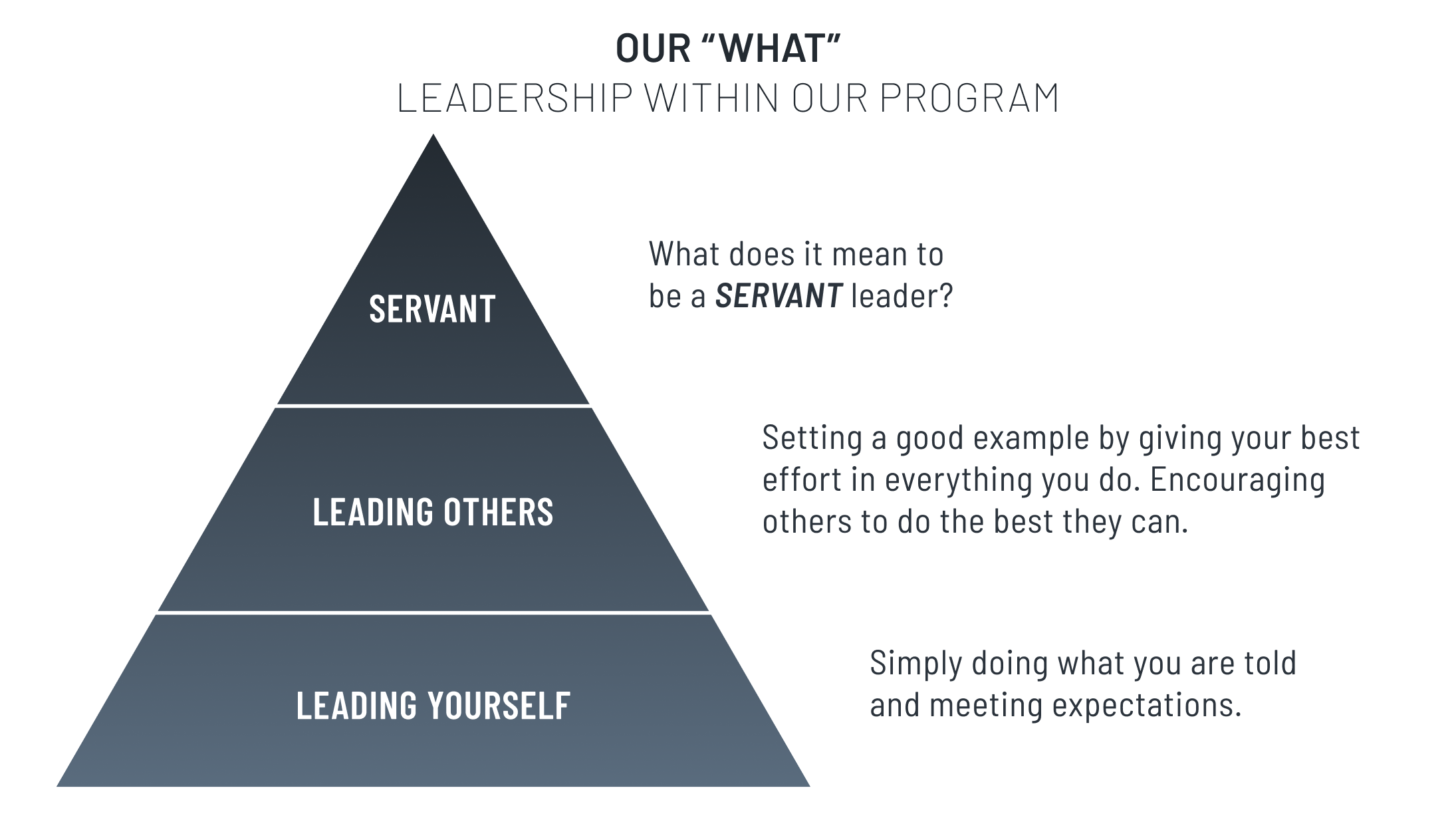
True leadership isn’t just leading by example; it’s about getting the best out of others. That’s servant leadership—helping teammates succeed by living out our shared values.
Coach Takeaway:
Have players define one word they want others to use to describe their character. Then, ask how they’ll build that on and off the field. Review progress weekly.
Winning starts with leadership that builds culture. Culture shapes behavior. Behavior produces results. We believe in building servant leaders in our program to drive these results toward our desired outcomes. We ask our players on a weekly basis, “what have you done to affect positive change in a teammate?”
Every individual controls at least one thing—their 20 square feet: their attitude, effort, and response to everything that happens within a football program. That’s where culture begins and is built out from there. We borrowed this idea from Brian Kight who has some outstanding resources when it comes to building culture within your program. I highly encourage you to check him out!
We have a leadership council in our program that meets on a weekly basis. 4 members from each class (Seniors, Juniors, Sophomores, Freshman) are selected by their teammates to serve on the leadership council. Our 20-minute weekly discussion is centered around what each of our levels need from our leaders to find success. It is also an opportunity for players to voice concerns, problem solve difficult situations and get advice from their teammates to help continue to drive our culture forward.
7. The “R Factor”: Discipline Over Default
We implement a simple but powerful formula we got from Brian Kight:
E + R = O (Event + Response = Outcome)
We can’t control events or outcomes, only our response. Players are trained to respond with discipline rather than default emotion.
Our individual response, or “R Factor” has six stages:
Press Pause: Slow down, think, and reset.
Get Your Mind Right: Focus, self-talk, and emotional awareness.
Step Up: Respond with discipline. Win the moment when tested.
Adapt and Adjust: Identify if your response delivered the outcomes your team needs and be ready to make a change in order to improve.
Make a Difference: Your response affects others’ experiences. Engage in the most disciplined response to achieve the best possible outcomes.
Build Skill: Train your responses like any other skill and improve over time for yourself, your teammates and the program!
Coach Takeaway:
Use “E+R=O” as a shared team language. After every practice or game moment, ask, What was the event? How did we respond? What outcome did that produce? How do we improve our response to get a better outcome?
8. Discipline-Driven Teams Win
We emphasize in our program that success comes from discipline-driven responses, not just talent alone. We encourage players to eliminate BCD—Blame, Complain, Defend. These default behaviors kill culture and have never achieved a desired outcome.
One of my favorite quotes to use is, “The pain of discipline is far less than the pain of regret.”
Coach Takeaway:
During film review, highlight response outcomes as well as performance outcomes—moments when players reacted with discipline and also without (poorly or emotionally). Celebrate disciplined responses even in failure.
9. Make a Difference
Your response doesn’t exist in isolation—your “R” becomes someone else’s “E.” Every word, action, and attitude creates an experience for others. This is a very meaningful concept for teams. When players and coaches frame their response this way I believe it brings clarity to the value of a disciplined response in every situation.
Coach Takeaway:
Create a “Buddy System.” Have players randomly select one teammate each week they’ll intentionally look for opportunities to help make better or improve their experience. Ask them afterward: What did you do? What changed for that teammate?
10. Building Culture, One Habit at a Time
Building culture isn’t about a new facility or recruiting more talent—it’s about identity, accountability, and connection. Programs that live their values daily will outperform more “talented” teams that don’t.
At the end of the article, I've shared a link to our “Culture Playbook” we use to guide our discussions during our preseason meetings. We spend about 30 minutes each day the first two weeks of practice building our culture with our players and our coaches. Don’t leave your team culture up to chance. Start intentionally building it now with focus and discipline!
Final Thoughts
If you want your program to win on and off the field, start by coaching culture the same way you coach schemes. Make it teachable, trainable, and visible.
Every drill, meeting, and interaction is a chance to reinforce your values. When belief and behavior align, your culture becomes your competitive advantage.