Ignacio Ovando: The Defender Lighting up the Libertadores


The Copa Libertadores is one of 600+ competitions on Hudl Wyscout and offers scouts a chance for a first look at some of the best young South American talent.
The 2026 Copa Libertadores knock-out phase got underway last week, with every tie still balanced on a knife-edge after the first match of the Round of 16.
There may not have been any goals in the clash between Rosario Central and Corinthians, played amidst a hostile atmosphere at the Estadio Gigante de Arroyito, but the game’s appeal for scouts centred around a couple of exciting prospects on display.
For the Brazilians, 21-year-old Breno Bidon represents one of the most elegant technical young midfielders on the continent and a more “Spanish-style” playing profile that the national team lacks.
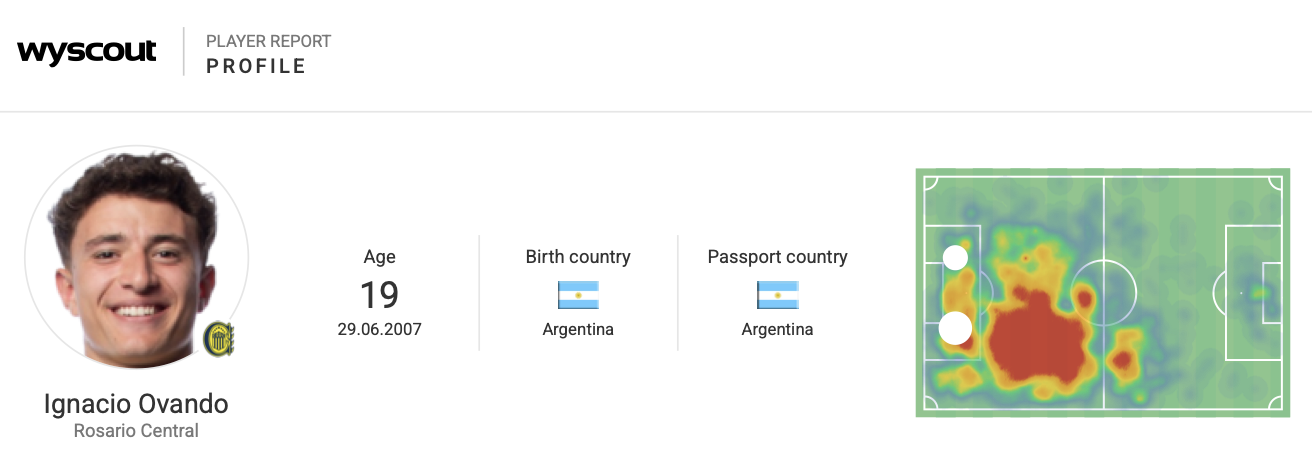
But, having helped his side to another clean sheet, it was perhaps Argentinian defender Ignacio Ovando who came out of the game with his reputation further enhanced.
Player Development Built on Necessity
Before drilling down into what video analysis tells us about Ovando, it’s worth placing his emergence in the wider context of internal and external trends.
While Argentina's reputation as a producer of attacking talent is well established, another tendency has gathered momentum in recent years. Alongside the country's gifted forwards and playmakers, its academies have become increasingly successful at developing technically accomplished centre-backs capable of meeting the demands of the modern game.
From the national team's defensive pairing of Cristian Romero and Lisandro Martínez to younger names such as Valentín Gómez and Aaron Anselmino, Argentina continues to produce defenders who are attracting attention both at home and abroad.

A key reason for that production line is the willingness of Argentine clubs to trust young defenders. A review of the opening three matchdays of the 2026 Clausura found that 25 of the league's 30 clubs started at least one centre-back aged 23 or under, illustrating the opportunities available to academy graduates.
While that reflects the strength of the country's youth development system, it also owes something to the financial realities of South American football, where clubs increasingly rely on homegrown talent before lucrative transfers abroad. Those opportunities provide invaluable first-team experience during a crucial stage of a player's development, while also increasing their visibility to recruitment departments across the world.
Next in Line: Ignacio Ovando
Rosario Central’s precocious centre-back Ignacio Ovando is arguably the clearest archetype of this current trend, the latest defensive gem to emerge from this environment.
Having made his first-team debut in October 2025 and only turned 19 in June, Ovando has quickly established himself as an important part of the senior squad. He featured in 16 of Rosario Central's 19 Apertura matches as the club reached the semi-finals, and has started every game during the Copa Libertadores group stage.
With recruitment departments continuing to monitor Argentina's emerging defensive talent, his rapid progression makes him an interesting case study for those seeking to identify the next generation of centre-backs.
Pinpointing which young centre-backs have the potential to progress to the highest level is not straightforward. Many of the qualities that define the position, such as positioning, anticipation and decision-making, are difficult to capture through traditional statistics alone. This is where video analysis becomes essential, allowing recruitment teams to examine the details behind a player's performances and understand the attributes that may indicate future potential.

Defensive Profile
When analysing Ovando's performances via Hudl Wyscout video, the first characteristic that stands out is his defensive intelligence. Rather than relying on aggressive tackling or recovery defending, game footage shows that the Rosario Central centre-back consistently looks to position himself in a way that limits an opponent's options before danger develops. He shows a strong understanding of space, regularly adjusting his positioning to close passing lanes, provide cover for teammates and place himself in the best possible position to intercept rather than react.
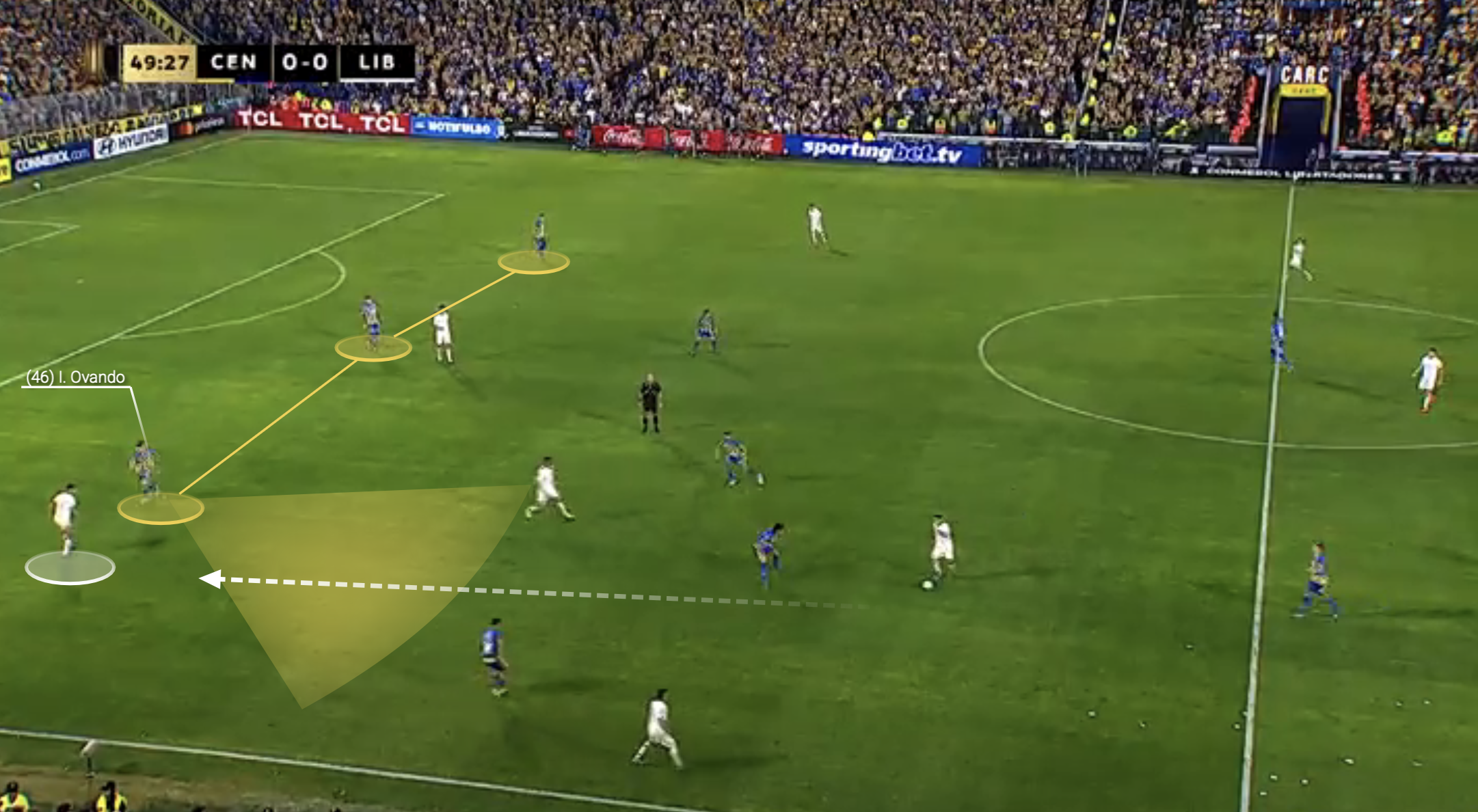
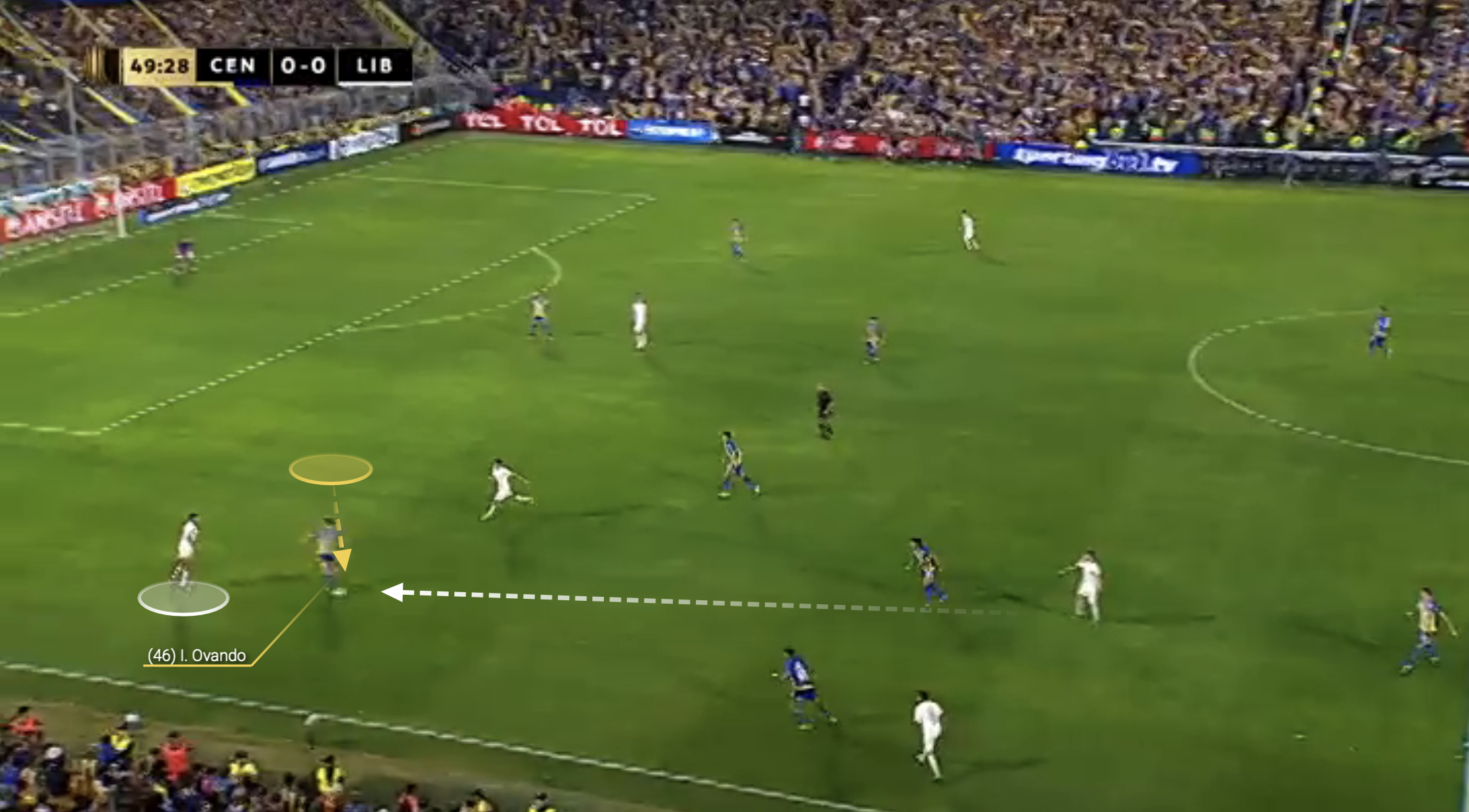
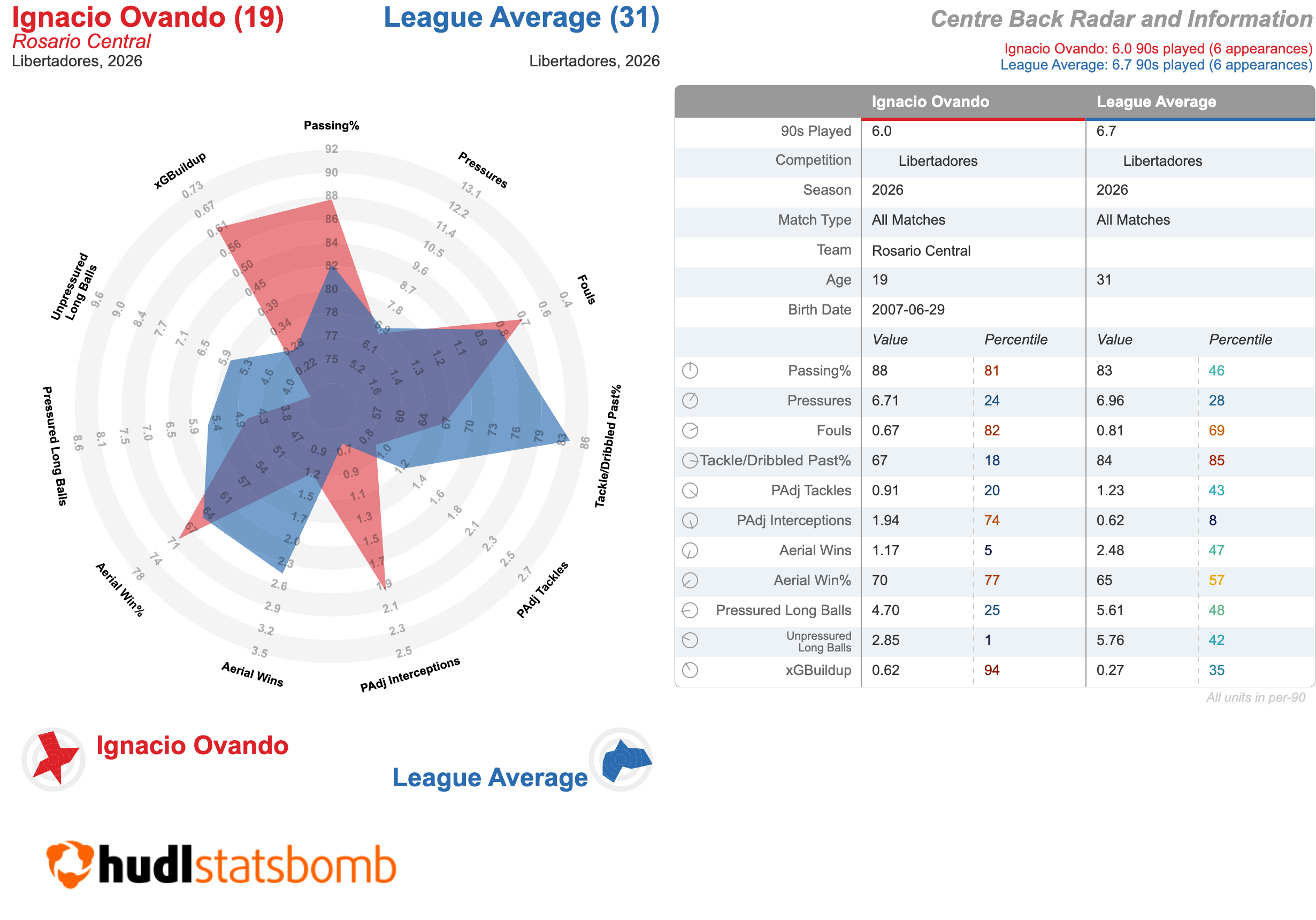
Those observations are reflected in the data. Ovando averaged 1.94 PAdj interceptions per 90 during this year’s Libertadores, placing him in the 74th percentile among centre-backs, while his domestic league stats are even higher. While interceptions alone should never define a defender, the figure supports what repeated video analysis reveals: a player who consistently reads the game well enough to disrupt attacks before they fully develop.
Of course, even the best-positioned defenders cannot prevent every duel. Watching clips of him on Hudl Wyscout, we see that when Ovando is required to engage directly with an opponent, he displays the same composure that characterises his positional play. Rather than committing early or diving into challenges, he generally remains patient, trusting his positioning before choosing the right moment to step in. That measured approach allows him to win possession cleanly while limiting unnecessary fouls or being drawn out of position.
That composure is reflected in his defensive duel numbers. During the 2026 Copa Libertadores group stage, Ovando recorded a defensive duel success rate of 76.3%, placing him among the five most successful under-23 centre-backs in the competition.
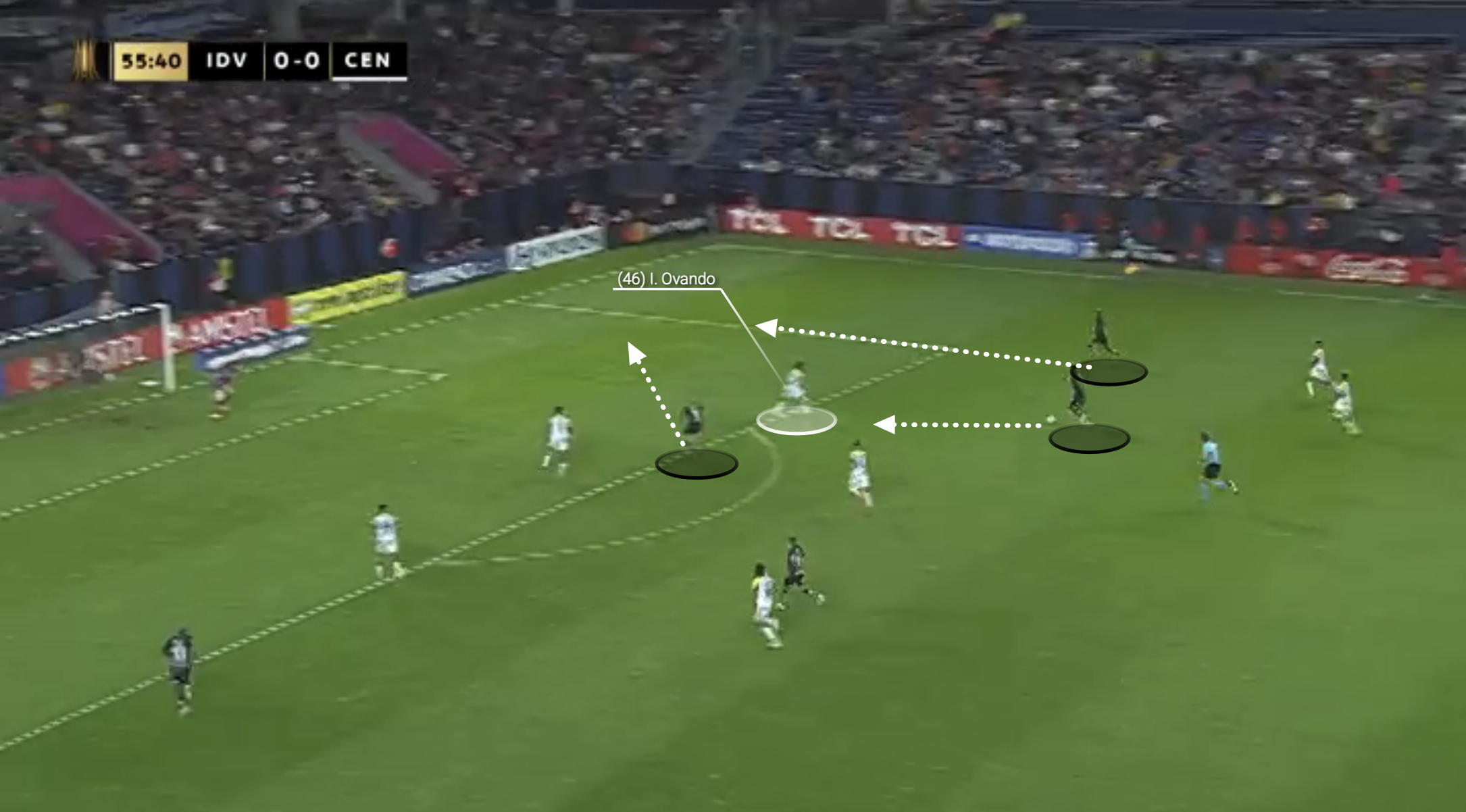
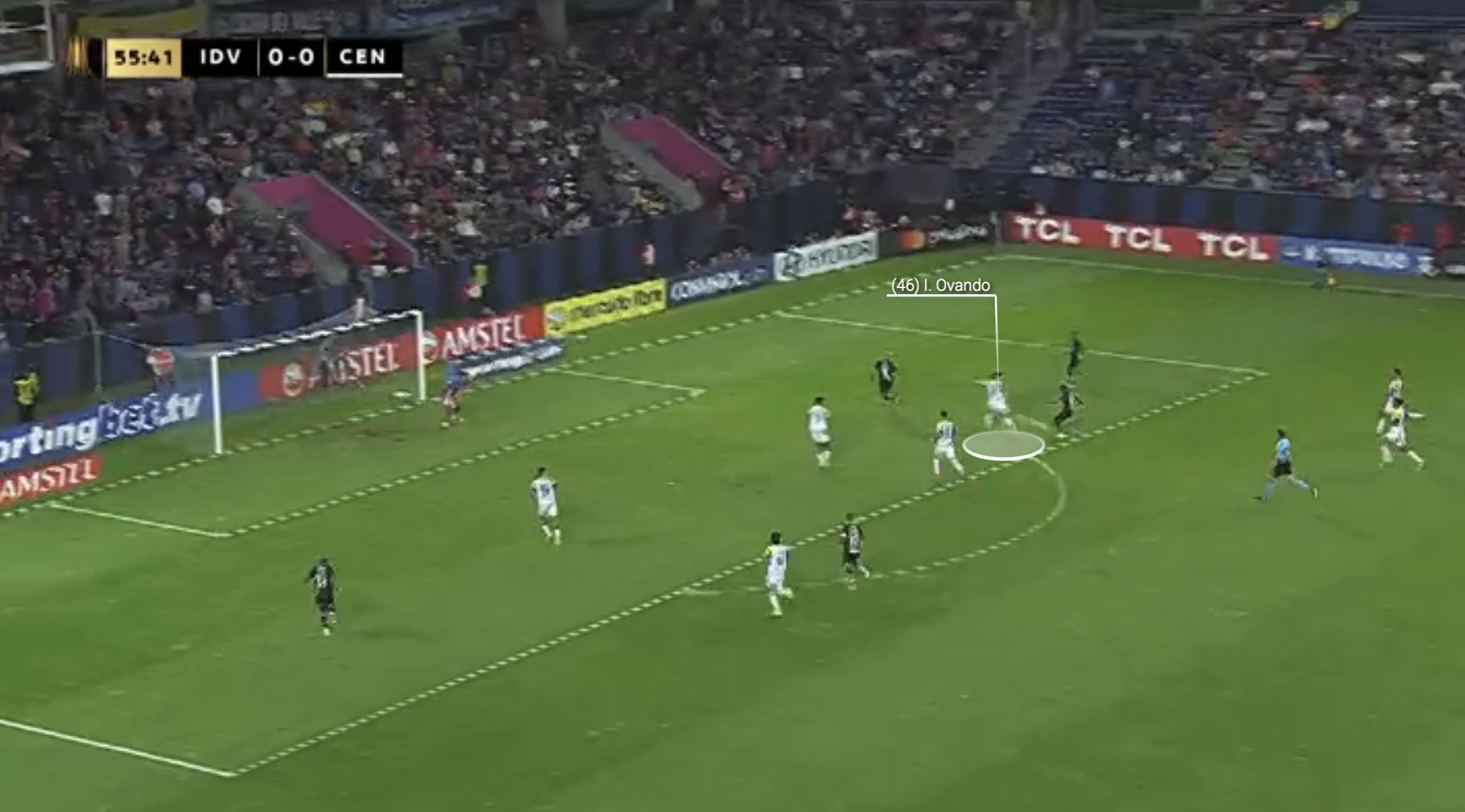
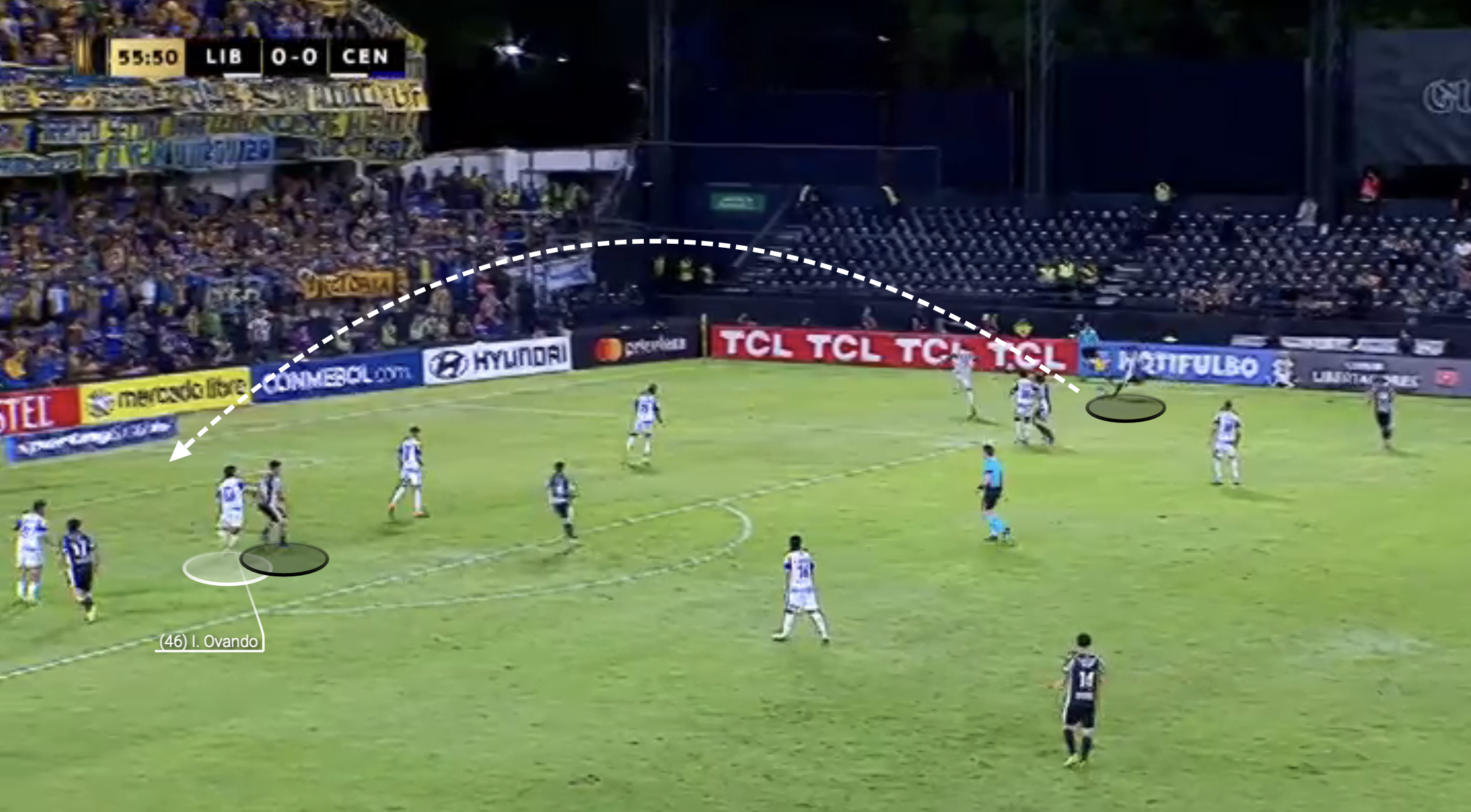
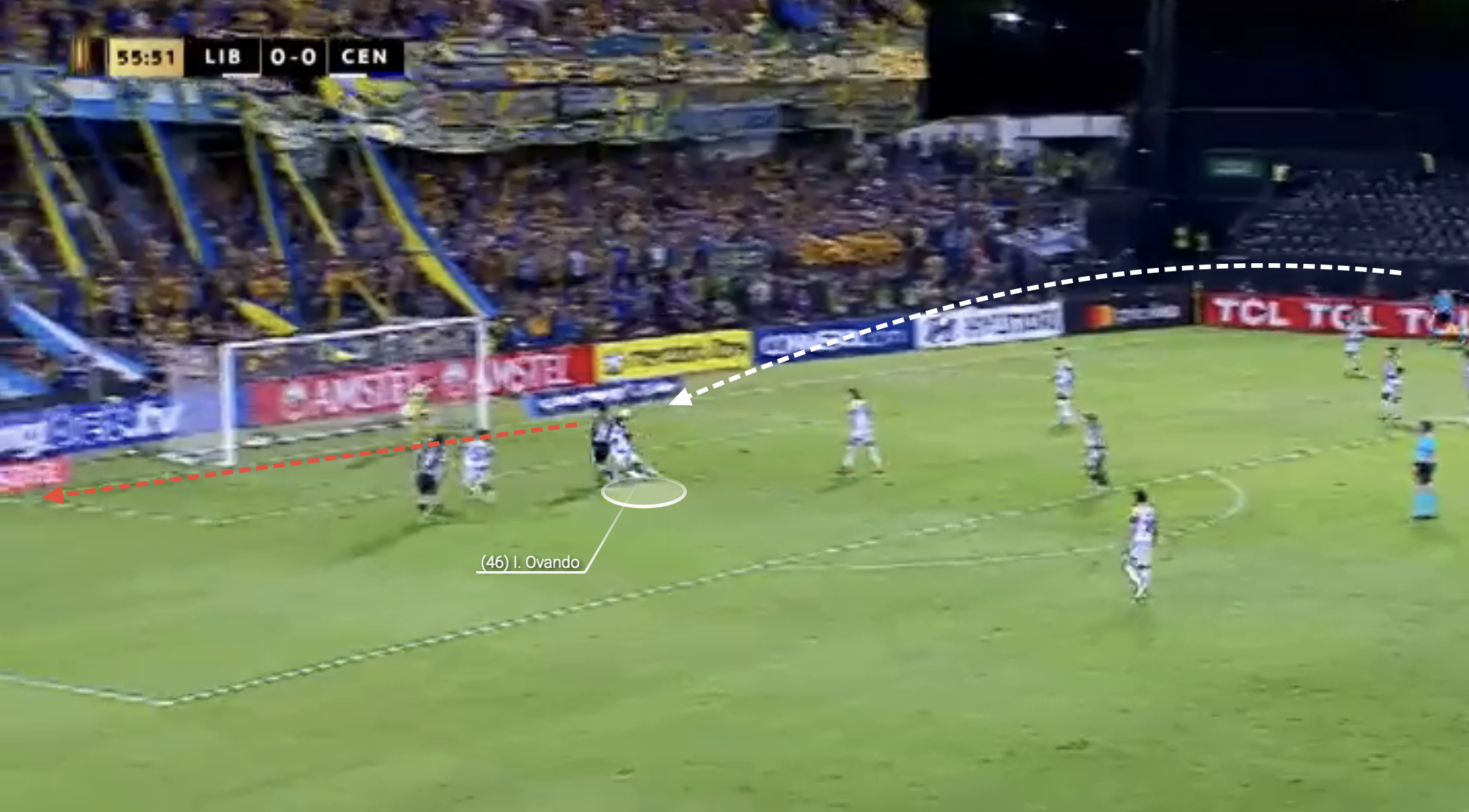
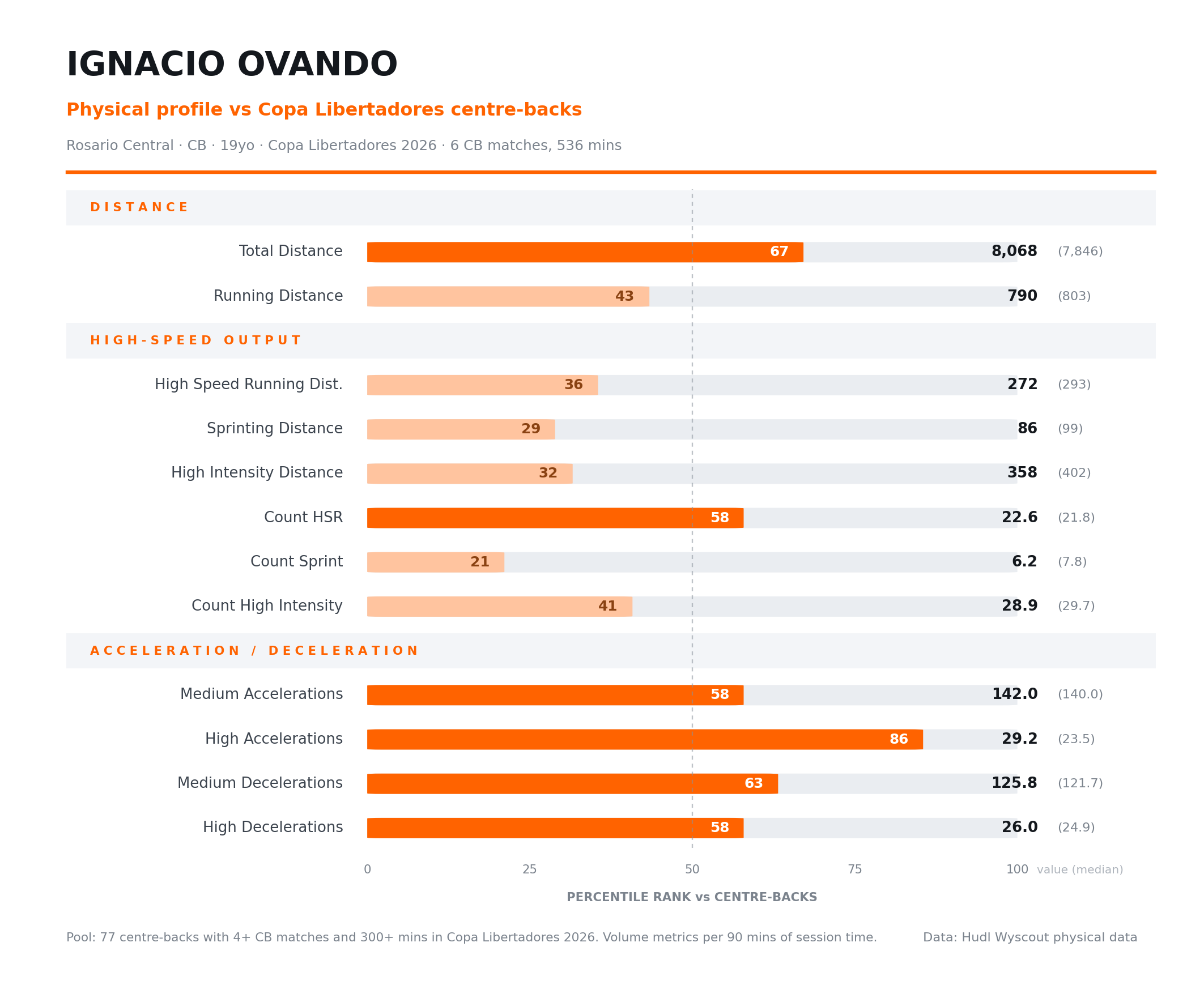
Taken together, Ovando's out-of-possession profile is defined less by spectacular defensive interventions and searing pace than by consistency. His ability to read the game, maintain good positioning and make sound decisions allows him to solve problems before they escalate, qualities that provide a strong foundation for a young centre-back with ambitions of progressing to a higher level.
On the ball
While Ovando's defensive qualities provide the foundation of his game, his comfort in possession is equally important in understanding why he has earned the trust of Rosario Central's coaching staff at such a young age. In an era where centre-backs are increasingly expected to contribute to build-up play, he demonstrates a level of composure on the ball that complements his work without possession.
One of the first things that stands out when watching his performances is his willingness to receive under pressure. Ovando regularly scans his surroundings before taking possession and adjusts his body shape to keep multiple passing options available. Rather than simply recycling possession, he consistently looks to break lines, finding midfielders between the opposition's shape or carrying the ball into space when opportunities present themselves.
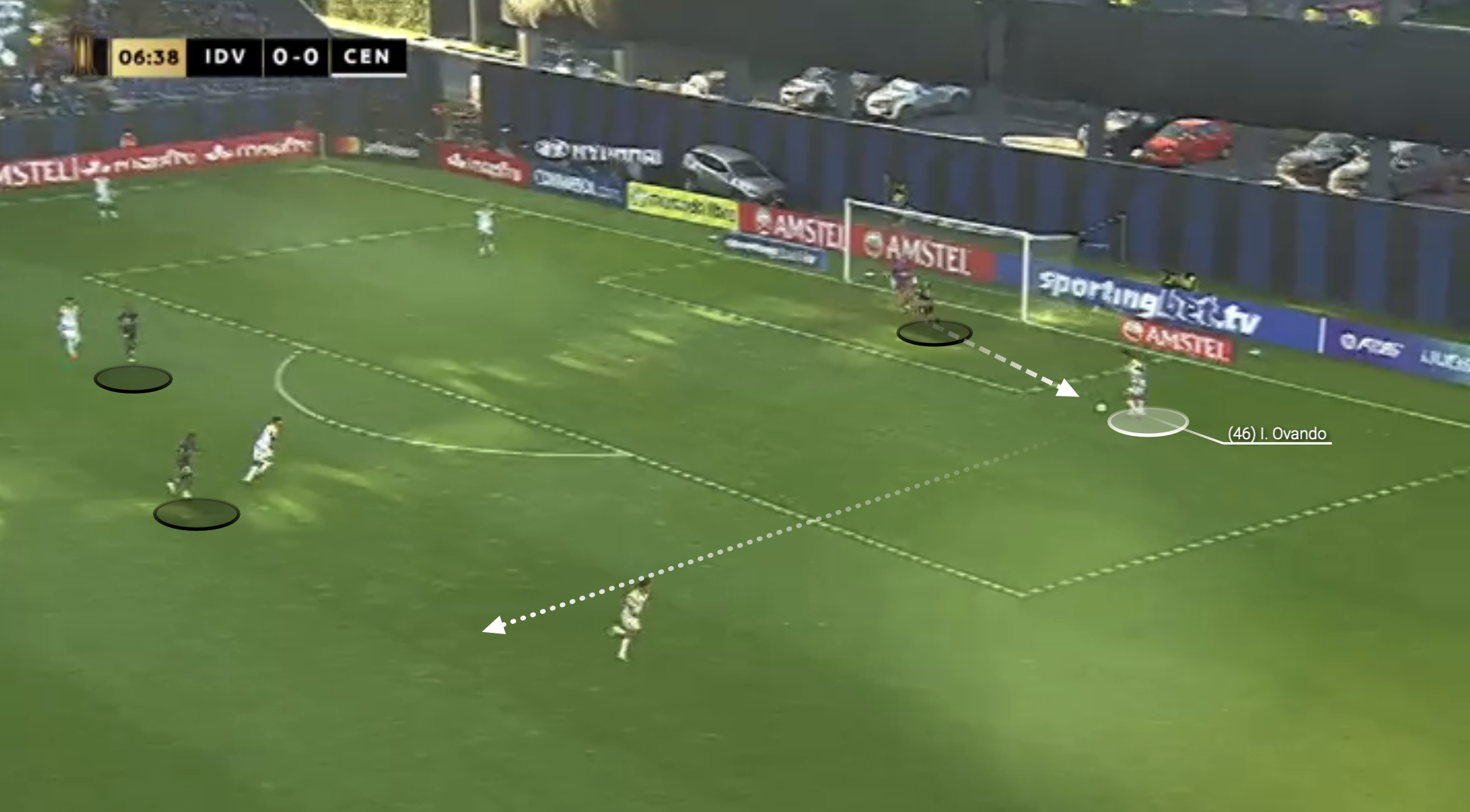
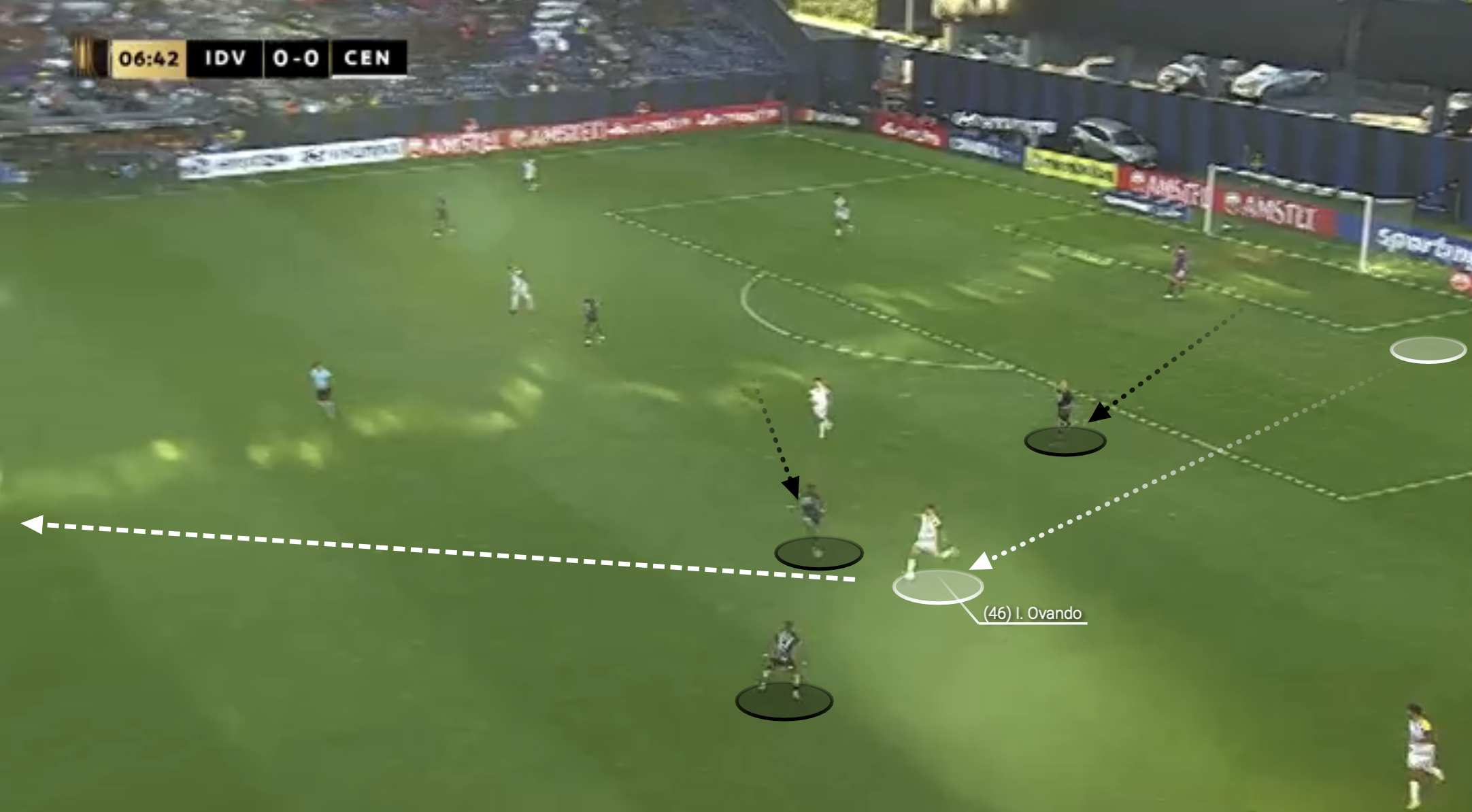
Those observations are also backed up in the data. As per Hudl Statsbomb market-leading advanced event data, Ovando completed 88% of his passes during the 2026 Copa Libertadores group stage, ranking in the 81st percentile among centre-backs, while his xG Build-Up contribution (0.62) placed him in the 94th percentile.
His willingness to advance possession is equally apparent through his ball carrying, averaging 3.23 ball progressions per 90 minutes, the fourth-highest figure among under-23 centre-backs in the competition, while his Dribble & Carry On-Ball Value (OBV) ranked in the 98th percentile.
Although his primary responsibility is to defend, Ovando also poses a threat from attacking set pieces. His two goals during the 2026 Copa Libertadores group stage were the joint-highest tally among under-23 players, adding another dimension to an already well-rounded profile.
No young centre-back is a complete product, and Ovando is no exception. There are still areas of his game to refine, including the consistency of his longer distribution, reducing the occasional error and showing greater assertiveness in some defensive duels. The video shows that, at times, he can also commit too early when stepping out of the defensive line, while continued experience should bring greater confidence to attempt more progressive actions in possession.
Those are the natural development points for a 19-year-old centre-back rather than significant concerns. Indeed, Ovando's rapid progress has already been recognised beyond Rosario Central, with his inclusion as a training partner in Lionel Scaloni's Argentina squad underlining the regard in which he is held and hinting at a potential role in the next international cycle.
Why Scouts Should be Watching
For recruitment departments, the Libertadores continues to provide one of the most valuable contexts in which to assess emerging centre-backs - Argentinian or otherwise. Financial realities mean young players are increasingly entrusted with senior responsibility, while the demands of continental football expose them to a wide variety of tactical and physical challenges before they move abroad. For scouts, that combination offers an opportunity to evaluate prospects in meaningful, high-pressure environments rather than solely through academy football.
Ovando is still at the beginning of his career, and there are aspects of his game that will continue to develop with experience. Even so, his performances already demonstrate many of the qualities sought in the modern centre-back: defensive intelligence, composure on the ball and the ability to make sound decisions in and out of possession.
Whether he ultimately reaches the highest level remains to be seen, but his rapid development and encouraging body of work already make him a player worthy of close attention from recruitment departments.