What Happens When Every Coach Gets a Focus Camera

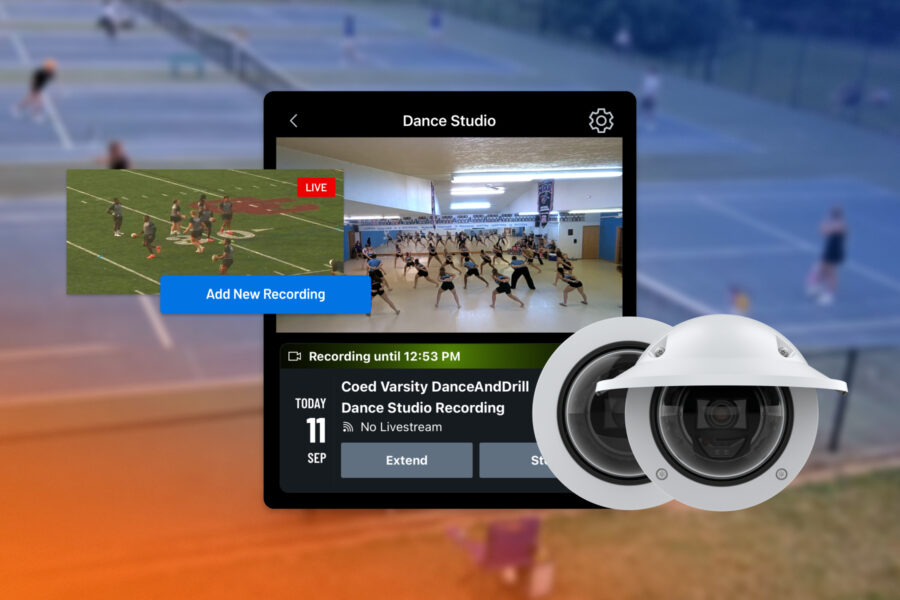
A dance coach in Iowa, a tennis coach in Tennessee, and a rugby coach in West Virginia got Hudl Focus cameras. Here’s what changed.
It's not just for volleyball or basketball. It's for dance too. It connects you across your whole athletic department.
Iowa Central Community College: Dance Team (NJCAA)
Coaches: Cassidy Vermeer and Stephanie Sibenaller
Setup: Hudl Focus Point (studio), Focus Indoor (gym) and Outdoor (practice field)
Cassidy Vermeer has coached dance at Iowa Central for 14 years. Her program has grown from five dancers to 31— two national titles, five podium finishes —and moved from performing arts into the athletic department nine years ago, well ahead of most schools. What she and co-coach Stephanie Sibenaller brought to their program next was ahead of the curve, too.
Before Hudl, filming meant juggling phones. Sometimes Vermeer's, sometimes a dancer's, sometimes a device propped on a ladder because she needed the angle. Storage was always full, videos lived in group texts, and getting a full-room view required two or three devices from different corners.
Now the studio has its own dedicated Hudl Focus Point camera — nicknamed José, for the record.
The camera setup extends beyond the studio. When the team moves to the gym to simulate competition or sideline prep, there's a Focus Indoor camera in there, too. Same for the practice field camera, where they can simulate football game day. The studio camera is positioned from behind, matching the orientation dancers practice in. The gym and field cameras simulate an audience or judge view.
Film sessions happen every Tuesday and Thursday. Sibenaller hooks her laptop to a projector and works through clips frame by frame, showing dancers not just what they're doing wrong but exactly when and where it happens. "I know it feels like you're doing this," she'll tell them, "but when we watch the film back, this is what we're seeing."
Sibenaller reinforces that accountability by checking the coaching dashboard to see exactly how many hours each athlete has watched. "I don't have to hound them," she said. "Hudl makes the expectations crystal clear — there's no room for miscommunication." Even injured dancers can keep up with recordings, and new team members can learn archived routines before they ever step foot on campus.
When they brought the request to the athletic department, the AD's reaction was straightforward: other teams on campus were already using Hudl, so a camera in the dance studio was just another room in the building.
"Being able to tap into the same platform your other athletic teams use is a great angle," Sibenaller said. "It's not just for volleyball or basketball. It's for dance too. It connects you across your whole athletic department."
Bethel University: Tennis (NAIA)
Coach: Derrick Hubble
Setup: Hudl Focus Point (two courts)
Derrick Hubble is the head men's and women's tennis coach at Bethel University in McKenzie, Tennessee. He's also the assistant SID, which means he runs the streaming setup for every athletic event on campus.
"If it's recorded on this campus," he said, "it's probably because of me."
Before cameras, tennis at Bethel wasn't being filmed at all. No streaming. No film review. Games happened and disappeared. Hubble had tried propping up cell phones occasionally, but the quality wasn't there, and nobody outside the court could watch.
To fix that, the IT department wired two Hudl Focus Point cameras along the top of the fence. One covers four courts on each end. Men's matches go on the top courts, women's on the bottom.
The immediate impact wasn't about coaching film. It was about connection. Bethel's tennis roster is largely international, with players whose families are watching from Brazil, Europe, and beyond. Hubble set streaming access at $5.95 per match, keeping it affordable. "Knowing where these kids come from and what their financial stability is, I thought it was the right price point."
Last season, his number-two player clinched a match. After the final point, he walked to the camera and pointed directly into it.
His dad was watching from Brazil.
"That's for you, Dad."
"A lot of these tennis apps, you either have to catch it live or you don't see it," Hubble said. With Hudl, families can watch on demand from anywhere in the world — even if it's midnight back home — and for international recruits deciding where to play, knowing their family can watch every match matters.
Beyond the family connection, film has changed how Hubble prepares his team. He reviews footage to build practice schedules around technique, going back to catch forehands, backhands, and positioning issues that are easy to miss in the moment. On match days, cameras are set up in advance, and he can focus on coaching. If something goes wrong, the system handles itself.
"I didn't have to reset it," he said after an internet outage knocked out a stream. "It just went straight back in."
Nobody else in his region is doing this for tennis. Hubble knows it. His program went from zero streaming to full coverage in a single off-season, and his athletes' families can watch from anywhere in the world.
"That's the strongest tool. The players being able to go back and look at everything."
Wheeling University: Rugby (NCAA Division II)
Coach: Maxwell Hamilton
Setup: Hudl Focus Outdoor (stadium)
Maxwell Hamilton became head men's rugby coach at Wheeling University at 23. His team just won their third consecutive national championship.
Wheeling’s athletic department invested in Hudl years ago, so when Maxwell arrived, the camera was already installed in the stadium. Without having to struggle through finding someone to film with a handheld recorder, Hamilton got right to work. He had worked as a team liaison for the French and New Zealand national women's rugby teams at the LA7s Olympic circuit before coming to Wheeling. He just built a system on top of what was already there.
"The camera doesn't lie," he tells his players at practice. "Film's on. Camera does not lie."
For home games, that film is ready right away. For away games, Hamilton’s goal is to have the entire match coded before the team bus gets back to Wheeling. Film review is on Monday. By Tuesday, they're preparing for the next opponent.
Every player must bring five timestamps to film sessions, five specific moments from their own performance, good or bad. They text those to Hamilton before they walk in the room.
"What was going through your brain when you made this decision?" he'll ask. "Sell us on why you did that."
Because the footage lives in Hudl, Hamilton can code directly against it in Hudl Sportscode — tracking tackle rates, line breaks, and player movement without bouncing between systems. One platform, from the camera on the stadium to the film session on Monday
Rugby has no strict right or wrong on most plays. The game lives in decision-making. Film is how Hamilton teaches that language.
There's also an accountability layer his players feel. Early each season, Hamilton projects the film-viewing stats for the whole team to see who's watching and who isn't. The competitive atmosphere does the rest. "I always leave it up for a few minutes so they can see each other's numbers and start poking each other."
One morning last season, he woke up to a flood of texts. Hudl storage had hit its limit overnight. His players wanted to watch practice and couldn't get in.
"That's the strongest tool," he said. "The players being able to go back and look at everything."
Three national titles. A team blowing up their coach's phone for practice footage at midnight. The camera doesn't lie.