Emerging Talent: Finding Value in Europe's Development Leagues
30 Jan 2026
7 min Read
By Oliver Walker
Analyst
For many clubs outside of the established elite, the recruitment strategy will include a clear objective to identify high-potential assets, develop them within your system, and eventually sell them on. It is a model that relies on finding value early, often by looking beyond the top-level leagues.
However, the challenge lies not just in spotting talent, but in projecting it. When recruiting from development leagues, teams need to know if a player’s output will translate to a higher level. This is where context becomes essential. By layering Statsbomb event data with Hudl physical data, recruitment departments can build a comprehensive profile of a player’s technical quality alongside their athletic potential.
With Statsbomb covering 190+ competitions and Hudl physical data available for over 100 leagues worldwide, we can benchmark prospects in these emerging markets directly against positional averages from the Big 5 European leagues – widely regarded as the most reputable and competitive leagues in global football. This allows us to identify players who possess the physical capacity to compete with the elite and therefore, with some technical and tactical development, the potential to one day translate their game to that level.
Using the Swiss Super League, Czech First League, and Croatian HNL as the example, here are four players aged under 24 that the data suggests could have the potential to step up.
Physical Metric Definitions:
Running: Between 15 km/h and 20 km/h
High Speed Running: Between 20 km/h and 25 km/h
Sprinting: Above 25 km/h
High Intensity Running: Above 20 km/h (encompasses both High Speed Running and Sprinting)
High Acceleration/Deceleration: A peak value greater than 3 metres/second²
Sergi Domínguez (Central Defender, 20)
Evaluating centre-backs through data can often pose a unique challenge. Unlike wingers or box-to-box midfielders, they are rarely required to output huge distances or perform repeated high-intensity sprints over 90 minutes.
However, at the highest level - and especially within dominant teams - the physical demands shift. Centre-backs are expected to defend vast areas of space, allowing their team to commit bodies forward safe in the knowledge their anchoring defenders can sweep up behind.
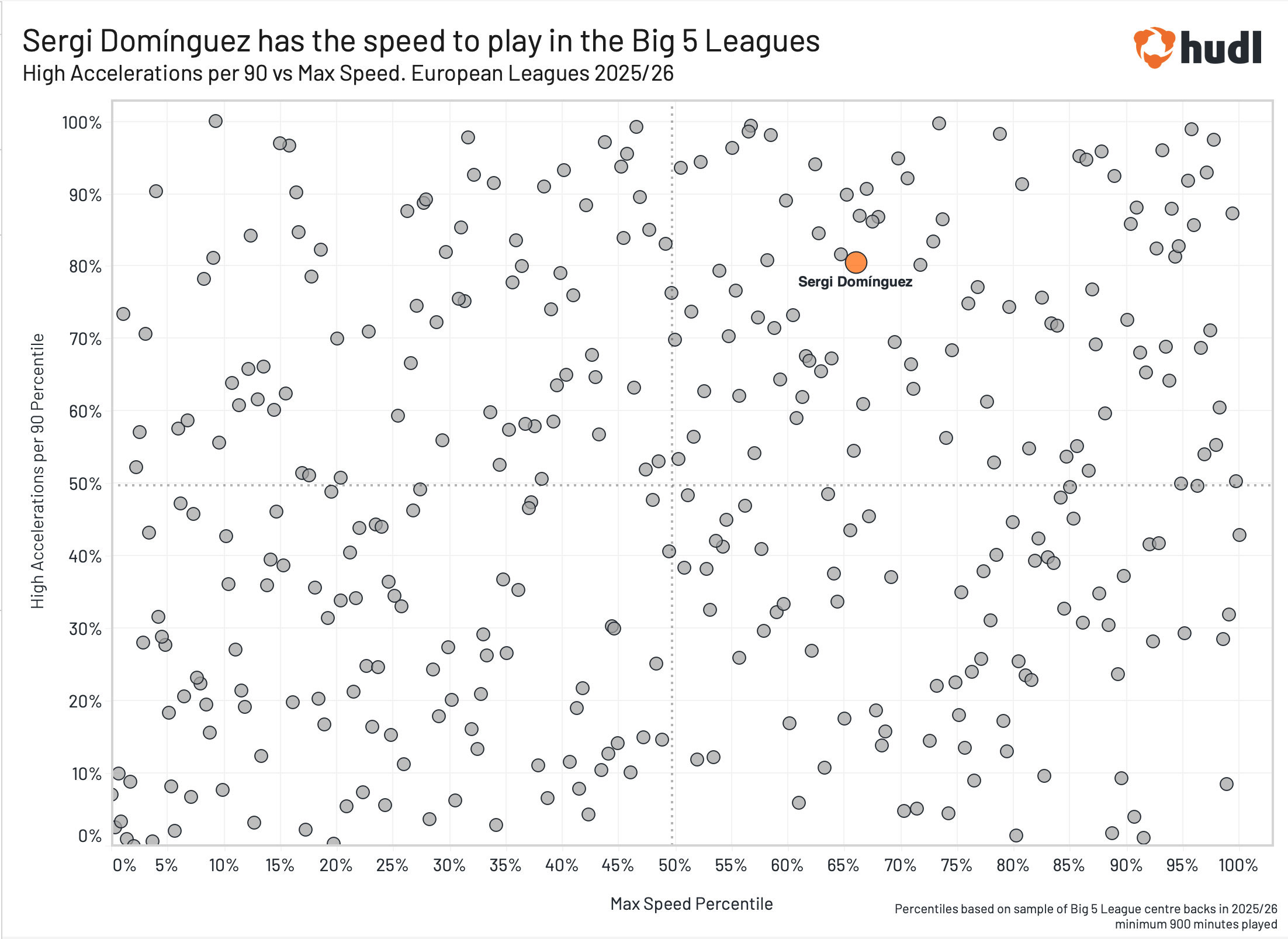
At Dinamo Zagreb, Sergi Domínguez profiles as a player capable of filling this role. While his top speed is very competitive (67th percentile in the Big 5 Leagues), his ability to react is elite, ranking in the 81st percentile for High Accelerations. This burst is crucial for a modern defender, ensuring he can win those vital first five yards when intercepting a through ball or covering depth.
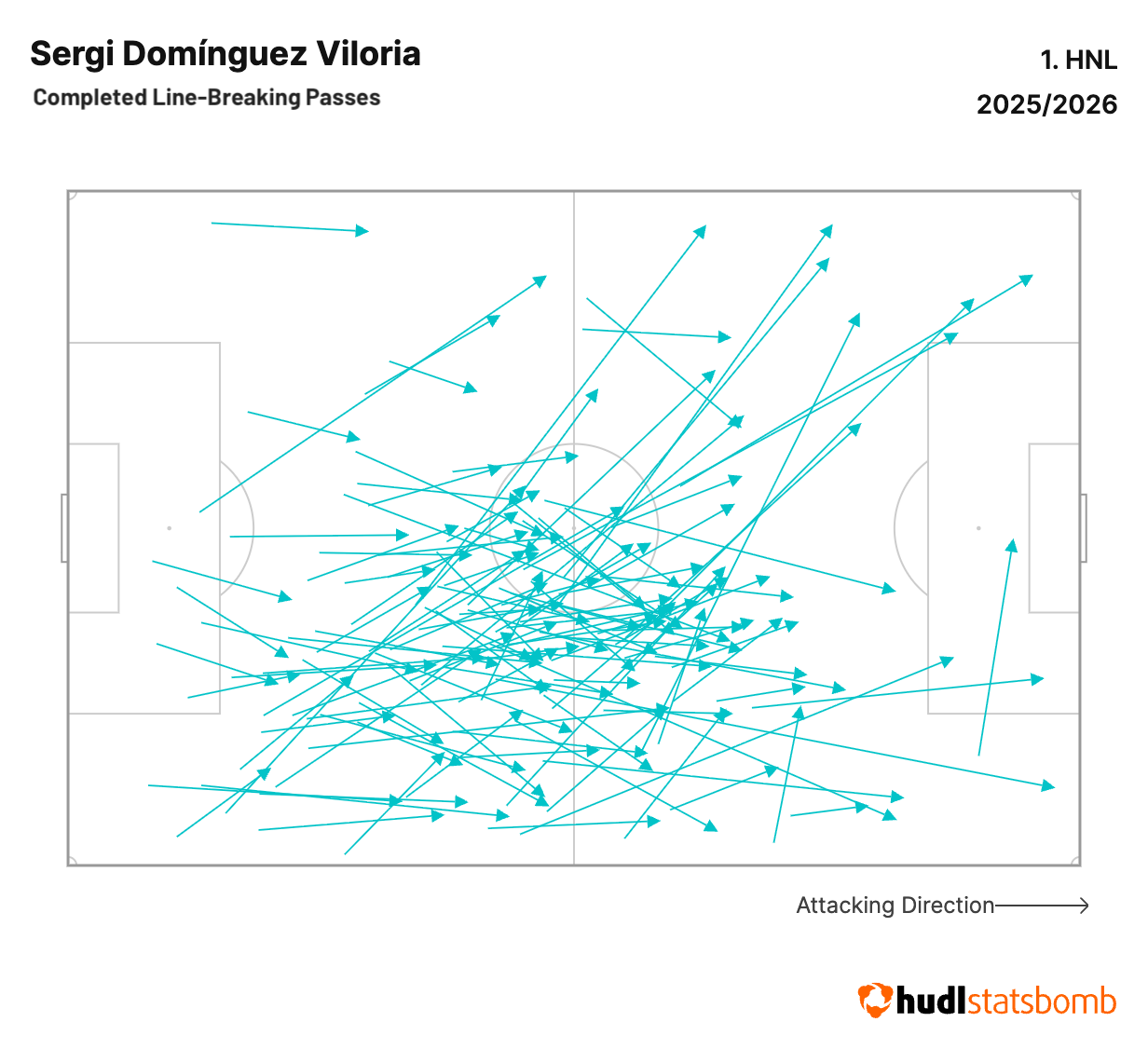
What makes the 20-year-old such an appealing prospect, however, is the combination of this physical base with his technical education. As you might expect from a graduate of Barcelona’s La Masia academy, his ability to progress play stands out as his exceptional attribute. Domínguez doesn't just retain possession; he breaks lines with both his passing and his ball carrying. Only one player in the Croatian top flight has completed more line-breaking passes per 90 minutes this season.
Whether carrying the ball out of defence or punching a pass through the opposition's first line of pressure, he offers the modern ball-playing profile that top-tier clubs covet.
Barcelona reportedly retain a sell-on clause and a priority option on Domínguez — a clear indicator of his perceived ceiling. For recruitment departments elsewhere, he is certainly a name to monitor.
Aziz Abdu Kayondo (Left Back, 23)
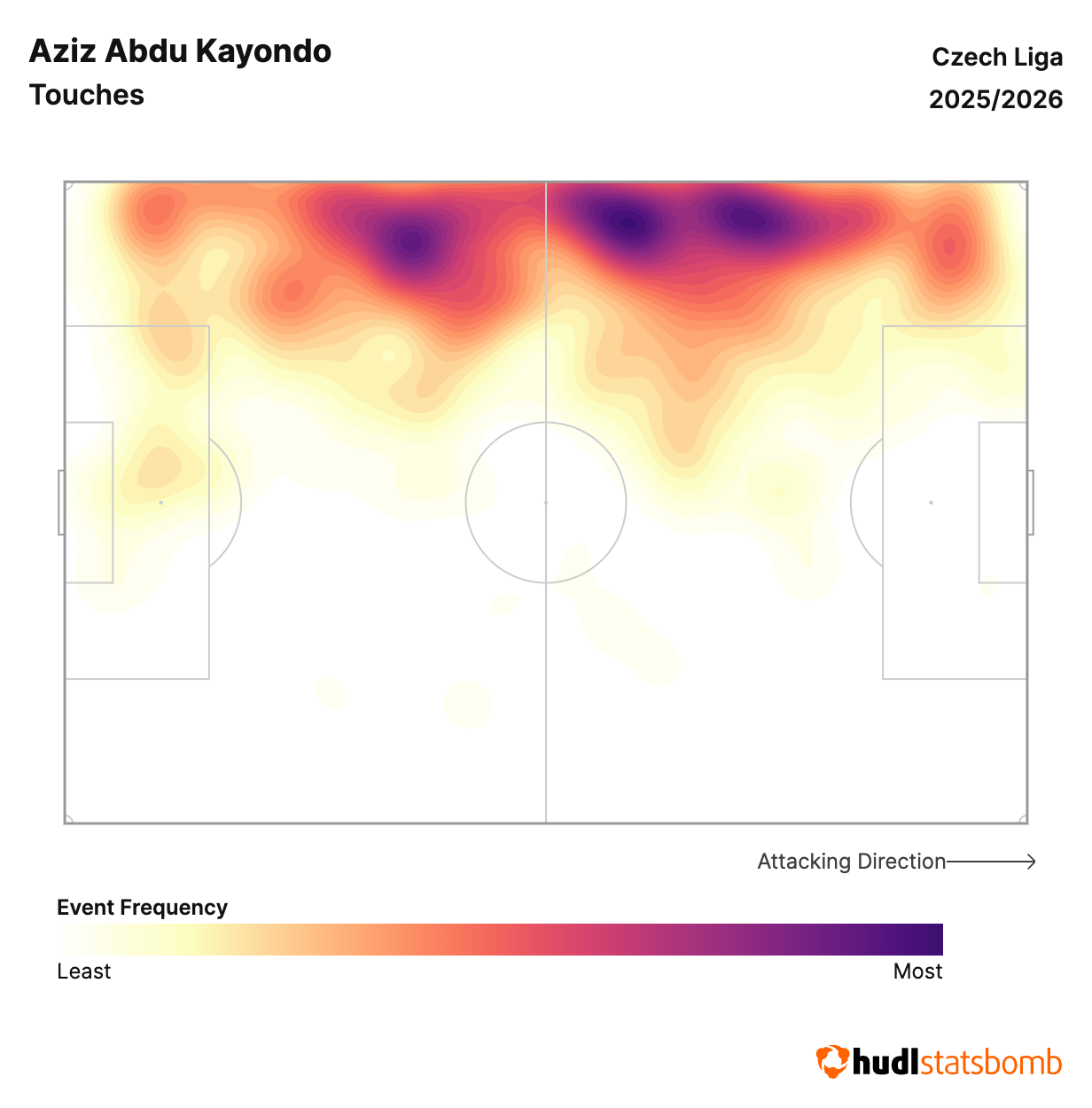
Switching focus to the Czech First League, we find another intriguing physical profile in Aziz Abdu Kayondo, a Uganda international providing relentless running power on the left flank for Slovan Liberec.
Kayondo is a perfect example of why physical data requires context. If you were judging solely on top speed, his 45th percentile ranking might not immediately jump off the page. However, his value lies in his engine.
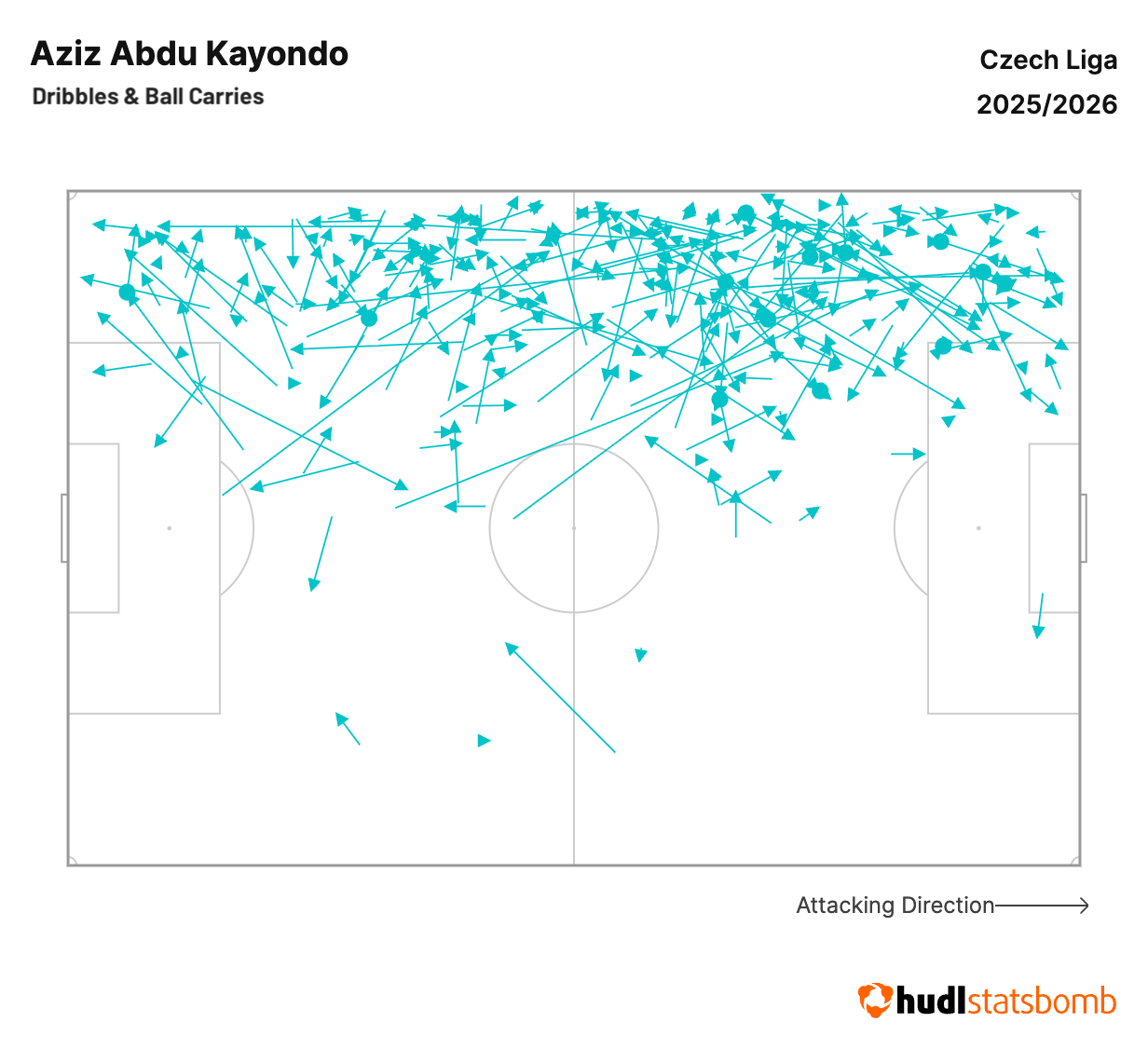
Kayondo possesses an elite ability to perform high-speed runs repeatedly and over distance. He ranks in the 88th percentile for both High Intensity Distance and the frequency of his high-intensity runs per 90 minutes. In a match context, this means he is a constant outlet — a player who doesn't just make one overlapping run, but makes every overlapping run, constantly stretching the opposition whilst also being capable of recovering his position afterwards if the ball turns over.
That physical output is paired with an end product. Kayondo’s Open Play xG Assisted sits at 0.12 per 90 minutes (90th percentile), making him one of the First League’s most creative defenders. Furthermore, his ability to drive the team up the pitch is elite relative to his competition. His On-Ball Value — a model that values each action based on the +/- impact it has on the team's likelihood of scoring and conceding — added from dribbling and ball carrying ranks in the 98th percentile at +0.14 per 90 minutes.
At 23, Kayondo is slightly further along his development path than the other names on this list, but for clubs looking to inject immediate, proven threat into their left-hand side, his combination of stamina and creative output makes him a prime candidate for shortlists and further scouting.
Cheveyo Tsawa (Central Midfielder, 19)
Moving our focus to Switzerland and to two prospects from the Swiss U21 national team who are currently enjoying true breakout campaigns in the Swiss Super League. The first is FC Zürich’s teenage engine room, Cheveyo Tsawa.
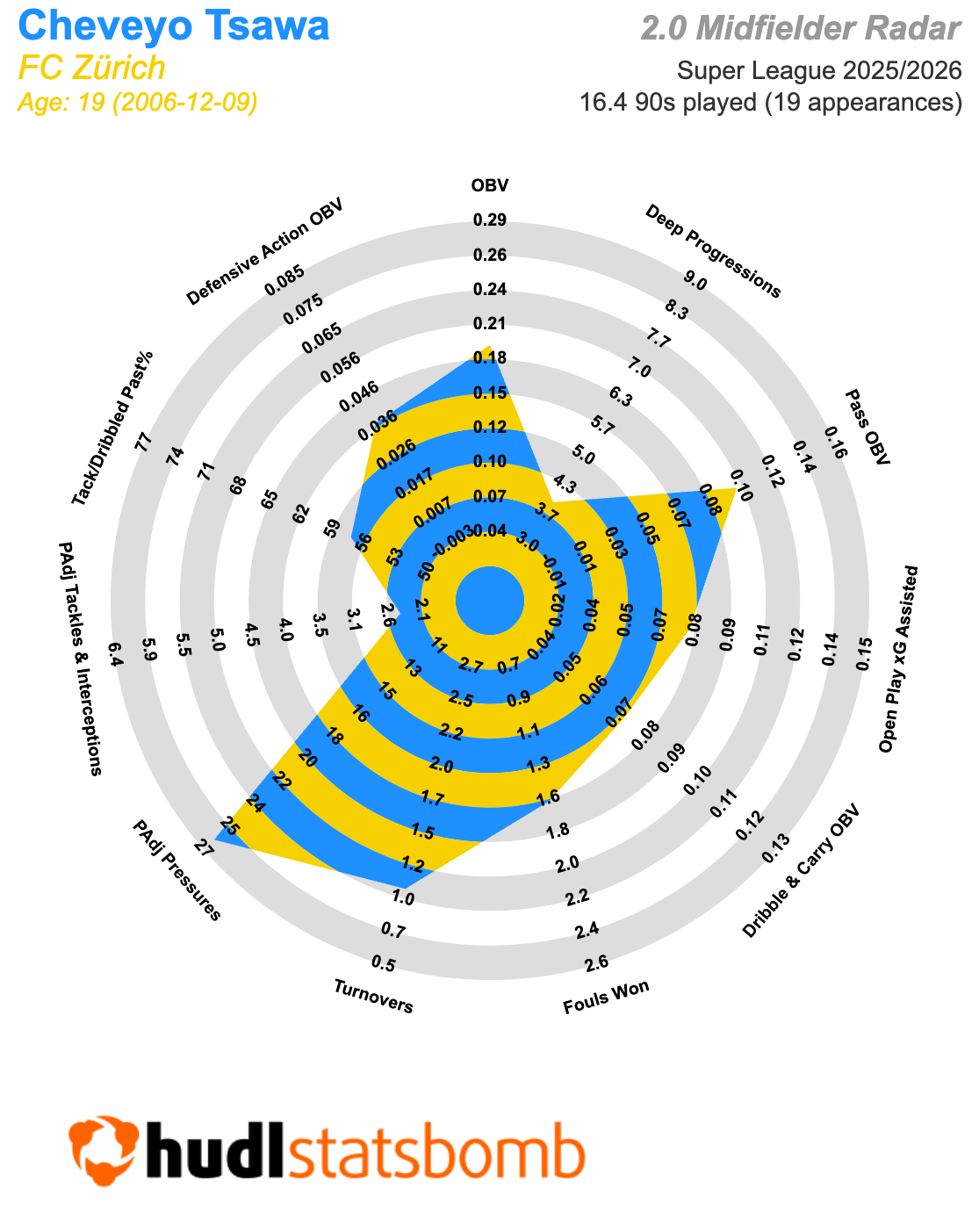
At just 19 years old, Tsawa has this season established himself as a key figure in Zürich’s midfield, starting 19 of 21 Super League matches in 2025/26. His technical floor is already impressive for a player of his age; performing above the league average for most key metrics for central midfielders, adding value with his passing, creating chances for teammates, drawing fouls, and relentless in the press.
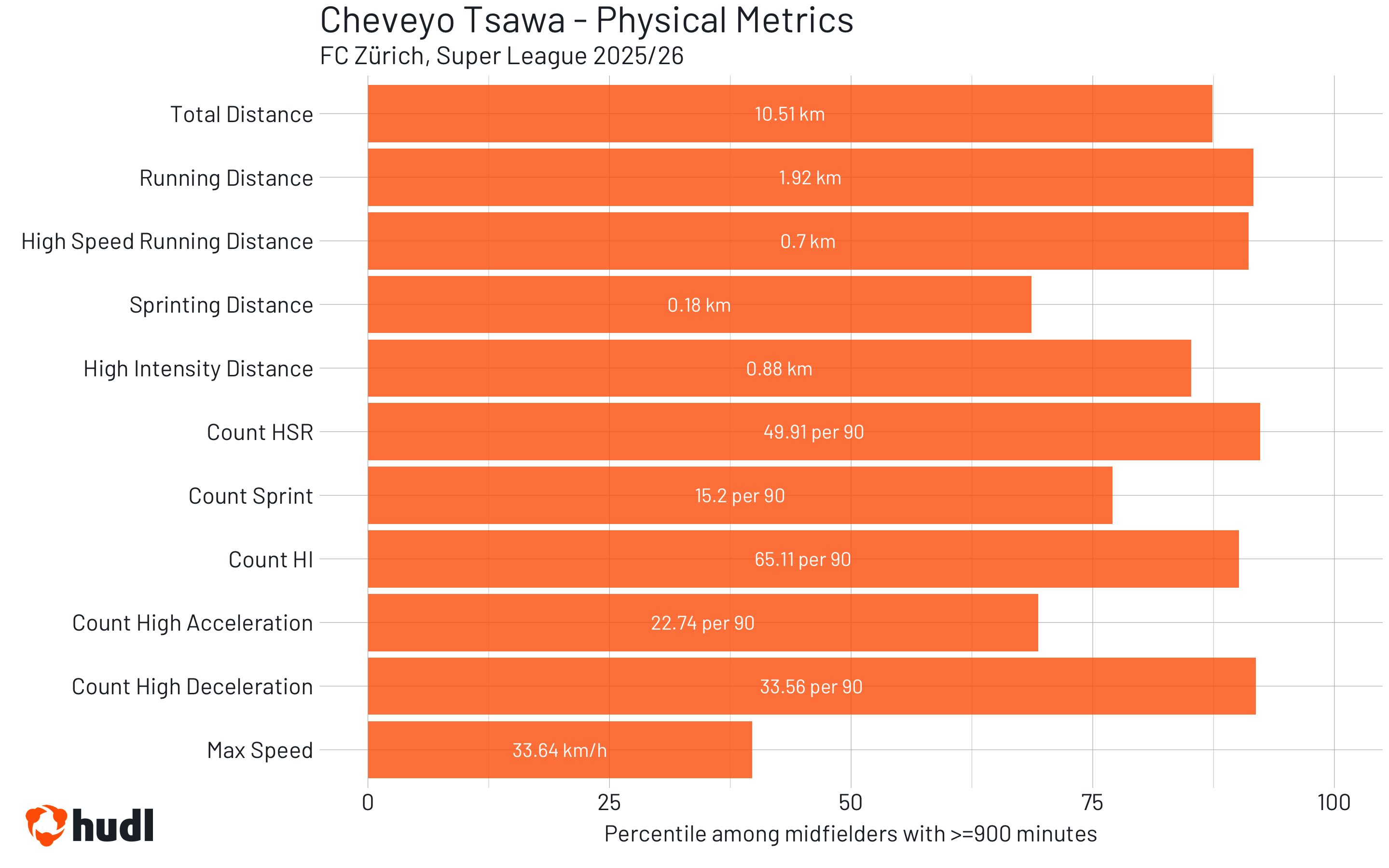
But it is his physical capacity that suggests, combined with technical and tactical development, he could one day play on the bigger stage. Tsawa is a particularly strong runner, profiling as an elite athlete even when benchmarked against the highest standards.
His High Intensity Distance ranks in the 85th percentile against Big 5 League central midfielders, while his frequency of high-intensity runs sits in the 90th percentile.
This combination of volume and intensity stands out for a teenager – and Tsawa still has room to grow into his physical frame. With the engine to cope with the Premier League or Bundesliga immediately and a technical baseline that offers a solid platform for further coaching, Tsawa represents an opportunity to buy into his potential before it fully explodes.
Franz-Ethan Meichtry (Winger, 20)
Finally, we turn our attention to the current leaders of the Swiss Super League: FC Thun. Having only earned promotion last season, they have defied expectations to sit seven points clear at the time of writing. While their title charge has been built on a solid, experienced collective, it is 20-year-old Franz-Ethan Meichtry who provides the dynamic spark.
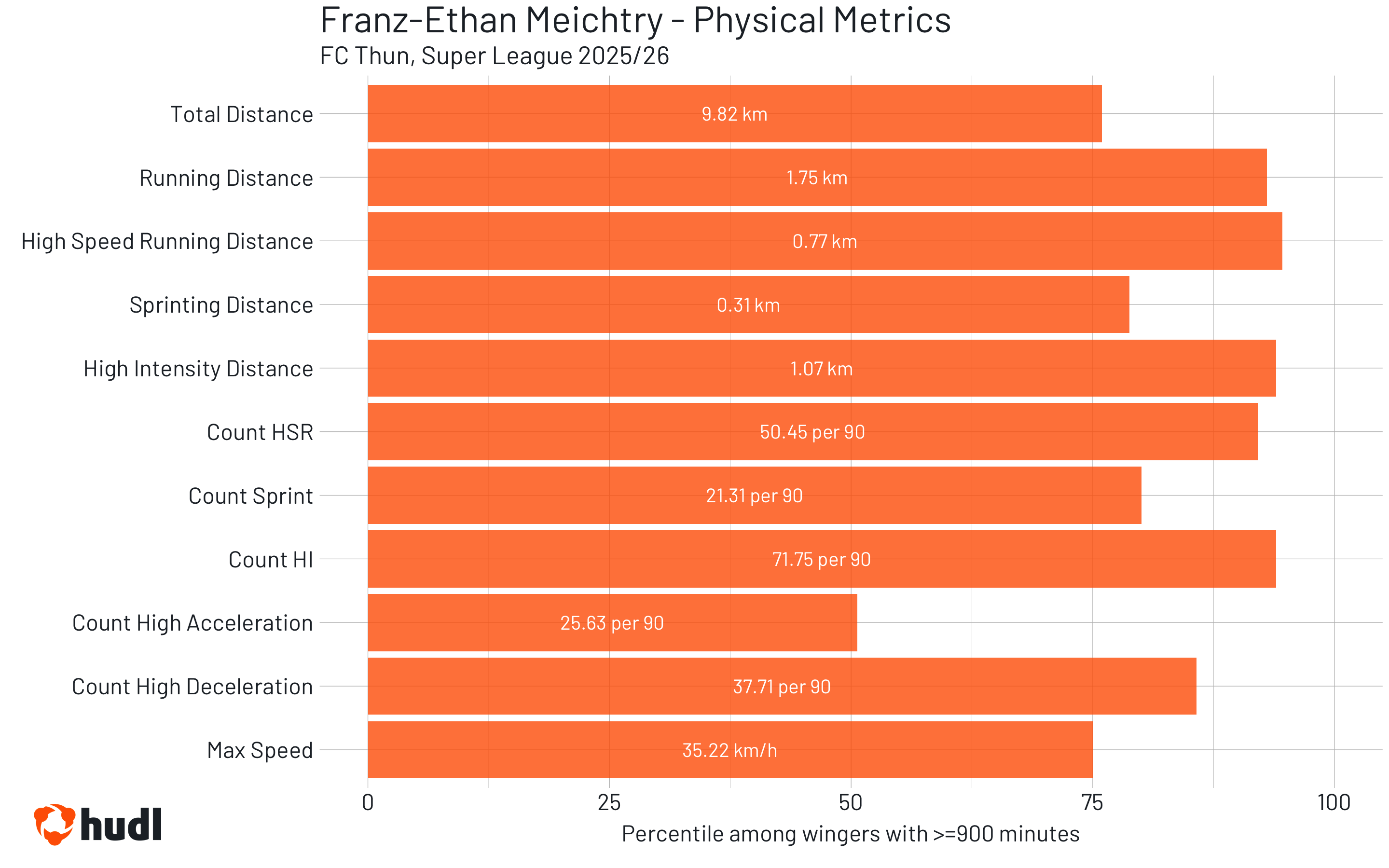
A Swiss U21 teammate of Tsawa, Meichtry shares that elite physical DNA.
Meichtry is a player constantly in motion. His physical data and video scouting demonstrates this: he profiles as a forward who performs high-intensity actions repeatedly and over distance, meaning he is just as effective at closing down space defensively as he is attacking it with the ball.
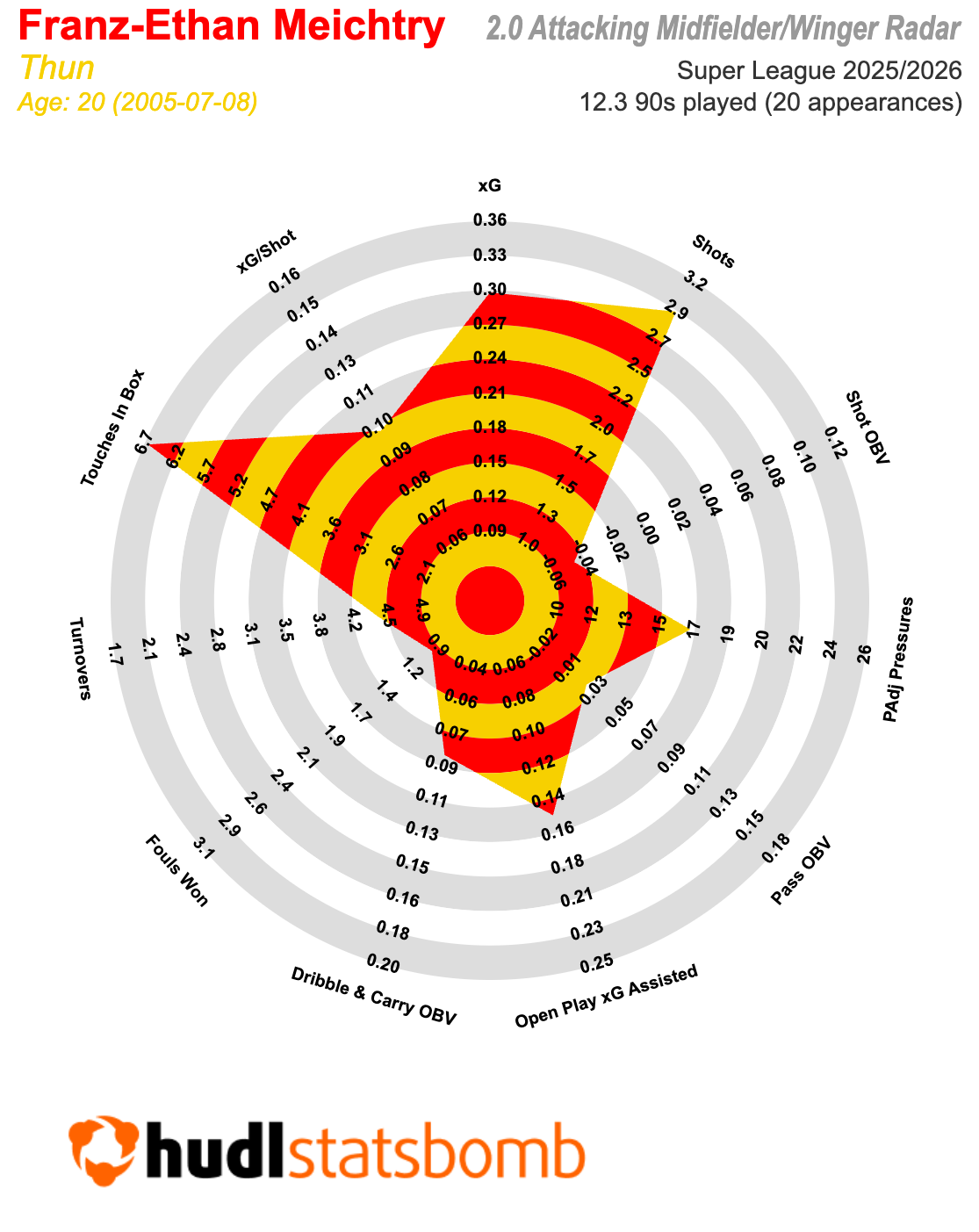
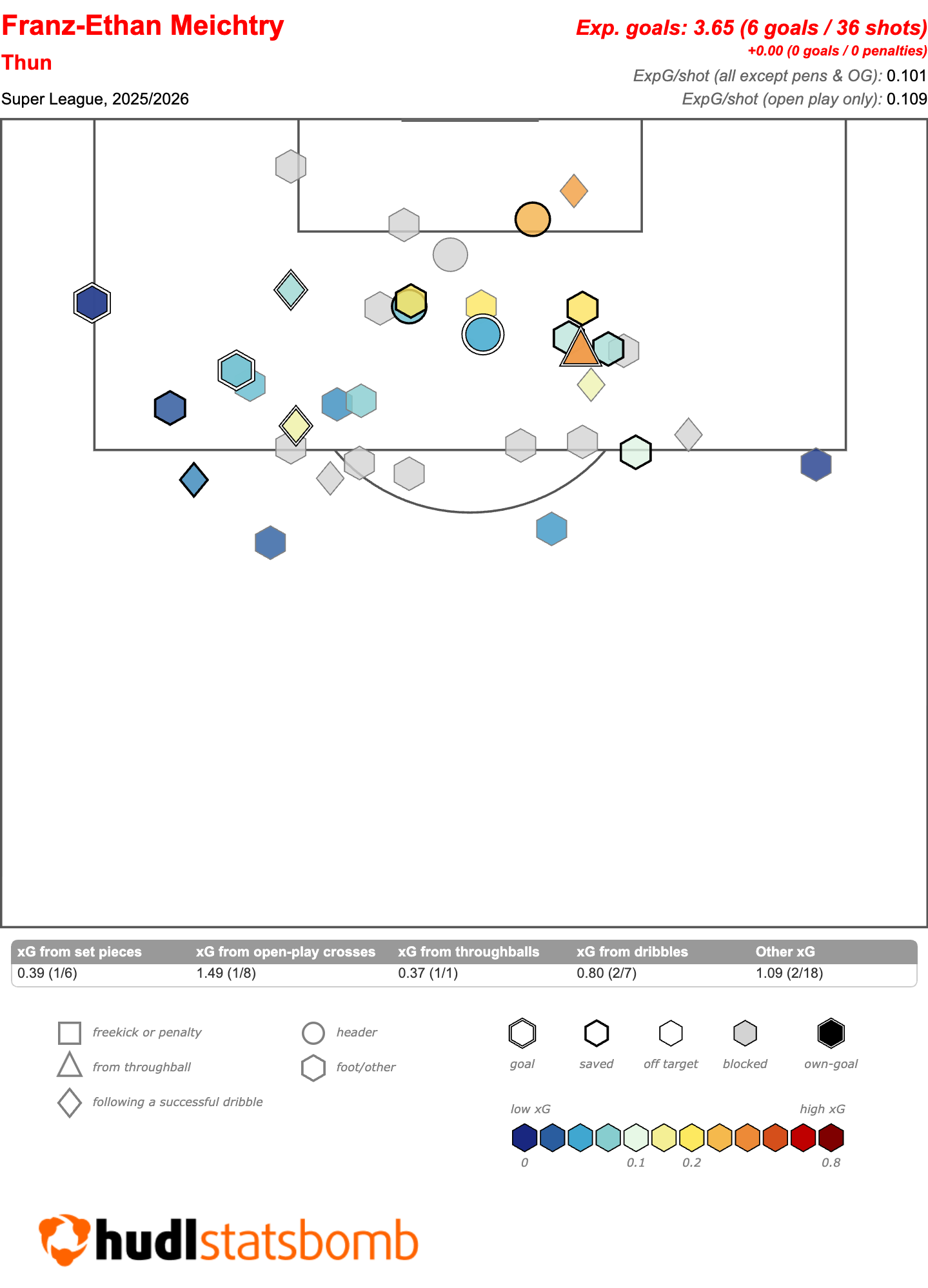
Crucially, he turns that running power into an end product. Only two Super League wingers or attacking midfielders have generated a higher expected goals (xG) per 90 than Meichtry this season, a threat backed up by a return of six goals.
However, the data also highlights where the next level of coaching is required. While his shot map shows good variety, he could improve his efficiency by finding separation before pulling the trigger, resulting in fewer blocked shots and more attempts from central areas. The raw material is certainly there, though: seven of his 36 shots came after beating an opponent on the dribble, showing he does have the skill to create his own openings. Meichtry just needs to apply it more frequently and effectively to become an elite goalscorer, especially at a higher level.
FC Thun smartly extended his contract to 2030 in December, clearly a move to protect his value with the summer window approaching and transfer interest anticipated.
Scout from a worldwide database with Statsbomb, Wyscout, and Physical data as part of the Hudl Pro Suite