How to Build and Coach Your Offensive Line
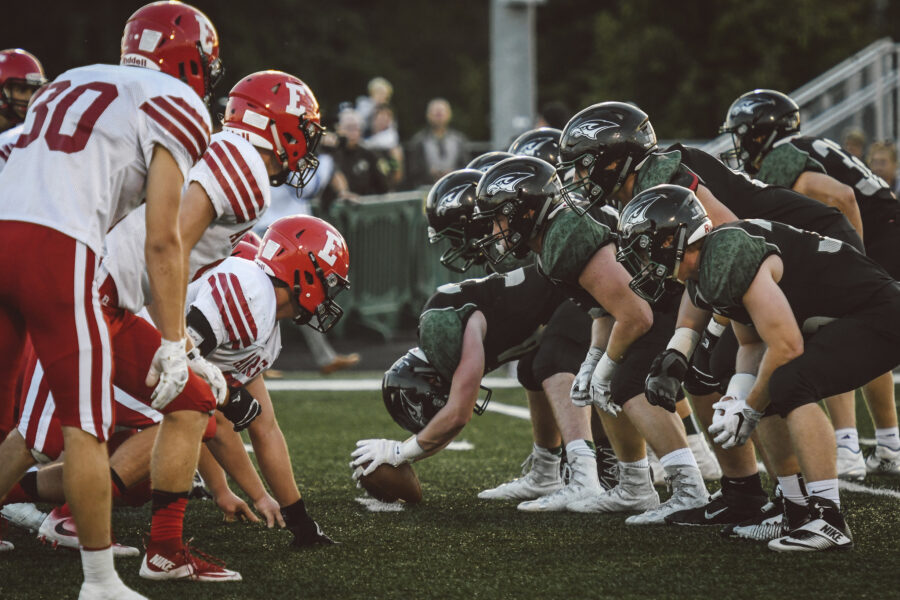
When it comes to coaching youth football, crafting the perfect offensive line isn’t easy — but we have some tips to fortify your front five.
Coaching the offensive line is a special task. It’s a unique unit within the team—the ones the rest of the offense relies on to be able to do their jobs. The offensive line must work together and trust each other on each play of every practice and every game. It’s a mentally-challenging position to coach, but also an extremely rewarding one.
Finding Your Front Five
One of the biggest challenges year to year is finding the five players to fill the line. For starters, you’re not typically working with the fastest athletes on the team, and many of them believe they should be playing another position. I have never coached a lineman who wouldn’t immediately change positions if given the opportunity. Most believe they can play on the defensive line or be a tight end, linebacker or fullback.
But what these players may not understand is that offensive lineman need to be cerebral, and they’re central to the success of the entire team. It’s your job to not only help them accept their position, but excel at it.
Embracing the O-Line Role
Here’s a few examples of what you can tell these players:
- You have a particular set of skills and body type that translate to the offensive line.
- Your skills, which I’ll help develop, can translate into you becoming a reliable, contributing, and extremely important member on this team.
- Your skills can help this team be successful each week.
- If you embrace being a lineman right now, then we can start working towards becoming a great team.
Position-Specific Skills: What to Look For
The Center: Intelligence at the Heart of the Line
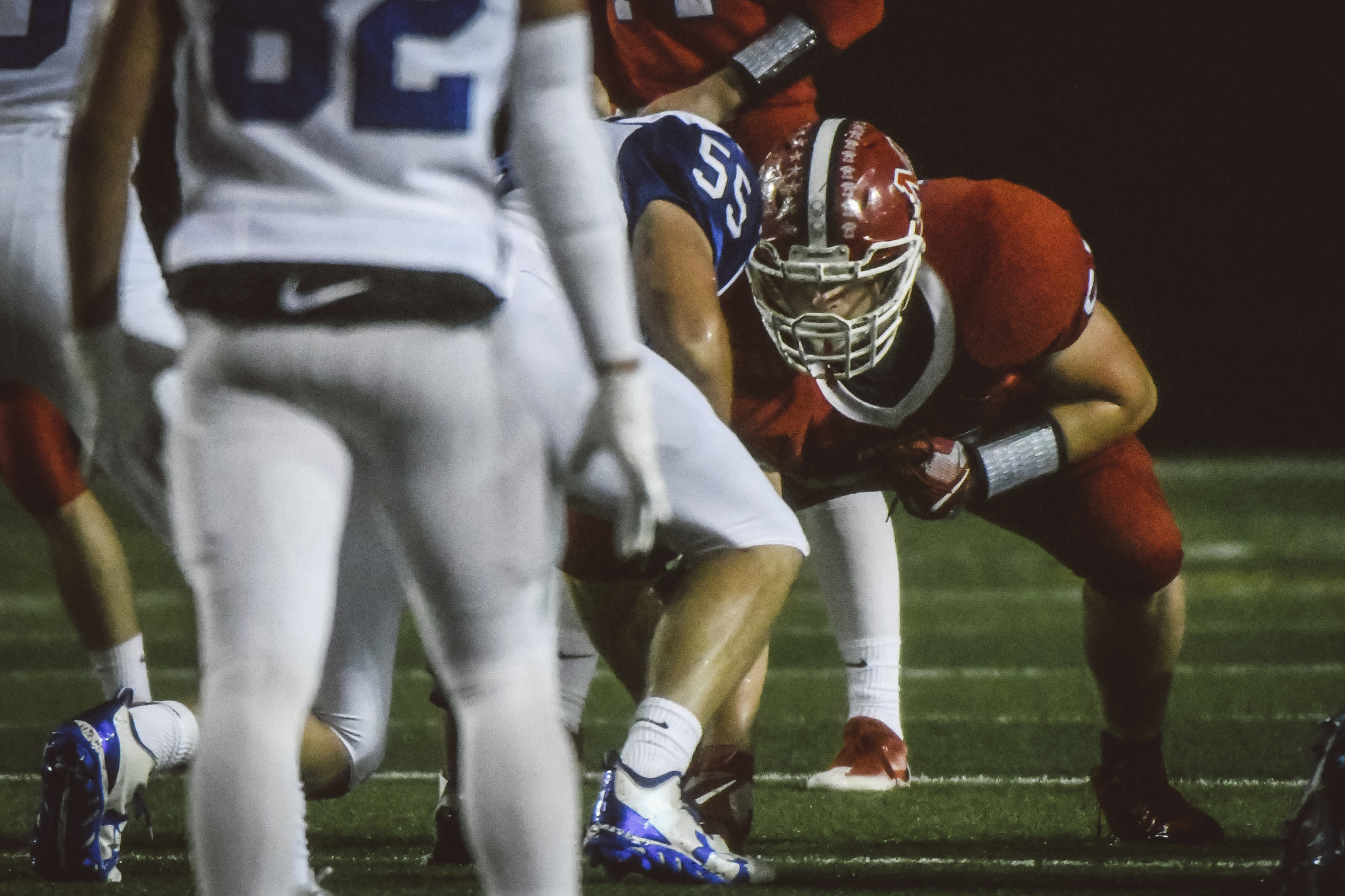
Let’s start with the center. You know the O-Line needs intelligent players, and the center is the fulcrum.
Your center needs to be able to:
- Identify the defensive front and where the strength of the defense is, then communicate this with the rest of the line.
- Snap and step quickly to their blocking assignment.
The first thing to look for is relentless effort. You need a center who will work to stay in front of his assignment and do everything he can to keep him from making a play. Our best centers have been guys who could execute these skills: communication, snapping, quick steps and relentless effort.
The Guards: Versatility & Vision
Guards are the guys who can move, but work better with someone next to them. You might have athletic guards who can pull well and overtake the next down lineman on outside zone, or have guards who are larger people movers that smothered their man. Either body type requires the guard to have active feet and the vision to look for work.
Many times guards are uncovered and are called upon to help the center or the tackle, or to look for a linebacker threatening their gap. They must be able to anticipate their assignment because they’re not always immediately engaged at the snap. Guards have to know when to do what they are coached to do, but also be able to improvise at times and do what it takes to get a block.
The Tackles: Edge Protectors & Soloists
Ideally, tackles have the ability to work in space. They’re going to be put in one-on-one situations and they must be able to handle this solo assignment.
They need to be able to:
- Set the edge and keep faster, more athletic defensive ends from getting into the backfield.
- Have vision to see who is lined up over them, as well as those off the line outside and away from them.
- Have a sense of multiple threats on a single play and be able to communicate to the guard who he will pick up so the guard knows where to look for work.
Tackles are the soloists of the choir. They are the ones who stand out to people and their performance, for better or worse, is the most noticeable of all offensive linemen.
Building Unit Cohesion: The Five Musketeers
Each individual must use their skills to execute their assignment on a given play, but their performance is linked. If four do their job and one fails, it’s a recipe for chaos. Players on the offensive line must be able to work together—and individually—at the same time. They must trust each other in order to be successful. They are the five musketeers—all for one and one for all.
The best way to help your offensive line see what they need to do is via video. Record your games and practices, upload them to Hudl, then create individual playlists to boost their knowledge, development and performance. With video at your disposal, you’ll be able to help your offensive line see patterns from future teams they'll play and how to stack up against them.